





English Mahogany Dumb Waiter
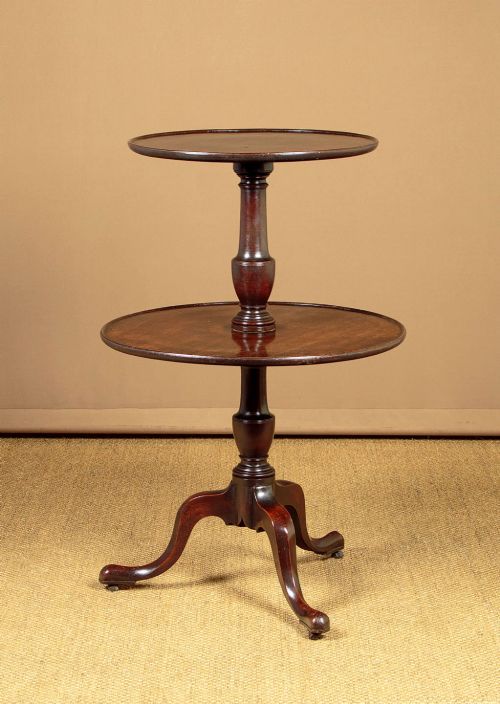
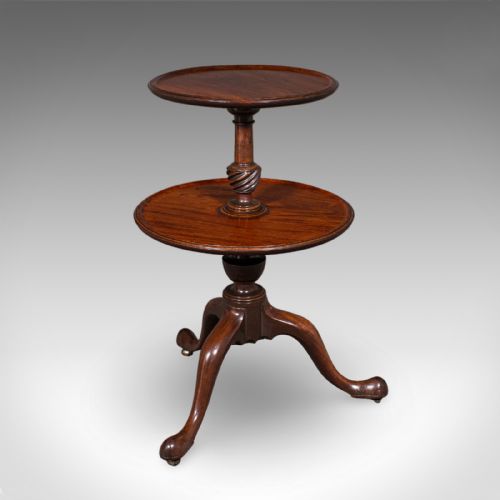
An English mahogany dumb waiter is a tiered serving stand designed to hold dishes near the dining table without servant attendance.
English Mahogany Dumb Waiter
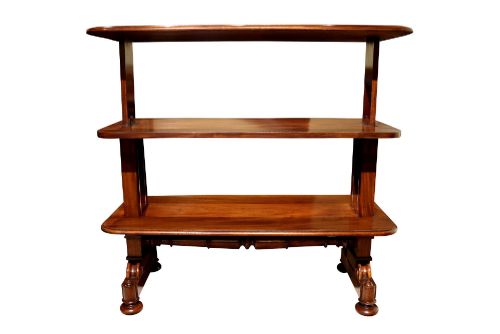
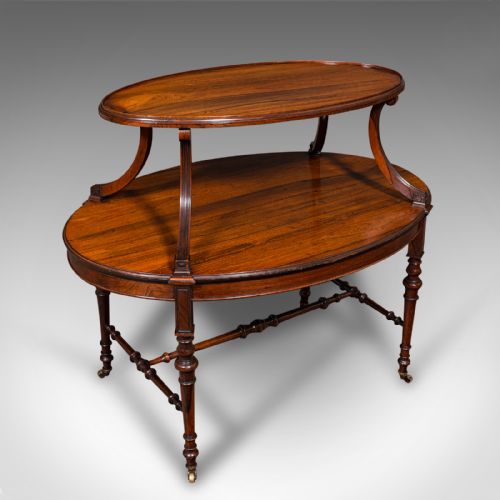
An English mahogany dumb waiter serves as a multi-tiered stand for dining rooms, designed to hold dishes and serving items close at hand. These pieces appear across Georgian, Regency, William IV, Victorian, and Edwardian periods.
The most common forms on this page include two-tier and three-tier revolving tables, serving stands, and occasional side tables in solid mahogany.
Originating from English country houses and dining parlours, these tables range from modest two-tier afternoon tea stands to grand rise-and-fall buffet servers.
How They Were Made
Cabinet makers utilised dense, richly grained mahogany timber for the primary structure, often turning central columns from a single piece of wood. Brass castors, cast hinges, and rotating mechanisms support the tiered trays.
Construction techniques involve graduated circular tiers joined by central turned pillars and sturdy tripod or quadod pedestal bases.
Early dining etiquette demanded dumb waiters so guests could gossip freely without servants overhearing the conversation.
What Varies in Quality
The selection of mahogany timber governs the visual weight and depth of grain across the tiers, separating standard utility pieces from finely figured examples. Turning on the central pillar and the smoothness of any rotating mechanism show the cabinet maker's skill.
Proportion and stability define the better pieces, where the weight of the graduated tiers balances securely on the tripod base without wobble.
Oetzmann & Co.
The English Mahogany Dumb Waiter Glossary
- Dumb waiter
- A multi-tiered freestanding table used for holding food and tableware during meals. These stands typically feature rotating or fixed circular shelves.
- Tier
- An individual circular shelf or tray fitted to the central column of the stand. Most examples feature two or three graduating tiers.
- Rise and fall
- A mechanical mechanism allowing specific tiers to adjust in height. This style appears frequently on William IV servers.
- Lazy Susan
- A revolving tray placed on a table or stand to assist with sharing dishes. These rotate smoothly on a central pivot.
English Mahogany Dumb Waiter: Frequently Asked Questions
How were dumb waiters used historically?
Dumb waiters sat beside the dining table to hold extra plates, wine bottles, and courses during long meals. Diners could help themselves without interrupting conversation.
They also functioned as afternoon tea stands or serving tables in country house drawing rooms.
How do I care for mahogany furniture?
Mahogany requires minimal maintenance beyond dusting with a soft, dry cloth. Avoid placing these pieces in direct sunlight or near heat sources to prevent timber splitting.
Occasional application of natural wax helps maintain the lustre of the polished wood surface.
How can I tell the period of a dumb waiter?
Georgian and Regency examples typically display slender turned columns and tripod pad feet with understated mahogany grain. Later Victorian and Edwardian pieces often incorporate heavier pedestal bases or elaborate carving.
Hardware such as brass castors and turning styles offer further clues to the exact decade of manufacture.