

Regency Mahogany Secretaire Cabinet
A regency mahogany secretaire cabinet combines practical writing space with book storage, offering a sophisticated focal point for a traditional study.
Regency Mahogany Secretaire Cabinet
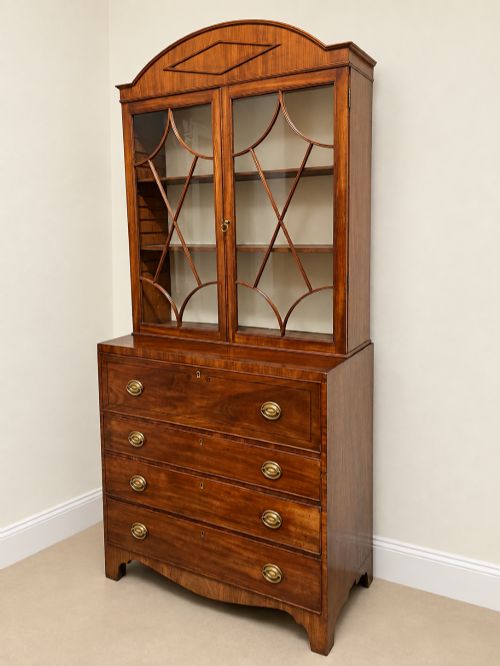
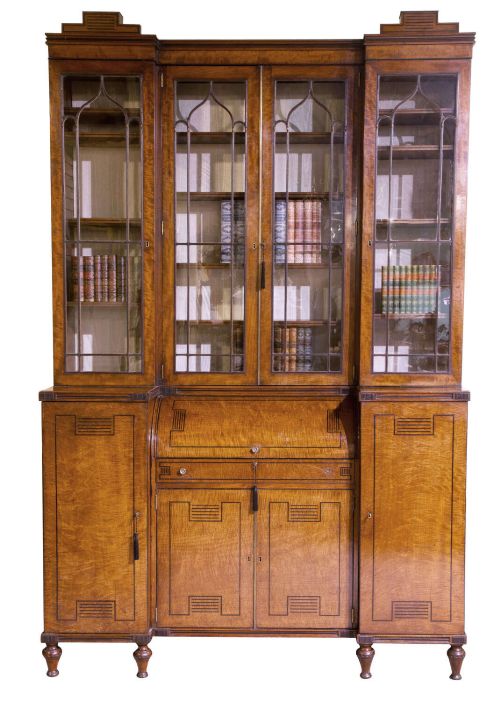
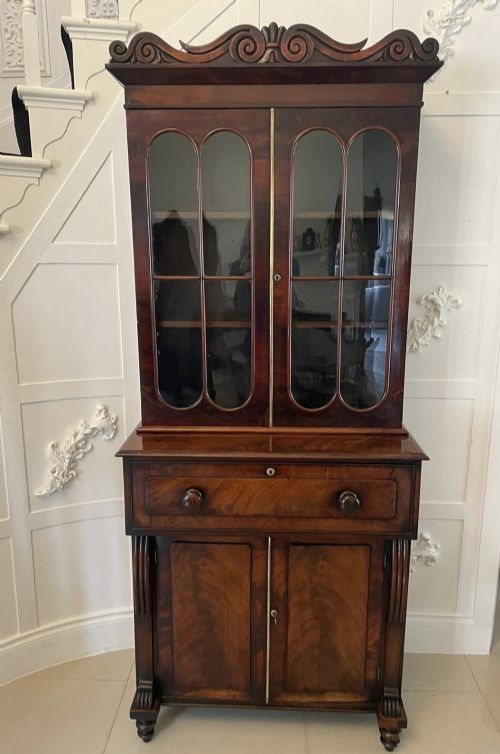
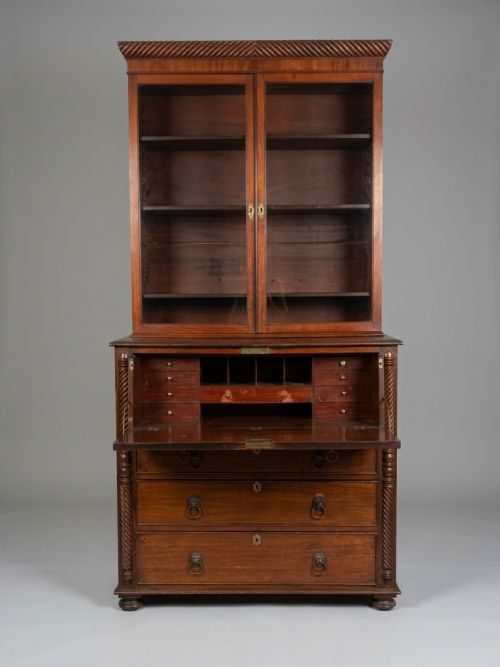
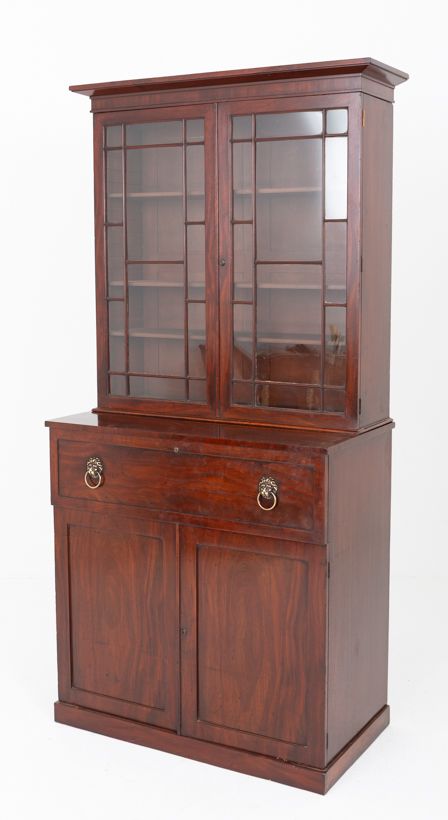
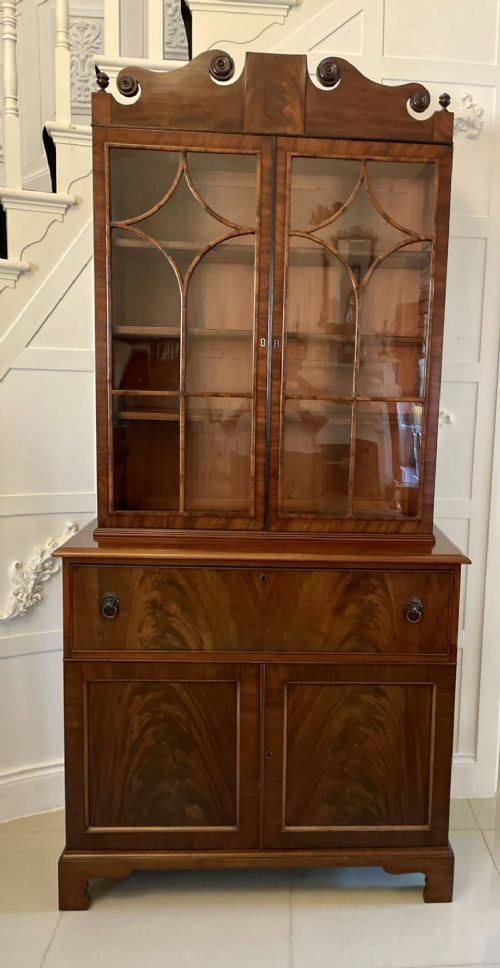
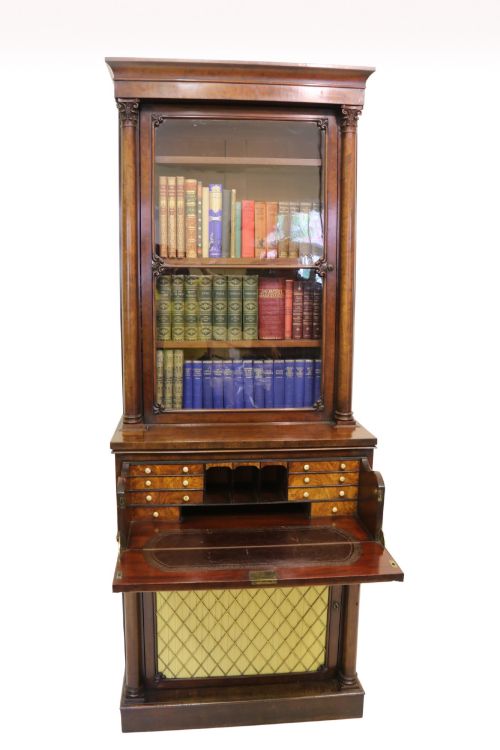
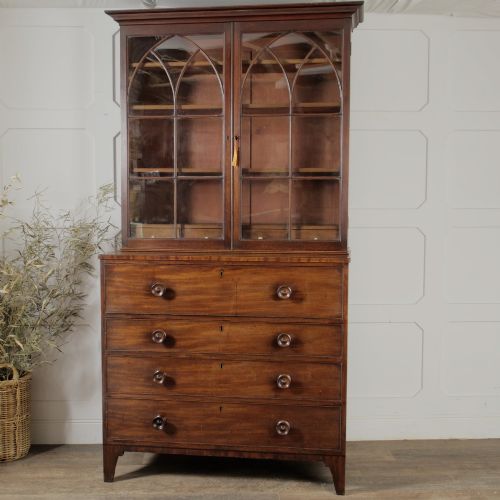
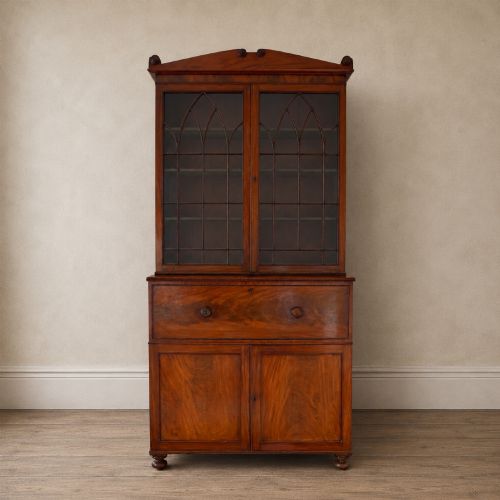
A regency mahogany secretaire cabinet is a versatile piece of furniture designed for both writing and display, typically incorporating a pull-down desk drawer alongside upper glazed doors for books. These items bridge the gap between a chest of drawers, a desk, and a bookcase, originating from the late Georgian and Regency eras.
The most common version met on this page is the tall secretaire bookcase, constructed in rich timber with fitted interior compartments for stationery and documents. Pieces span the Regency, George IV, and William IV periods, alongside broader 19th-century interpretations.
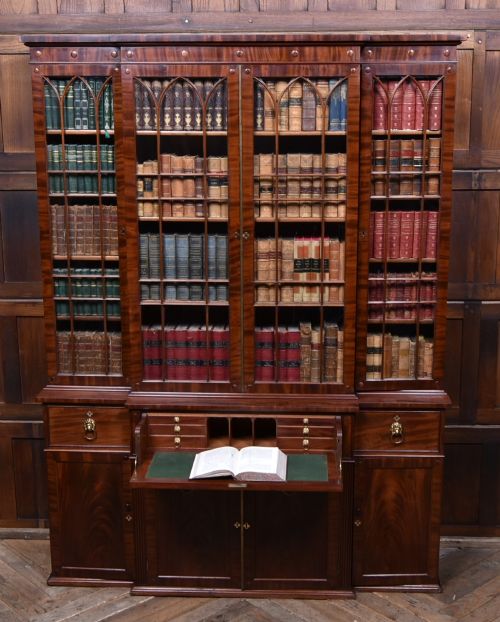
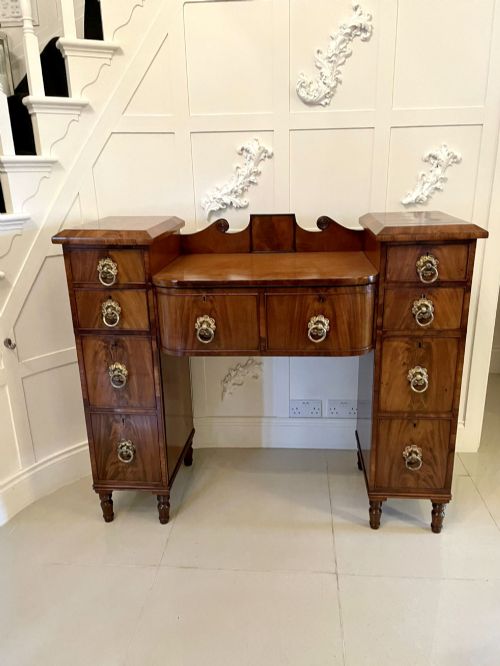
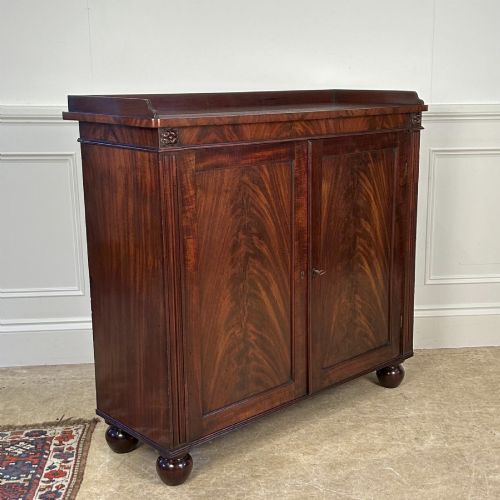
Alternative forms include shorter chests, side cabinets, and breakfront designs that integrate writing surfaces into grander architectural proportions. Regional variations, such as Scottish or Channel Island examples, appear alongside pieces produced by prominent cabinet makers.
How They Were Made
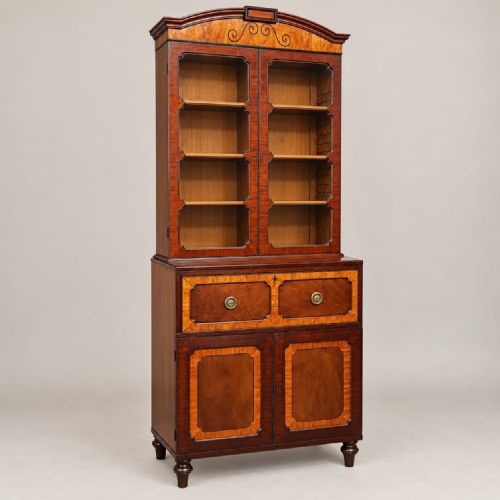
Cabinet makers utilised solid mahogany and figured veneers such as flame mahogany, often selecting timber with deep natural grain patterns for exterior drawer fronts and doors. Satinwood and ebony provide contrasting stringing and inlay details on finer examples.
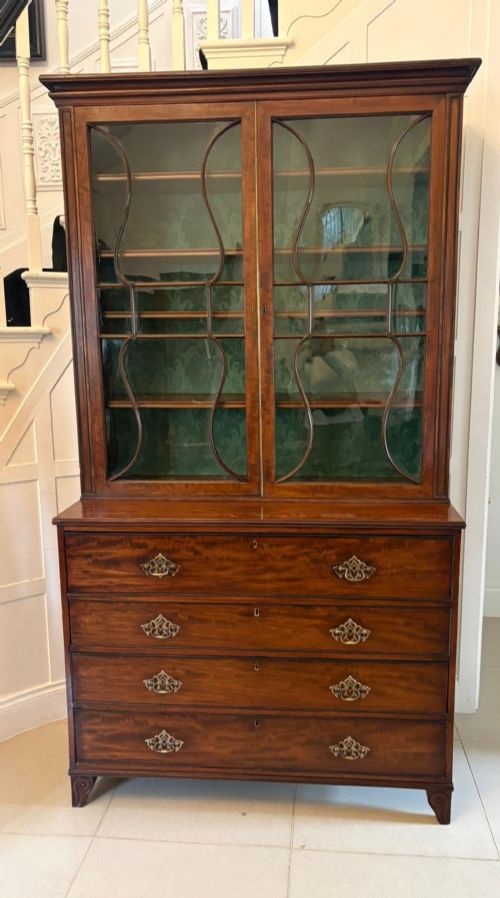
Structural elements incorporate brass hardware for handles and escutcheons, while upper sections feature glazed doors enclosing adjustable shelving. Interior compartments rely on small drawers and pigeonholes constructed from secondary timbers.
Regency Mahogany Secretaire Cabinet Retail Price Guide 2026
Typical asking prices for regency mahogany secretaire cabinet among the pieces listed under this phrase on Sellingantiques today, from the lower quarter to the upper quarter. They describe what is for sale here now, not the wider market.
Several pieces conceal tiny hidden drawers behind secret panels, designed for private correspondence.
What Varies in Quality
The selection of timber grain heavily influences the visual impact, with matched flame mahogany veneers creating symmetry across large surfaces. Finer pieces demonstrate precise inlay work in contrasting timbers like satinwood and ebony.
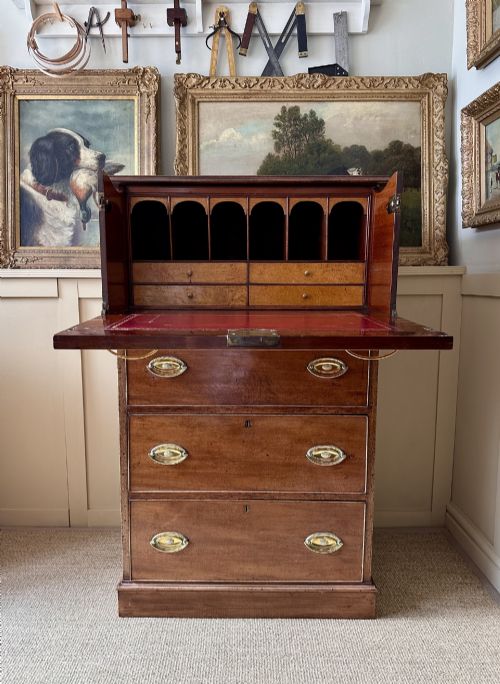
Internal complexity sets apart standard utilitarian pieces from exceptional commissions, particularly regarding the arrangement of secret compartments, small drawers, and leather-lined writing surfaces within the fall front.
Gillows of Lancaster·George Oakley
The Regency Mahogany Secretaire Cabinet Glossary
- Secretaire
- A desk or cabinet with a pull-down writing drawer that conceals smaller compartments and pigeonholes. This central feature allows a chest of drawers or bookcase to function as a writing desk.
- Flame mahogany
- A veneer cut from timber where the branch meets the trunk, producing a distinctive fire-like ripple effect. Cabinet makers prized this figure for principal display surfaces.
- Breakfront
- A piece of furniture where the central section projects forward from the flanking sides. This architectural layout adds depth and presence to larger bookcases and cabinets.
- Escritoire
- An alternative term for a writing cabinet or desk. The word derives from the French term for writing.
- Glazed doors
- Glass-fronted upper doors typically divided by wooden framing bars or astragals. They protect library contents while allowing visibility of book bindings.
Regency Mahogany Secretaire Cabinet: Frequently Asked Questions
How do I use the secretaire drawer?
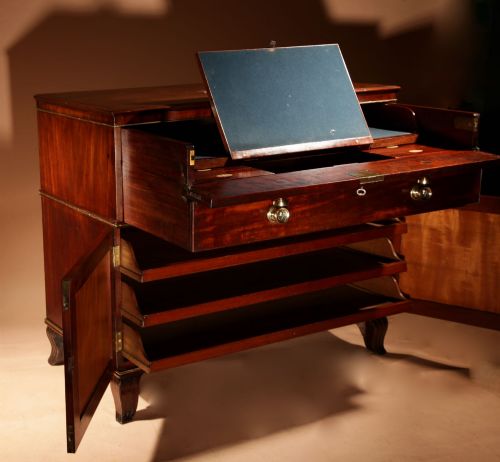
The top drawer pulls forward and drops down on hinges to reveal a fitted interior of small drawers and pigeonholes. This creates a functional writing surface without requiring a separate standalone desk.
Support arms automatically slide out or drop down to bear the weight of the writing flap during use.
Where should I place this cabinet?
These cabinets suit libraries, studies, or drawing rooms where vertical storage and display space prove useful. Their architectural presence anchors a room while providing enclosed storage.
Ensure adequate clearance in front of the piece for the fall-front writing drawer to open fully.
How do I distinguish Regency from Victorian periods?
Regency and late Georgian pieces generally display lighter proportions, refined brass details, and classical architectural influences. Victorian examples often adopt heavier scaling and darker finishes.
Checking secondary woods and construction methods inside the drawers helps confirm the period of manufacture.
What is flame mahogany?
Flame mahogany is a specific wood veneer prized for its dramatic, undulating grain pattern. It results from cutting timber at the junction where branches join the main trunk.
Cabinet makers arranged these veneers symmetrically across drawer fronts to create striking visual movement.