
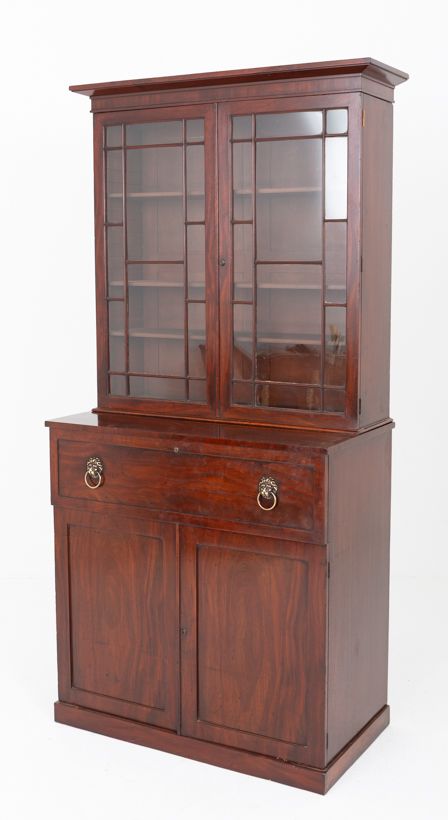
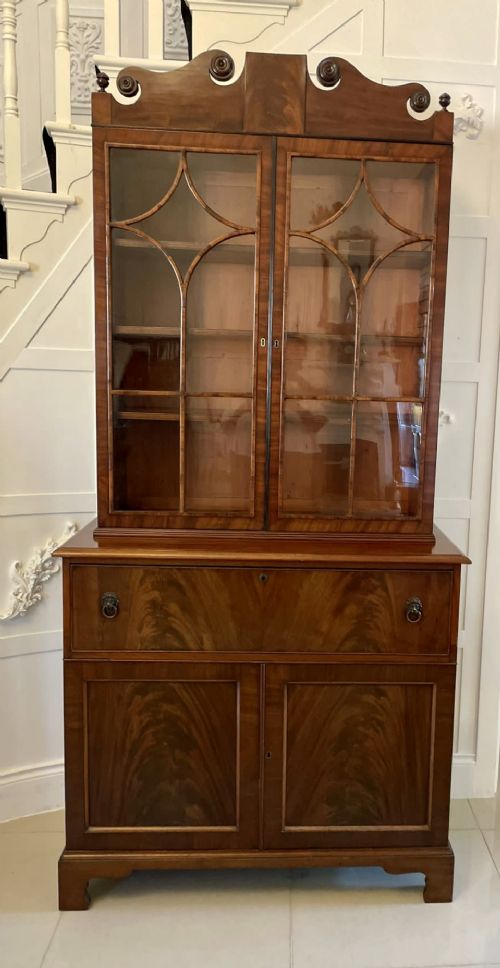
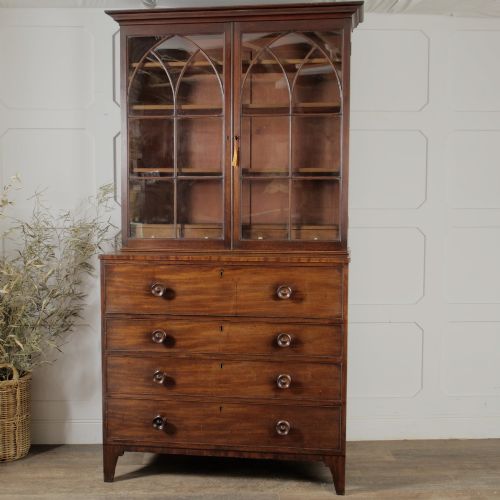
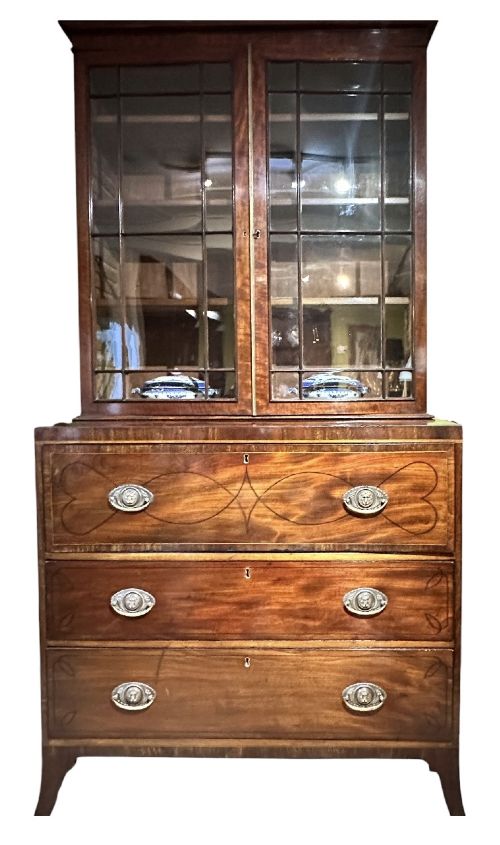
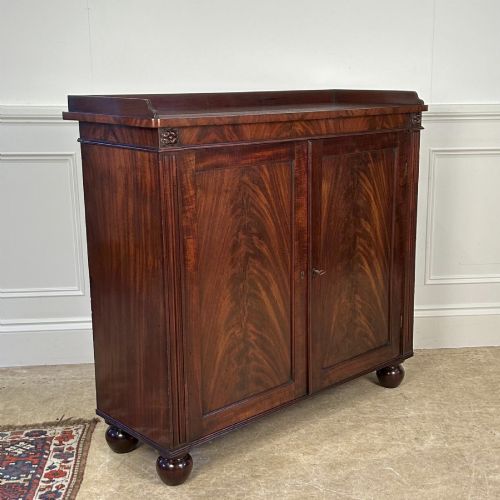
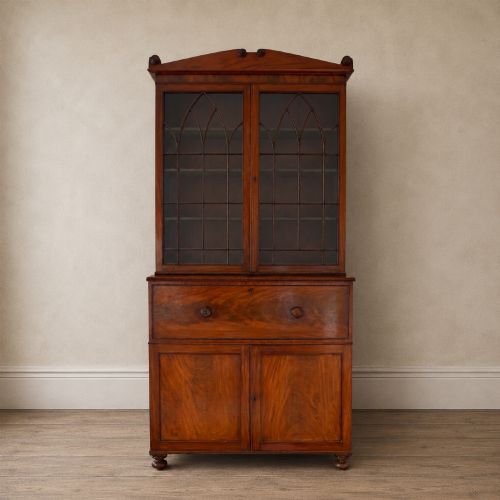
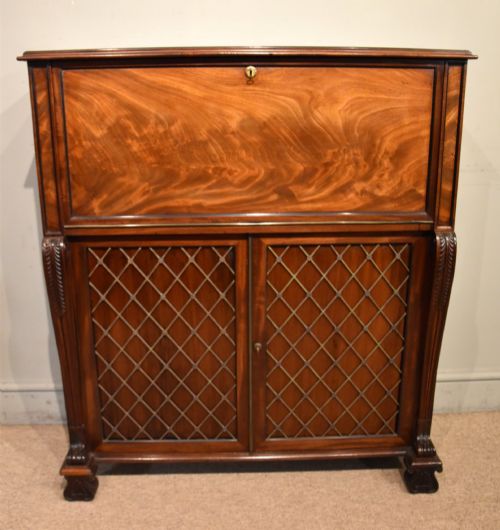
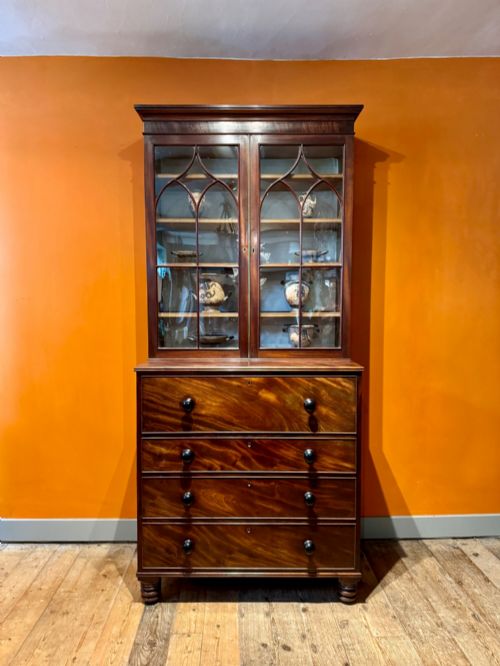
Regency Mahogany Secretaire Bookcase
A regency mahogany secretaire bookcase combines a library cabinet with a fitted writing drawer, offering functional elegance for domestic paper use.
Regency Mahogany Secretaire Bookcase
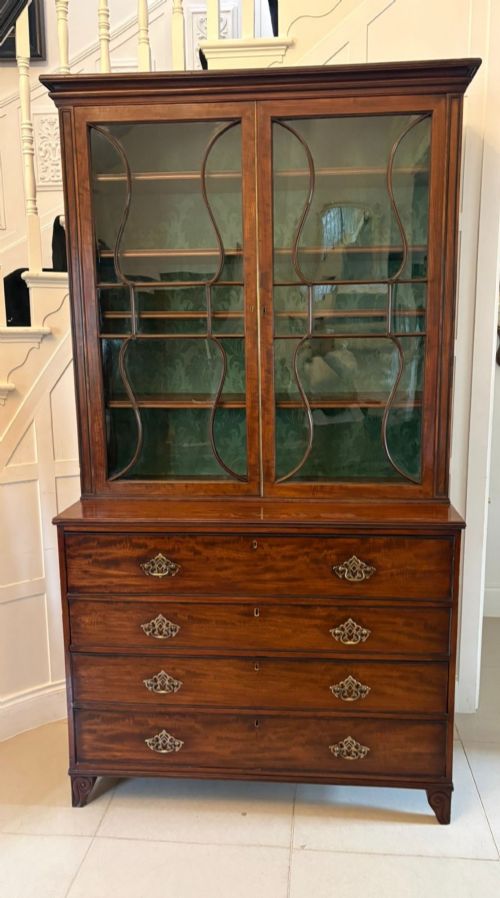
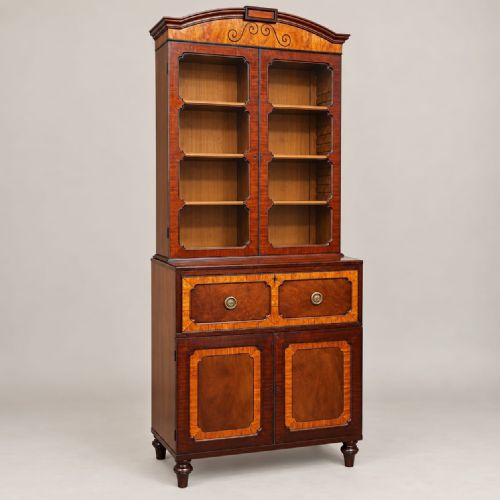
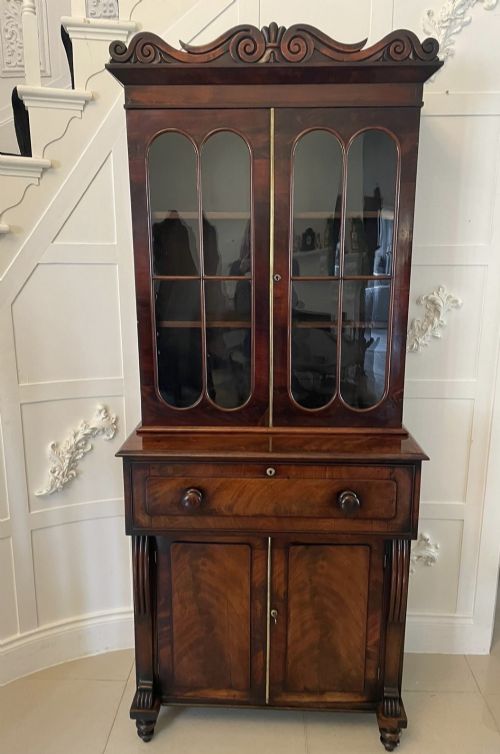
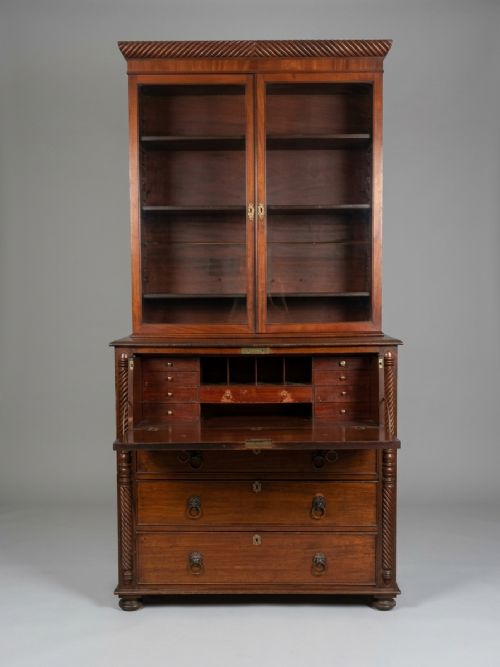
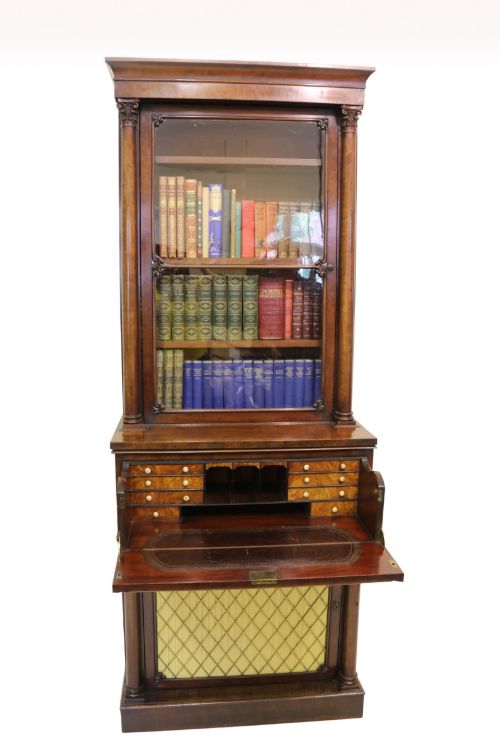
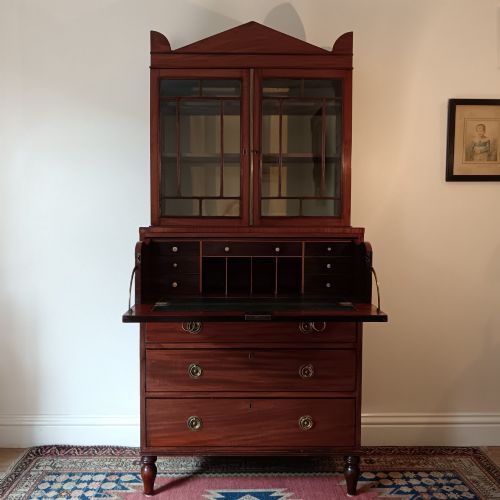
A regency mahogany secretaire bookcase brings together glazed upper shelving for books and a lower section containing a pull-out writing drawer with pigeonholes and small drawers. These dual-purpose pieces date predominantly from the nineteenth century, spanning periods from George III through to William IV and early Victorian production.
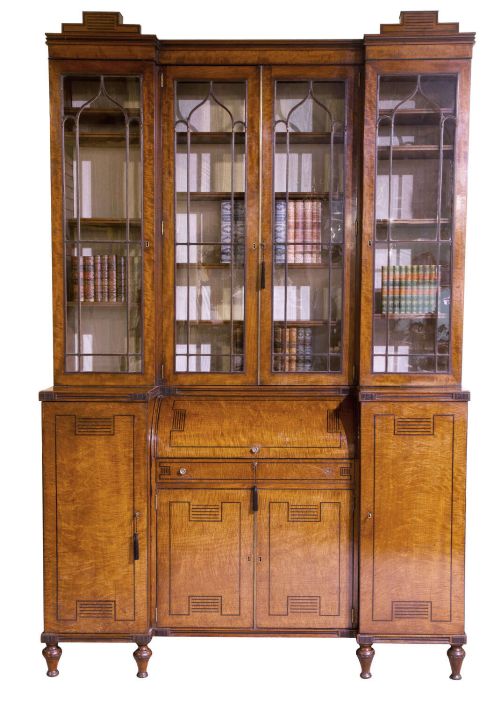
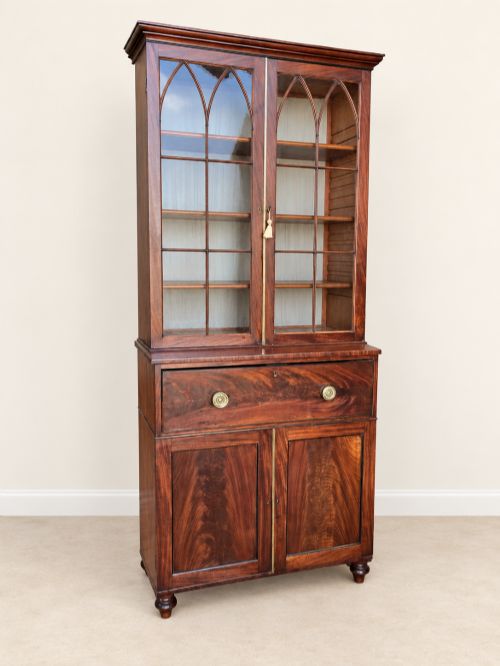
Most examples found on this page adopt the tall upright cabinet form, though smaller dwarf variations and breakfront formats also appear. The upper doors typically feature glass panels, while the lower body combines the secretaire drop-front with standard storage drawers or cupboard doors below.
Origins stretch across standard English cabinet-making traditions alongside regional pieces such as Channel Island examples. Makers varied from provincial workshops to renowned cabinet-makers operating during the Regency and George IV eras.
Materials and construction methods
Cabinet-makers relied primarily on solid mahogany and mahogany veneers, often selecting figured mahogany, flame mahogany veneer, or contrasting satinwood and ebony inlays to decorative effect. Glass provided the transparent panels for the upper bookcase doors, while leather inserts frequently lined the interior writing surfaces.
Brass hardware, including escutcheons and handles, completed the structural assembly of drawers and doors. Secondary woods lay beneath the veneers, supporting complex interior pigeonholes and fitted drawer compartments within the drop-front secretaire section.
Listings feature mahogany, satinwood, ebony, and brass across nineteenth-century Regency, George IV, and William IV periods.
Judging quality and execution
The degree of refinement in timber selection divides ordinary pieces from superior examples, particularly where cabinet-makers employed matched flame mahogany veneers or intricate satinwood and ebony inlay work. Grain continuity across drawer fronts and doors indicates careful planning by the workshop.
Interior execution dictates the standing of a secretaire bookcase, visible in the complexity of the fitted drawer arrangement, secret compartments, and the smooth mechanical operation of the drop-front writing surface. Superior proportions, balanced breakfront configurations, and fine brass details distinguish high-status cabinet-work from simpler utility pieces.
Gillows of Lancaster·George Oakley·Thomas Hope
The Regency Mahogany Secretaire Bookcase Glossary
- Secretaire
- A writing drawer or compartment featuring a drop-front that conceals small interior drawers and pigeonholes. It allows a tall bookcase to function doubly as a compact bureau desk.
- Breakfront
- A cabinet design where the central section projects forward from the flanking outer wings. This configuration provides greater depth and visual rhythm to large library bookcases.
- Flame mahogany veneer
- A sliced timber veneer displaying a distinct flickering flame-like grain pattern. Cabinet-makers applied this to prominent surfaces for decorative impact.
- Glazed doors
- Upper cabinet doors fitted with glass panes to display book collections. Muntins divide the glass into distinct geometric or arched panes.
- Dwarf bookcase
- A lower-scaled cabinet built for smaller rooms or lower ceilings. These pieces maintain the standard bookcase and secretaire combination in a compact footprint.
Regency Mahogany Secretaire Bookcase: Frequently Asked Questions
How do I use the secretaire drawer?
The front of the top large drawer folds downward on hinges to create a writing surface. Inside, you will find an arrangement of small pigeonholes and miniature drawers for stationery.
Support arms automatically slide out or drop down to hold the weight of the writing flap while in use. Pushing the flap back up and locking the outer escutcheon secures the internal writing space.
What is the difference between Regency and William IV?
Regency pieces generally display lighter proportions, refined classical inlays, and restrained brass detailing dating from the early decades of the nineteenth century. Cabinet-makers drew heavily on ancient Greek and Roman design motifs.
William IV pieces, produced slightly later, tend to feature heavier timbers like Cuban mahogany, bolder architectural cornices, and more robust turned supports. The overall aesthetic shifts from delicate neoclassical elegance toward heavier early Victorian solidity.
Will standard books fit inside the upper shelves?
Upper shelves are adjustable in many of these bookcases, allowing you to alter the interior height to accommodate varying book sizes. However, very deep folio volumes may exceed the internal depth of older cabinets.
Measuring the internal shelf depth and height before arranging your library ensures proper fit. Most sections easily hold standard octavo volumes and historical editions.
How should I care for the mahogany and leather?
Maintain the mahogany exterior by applying traditional beeswax periodically to nourish the timber and preserve the polished finish. Avoid placing the cabinet near direct heat sources or strong sunlight to prevent veneer splitting.
Treat leather writing inserts gently with specialist leather dressings to keep the material supple. Dust interior compartments regularly with a soft dry cloth.