
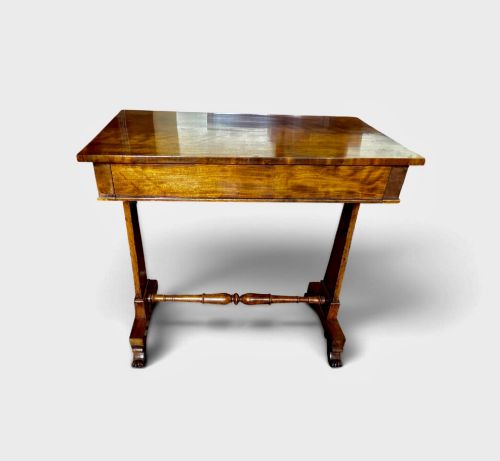
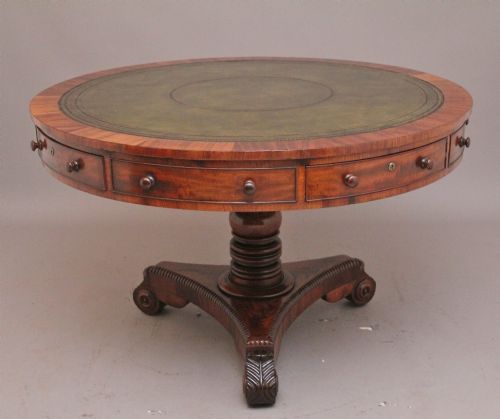
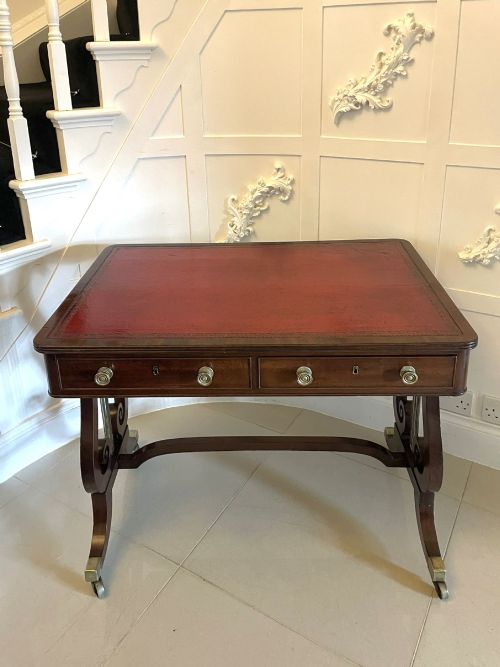
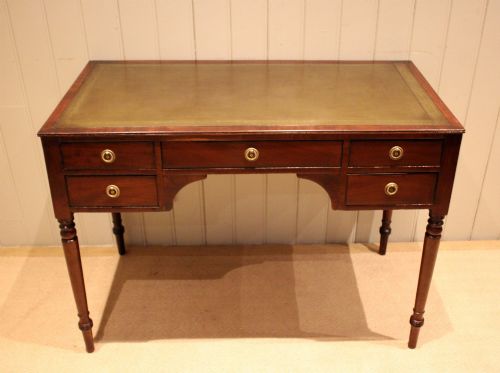

Regency Mahogany Library Table
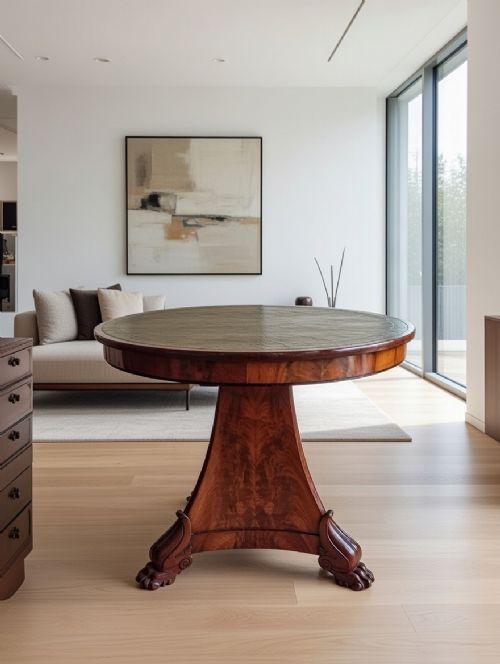
These pieces of regency mahogany library table design are substantial workspaces built to sit proudly in the centre of a room rather than against a wall.
What a regency mahogany library table is
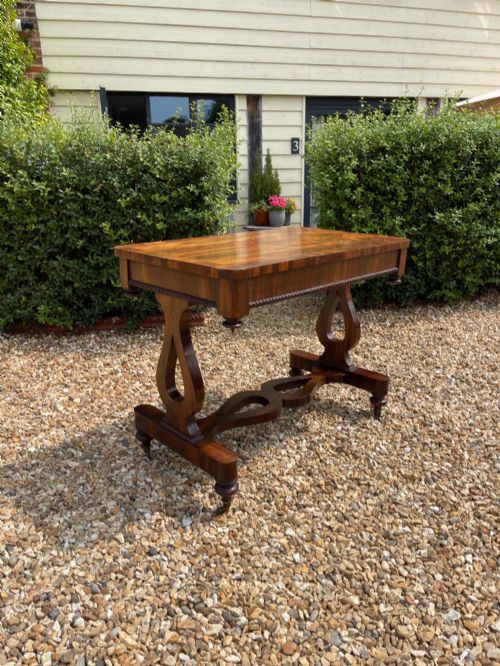
A regency mahogany library table is a heavy-duty freestanding piece designed for serious study, writing, and holding heavy volumes in country houses and town residences. The pieces on this page span the 19th Century, Regency, and Georgian periods, capturing the architectural seriousness of the era.
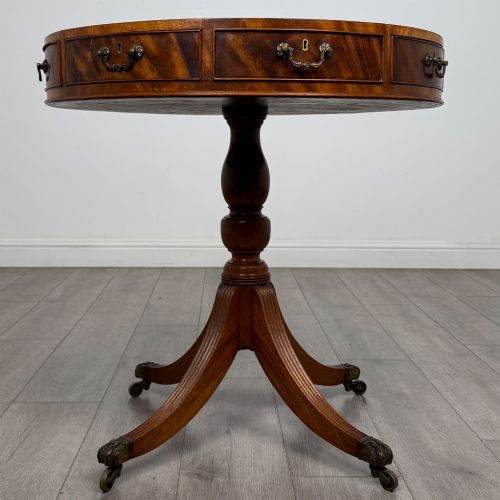
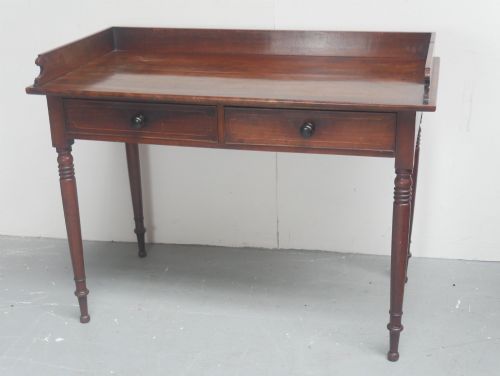
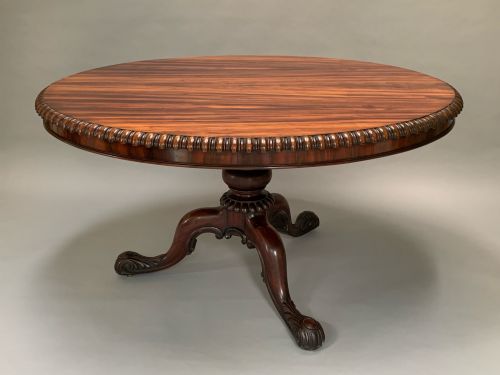
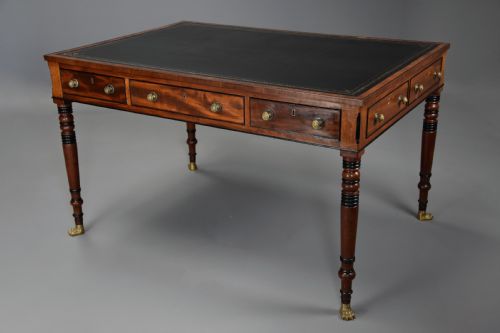
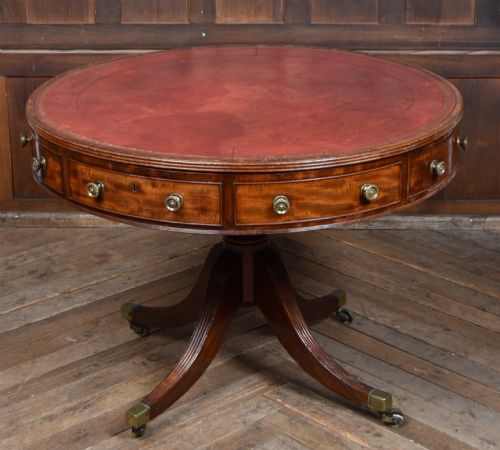
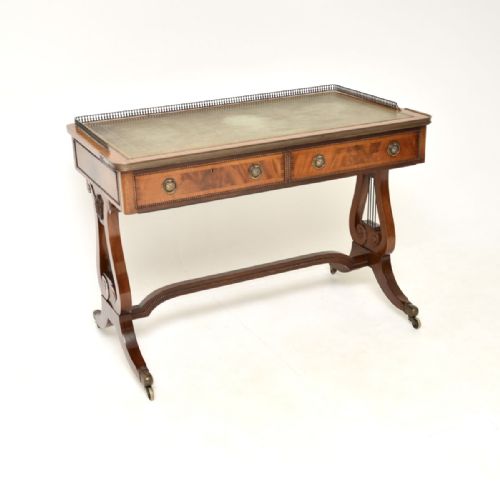
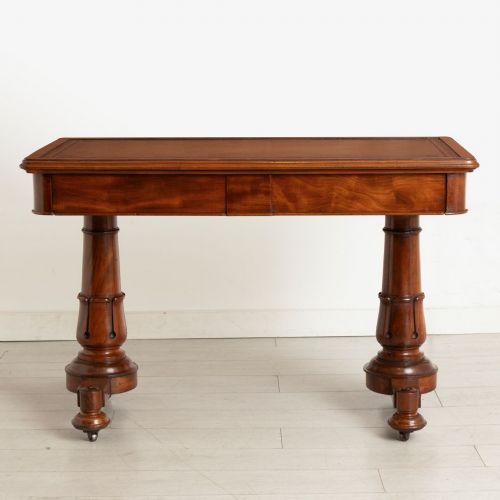
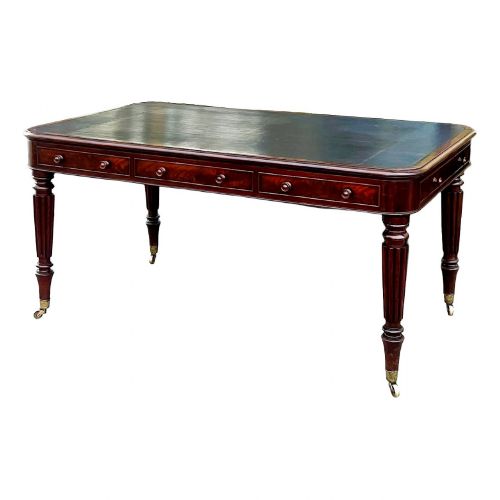
Most examples you will encounter take the form of large writing tables, drum tables, pedestal tables, or double-sided partners desks with leather tops. They appear alongside related forms such as sofa tables and occasional writing desks, showing how versatile the furniture of the period was.
Because they were intended to be seen from every angle, these tables are finished on all sides so they do not need to hide against a perimeter wall. They bridge the gap between practical working furniture and grand decorative objects for the home.
How they were made
Makers built these tables primarily from solid mahogany and flame mahogany veneers, bringing out rich grain patterns through careful polishing. They incorporated secondary woods for interior drawer linings and structural framing to ensure stability.
Many examples feature contrasting details like ebony inlay or geometric stringing, alongside functional metalwork such as brass handles, castors, and inset tooled leather writing surfaces. The structural work relies on solid pedestals, X-frames, and gun barrel columns to support heavy loads of books and papers.
Retail Price Guide 2026
Typical UK retail prices for regency mahogany library table, calculated from the Sellingantiques database of over a million retail prices indexed since 2003. This retail price guide relies exclusively on Sellingantiques data; no external sources or auction records are used, so the figures do not describe the wider market.
The listings on this site record library tables built from mahogany, accented with brass, ebony, and leather.
What varies in quality
The division between standard workshop production and top-tier cabinet making rests on the choice of timber and the precision of the joinery. Premium examples utilise intense flame mahogany veneers matched symmetrically across large expanses like table tops and drawer fronts.
Execution of secondary details dictates the standing of a piece, from the crispness of brass inlays and castors to whether drawers are finished on both sides for double-sided use. Maker attribution also plays a role, as documented pieces from known workshops show superior internal construction and tighter tolerances.
Gillows of Lancaster
The Regency Mahogany Library Table Glossary
- Drum table
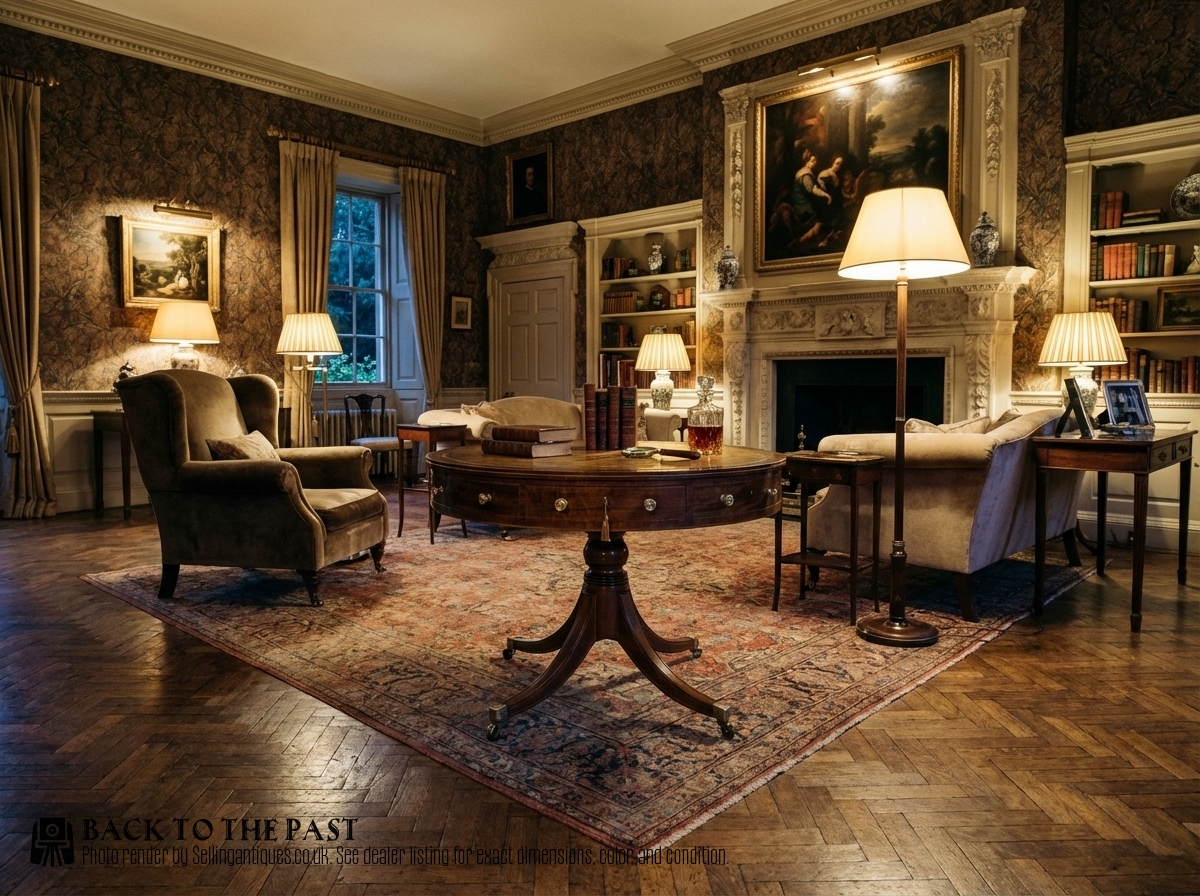
- A circular library table with a deep top containing a ring of drawers, often standing on a single central pedestal with tripod legs.
- Partners table
- A large double-sided desk or library table fitted with drawers on opposing faces so two people can work opposite each other.
- Pedestal table
- A form supported by one or more heavy vertical columns resting on a platform base with spreading feet, often fitted with brass castors.
- Sofa table
- A smaller rectangular table designed to stand in front of a sofa, typically featuring drop leaves on either end and double pedestal supports.
- Flame mahogany
- A highly figured veneer cut from the fork of the mahogany tree where the branch meets the trunk, producing a rippling flame-like pattern.
- Stringing
- Thin inlaid lines of contrasting timber, such as ebony, used to outline panels, drawer fronts, and table edges for decorative effect.
Frequently Asked Questions
What is a partners library table?
A partners library table is a double-sided workspace featuring drawers and compartments accessible from both long sides. This layout allowed two people, such as business partners or scholars, to sit opposite each other and work independently.
These pieces were constructed to stand freely in the middle of a grand room rather than against a wall. They represent some of the most substantial and desirable forms of nineteenth-century workspace furniture.
How do I use one in a modern home?
These tables function naturally as large executive desks, central display pieces, or dining surfaces in spacious rooms. Because they are finished on all sides, they look correct when placed in the middle of a home office or living space.
When living with antique leather writing surfaces, use protective blotters for daily writing to preserve the historic hide. Regular waxing keeps the mahogany timber nourished without building up unwanted residues.
Are all library tables double-sided?
Not all library tables are double-sided, though many grander examples feature working drawers on opposing faces. Simpler single-sided variations often have dummy drawers on the reverse side to maintain a balanced appearance while saving materials.
Examining the drawer linings and back panels reveals whether a table was built to be viewed from all directions. Freestanding single-sided models still feature polished backs even if they lack operational drawers.
How do I tell Regency from Georgian styles?
Regency style tables lean towards heavier architectural elements, classical revival motifs, brass inlays, and bold pedestal supports. Georgian pieces often display simpler, more restrained lines with straight legs or traditional tripod bases.
Because the Regency era falls within the late Georgian period, the styles frequently overlap in construction methods and timber choices. Makers of both periods relied heavily on solid mahogany and flame veneers to achieve their visual impact.