



Regency Mahogany Hall Chairs
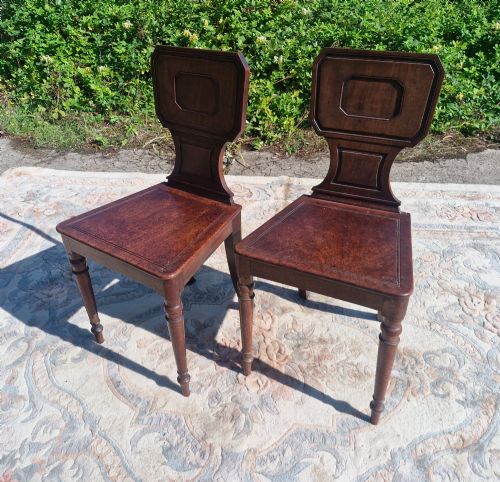
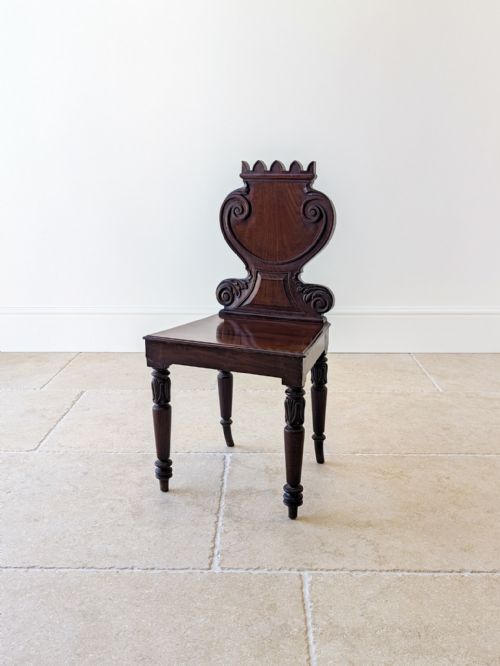
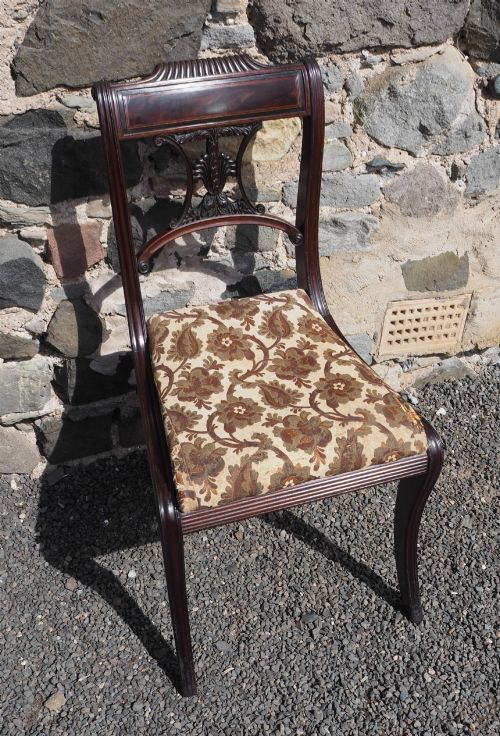
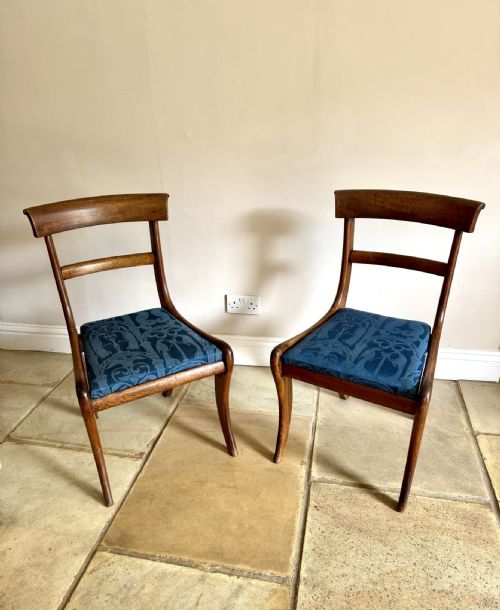
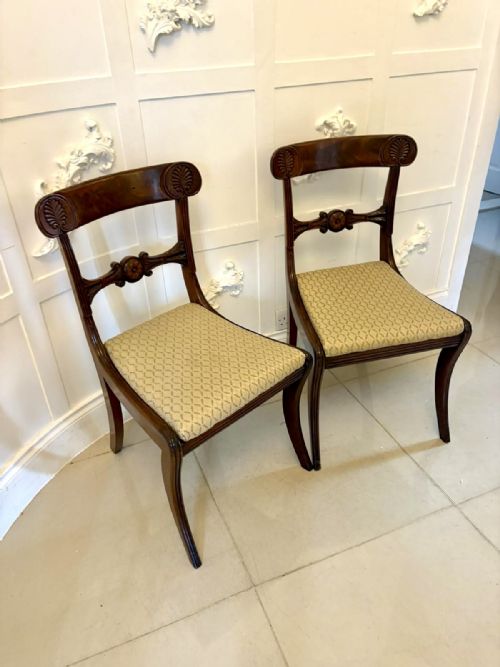
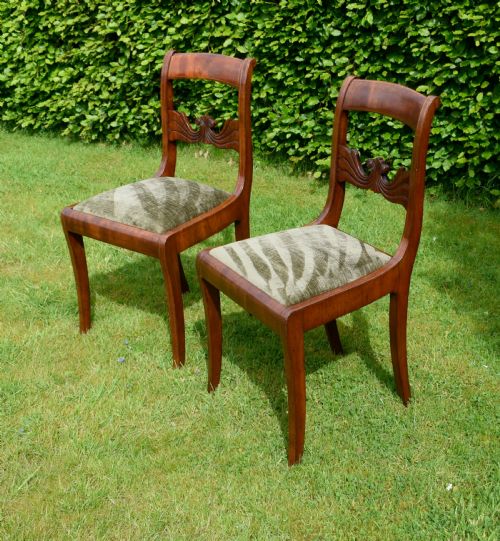
Regency mahogany hall chairs are striking architectural seating pieces that bring distinct early nineteenth-century pedigree and sculptural timber forms to an entrance or hallway.
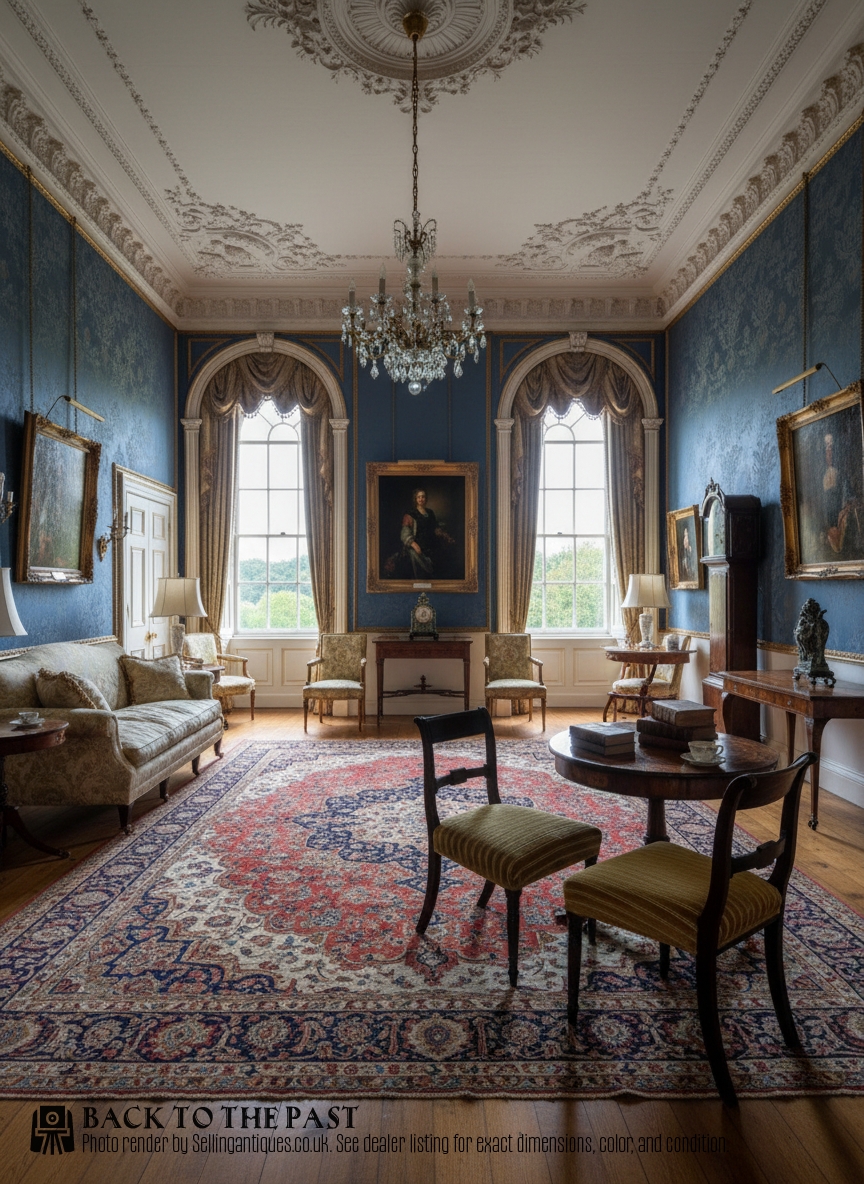
Regency Mahogany Hall Chairs
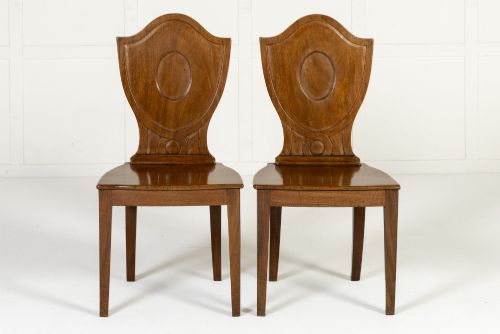
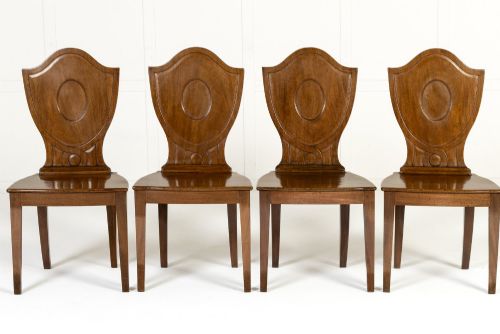
Regency mahogany hall chairs are formal, timber-seated chairs designed primarily for display and brief use in entrance halls rather than long-term comfort. The pieces available here span the Georgian, Regency, George III, George IV, and William IV periods, alongside later nineteenth-century interpretations.
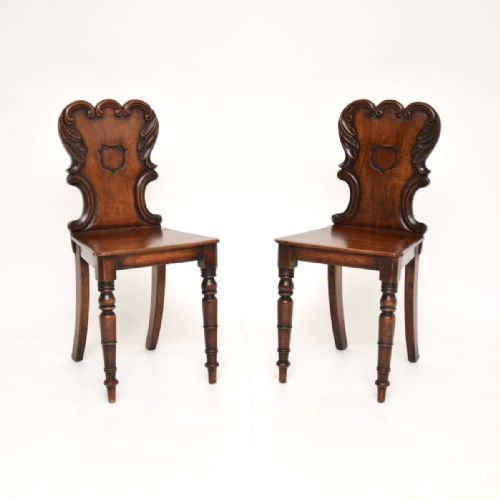
Most examples appear as pairs or larger sets, often featuring solid carved wooden seats and elaborately shaped backs adorned with heraldic crests, armorials, or classical shell and pelta motifs.
How they were made
Cabinetmakers utilised dense mahogany, frequently figured or Cuban timber, combined with secondary woods to construct these rigid frames. Techniques involved intricate hand-carving for shield, shell, and gothic backsplats, alongside precision turning for tapered or sabre legs.
Select examples incorporate painted crests, brass inlay, or ebony stringing to accentuate the timber grain and architectural silhouettes.
Regency Mahogany Hall Chairs Retail Price Guide 2026
Typical asking prices for regency mahogany hall chairs among the pieces listed under this phrase on Sellingantiques today, from the lower quarter to the upper quarter. They describe what is for sale here now, not the wider market.
Several agile greyhound crests peer out from the timber backsplats, ready to sprint down the hallway.
What varies in quality
The distinction between standard examples and the finest pieces lies in the crispness of the hand-carving and the choice of figured mahogany. Superior pieces display deep, confident relief work on armorial crests and shell backs without soft edges.
Proportion and timber selection drive value, where rich natural patina and robust joint construction elevate a set far above ordinary production.
Gillows
The Regency Mahogany Hall Chairs Glossary
- Mahogany
- A durable tropical hardwood prized for its deep reddish-brown tone and fine grain, widely utilised in quality furniture throughout the Georgian and Regency eras.
- Armorial
- A design featuring a family coat of arms or heraldic crest, frequently painted or carved directly into the wooden back of a hall chair.
- Pelta back
- A chair back shaped in the form of an ancient Greek crescent shield, characteristic of classical Regency design.
- Sabre leg
- A concave-tapered furniture leg curving outward in the manner of a cavalry sabre, common on seating from the early nineteenth century.
Regency Mahogany Hall Chairs: Frequently Asked Questions
Where should I place a hall chair?
These pieces suit entrance halls, landings, or reception rooms where their sculptural wooden backs can be appreciated against a wall. They function well as accent seating rather than daily lounging chairs.
Because they feature solid timber seats without upholstery, they remain practical for high-traffic entryways while adding immediate historical character.
Are these chairs comfortable to sit on?
Hall chairs were historically designed for brief waiting periods rather than extended relaxation. Their carved wooden seats and upright posture encourage proper bearing.
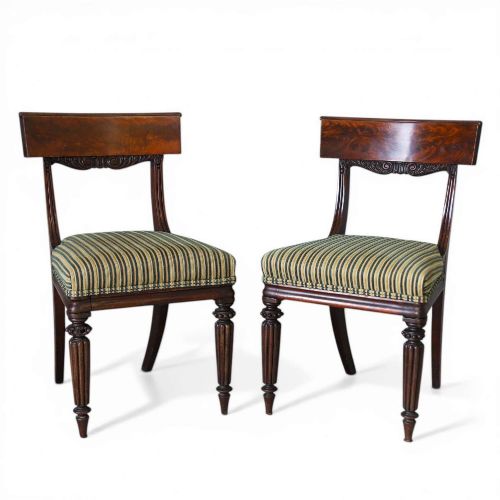
While some related reception and morning room variants include fabric upholstery or Regency stripes, the classic hall chair relies entirely on carved wood.
How do I date a Regency hall chair?
Dating relies on stylistic markers such as classical shield backs, pelta shapes, and sabre legs associated with the early nineteenth century. Cabinetmaking traits like timber choice and hand-carved detailing help distinguish Georgian origins from later Victorian revivals.
Comparing the crispness of armorial carvings and the presence of brass inlay provides further clues to the exact decade of manufacture.
Why are they often found in pairs?
Original dining and entrance hall seating was commissioned in matched pairs or larger sets to flank console tables or line hallway walls symmetrically. Surviving sets maintain this balanced aesthetic prized by traditional interiors.
Finding matched pairs or sets of four and five remains a key advantage for furnishing symmetrical spaces.