
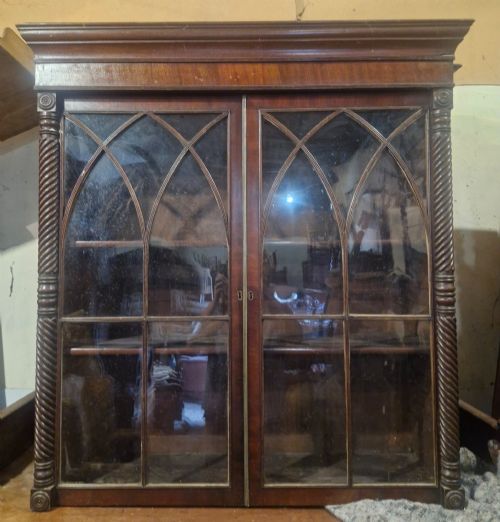
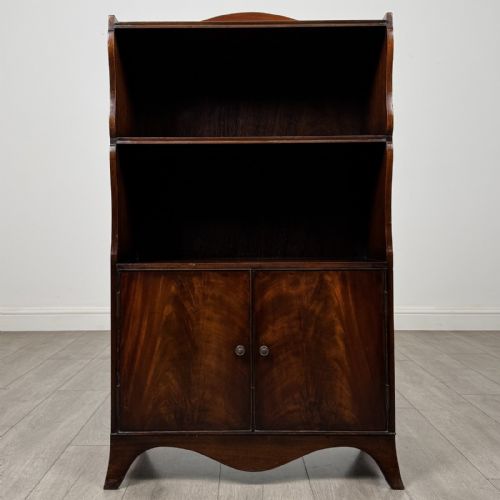
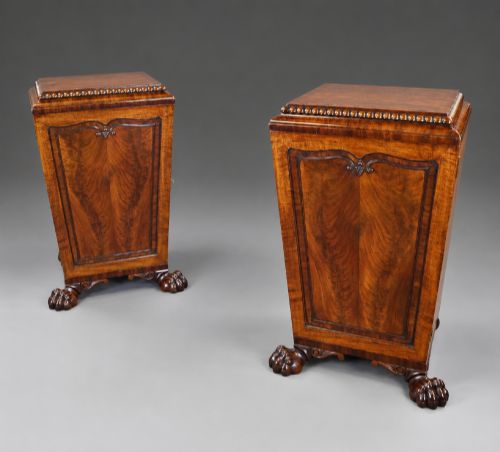
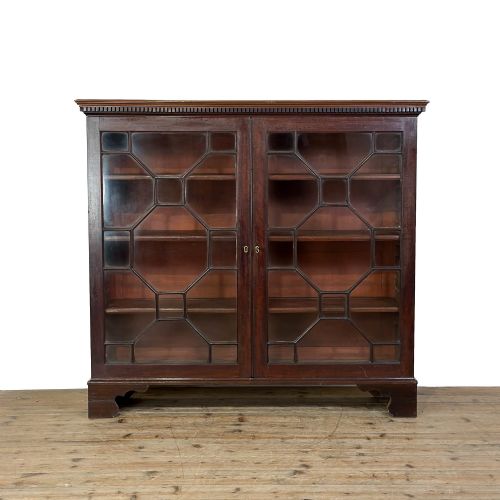
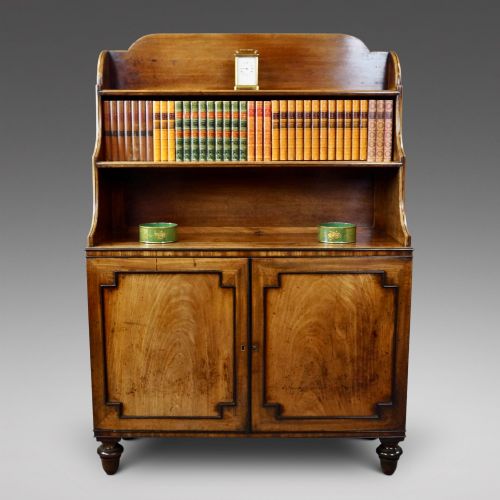
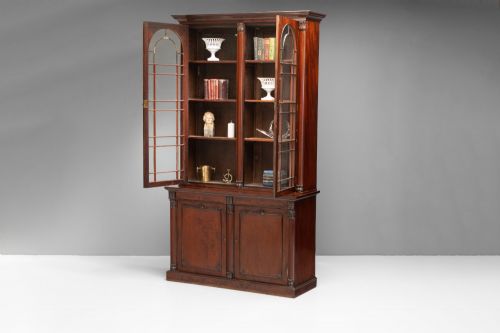


Regency Mahogany Display Cupboard
A regency mahogany display cupboard brings refined architectural presence to a room, offering disciplined timber figures and clear glass for curated collections.
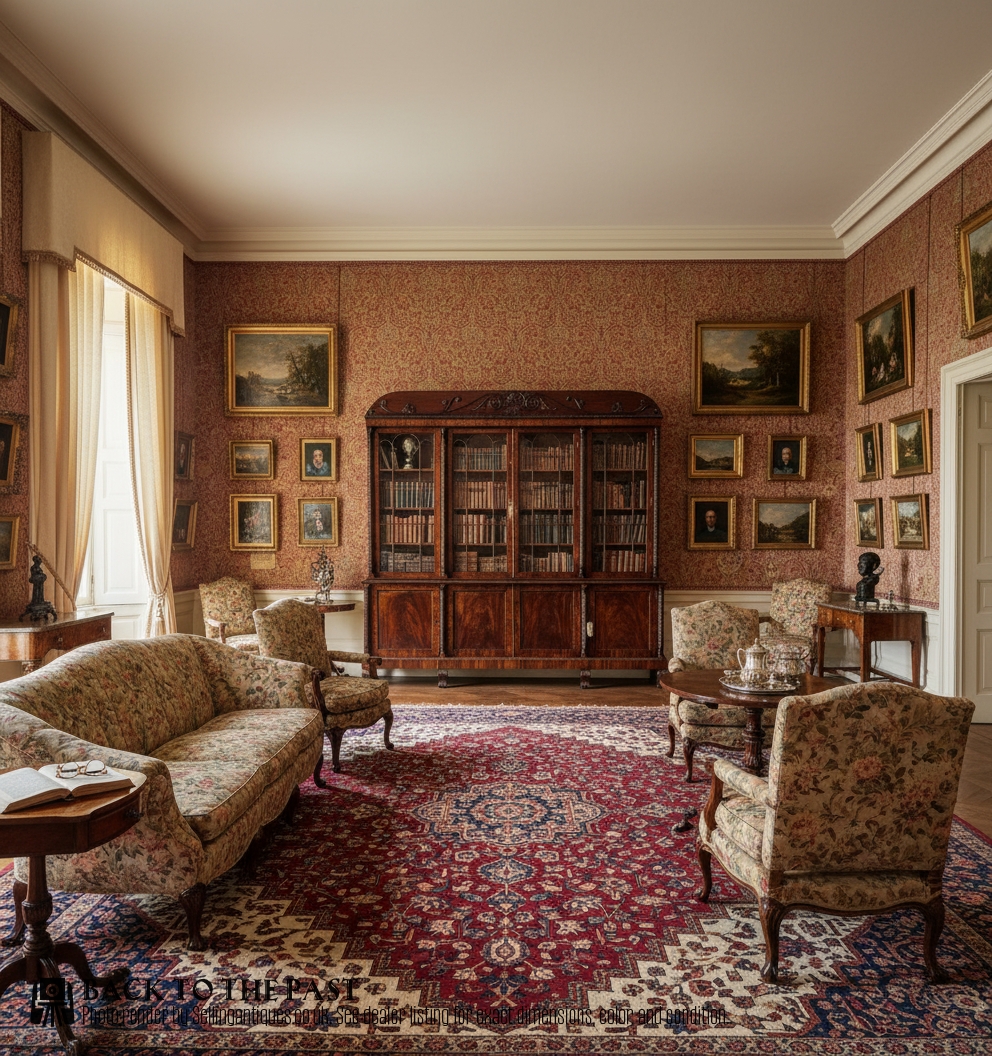
Regency Mahogany Display Cupboard
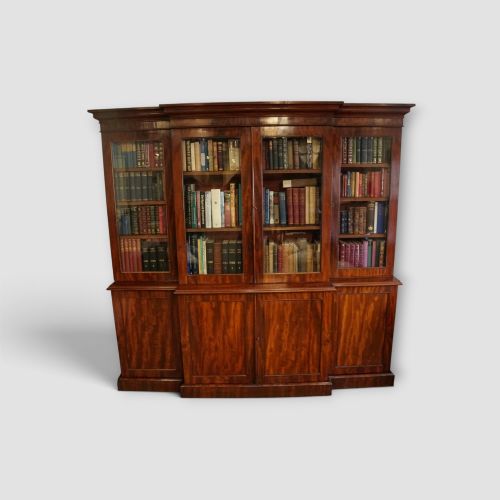
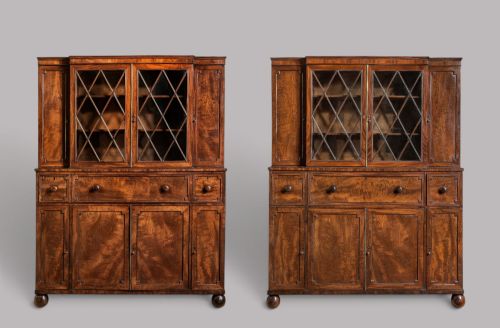
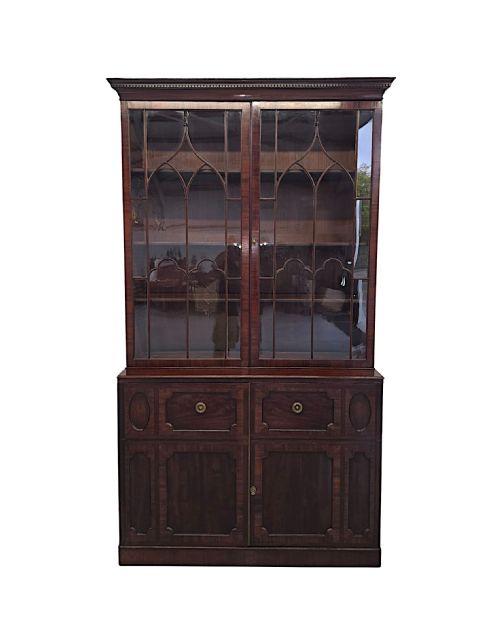
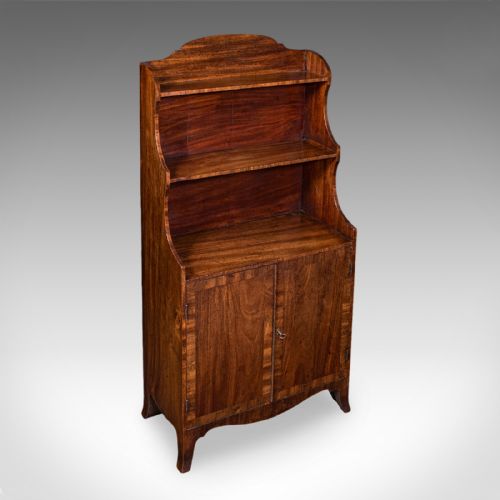
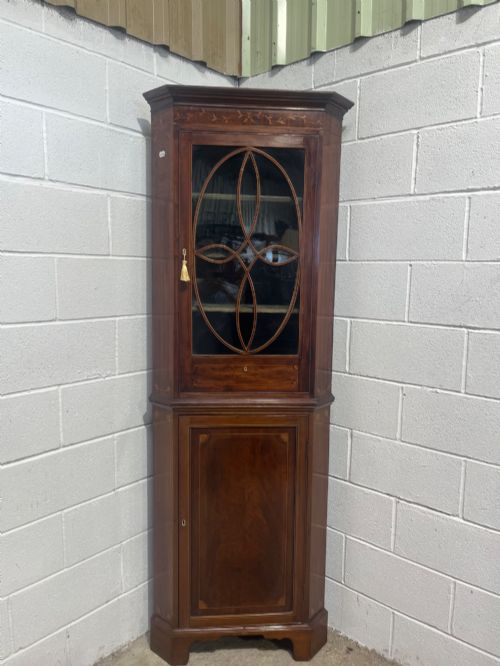
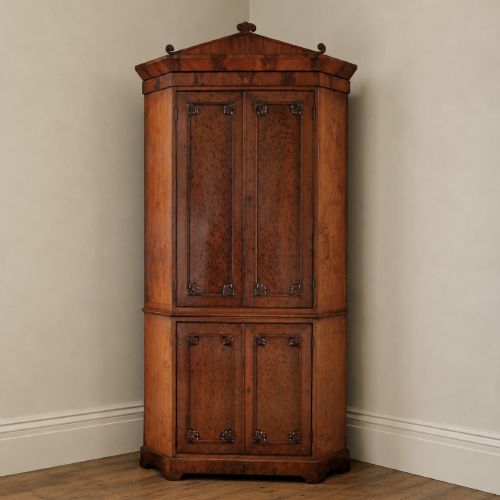
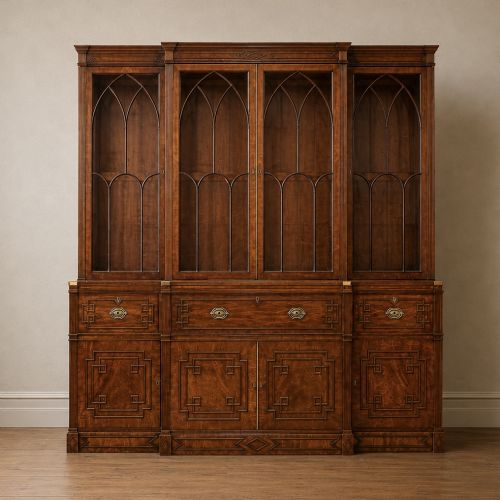
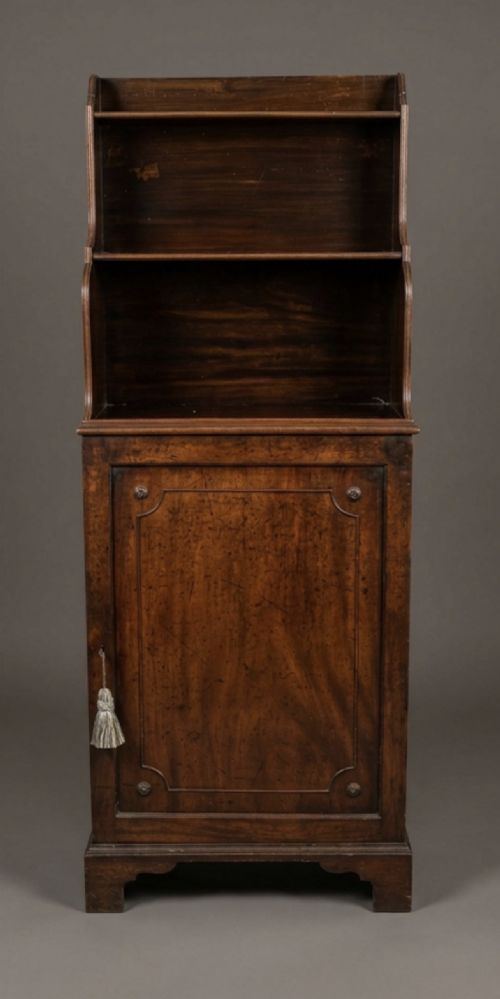
A regency mahogany display cupboard encompasses tall breakfront libraries, open waterfall bookcases, and floor-standing corner cupboards designed to exhibit bound volumes and curated objects. Buyers most frequently encounter tall glazed bookcases and compact chiffoniers originating from the nineteenth century.
The pieces emerge from Georgian, Regency, and William IV periods, displaying distinct regional variations from Irish workshops to Scottish cabinets. Forms range from hexagonal pedestal cabinets to diminutive breakfront bookcases fitted with astragal glazing.
Materials and construction
Cabinet makers utilised solid mahogany and rich flame mahogany veneer applied over secondary timbers such as oak, creating dense surfaces with deep natural figure. Glazing bars divide glass panels into precise geometric compartments, while brass fittings secure doors and support internal shelving.
Structural joinery relies on pegged frames and dovetailed carcases designed to support heavy volumes without distortion. Wire mesh occasionally replaces glass panels on specialised cabinets intended for ventilation.
The inventory spans the Georgian, Regency, Victorian, and Edwardian periods, including specific years from 1800 to 1920.
Standards of execution
The distinction between standard workshop production and superior cabinet work lies in the selection of timber veneers and the crispness of applied mouldings. Finer examples exhibit continuous grain matching across large breakfront doors and delicate astragal bars shaped with refined profiles.
Proportion and scale dictate the hierarchy of these pieces, where diminished footprints or unusually large library formats demand greater technical mastery from the maker. Original brass hardware, functioning locks with period keys, and untouched patination elevate the standing of a piece.
Gillows
The Regency Mahogany Display Cupboard Glossary
- Astragal glazing
- Timber bars dividing a glass door into smaller panes. These delicate wooden strips often form intricate geometric patterns across bookcase doors.
- Breakfront
- A cabinet facade where the central section projects forward from the flanking wings. This configuration creates pronounced architectural depth.
- Chiffonier
- A low sideboard or cabinet equipped with shelving or a small cupboard above. They serve as compact storage units originating in the nineteenth century.
- Waterfall bookcase
- A set of graduated open shelves stepping back towards the wall from bottom to top. This form became popular during the Regency period.
- Plum pudding mahogany
- Timber cut from the burls or crotch sections of the tree displaying mottled circular grain patterns. It provides exceptional visual depth.
Regency Mahogany Display Cupboard: Frequently Asked Questions
How do I date a regency mahogany display cupboard?
Examine the construction methods of the carcase, the thickness of the drawer linings, and the style of the glazing bars. Regency and George IV pieces typically display crisper mouldings and lighter timber proportions than earlier Georgian furniture.
Hardware placement and key escutcheons also offer reliable chronological markers. Original glass panes often display minor surface ripples and bubbles characteristic of early manufacturing techniques.
Where should I place a large breakfront bookcase?
Position these substantial architectural pieces against a flat, load-bearing interior wall away from direct sunlight and heating vents. The substantial depth of breakfront libraries requires adequate floor space to maintain correct room proportions.
Ensure the room maintains stable humidity levels to protect nineteenth-century mahogany veneers from splitting. Allow sufficient clearance for doors to open fully without striking surrounding furniture.
What is the difference between a chiffonier and a bookcase?
A chiffonier is typically a lower piece combining enclosed lower cupboards with a small raised shelf or back panel, designed for general living spaces. Bookcases are taller storage units primarily configured with open or glazed shelving for displaying bound volumes.
Chiffoniers often incorporate fabric panels behind wire mesh doors or feature simpler upper tiers. Bookcases prioritize vertical display capacity and structural timber framing.
How do I care for flame mahogany veneer?
Maintain a stable indoor environment free from extreme temperature fluctuations and excessive moisture. Clean surfaces gently with a dry microfibre cloth to remove dust without abrasive polishes.
Apply high-quality beeswax sparingly to nourish the timber and preserve the natural sheen of the grain. Avoid chemical sprays that can degrade historic French polish finishes.