

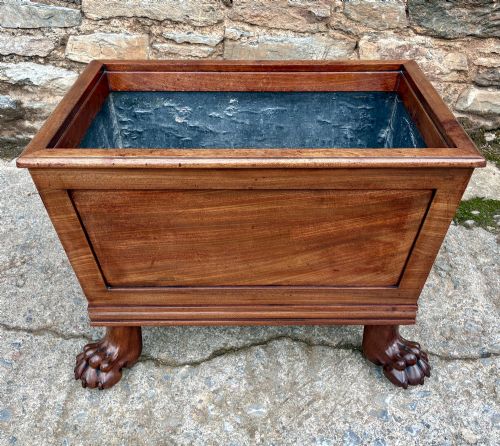
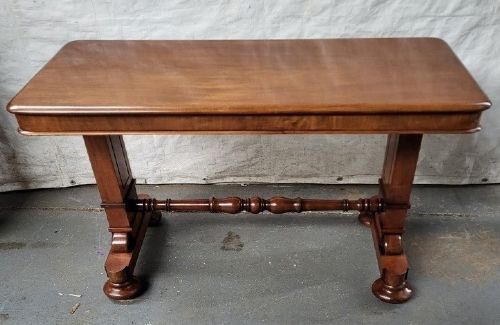
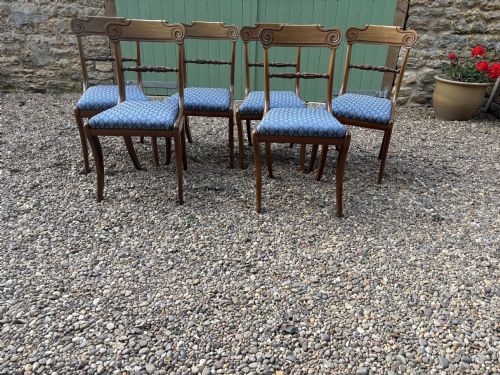
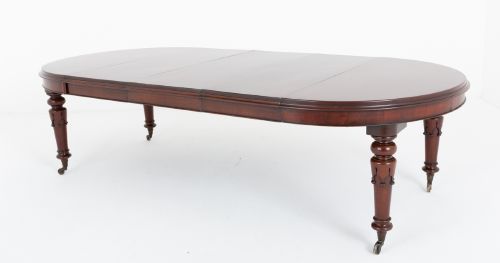

Regency Mahogany Dining Furniture
Regency mahogany dining furniture brings solid timber and proportion to the room, offering tables and chairs built to last.
Regency Mahogany Dining Furniture
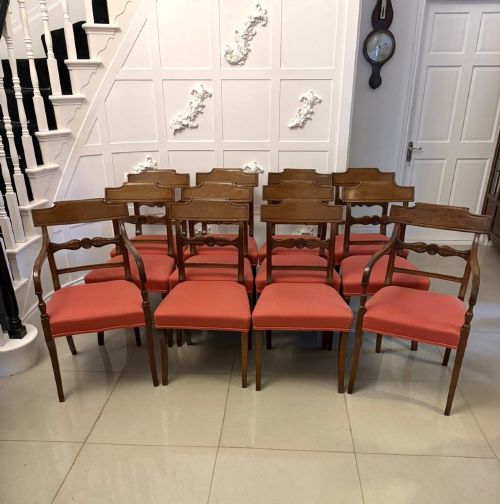
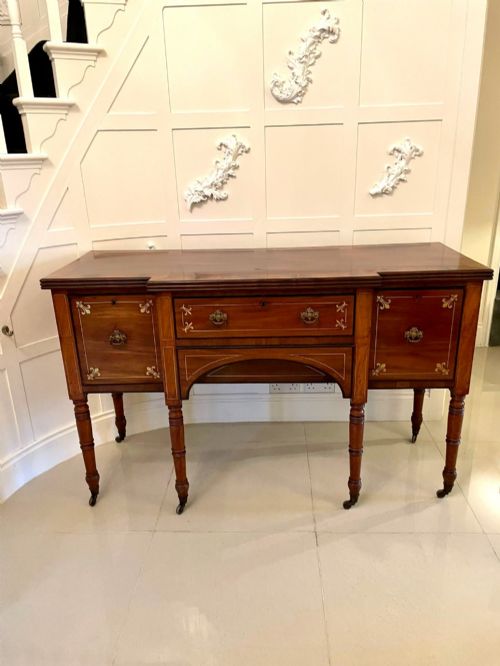
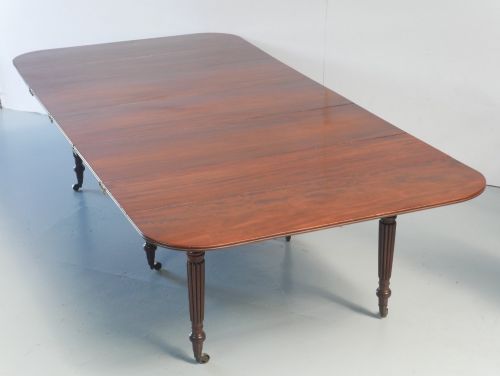
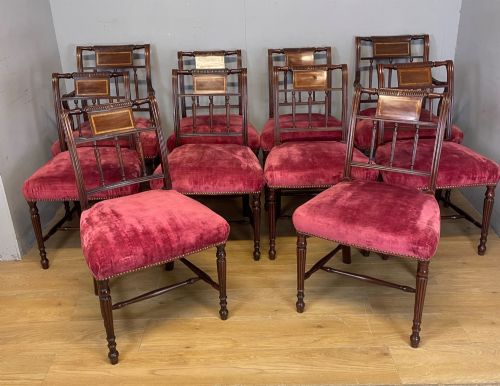
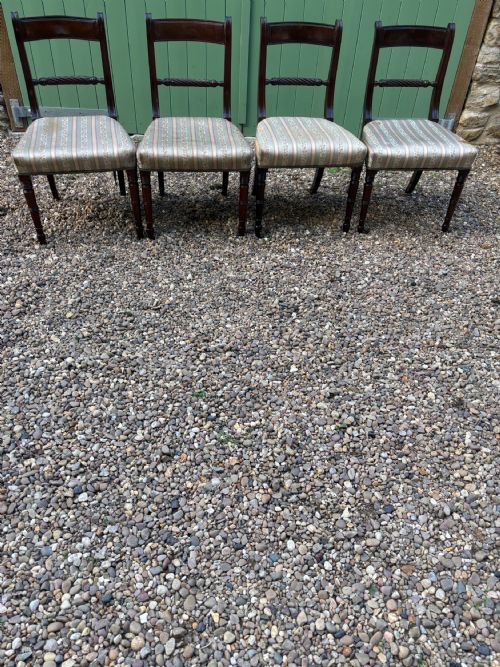
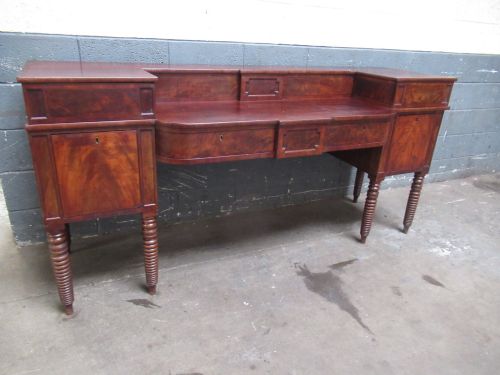
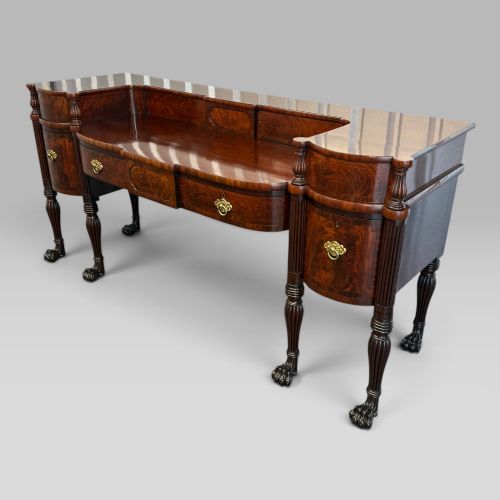
The pieces on this page lean heavily toward large extending tables, pedestal tables, and matched sets of dining chairs or carvers. Sideboards and chiffoniers appear frequently alongside breakfast tables and dumb waiters, reflecting the formal dining requirements of large houses from the nineteenth century.
Origins span English, Scottish, and Irish workshops, showing regional variations in cabinet-making traditions. Sets range from small groups of four chairs to large boardroom and multi-pedestal tables seating upwards of twenty guests.
Standards of Execution
Quality rests in the selection of timber veneers and the precision of boxwood or brass inlay work across large surfaces like sideboard doors and table leaves. Well-executed pieces display continuous grain matching and cleanly cut decorative details rather than hurried assembly.
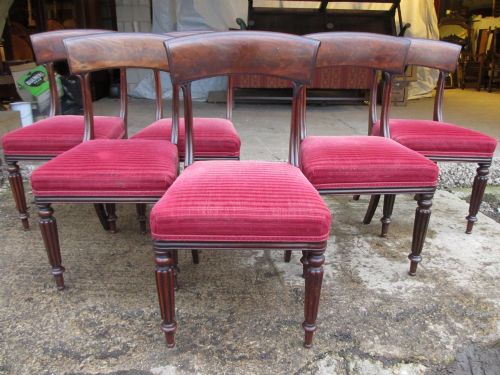
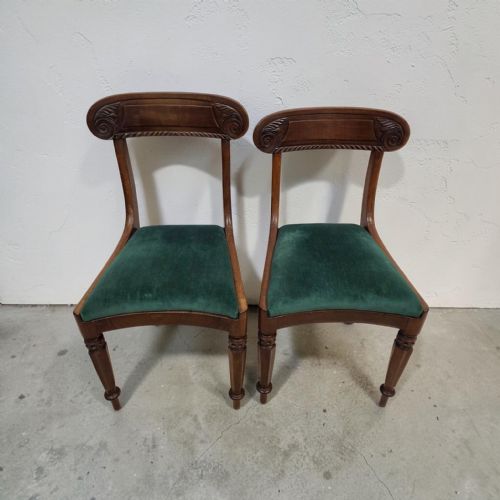
The integrity of extending mechanisms and the sturdiness of pedestal supports dictate the durability of dining tables under daily use. Chair construction varies from simple joined frames to robustly carved models with defined crest rails and stable leg joints.
Regency Mahogany Dining Furniture Retail Price Guide 2026
Typical asking prices for regency mahogany dining furniture among the pieces listed under this phrase on Sellingantiques today, from the lower quarter to the upper quarter. They describe what is for sale here now, not the wider market.
Several dining tables stretch past thirteen feet with twenty-six chairs, ready for an enormous dinner party.
Whytock & Reid·Walker-Lancaster
The Regency Mahogany Dining Furniture Glossary
- Carver
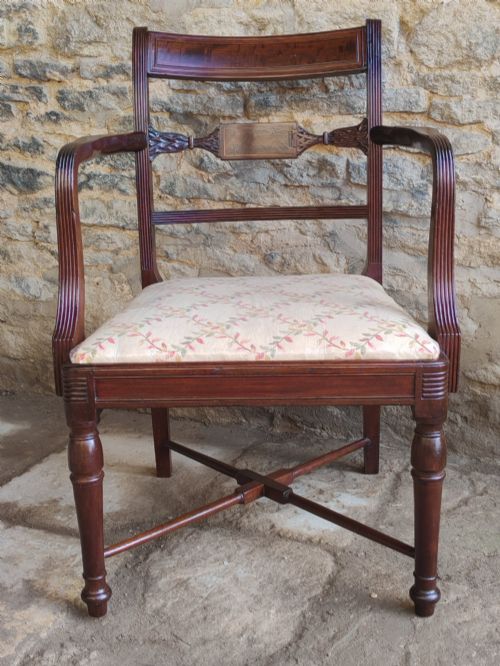
- An armchair designed with arms, traditionally placed at the heads of a dining table for the host. These match the smaller side chairs in a dining set.
- Pembroke table
- A small table with hinged drop leaves on two opposing sides. They often include a single drawer and rest on four legs or a central pedestal.
- Dumb waiter
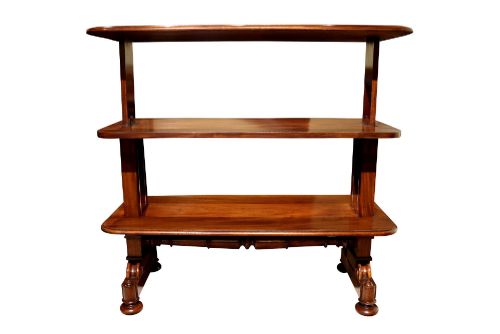
- A tiered revolving piece of furniture used to hold dishes and silverware beside a dining table. They allow diners to serve themselves without servants present.
- Chiffonier
- A low sideboard or cabinet enclosed with doors and sometimes featuring a small shelf superstructure on top. These served to store dining silver and linens.
Regency Mahogany Dining Furniture: Frequently Asked Questions
How do I seat twenty people?
Large multi-pedestal extending tables accommodate massive gatherings by accepting multiple removable leaves.
Irish and Scottish formats often provide the extra length and robust pedestals required for these larger seating arrangements.
What is a pedestal table?
A pedestal table rests its central weight on one or more heavy carved pillars rather than four corner legs.
This design allows diners to sit around the perimeter without legs obstructing their chairs.
How do I tell periods apart?
Georgian and Regency pieces lean towards classical restraint with straight lines and subtle boxwood stringing.
Later William IV and revival items introduce heavier proportions, bolder pedestal bases, and more prominent scrolling woodwork.
Where were sideboards used?
Sideboards stood against dining room walls to hold serving dishes, cutlery, and glassware during large meals.
Their deep drawers and cupboards kept the dining space organised and free of clutter.