
Regency Mahogany Chiffonier Cabinet
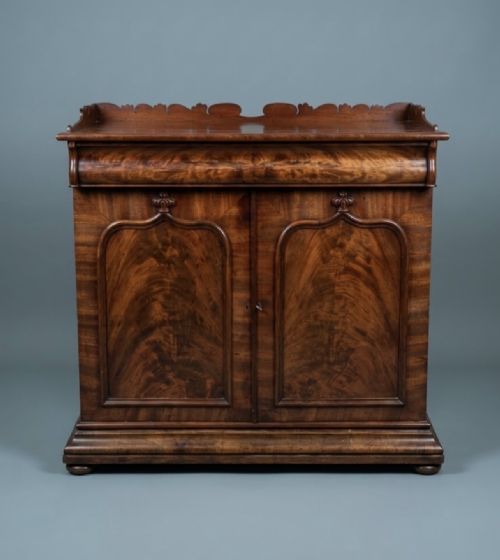
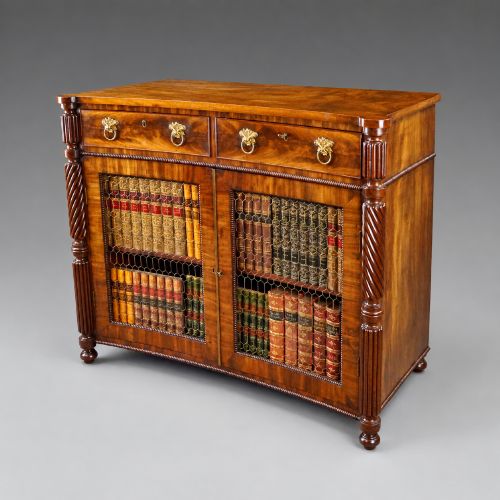
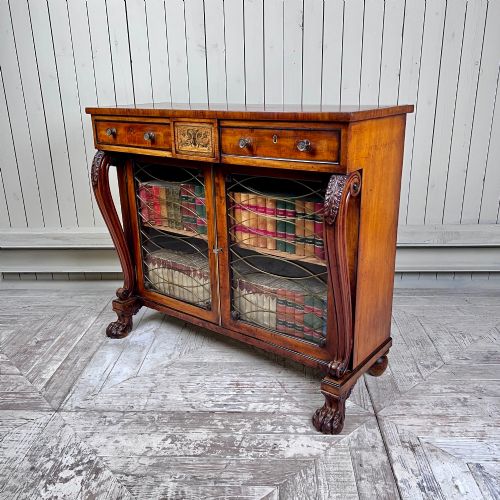
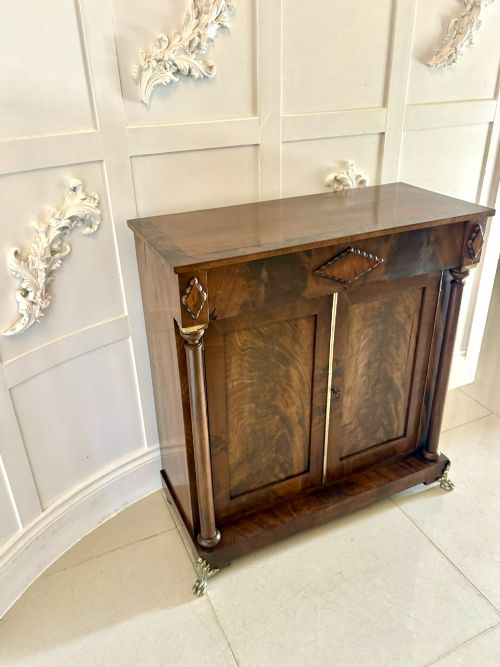
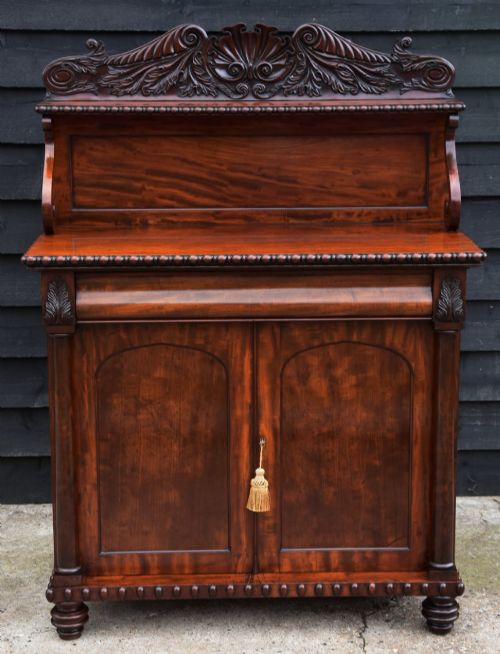
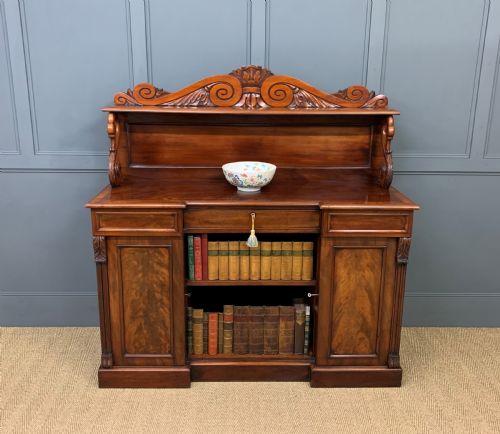
A regency mahogany chiffonier cabinet brings refined architectural presence to a room, combining enclosed storage with open display surfaces.
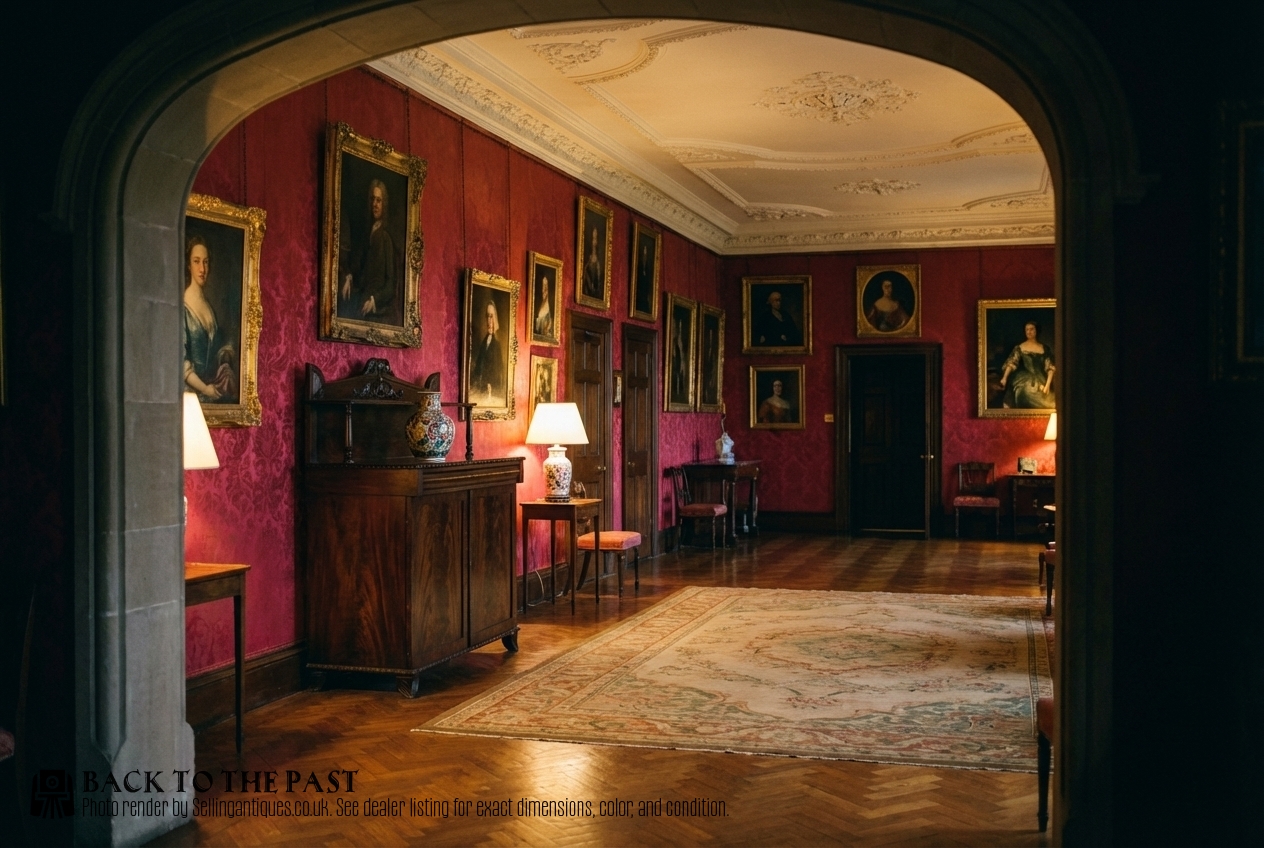
Regency Mahogany Chiffonier Cabinet
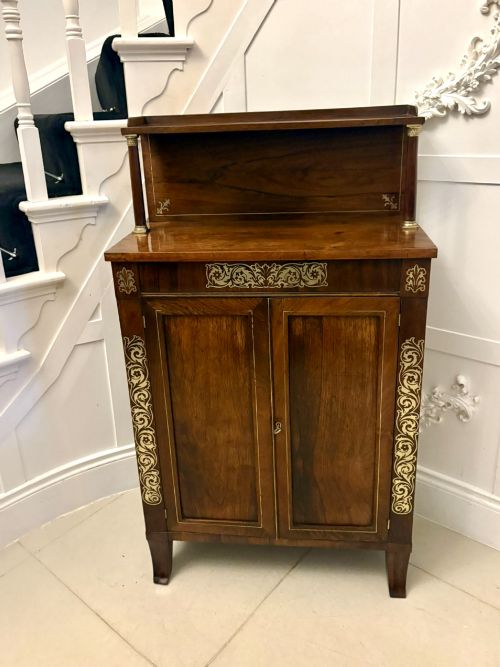
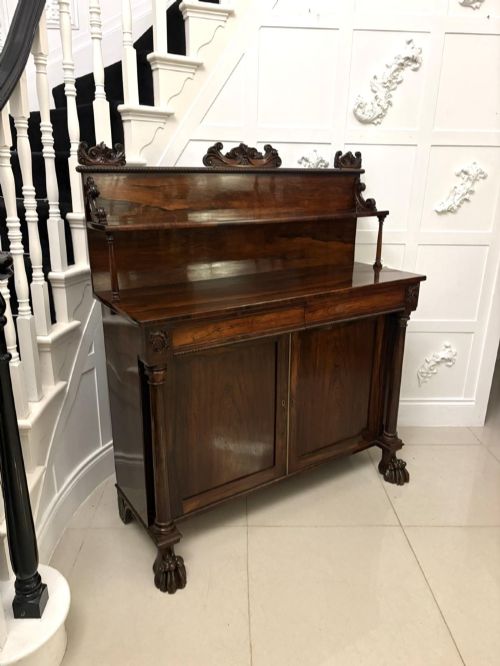
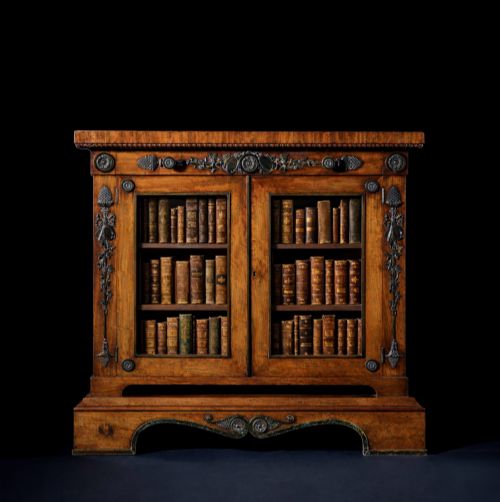
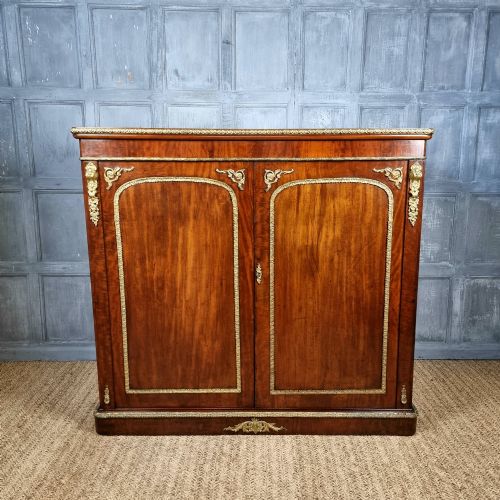
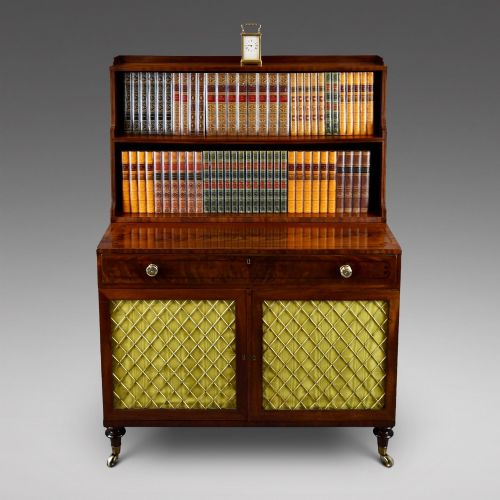
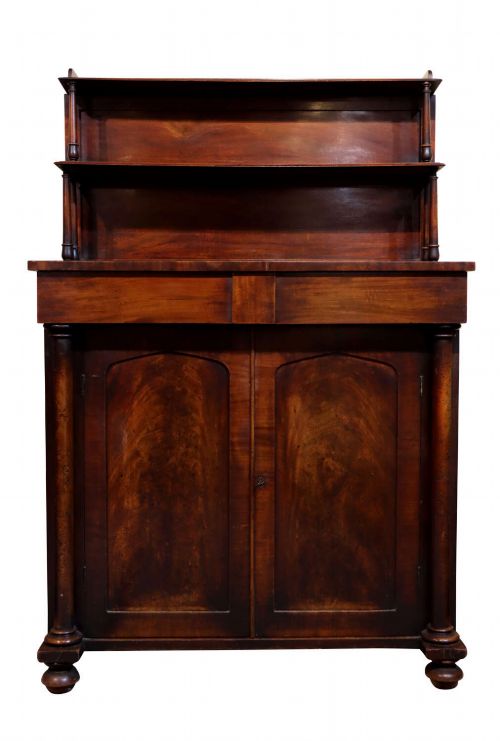
A regency mahogany chiffonier cabinet typically combines a low cupboard base with either an open shelf structure or a glazed bookcase top, designed for domestic dining rooms and libraries. These pieces emerge predominantly from the nineteenth century, including the Regency and William IV periods, alongside Georgian and occasional later Victorian or twentieth-century interpretations.
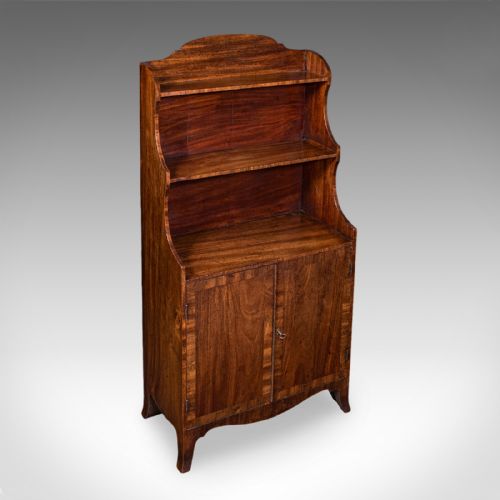
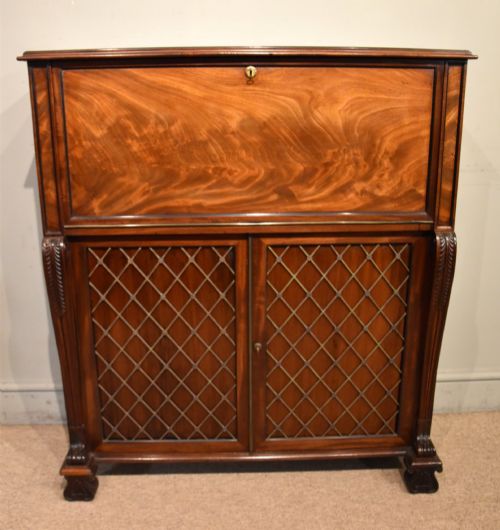
The format frequently overlaps with side cabinets, low cupboards, and waterfall bookcases, sharing similar low proportions and timber construction. Buyers meeting these pieces will find configurations ranging from simple two-door cupboards to elaborate designs incorporating secretaire drawers and mirror backs.
Materials and construction methods
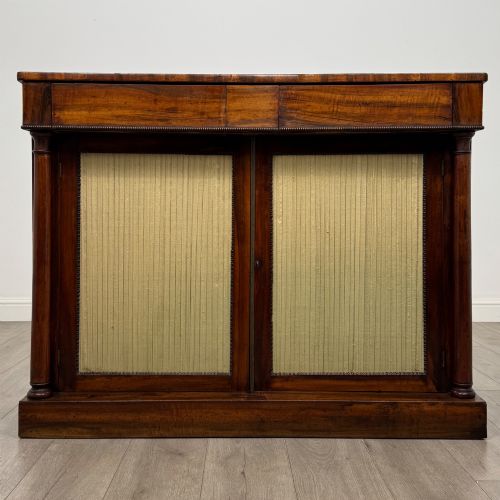
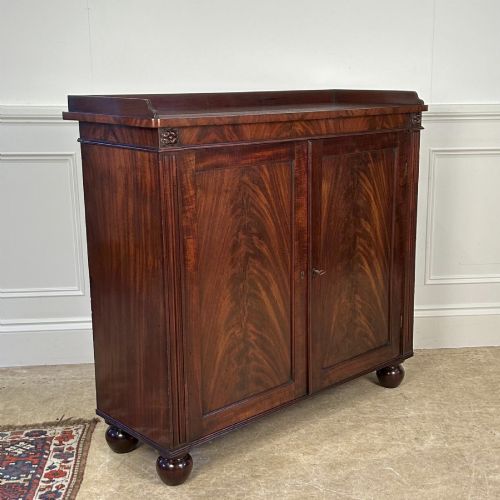
Makers utilised solid mahogany and flame mahogany veneer over secondary timbers, selecting figured stock for drawer fronts and door panels to create deep visual movement. Construction often incorporates brass mounts, brass grilles, mirror glass inserts, and fabric linings behind door panels.
Detailing on these pieces relies on precision joinery combined with brass inlay, ebony stringing, and bronze mounts. Surfaces receive polish that emphasises the rich grain and warm tones inherent in nineteenth-century mahogany.
Listings feature pieces spanning the Georgian, Regency, William IV, and Victorian eras, constructed primarily in mahogany and flame mahogany veneer with brass and mirror accents.
Judging cabinet quality and execution
The grade of mahogany veneer dictates much of the visual impact, with highly figured flame grain and balanced book-matching separating superior examples from plain timber. Execution shows in the crispness of brass inlay, the refinement of bronze mounts, and the integration of secondary woods.
Proportion and structural integrity define the architectural merit of each piece, particularly where concave fronts, tiered waterfall bookcases, or secretaire drawers demand exacting carpentry. Finer examples maintain original hardware, glass panels, and interior fittings without compromising the clean lines established during the Regency period.
Gillows
The Regency Mahogany Chiffonier Cabinet Glossary
- Chiffonier
- A low standing cabinet equipped with cupboards below, frequently surmounted by shelves or a mirror back.
- Flame mahogany
- A veneer cut from the fork of the mahogany tree, producing a swirling pattern resembling flickering flames.
- Secretaire
- A drawer fitted with a drop-front writing surface, pigeonholes, and small drawers concealed within the cabinet structure.
- Brass grille
- A fine metal mesh fitted into cabinet doors in place of wood or glass, allowing ventilation while obscuring contents.
- Waterfall bookcase
- A tiered set of open bookshelves where each successive shelf steps back from the one below it.
Regency Mahogany Chiffonier Cabinet: Frequently Asked Questions
What is the difference between a chiffonier and a sideboard?
A chiffonier is generally smaller and lower than a traditional sideboard, often featuring a shelf tier or bookcase superstructure above enclosed cupboards. They were designed for smaller reception rooms and parlours.
Sideboards tended to be longer and heavier pieces intended for formal dining rooms, dedicated primarily to serving food and storing heavy tableware rather than displaying books or decorative objects.
How do I spot a true Regency piece from later copies?
Genuine Regency pieces display construction methods appropriate to the early nineteenth century, including hand-cut dovetails, timber shrinkage patterns, and secondary woods like oak or pine. The quality of the flame mahogany veneer and the weight of the brass fittings offer reliable indicators.
Later interpretations, such as twentieth-century Regency style pieces, often betray their origins through modern machine-cut joints, uniform commercial veneers, and modern hardware fixings that lack period wear.
Where were chiffonier cabinets placed in a Regency home?
These cabinets sat against dining room or parlour walls, serving as convenient surfaces for serving dishes, holding writing materials, or displaying small collections of books. Their compact footprint made them adaptable for urban townhouses.
Pieces with mirror backs or upper shelves functioned effectively in drawing rooms to reflect candlelight and display decorative porcelain or glassware.
Are secretaire drawers common in these cabinets?
Secretaire drawers appear frequently in these cabinets, providing a dual purpose by concealing a fitted writing desk behind a drawer front that drops down on quadrant hinges. This allowed a single piece of furniture to function as both a storage cupboard and a writing bureau.
Inside these compartments, makers arranged small pigeonholes and letter drawers in maple or mahogany to organise correspondence within the compact frame.