




Regency Mahogany Caddy
A regency mahogany caddy offers a tactile connection to the domestic rituals of the nineteenth century through compact, finely figured wooden storage boxes.
Regency Mahogany Caddy
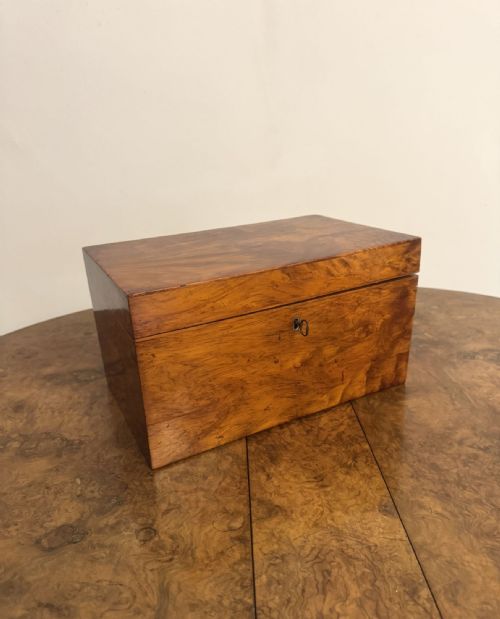
A regency mahogany caddy is primarily a lidded box designed to store loose tea leaves securely under lock and key. The pieces seen most frequently on this page date from the early nineteenth century, encompassing Georgian, Regency, and William IV periods.
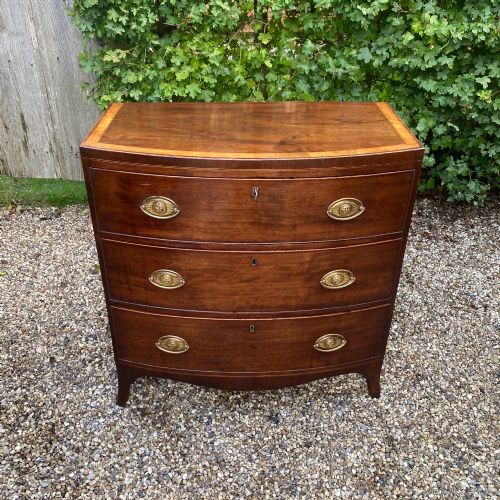
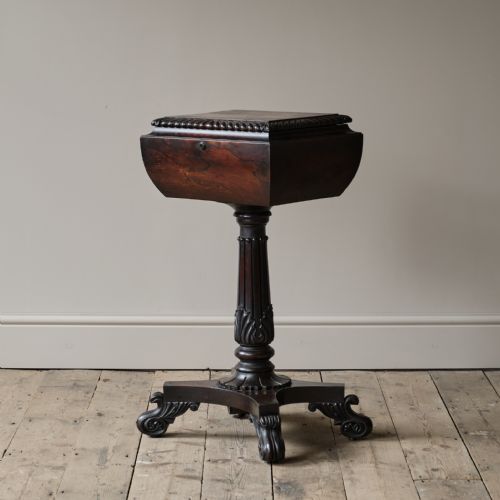
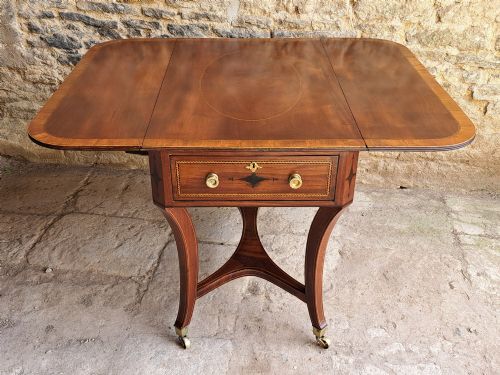
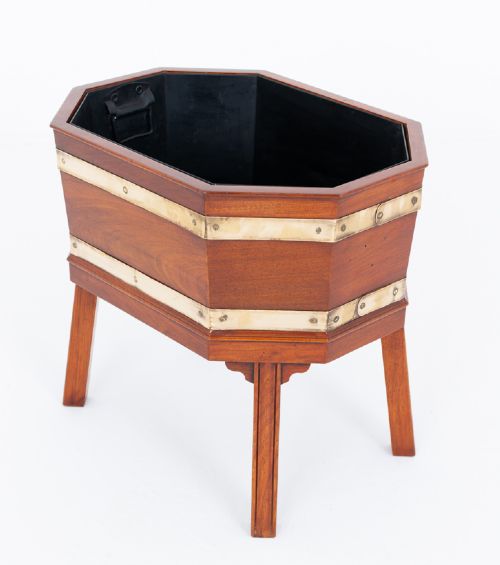
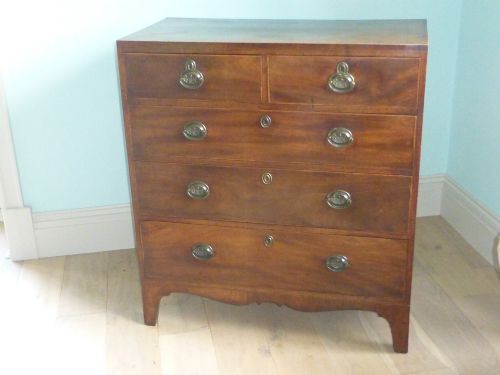
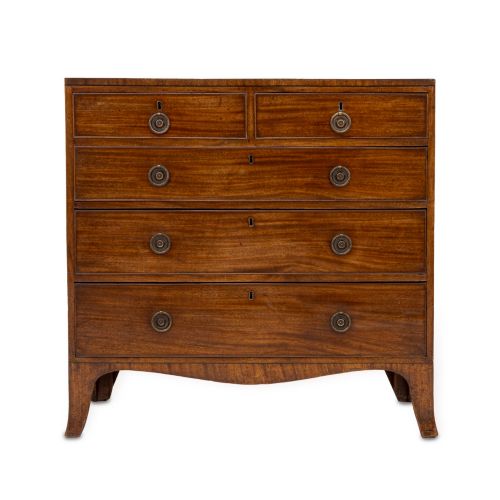
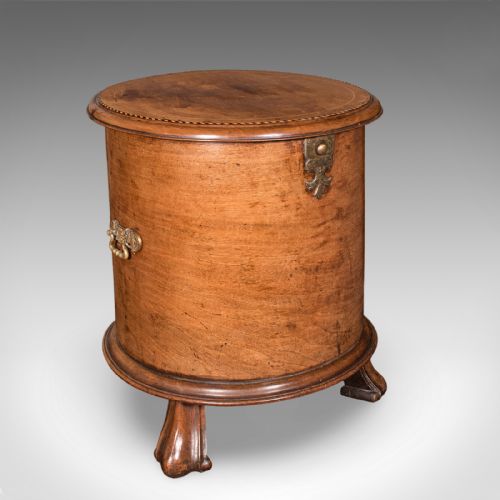
Beyond standard tabletop tea caddies, the selection includes larger sarcophagus forms, teapoys on stands, and larger cellarettes meant for wine storage. Chests of drawers sharing a distinctive caddy top profile also appear frequently in the inventory.
These items originate predominantly from English and Irish workshops, reflecting a period when tea was an expensive commodity requiring dedicated domestic containment.
Materials and Construction
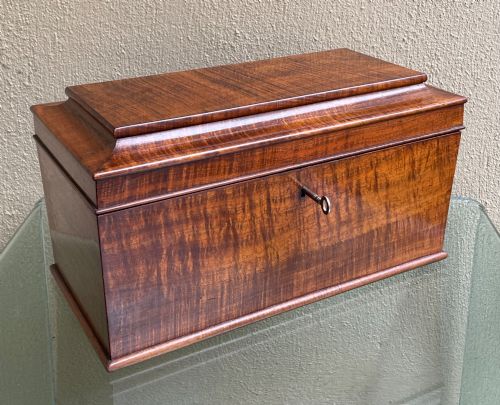
Makers utilised solid mahogany and applied flame mahogany veneers over secondary timbers to create rich, rippling surface patterns. Cabinetmakers enhanced these exteriors with contrasting stringing and inlay composed of satinwood, boxwood, and ebony.
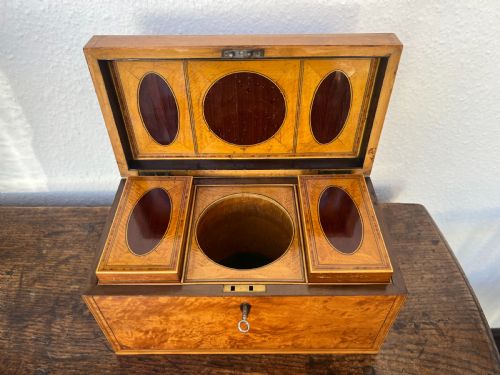
Fittings played a functional and decorative role, featuring cast brass handles, escutcheons, ball and claw feet, and interior mixing glasses. Internal compartments frequently retain foil linings or fitted wooden lids designed to preserve aromatic tea leaves.
The inventory combines traditional tabletop tea caddies with larger architectural cellarettes and pedestal-supported teapoys.
Markers of Superior Workmanship
Quality rests heavily on the choice of timber and the precision of the cabinet work. Superior examples display intensely figured flame mahogany veneers matched symmetrically across the lid and sides.
Attention to detail in secondary elements distinguishes finer pieces, such as intricate brass inlay, well-fitted interior mixing bowls, and original bone escutcheons around the keyholes.
Gillows·Strahan
The Regency Mahogany Caddy Glossary
- Caddy
- A small box or container originally used for storing tea leaves. The term derives from catty, the Chinese unit of weight.
- Teapoy
- A pedestal table featuring a lidded storage box on top for holding tea. These pieces often include internal canisters and mixing bowls.
- Sarcophagus
- A monumental container shape with a sloping lid resembling an ancient stone coffin. Cabinetmakers adopted this architectural silhouette for grand tea caddies and wine coolers.
- Escutcheon
- A protective flat plate surrounding a keyhole. On these pieces, they are frequently formed from bone, ivory, or engraved brass.
Regency Mahogany Caddy: Frequently Asked Questions
What were tea caddies used for?
Tea caddies served as secure containers for storing expensive loose tea leaves in nineteenth century households. Because tea was a heavily taxed and costly commodity, these boxes were kept locked by the head of the household.
Inside, divided compartments allowed different varieties of tea to be blended to personal taste. Mixing glasses provided a vessel for diluting or preparing the brew before serving.
How do I date a mahogany caddy?
Dating relies heavily on architectural styles, furniture forms, and cabinetmaking techniques visible across the piece. Items from the Regency period often feature sarcophagus silhouettes, brass lion paw feet, and geometric ebony stringing.
Earlier Georgian examples tend towards simpler rectangular or octagonal boxes with bracket feet and delicate shell inlays. Later Victorian iterations introduce heavier carvings and alternative veneers like burr maple.
Where should I place a teapoy?
A teapoy functions well as an accent table beside a seating area or in a study. Because these pieces feature finished panels on all sides, they look appropriate freestanding in a room rather than pushed against a wall.
The internal compartments also make them practical for storing small modern items like stationery or collections while maintaining historical character.
What is the difference between a caddy and a cellarette?
A tea caddy is a tabletop box scaled for holding loose tea leaves and sugar. They are compact enough to be lifted and moved between rooms during social gatherings.
A cellarette is a substantially larger storage case designed for holding bottles of wine or spirits. These frequently stand upon their own floor-standing legs, pedestals, or castors.