
Regency Library Shelving
Regency library shelving brings order to books through tiered tiers and open formats in rich timbers.
Regency Library Shelving
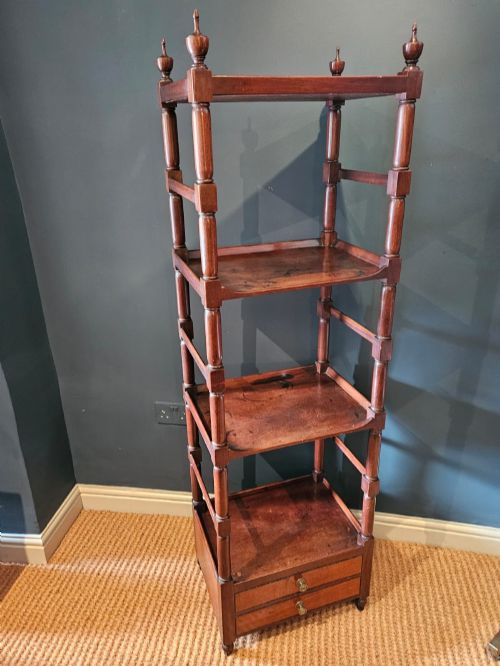
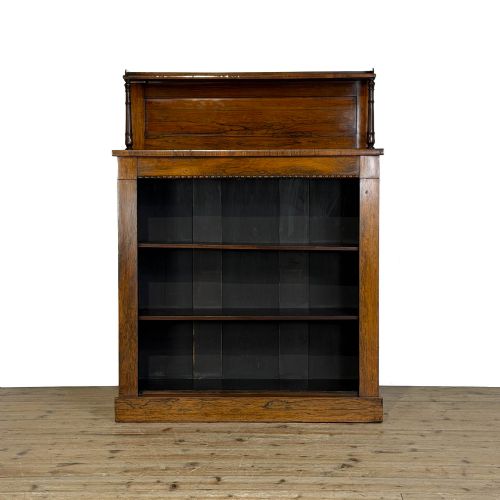
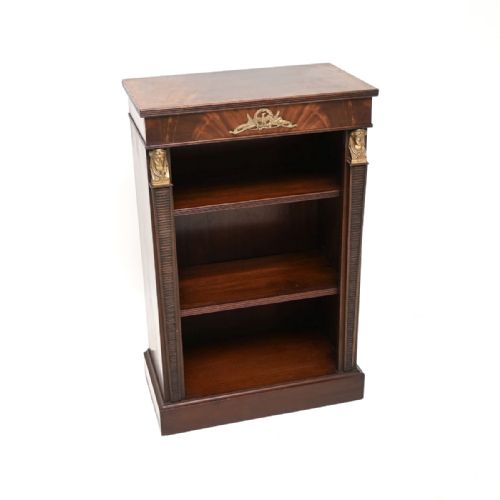
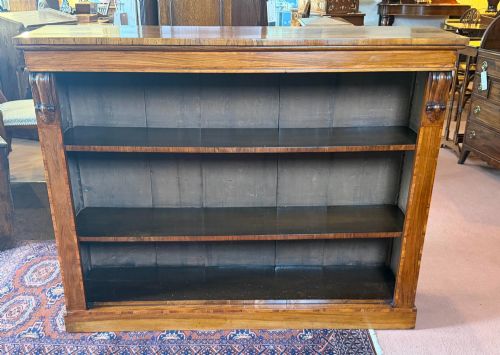
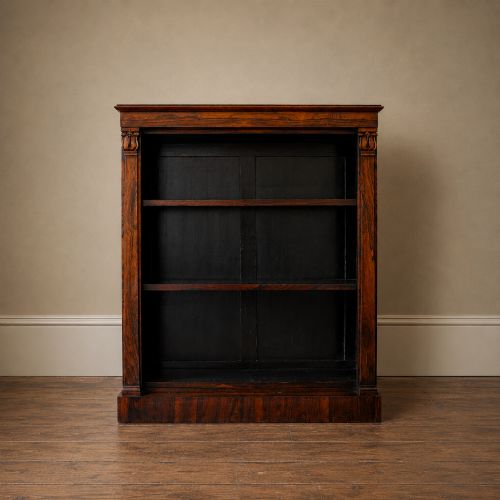
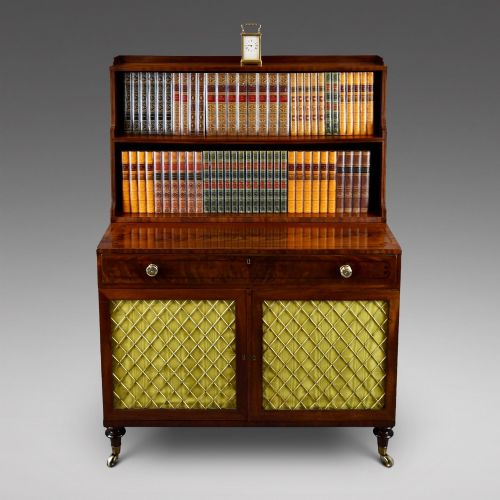
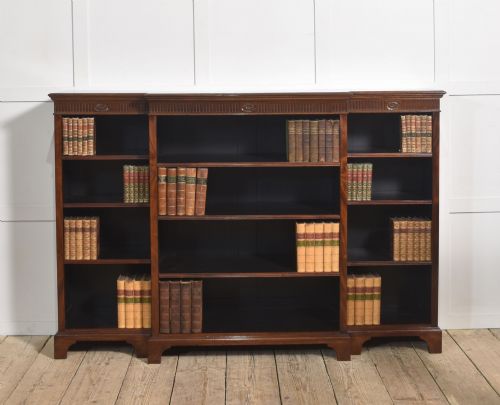
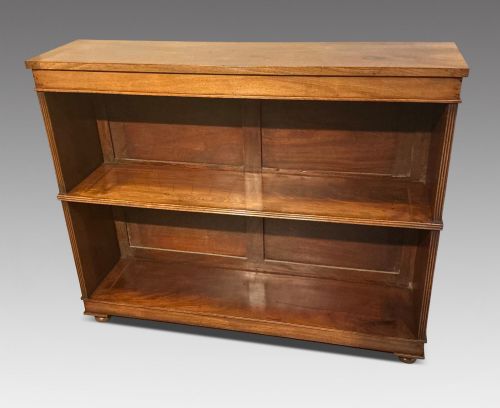
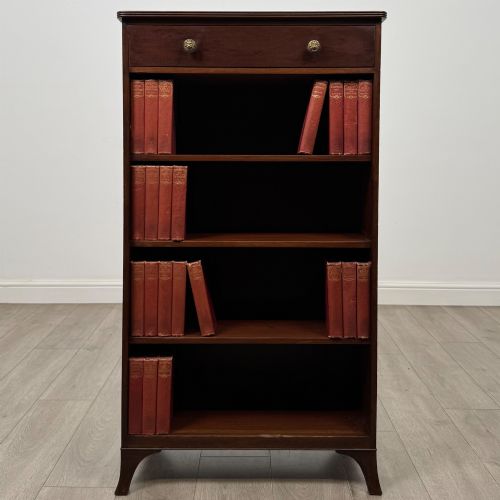
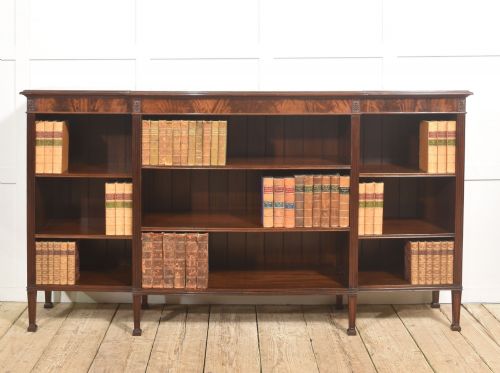
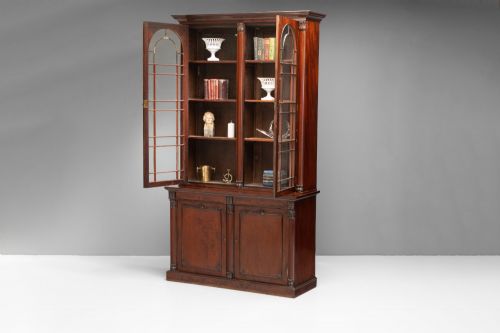
When searching for regency library shelving, a buyer encounters open bookcases, breakfront bookcases, and tiered whatnots designed to house substantial collections. The listings feature examples primarily from the nineteenth century alongside later revivals reflecting Georgian, Regency, and William IV styles.
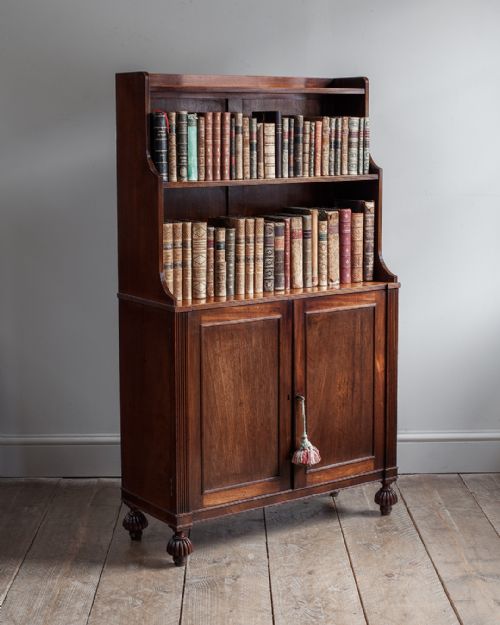
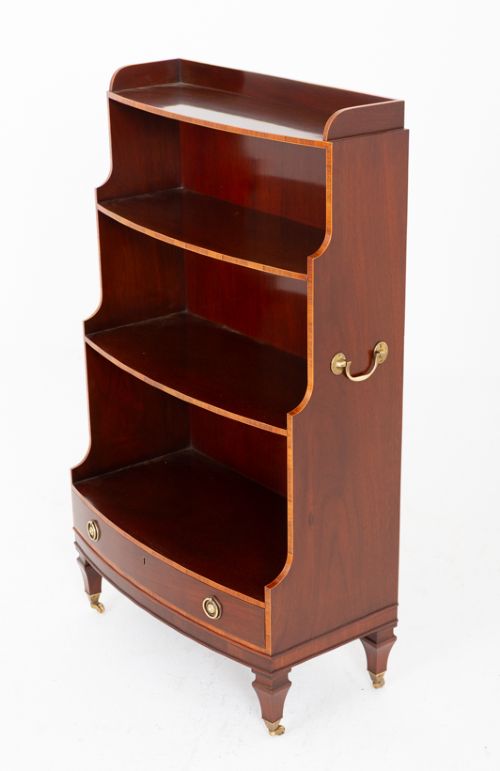
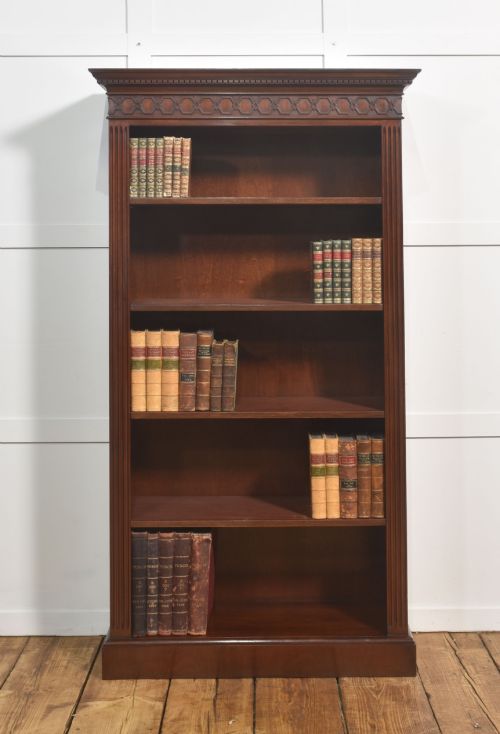
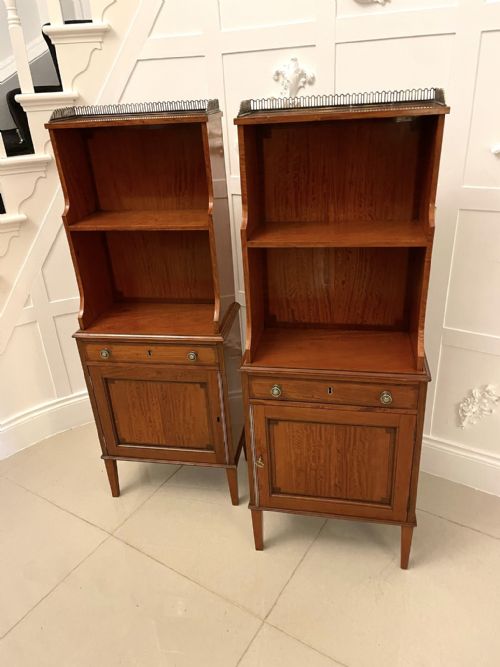
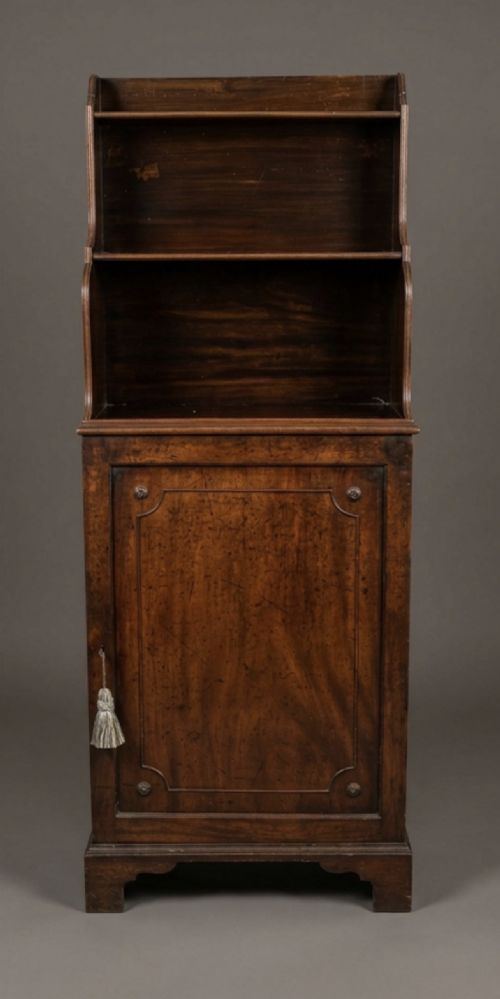
The most common forms on this page include open bookcases with adjustable shelves and multi-tiered waterfall designs. These pieces range from compact what-nots to large breakfront library bookcases scaled for formal rooms.
Originating largely from the nineteenth century, these pieces utilise architectural proportions and refined timber grains to anchor a room's study or library space. Makers and cabinetmakers of the period produced versatile shelving units that combined display utility with domestic elegance.
Materials and Construction Methods
Cabinetmakers constructed these bookcases and shelving units predominantly in solid mahogany, rosewood, and oak, frequently employing flame mahogany veneer for decorative impact. Satinwood and walnut also appear, often accented with crossbanding or brass details.
Construction relies on traditional joinery to support heavy volumes, incorporating adjustable shelf mechanisms that allow flexible storage. Open fronts and tiered platforms distribute weight evenly across sturdy timber feet and plinth bases.
Bookshelf depths expand gently downward, accommodating folio volumes below while paperbacks sit proudly above.
Distinctions in Quality
Quality in these pieces rests upon the selection of timber figures, such as rich flame mahogany or figured rosewood, matched across large breakfront surfaces. Superior examples display refined proportions, crisp mouldings, and finely fitted adjustable shelving mechanisms.
The integration of secondary timbers and the precision of the joinery separate standard production from master workshops. Finer shelving units retain original brass fittings and exhibit thoughtful scaling that balances decorative presence with structural integrity.
Gillows
The Regency Library Shelving Glossary
- Breakfront
- A piece of furniture having a central section that projects forward from the flanking sides. This architectural arrangement creates depth and visual rhythm in large library bookcases.
- Waterfall bookcase
- A tiered shelving unit where each successive shelf steps back from the one below it. The cascading profile provides graduated depth for smaller volumes and display items.
- What-not
- A multi-tiered piece of furniture designed for displaying ornaments, books, or small objects. These open frameworks utilise slender upright supports to maintain a light visual footprint.
- Crossbanding
- A decorative border of veneer laid so that the grain runs at right angles to the surrounding wood. This technique frames drawer fronts, shelves, and cabinet tops with contrasting timber lines.
- Adjustable shelves
- Shelving supported by movable pins or ratchet systems allowing vertical height adjustment. This practical adaptation accommodates books of varying sizes.
Regency Library Shelving: Frequently Asked Questions
What is regency library shelving?
Regency library shelving comprises open bookcases, breakfront units, and tiered whatnots designed to store and display books. These pieces combine architectural forms with figured timbers like mahogany and rosewood.
Originating primarily from the nineteenth century, they offer adjustable shelving and sturdy construction suited for organising substantial personal libraries.
How do I adjust the shelves?
Many period bookcases feature internal wooden ratchets, peg holes, or brass shelf support tracks. You simply lift the shelf and reposition the brass or wooden supports into alternative slots.
This adaptability allows the internal compartments to accommodate volumes of varying heights without altering the exterior case.
Where should I place an open bookcase?
Open bookcases suit studies, libraries, and living spaces where quick access to books is desired. Placing them against interior walls away from direct sunlight protects the timber veneers from fading.
Ensure the room maintains stable humidity levels to preserve the structural stability of the solid mahogany or rosewood frames.
How do I date a library bookcase?
Dating relies on observing timber choices, construction techniques, and stylistic markers such as Regency, William IV, or Georgian proportions. Earlier nineteenth-century pieces often display hand-cut joinery and dense, well-figured mahogany or rosewood.
Later Victorian and Edwardian interpretations introduce modified hardware and softer secondary woods while retaining traditional bookcase formats.