
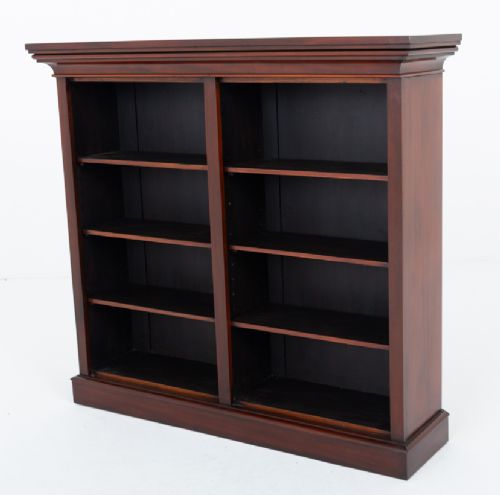
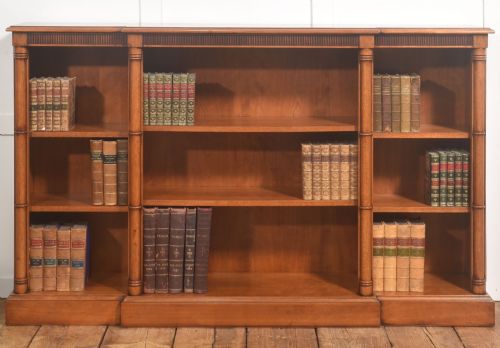
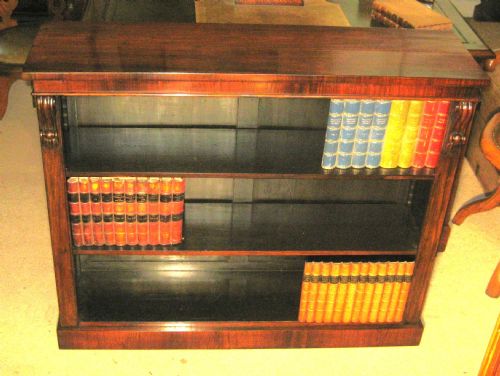
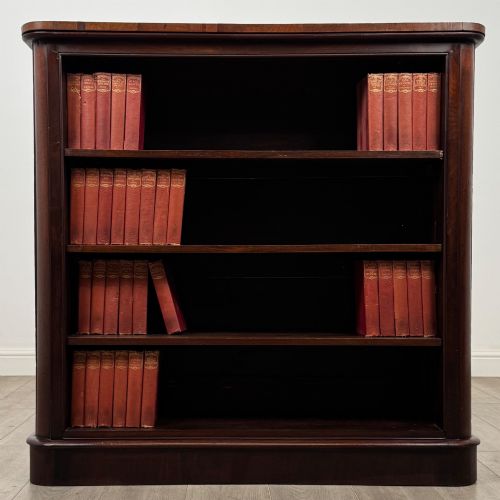
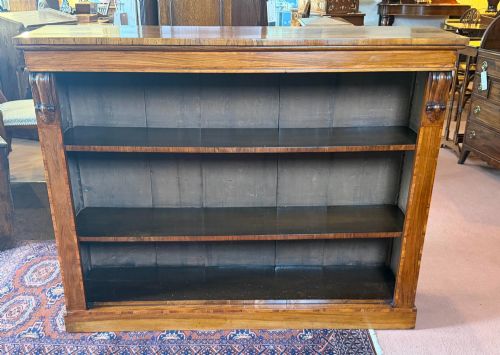
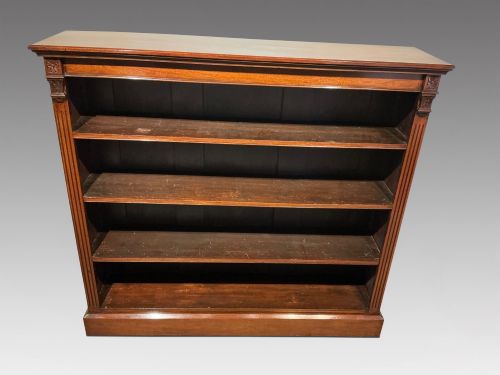


Low Open Face Bookcase
These low open face bookcase pieces are timber library furniture shaped for accessible volumes, prized for their display potential.
Low Open Face Bookcase
A low open face bookcase is a piece of low shelving designed for books without cabinet doors, appearing across Victorian, Edwardian, and Regency periods.
Formations range from standard rectilinear carcasses to breakfront designs and ebonised brass mounted variations.
Materials and Construction
Cabinet makers utilised dense hardwoods such as mahogany and rosewood, alongside solid oak and walnut veneer.
Joinery methods accommodated adjustable shelving mechanisms to alter shelf heights according to book sizes.
Carved details and brass mounts appear on specific examples, particularly within Victorian and Regency items.
Some bookcases wore ebonised coats to look like costly ebony, fooling nobody with good eyes but charming everyone anyway.
Assessing Quality
Quality rests in the choice of timber figure, such as richly grained rosewood or figured mahogany, and the crispness of any applied carving.
The sophistication of the shelving adjustment mechanism and the integrity of the timber carcass separate standard utility pieces from finer library furnishings.
The Low Open Face Bookcase Glossary
- Breakfront
- A cabinet form where the central section projects forward from the flanking wings. This architectural arrangement adds visual depth to low bookcases.
- Ebonised
- Timber finished to resemble ebony through a staining or painting process. This dark surface treatment provides a contrasting backdrop for gilt or brass mounts.
- Veneer
- A thin layer of superior wood applied over a secondary timber base. Walnut veneer surfaces showcase decorative grain patterns while maintaining structural stability.
- Adjustable
- Shelves supported on moveable pegs or racks rather than fixed partitions. This adaptability accommodates volumes of varying heights.
Low Open Face Bookcase: Frequently Asked Questions
What periods do these bookcases come from?
The pieces span the nineteenth and twentieth centuries, including Regency, Victorian, and Edwardian eras. Examples also extend into the Art Deco period.
Construction styles reflect the prevailing tastes of these dates, utilising timbers typical of each distinct era.
Are the shelves adjustable?
Many examples feature height adjustable shelves to accommodate different book sizes. This mechanism allows the owner to rearrange the interior space easily.
Not every piece includes this function, so checking individual shelf supports is advisable.
What woods are commonly used?
Mahogany, rosewood, oak, and walnut form the primary materials for these bookcases. Solid timber and veneer applications both appear across the selection.
Certain pieces incorporate brass mounts or ebonised finishes for decorative effect.
How do I place one in a room?
Their low profile makes them suitable for positioning beneath windows or along walls without obstructing artwork. The open front provides immediate access to frequently read volumes.
They function effectively as display surfaces for decorative objects alongside books.