



Antique Breakfront Shelf Unit
An antique breakfront shelf unit offers commanding architectural presence and generous display space, anchoring a grand room with timber character.
Antique Breakfront Shelf Unit
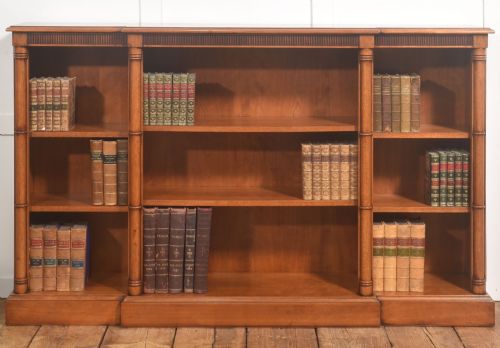
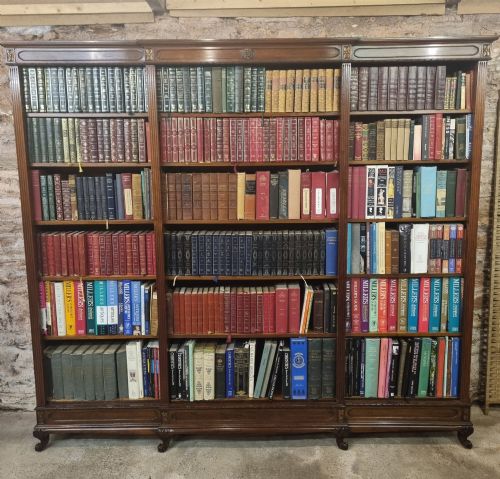
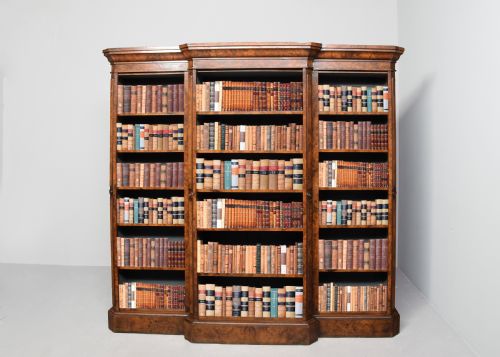
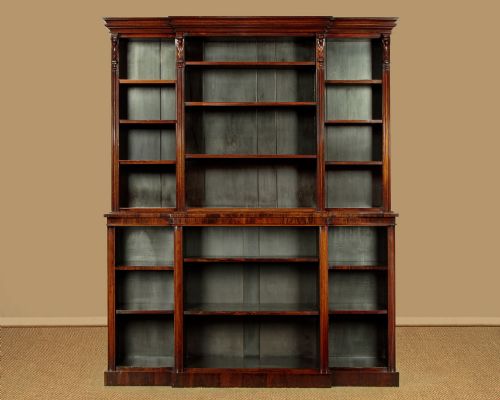
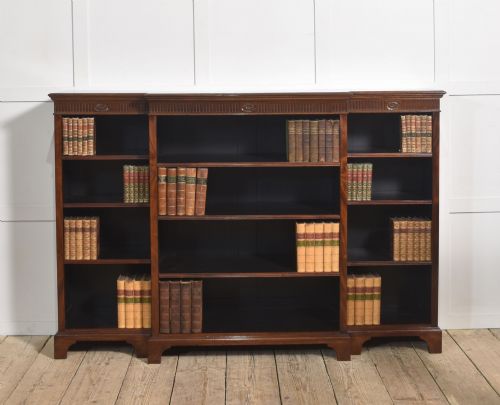
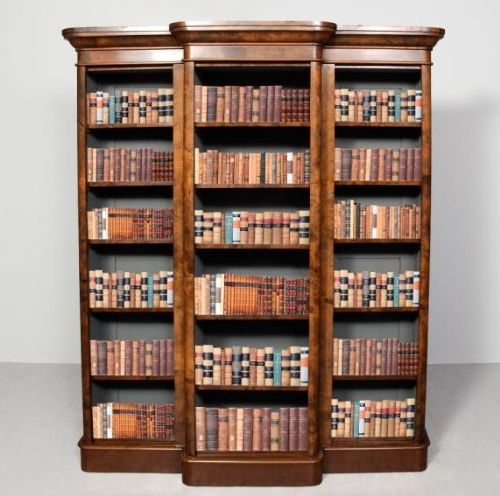
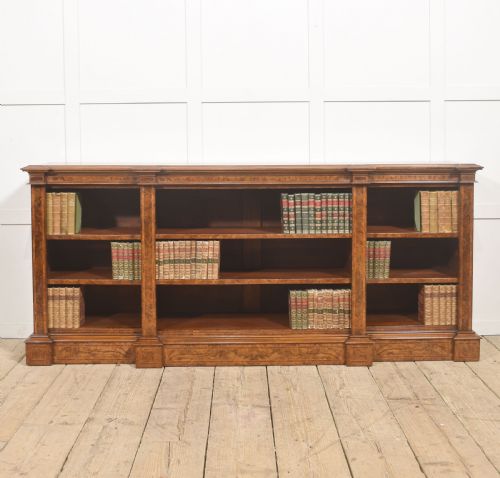
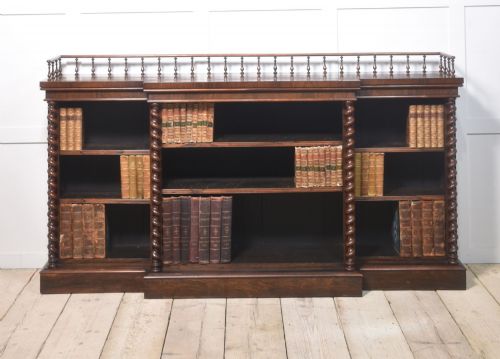
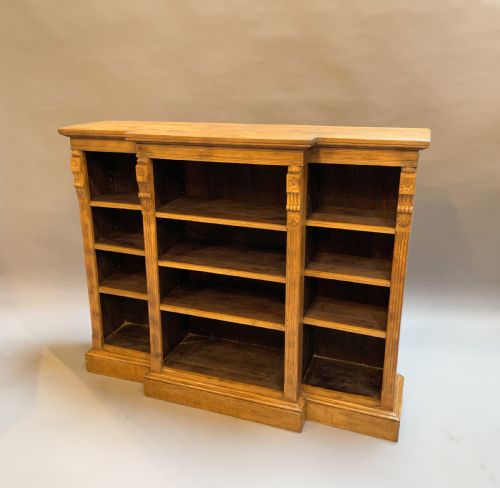
When you search for an antique breakfront shelf unit, you encounter substantial furniture pieces designed with a central section that projects forward from flanking wings. These items primarily manifest as open bookcases and display cabinets originating from the nineteenth century into the early twentieth century.
The prevailing examples on this page date from the Victorian era and use traditional timbers such as mahogany, burr walnut, and rosewood. Formats range from low open bookcases with adjustable shelving to large library bookcases and brass-mounted Napoleon III designs.
Materials and construction methods
Cabinet makers utilised dense hardwoods like mahogany and rosewood alongside highly figured burr walnut veneers to construct these large frames. Grain selection was paramount, ensuring the projecting central breakfront section displayed striking natural timber patterns.
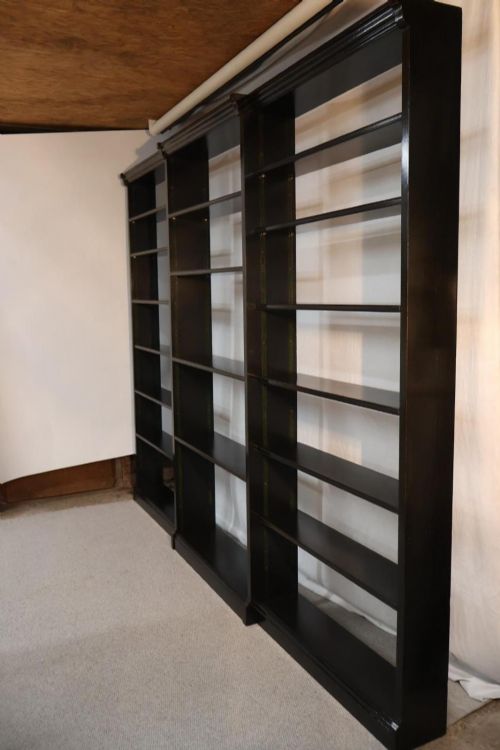
Interior engineering focused on utility, incorporating adjustable wooden shelves supported by timber or brass systems. Selected pieces incorporate fine brass mounts and ebonised detailing to enhance the visual depth of the woodwork.
Listings span the nineteenth and early twentieth centuries, featuring Victorian, Edwardian, and Regency revival styles constructed in mahogany, walnut, and rosewood.
Distinctions in quality and finish
The hierarchy of quality rests primarily upon the choice of timber veneer and the sophistication of the architectural proportions. Master cabinet makers selected richly figured burr walnut or dense rosewood for prominent surfaces, whereas utilitarian pieces employed simpler mahogany or softwood carcases.
Execution of detail defines the upper tier, seen in refined edge mouldings, well-fitted adjustable shelving mechanisms, and crisp brass mounts. The preservation of the original surface finish maintains the visual integrity established during manufacture.
Robert Strahan
The Antique Breakfront Shelf Unit Glossary
- Breakfront
- A piece of furniture where the central section projects forward from the two flanking sides. This architectural arrangement creates depth and shadow across the front elevation.
- Burr Walnut
- Timber taken from the warted excrescences of a walnut tree, yielding a swirling, highly decorative grain pattern. Cabinet makers prized this material for high-status veneering.
- Open Bookcase
- A shelving unit without doors, designed for immediate access to book collections. These pieces often feature adjustable shelves resting on traditional supports.
- Napoleon III
- A French stylistic period spanning the mid-to-late nineteenth century, associated with eclectic revivals and luxurious ornamentation. Pieces from this aesthetic frequently incorporate brass mounts and ebonised finishes.
- Ebonised
- Timber treated with a dark finish to imitate ebony wood. This technique provides a sharp contrast against lighter brass mounts or gilt highlights.
Antique Breakfront Shelf Unit: Frequently Asked Questions
What is a breakfront shelf unit?
A breakfront shelf unit is a large cabinet or bookcase featuring a central section that projects forward from the side sections. This architectural form creates visual depth and divides the elevation into distinct display bays.
Such units function primarily as grand bookcases or display furniture, housing large book collections and decorative objects while anchoring the proportions of a formal room.
How do I date an antique bookcase?
Dating relies on observing timber choices, construction techniques, and stylistic markers recorded in the physical design. Victorian pieces often employ heavy mahogany or figured burr walnut, while earlier Regency influences show lighter rosewood veneers and classical detailing.
Examining internal components like shelving adjustments and backboards also reveals manufacturing methods typical of specific nineteenth-century decades.
Are the shelves adjustable?
Many traditional breakfront bookcases feature adjustable shelving systems designed to accommodate volumes of varying heights. These typically utilise timber support battens or rows of peg holes inside the upright partitions.
Checking the interior reveals whether the shelving configuration can be altered to suit modern storage needs without losing historical integrity.
How do I care for rosewood and walnut?
Maintenance requires protecting the polished timber surfaces from direct sunlight and extremes of humidity that can cause wood to warp or veneers to lift. Regular dusting with a soft, dry cloth preserves the finish without abrasive chemical cleaners.
Applying appropriate wax feeds the antique timber periodically, maintaining the natural lustre of the grain established by nineteenth-century polishers.