

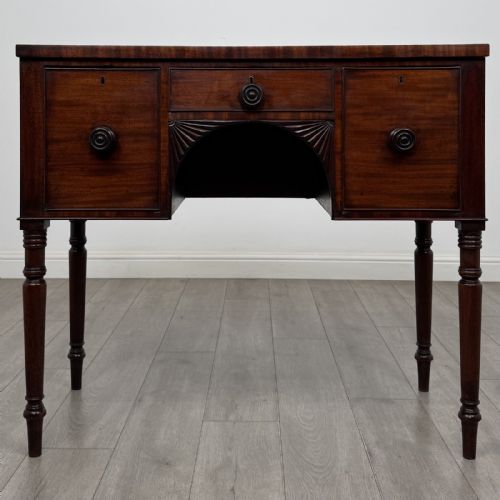
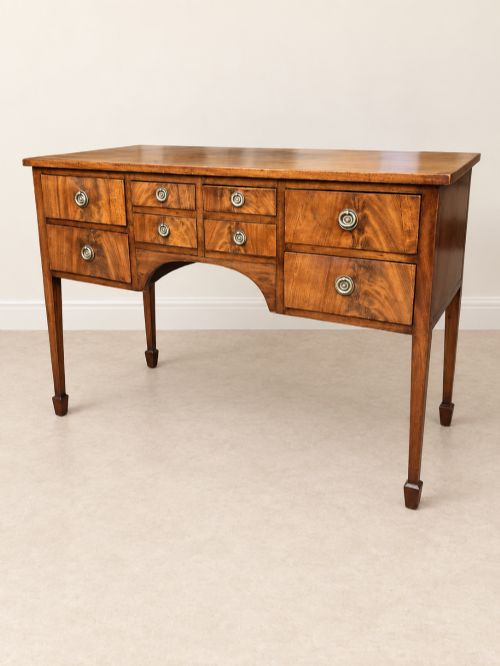
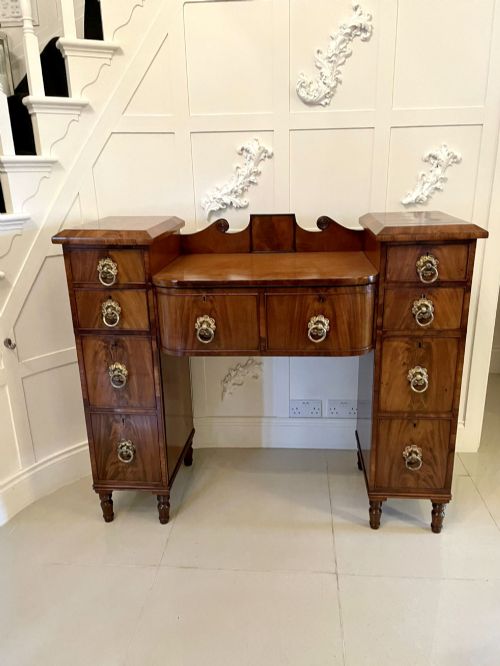
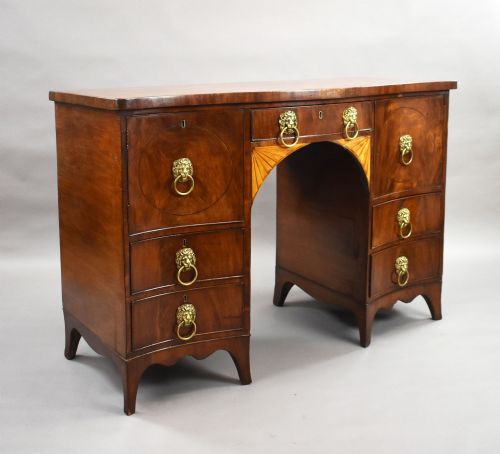


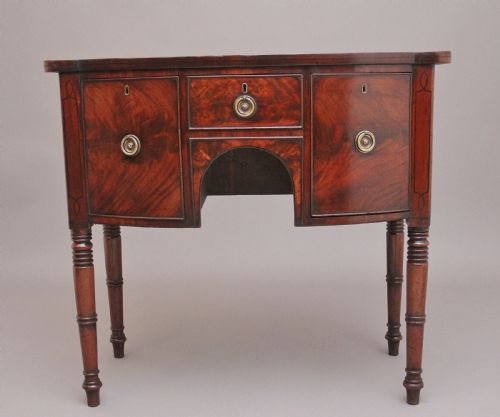


Regency Kneehole Sideboard
Regency kneehole sideboard examples bring architectural discipline and fine timber to a room, offering practical surface space alongside concealed storage.
Regency Kneehole Sideboard
When you search for a regency kneehole sideboard, you encounter pieces from the Regency, George III, and Georgian periods, alongside later nineteenth century revivals and twentieth century interpretations. These items typically present as sideboards, desks, dressing tables, and side tables in mahogany, flame mahogany, and painted pine.
The version most commonly met on this page is the mahogany sideboard or dressing table featuring a central kneehole space flanked by drawers. Surviving examples span formal dining room furniture to country dressers and miniature pieces.
Makers and craftsmen of these periods utilised dense tropical hardwoods and subtle stringing to achieve the restrained proportions characteristic of the style.
How they were made
Makers constructed these pieces primarily from solid mahogany and flame mahogany veneers laid over secondary woods such as pine. Boxwood stringing and brass fittings provided contrast and structural hardware.
Surviving items demonstrate cabinetmaking techniques typical of the early nineteenth century, including hand-cut dovetails for drawer boxes and turned or reeded legs.
Regency Kneehole Sideboard Retail Price Guide 2026
Typical asking prices for regency kneehole sideboard among the pieces listed under this phrase on Sellingantiques today, from the lower quarter to the upper quarter. They describe what is for sale here now, not the wider market.
Listings span the Regency, Georgian, and Victorian periods, with mahogany serving as the primary material alongside brass and boxwood.
What varies in quality
Quality in these pieces rests upon the selection of timber veneers, particularly the figuring of flame mahogany on drawer fronts. Superior examples display continuous grain patterns across the facade and meticulous inlay work.
The architectural integration of brass hardware, galleries, and secondary woods like boxwood distinguishes finer workshop output from simpler country production.
John Gregory London
The Regency Kneehole Sideboard Glossary
- Kneehole
- A recessed central space beneath a desk, dressing table, or sideboard designed to accommodate the legs of a seated person. This configuration allows the piece to function double as a writing surface.
- Flame mahogany
- A veneer cut from the fork of the mahogany tree where the branch meets the trunk, producing a distinctive rippled flame pattern. Cabinetmakers placed these highly figured veneers symmetrically on drawer fronts.
- Boxwood stringing
- Thin inlaid lines of pale boxwood set into contrasting darker timbers to create geometric borders. This decorative technique defines drawer edges and tabletops.
- Gallery
- A low raised wooden or brass railing fitted around the rear and sides of a tabletop or dressing table surface. It prevents items from rolling off the back.
Regency Kneehole Sideboard: Frequently Asked Questions
What is a kneehole sideboard?
A kneehole sideboard is a case piece featuring a central recessed opening flanked by banks of drawers, combining the storage of a traditional sideboard with the accessibility of a desk.
These forms appear in mahogany and other period timbers across Regency and Georgian designs.
How do I date a sideboard?
Dating relies on observing timber selection, construction methods, hardware types, and stylistic cues such as reeded legs or brass galleries. Cabinetmaking practices shifted noticeably between the George III period and later Victorian revivals.
Examining secondary woods like pine inside drawer construction also helps clarify the period of manufacture.
Where were these pieces used?
Such pieces found placement in dining rooms, halls, and bedrooms as serving surfaces, dressing tables, or writing desks. Their compact proportions made them adaptable to various domestic interiors.
Formal rooms typically received polished mahogany versions, while country houses utilised painted pine variants.
How do I care for mahogany?
Mahogany responds best to stable indoor humidity and protection from direct sunlight, which can fade the rich reddish-brown tones of the timber. Regular dusting with a dry cloth maintains the polished surface.
Occasional application of appropriate wax preserves the wood without building up heavy residues.