


Regency Japanned Table
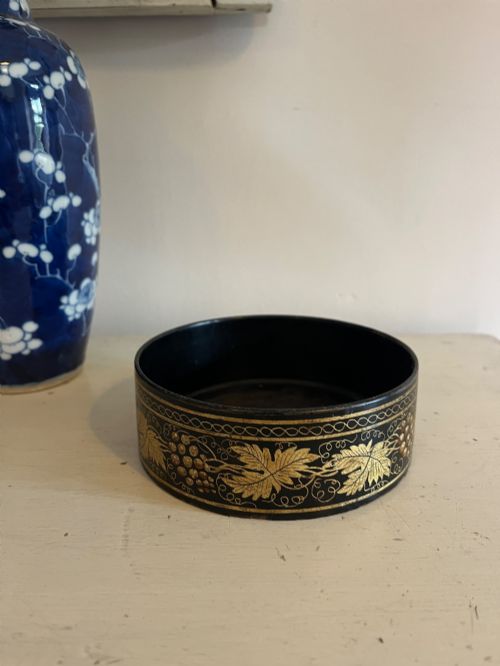
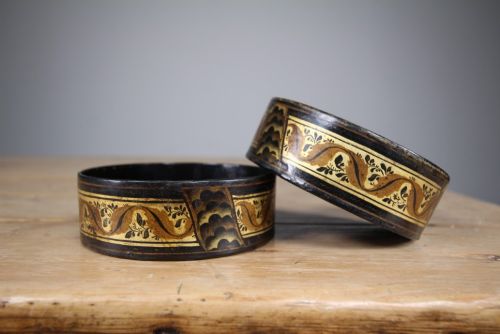
These pieces of regency japanned table design bring black lacquer, gold leaf, and Chinoiserie decoration together for a striking interior statement.
Regency Japanned Table
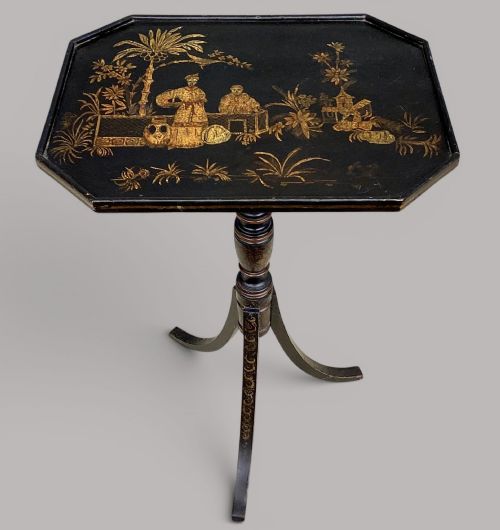
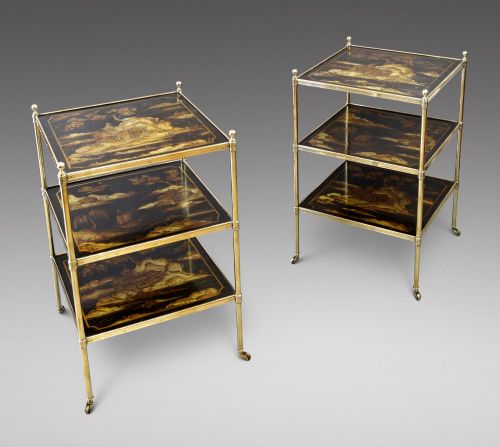
A regency japanned table combines Regency elegance with simulated Oriental lacquerwork, often appearing as occasional tables, wine tables, and tray tables on stands. The evidence shows forms ranging from two-tier occasional pieces and tripod wine tables to larger tray tables.
Most examples date from the Regency period and the nineteenth century, though later interpretations from the early twentieth century also appear. They often feature black or yellow grounds adorned with gilt Chinoiserie scenes.
Alongside standard occasional tables, the selection includes nests of tables, console tables, and pieces incorporating papier-mâché trays on folding or fixed stands. These surfaces provide both decorative impact and practical utility in a room.
How they were made
Maker workshops relied on timber, papier-mâché, and toleware as substrates for the lacquer finish. Artisans applied layers of lacquer to build a smooth surface before hand-painting intricate motifs in gold leaf and various colours.
Gilding and brass details frequently accent the black, red, or yellow lacquered wood and papier-mâché bodies. The technique emulates East Asian lacquer using European methods developed during the height of the Chinoiserie taste.
Yellow japanned workboxes and bright red accents prove that Regency decorators possessed a fondness for vibrant colour.
What varies in quality
Quality rests in the crispness of the hand-painted Chinoiserie decoration and the depth of the lacquer finish. Superior examples display refined brushwork in gold leaf that remains sharp and detailed across the surface.
The integrity of the underlying material, whether wood, papier-mâché, or toleware, dictates the strength of the piece. Master makers applied multiple layers of varnish and lacquer, resulting in a durable and lustrous ground that holds its decorative scheme over centuries.
Jennens And Bettridge·Henry Clay
The Regency Japanned Table Glossary
- Japanning
- European imitation of East Asian lacquerwork, typically executed in black or coloured grounds with raised gilt decoration. It became popular during the seventeenth century and saw a major revival in the Regency period.
- Chinoiserie
- European artistic style reflecting Chinese and East Asian artistic influences. It manifests on these tables through painted landscapes, figures, and pavilions.
- Papier-mâché
- Composite material made from paper pulp or layers of paper reinforced with glue, then pressed and dried. It provided a lightweight and stable surface for trays and table tops.
- Toleware
- Lacquered or enamelled sheet metal items, often used for trays and decorative urns. The material takes paint and lacquer effectively for decorative furnishings.
- Tripod table
- A small occasional table supported by a central pillar above three spreading feet. This form is common among wine and side tables in the evidence.
Regency Japanned Table: Frequently Asked Questions
What is a regency japanned table?
It is an occasional or wine table decorated with European lacquerwork in the Chinoiserie taste. These pieces date principally from the Regency era and the nineteenth century.
They combine classical British furniture forms with hand-painted gold motifs on dark or coloured grounds.
How do I clean japanned furniture?
Dust gently with a soft, dry cloth to protect the delicate lacquer and gold leaf decoration. Avoid liquid cleaners, abrasives, and modern polishes that can damage the antique surface.
Keep the piece away from direct sunlight and excessive heat sources to preserve the finish.
Are tray tables original?
Many authentic Regency tray tables consist of a detachable papier-mâché or tole tray resting on a custom-made stand. Makers frequently paired portable serving trays with folding or fixed wooden bases.
Both period combinations and later matched stands appear in the evidence.
How do I spot a later copy?
Examine the ground for the natural craquelure and mellowing associated with nineteenth-century materials. Genuine pieces show age in the wear of the lacquer and the hand application of the gilding.
Twentieth-century revivals and later interpretations often feature harder, more uniform modern synthetic finishes.