


Regency Chinoiserie Lamp Table
These pieces for regency chinoiserie lamp table searches bring painted black, red, and gilt lacquer surfaces together with traditional forms.
Regency Chinoiserie Lamp Table
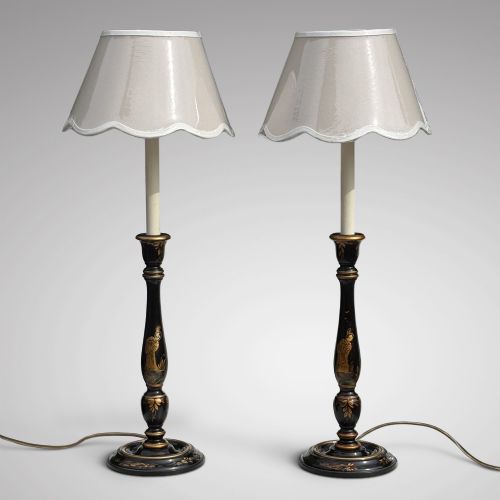
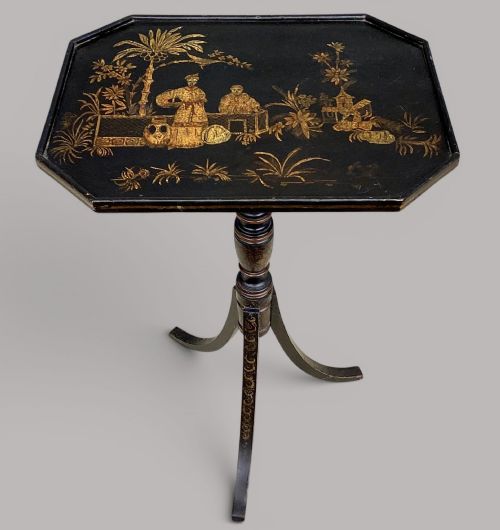
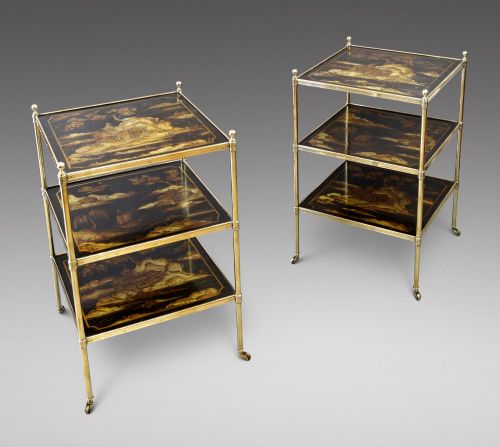
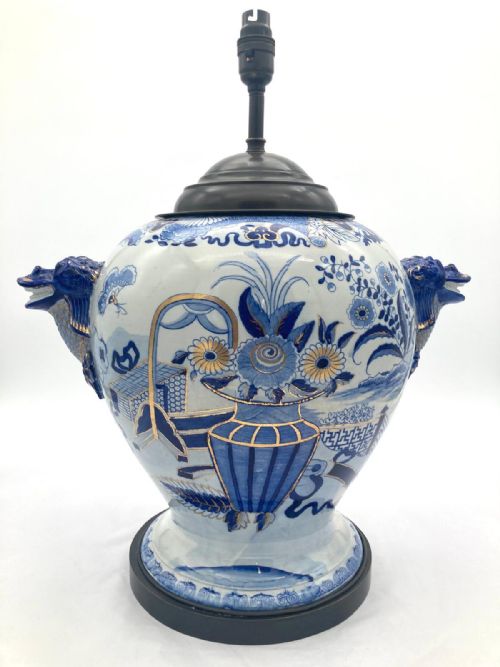
A regency chinoiserie lamp table unites the classic furniture forms of the Regency era with decorative Asian-inspired motifs. Buyers examining this page encounter occasional tables, wine tables, nests of tables, and side tables alongside pieces adapted as table lamps.
The selection ranges from pieces originating in the Regency period to later interpretations produced across the nineteenth and early twentieth centuries. Forms vary from compact wine tables with ebonised bases to tiered occasional tables and decorative lamps.
How they were made
Cabinet makers built these pieces using wood and lacquered wood as the primary structural foundations. Surfaces received layers of black, red, or painted lacquer combined with gold leaf application to build up intricate decorative scenes.
Detailing often incorporated brass elements, painted highlights, and fabric components where lampshades or specific mountings were integrated. Artisans applied hand-finished decorative motifs drawing on traditional lacquer techniques.
Some nineteenth-century pottery vessels simply grew tired of holding flowers and volunteered to illuminate the room as table lamps instead.
What varies in quality
The depth and preservation of the lacquer decoration set individual examples apart. Pieces featuring original multi-coloured gilt and red highlights over black grounds demonstrate superior decorative execution compared to simpler monochrome surfaces.
Structural complexity also defines the tier between standard occasional items and superior forms. Nests of tables and multi-tiered pieces require precise carpentry to maintain alignment across graduating surfaces.
Hicks and Meigh
The Regency Chinoiserie Lamp Table Glossary
- Chinoiserie
- European decorative style reflecting Chinese artistic influences, popular in furniture and lacquerwork. It relies on painted landscapes, figures, and botanical motifs rendered in gold and colour.
- Lacquer
- Protective and decorative resin finish applied in multiple coats to wood substrates. It provides a smooth, glossy surface suitable for intricate painted detail.
- Gilt
- Application of gold leaf or gold powder to ornament furniture surfaces and decorative objects. This technique highlights raised details and adds contrast against dark lacquer grounds.
- Tripartite base
- A three-legged or three-sided support structure often found on pedestal wine tables. It offers stability for small occasional furniture.
- Toleware
- Painted or lacquered metalware used for decorative domestic objects, frequently adapted into lamp bases. It provides a durable alternative to wooden vessels.
Regency Chinoiserie Lamp Table: Frequently Asked Questions
What is a regency chinoiserie lamp table?
A regency chinoiserie lamp table is an occasional piece of furniture or lighting adaptation featuring Asian-inspired painted decoration on a dark lacquer ground. These items reflect the Regency aesthetic combined with decorative painting traditions.
They serve as functional surfaces or lighting fixtures that introduce colour and pattern into traditional interiors.
How do I identify a period piece?
Identifying the period involves examining the construction methods, the wear of the lacquer, and the specific pigment choices. Pieces from the original Regency era display distinct joinery and hand-applied gilt work.
Later nineteenth and twentieth-century interpretations often show different base woods and variations in the formulation of the painted decoration.
Where were these pieces used?
These items were placed in reception rooms, libraries, and drawing rooms as decorative occasional surfaces for holding small objects or lighting. Their reflective lacquer finishes were designed to catch candlelight.
Today they function similarly in domestic spaces as accent tables or decorative table lamps.
How do I care for lacquer surfaces?
Lacquer requires gentle dusting with a soft, dry cloth to prevent the accumulation of abrasive particles. Avoid exposure to direct sunlight and excessive moisture to protect the finish.
Applying harsh chemical cleaners will damage the delicate gold leaf and painted details.