




Black Lacquer Wine Stand
A black lacquer wine stand brings dark surface and gilded detail to an interior, offering a steady surface for bottles or small items.
Black Lacquer Wine Stand
A black lacquer wine stand combines dark polished surfaces with decorative painting, serving as both a practical table and a display piece. Buyers seeking a black lacquer wine stand will find examples primarily from the Regency and Victorian periods.
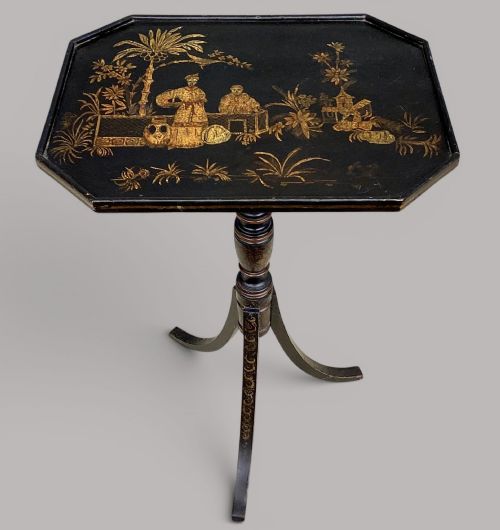
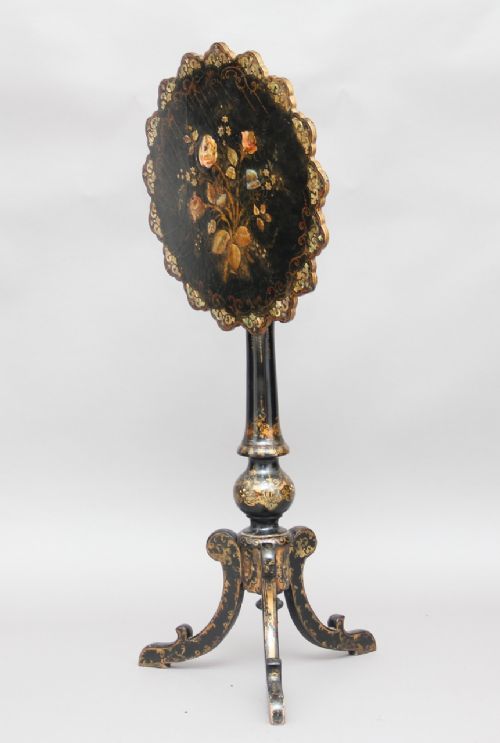
Regency pieces dominate the offerings, often displaying the classical proportions and Orientalist motifs typical of the early nineteenth century. Victorian examples continue the tradition using moulded papier-mâché and hand-painted details.
Materials and construction methods
Construction relies upon traditional timber framing or pressed papier-mâché, which provided a smooth foundation for successive layers of black lacquer. Artisans built up these finishes to create a deep, glossy surface capable of taking fine painted ornament.
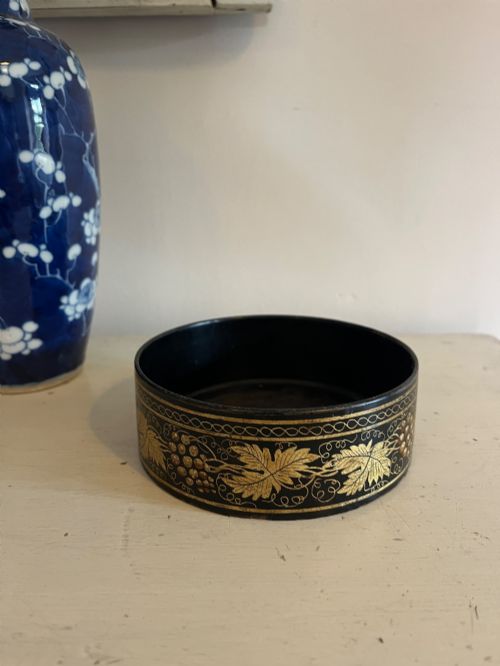
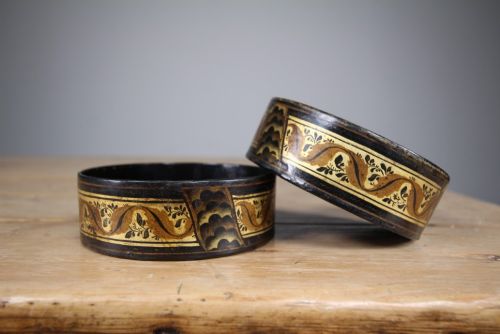
Decoration typically involves gold leaf and hand-painted pigments applied in Chinoiserie motifs depicting figures, landscapes, or floral patterns. Parcel gilding highlights turned pedestals, tripartite bases, and the raised rims of coasters.
Early nineteenth-century makers used compressed paper pulp to create wine coasters sturdy enough to hold heavy glass decanters.
Distinctions in quality and execution
Quality rests upon the crispness of the painted detail and the depth of the lacquer finish. Finer examples display meticulous brushwork in gold leaf that retains sharp definition across figures and foliage.
Structural integrity also separates standard items from superior works, particularly in the stability of tripartite bases and the smoothness of moulded papier-mâché trays. The harmony between the dark ground and the gilded ornamentation dictates the visual success of the piece.
The Black Lacquer Wine Stand Glossary
- Chinoiserie
- European decorative style reflecting Chinese artistic traditions. It employs motifs of pagodas, figures, and exotic landscapes rendered in gold and colour upon dark grounds.
- Papier-mâché
- Composite material made from paper pulp or layers of paper bound with glue, then pressed and dried. It forms a lightweight yet strong base for lacquer and paint.
- Parcel Gilt
- Partial application of gold leaf or gilt to specific decorative elements. It creates contrast against an ebonised or black lacquer background.
- Tripod Base
- Support structure featuring three legs radiating from a central column. It provides stability for small occasional tables and wine stands.
- Ebonised
- Wood finished to resemble ebony through staining or painting. This treatment achieves a dense black appearance beneath varnish or lacquer.
Black Lacquer Wine Stand: Frequently Asked Questions
What is a black lacquer wine stand used for?
These pieces function as small movable tables for serving drinks or holding bottles within reach of seating areas. Coaster variants sit directly on furniture or sideboards to protect polished wood from moisture.
Their compact scale allows them to move easily around a room as needed. Today they serve equally well as display surfaces for small decorative objects.
How do I date a black lacquer piece?
Dating relies upon observing construction techniques, wood types, and decorative styles characteristic of specific periods. Regency examples often display classical proportions and distinct Chinoiserie motifs.
Victorian pieces frequently utilise moulded papier-mâché with painted and gilded decoration. Comparing the finish and hardware helps establish the approximate decade of manufacture.
Are papier-mâché coasters durable?
Papier-mâché offers surprising strength and rigidity due to the compressed layers of paper and binder used in its manufacture. The material withstands normal handling when treated with care.
Protective lacquer finishes help shield the surface from minor moisture exposure. However, prolonged dampness or heavy impacts can damage the finish and the core material.
How do I care for antique lacquer?
Maintain antique lacquer by dusting gently with a soft, dry cloth to prevent surface scratching. Avoid using modern chemical polishes or water, which can damage the aged finish.
Keep pieces away from direct sunlight and extremes of temperature to prevent the lacquer from cracking. Wax polish formulated for antiques may be applied sparingly if recommended by a conservator.