

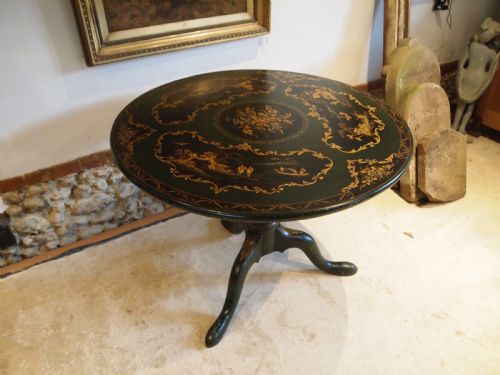


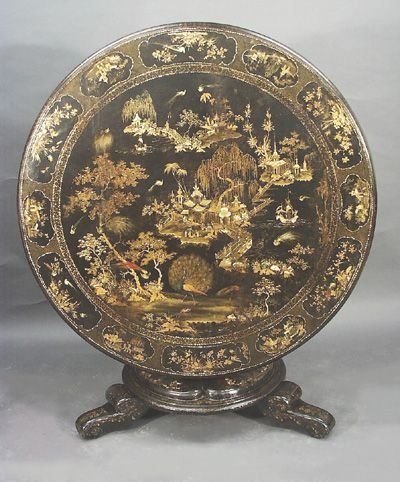
Chinoiserie Lacquered Tripod Table
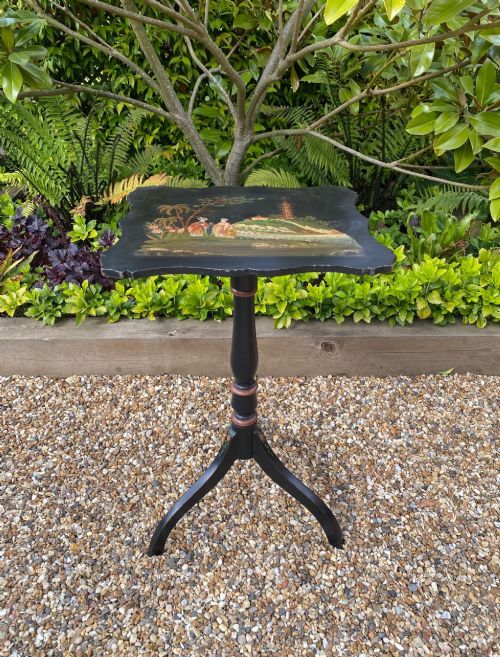
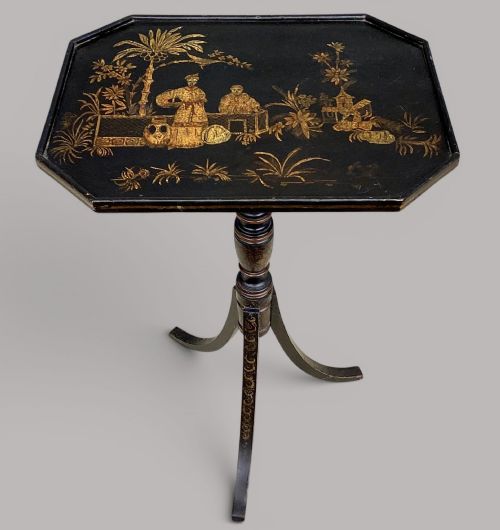
These chinoiserie lacquered tripod tables bring hand-painted narrative scenes and glossy black or dark surfaces into domestic rooms.
Chinoiserie Lacquered Tripod Table
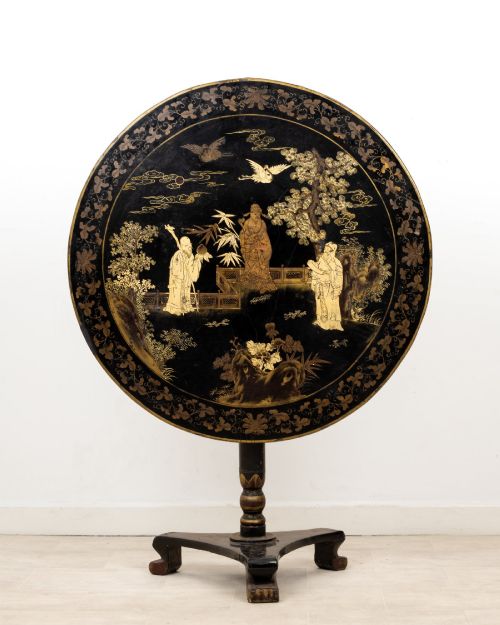
A chinoiserie lacquered tripod table combines a circular or tilt-top surface with a three-legged base, decorated in the European interpretation of East Asian design. These small occasional, side, and wine tables emerge across the Georgian, Regency, Victorian, and Edwardian eras, alongside revival pieces.
The forms span simple wine tables, tilt-top occasional tables, tray tables, and torcheres. The evidence shows black lacquer and hand-painted decoration appearing frequently on these tripod frames.
Originating from British cabinet-making traditions influenced by trade with China and Chinese export goods, the examples span the eighteenth, nineteenth, and early twentieth centuries. Buyers encounter both original period pieces and later revival versions sharing the same structural format.
Materials and construction
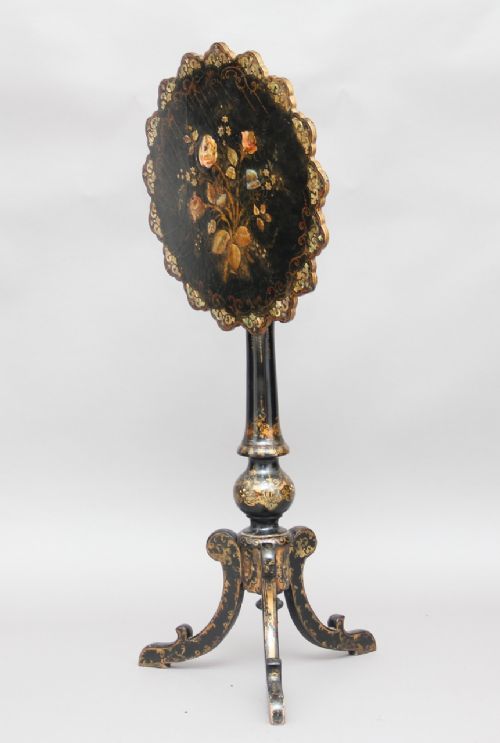
The primary construction relies on timber, sometimes augmented by papier-mâché, shaped into a top supported by a tripartite or three-legged pedestal base. Craftsmen applied layers of lacquer to achieve a smooth, deep surface finish.
Decoration involved hand painting, gold leaf, parcel gilt, and occasionally mother-of-pearl inlay to render the characteristic figures, landscapes, and architectural motifs. Glazed cinnabar also appears among the surface treatments in the record.
One surface manages to squeeze an entire mythical Chinese village onto a top no wider than a cartwheel.
Evaluating quality
Quality rests in the execution of the hand-painted details and the depth of the lacquer finish. The finesse of the gold leaf application and the precision of the joinery on the tripod base distinguish finer examples from standard production.
The crispness of the carving on the pedestal and the integrity of the surface ground determine the distinction between masterwork pieces and simpler regional or revival equivalents.
The Chinoiserie Lacquered Tripod Table Glossary
- Chinoiserie
- European decorative style reflecting Chinese artistic influences, typically featuring figures, pagodas, and landscapes. This aesthetic dominated the ornamentation of these lacquered surfaces.
- Tripod table
- A small occasional table supported by a central pillar on three legs. This format allows the table to stand steadily on uneven floors.
- Tilt top table
- A table with a mechanism enabling the top to pivot vertically when not in use. This design saved space in period interiors.
- Japanned
- European lacquerwork imitating East Asian styles, developed through successive layers of varnish and heat curing. It provides the dark glossy ground for gold decoration.
- Parcel gilt
- Partially gilded with gold leaf or paint to highlight specific carved or painted details. It creates contrast against the black lacquer background.
Chinoiserie Lacquered Tripod Table: Frequently Asked Questions
What is a chinoiserie lacquered tripod table?
A small movable table featuring a three-legged base and a top decorated with European interpretations of East Asian art.
These pieces served functional roles in period homes as wine tables, side tables, or display surfaces.
How were these tables used originally?
They functioned as portable surfaces for serving wine, holding candles, or displaying decorative objects in drawing rooms and parlours.
Tilt-top variants allowed the furniture to be stored flat against a wall when floor space was required.
How do I date a lacquer table?
Dating relies on examining the timber construction, the formulation of the lacquer, and the style of the painted motifs.
Georgian and Regency examples show different structural joinery and painting techniques compared to Edwardian or later revival pieces.
Are these tables sturdy enough for daily use?
The three-legged pedestal design provides stable support on level flooring, though the surfaces require care to prevent scratching.
Placing them away from direct heat sources helps preserve the underlying timber and the historic lacquer finish.