


Regency Inlaid Tea Chest
A regency inlaid tea chest brings the refined joinery of the early nineteenth century straight to a modern surface.
Regency Inlaid Tea Chest
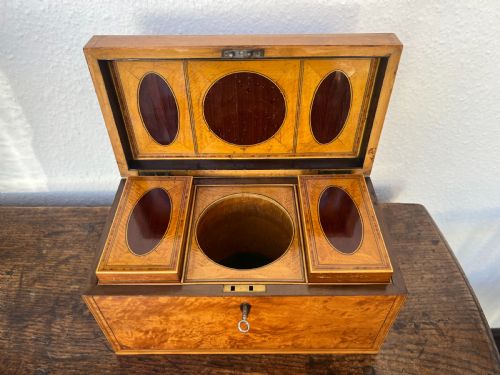
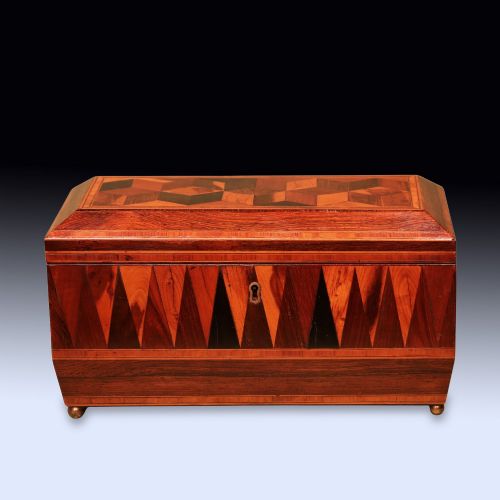
A regency inlaid tea chest is a specialised wooden box designed during the Regency, Georgian, and early Victorian periods to store and preserve expensive dry tea leaves. These containers appear in forms such as rectangular boxes, sarcophagus shapes, and standalone teapoys resting on their own pillars.
The pieces on this page originate predominantly from the Regency era, alongside related nineteenth-century examples in mahogany, rosewood, and exotic woods. Interiors frequently retain divisions, loose leaf cases, or inner canisters meant for separating different blends.
Beyond their original culinary purpose, these boxes function as decorative caskets and keepsake containers. Their compact proportions make them suitable for display on side tables and desks in contemporary rooms.
How They Were Made
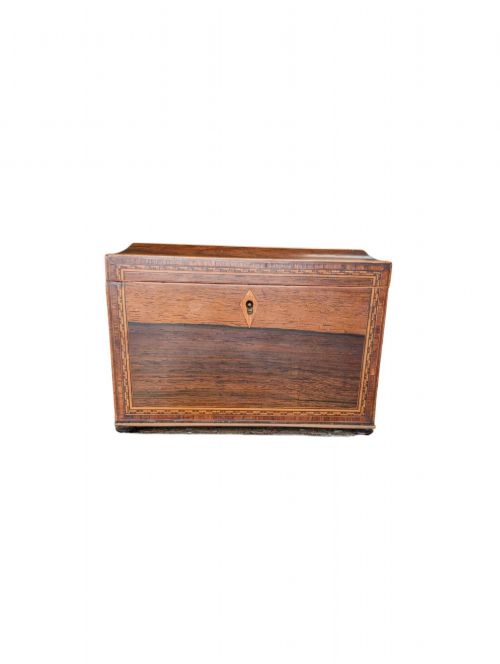
Cabinetmakers constructed these chests from dense tropical hardwoods like rosewood and mahogany, often applying veneers of satinwood, amboyna, and burr yew. Surfaces were then decorated using contrasting stringing and parquetry geometric patterns.
Brass inlay forms delicate scrollwork and geometric borders across many lids and panels, sometimes paired with mother-of-pearl or bone details. Tunbridge ware and tortoiseshell variations demonstrate specialised mosaic and shell-veneering techniques developed by period artisans.
The listings here frequently combine rosewood with brass inlay, while incorporating secondary timbers like boxwood, ebony, and satinwood.
What Varies in Quality
The survival of internal components, such as original mixing bowls, matching tea canisters, and working locks with keys, elevates the integrity of a piece. The crispness of carved details like lion mask handles also distinguishes superior examples.
The Regency Inlaid Tea Chest Glossary
- Teapoy
- A small stand or table designed to support a tea chest, or a large tea caddy fitted with its own legs. These often include internal compartments for mixing leaves.
- Sarcophagus form
- A box shape featuring a domed or steep-sided profile resembling an ancient stone coffin, popular for large tea caddies during the Regency period.
- Parquetry
- A geometric mosaic of wood pieces used for decorative veneer on box lids and panels. It creates striking patterns through contrasting light and dark timbers.
- Tunbridge ware
- Woodworking characterised by tiny, precise blocks of naturally coloured woods assembled into mosaic pictorial or geometric designs. Named after the English town where the technique flourished.
- Stringing
- A narrow strip of contrasting wood or brass inlaid into a flush channel on a surface to create linear borders. This technique frames the panels of many period chests.
Regency Inlaid Tea Chest: Frequently Asked Questions
What were tea chests used for?
Tea was an expensive luxury commodity in the nineteenth century, so leaves were kept under lock and key to prevent domestic theft. The boxes protected the delicate flavours from moisture and light.
Inside, the chests featured lidded compartments known as caddies, and sometimes a central glass or ceramic bowl for blending black and green teas together.
How do I style a tea chest at home?
These chests work well placed on a living room coffee table, a hallway console, or a study bookshelf. Their rich rosewood and mahogany tones complement both traditional and modern interiors.
Because they remain functional, you can lift the lid to store everyday items like keys, stationery, or jewellery while keeping the decorative exterior on display.
How can I tell a Regency chest from a Victorian one?
Regency pieces, dating roughly from the early nineteenth century, typically feature restrained neoclassical lines, crisp brass inlay, and exotic veneers like rosewood and satinwood. Cabinetmakers of this era favoured architectural proportions and sarcophagus silhouettes.
Victorian examples from later in the century often display heavier carving, varied proportions, and mother-of-pearl ornamentation, reflecting changing domestic tastes and manufacturing methods.
Are keys usually included with these boxes?
Many surviving chests retain their original working locks, and some listings note the presence of a matching key. However, historical locks on nineteenth-century boxes can be delicate and are often intended for display rather than daily security.
Even without a key, the escutcheons and brass hardware contribute significantly to the decorative appeal of the piece.