

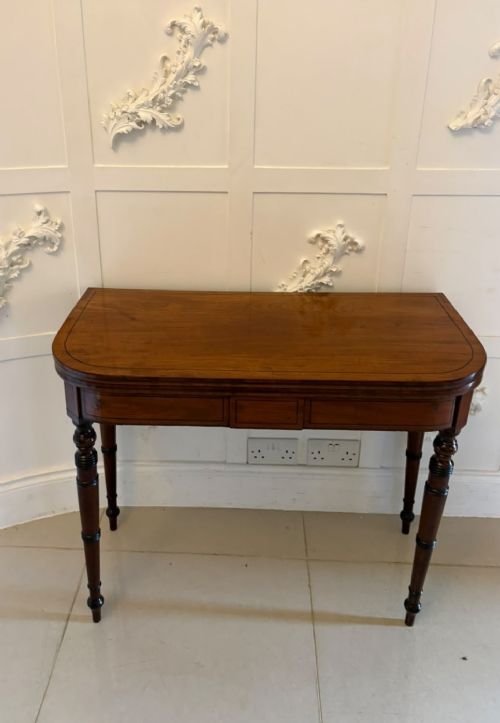
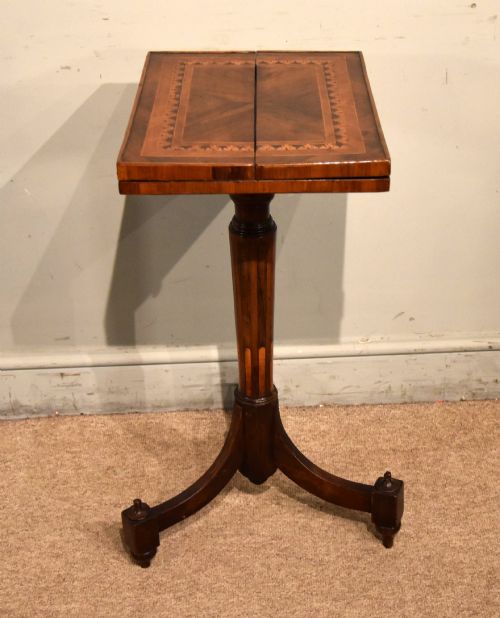
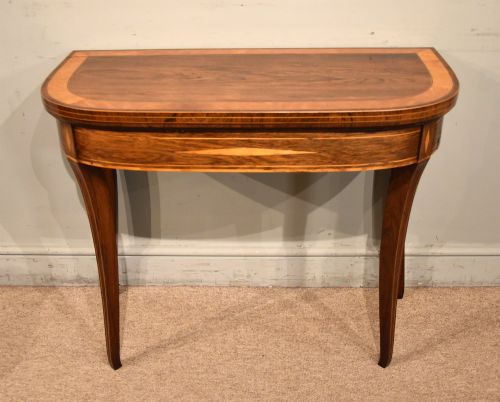

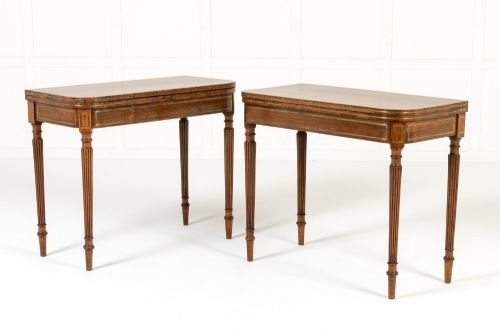
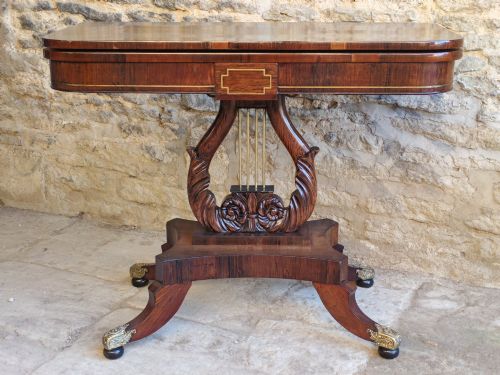
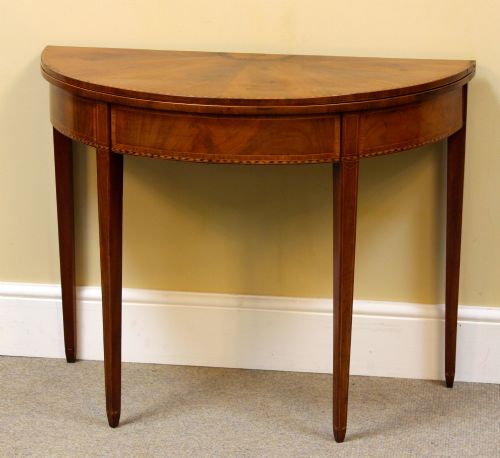
Regency Inlaid Games Table
A regency inlaid games table brings sophisticated folding surfaces and contrasting timber details into a room, offering adaptable entertaining space with period character.
Regency Inlaid Games Table
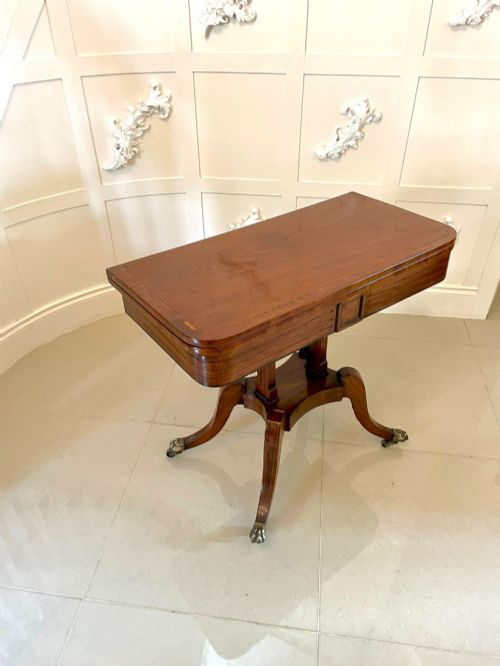
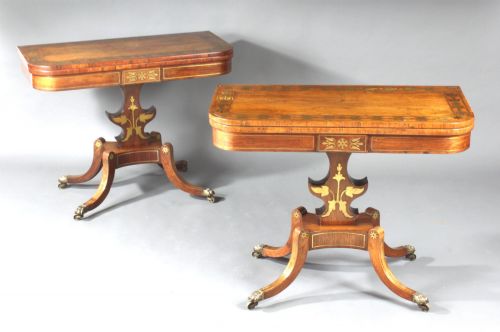
A regency inlaid games table is a dual-purpose piece designed for card playing, social evenings, and general display within a home. These tables typically feature a fold-over top or rotating mechanism that reveals a baize-lined playing surface when opened.
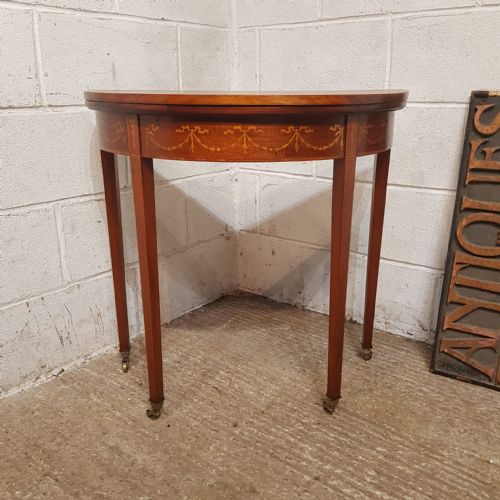
The versions most commonly met on this page date from the Regency and Georgian periods, alongside later revival pieces. They appear predominantly in forms such as demi-lune, D-shape, and rectangular console tables constructed for parlour or drawing-room use.
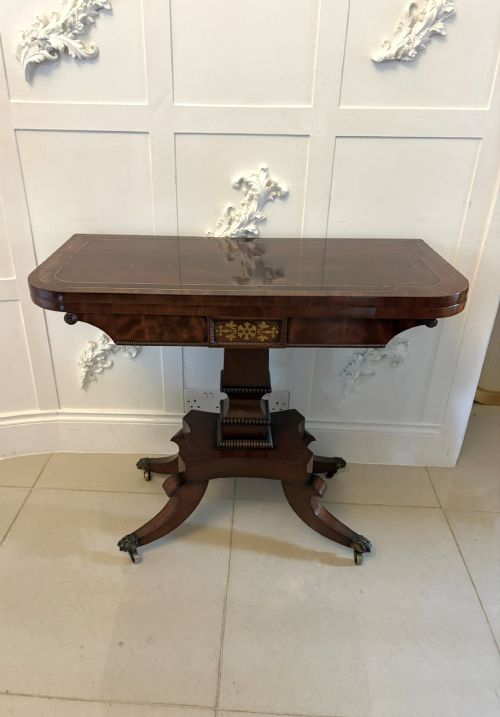
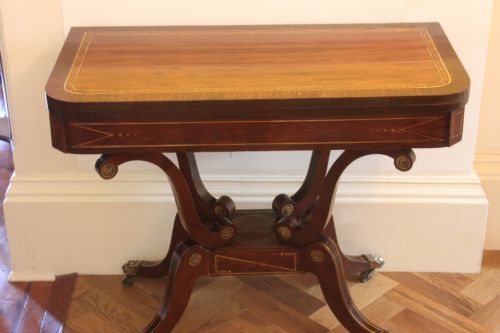
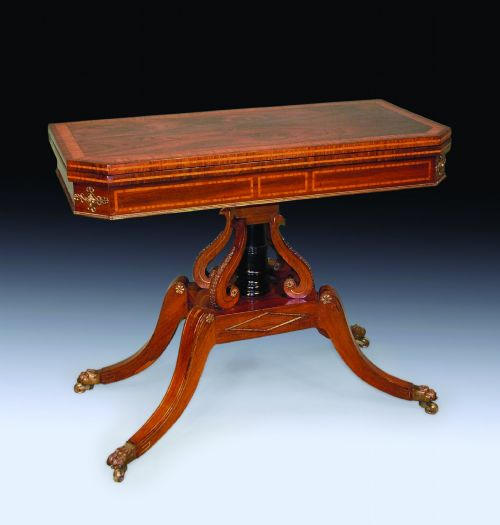
Makers utilised rich timbers and precise stringing to create geometric and floral patterns along the edges and friezes. Many examples incorporate pedestals with scroll feet or brass castors, balancing domestic utility with formal elegance.
How They Were Made
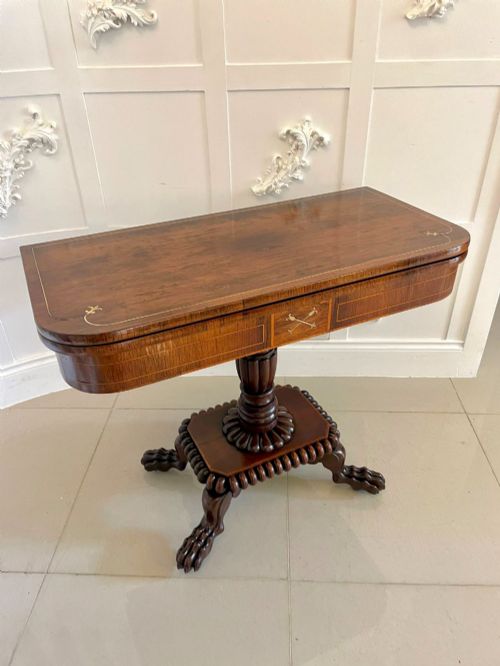
Cabinet makers constructed these tables using solid foundational woods like mahogany and fruitwood, veneered with figured rosewood, satinwood, or plum pudding mahogany. Artisans then recessed contrasting veneers of boxwood and ebony into channels to form delicate stringing and banding.
Brass inlay forms a significant decorative technique across the period, shaped into scrolling arabesques and geometric borders embedded directly into the wood. Metal mounts such as brass sabots, castors, and hinges completed the structural and decorative assembly of the folding tops.
Listings feature woods including rosewood, mahogany, satinwood, boxwood, and ebony, combined with brass inlay.
What Varies in Quality
The standard of timber selection and veneer matching defines the visual hierarchy of these pieces. Higher-grade examples display densely grained rosewood and meticulously cut satinwood that wrap evenly around curves and corners without lifting.
The precision of the inlay work and the integration of brass components separate standard production from master craftsmanship. Refined execution shows tight joints in the stringing and robust pivoting mechanisms that allow the fold-over leaves to operate smoothly.
George Bullock
The Regency Inlaid Games Table Glossary
- Demi-lune
- Having a half-moon shape with a flat back edge designed to stand flush against a wall. This format allowed tables to occupy minimal space when closed.
- Stringing
- Thin lines of contrasting wood inlay used to outline borders and geometric panels. It creates a crisp linear definition against darker primary timbers.
- Sabot
- A metal sleeve or mount fitted to the foot of a table leg for protection and decoration. Brass sabots often incorporate castors to aid movement.
- Cross-banding
- A border of veneer laid so that the grain runs at right angles to the main surface. This technique frames the top panel and adds visual depth.
Regency Inlaid Games Table: Frequently Asked Questions
What is a regency inlaid games table used for?
These tables served primarily for card games and social gatherings in period drawing rooms. When folded shut, they functioned as side or console tables against the wall.
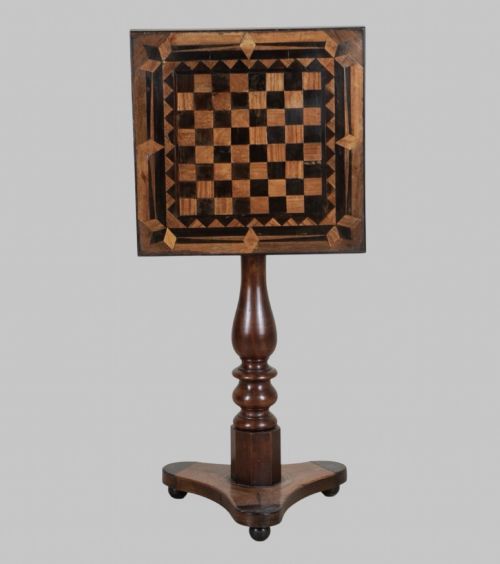
Opening the leaf revealed a baize-lined surface for cards or chess. Some variations included integrated storage compartments for counters and sewing equipment.
How do you open a fold-over games table?
The hinged top rotates on a pivot or swings open on knuckle joints to double the surface area. A swing leg or a pull-out frieze drawer supports the unfolded leaf.
Care must be taken to support the weight evenly during this movement to protect antique hinges and wooden pivots.
How can you tell the period of a games table?
Dating relies on examining timber choices, construction methods, and decorative motifs. Regency and Georgian examples frequently feature rosewood or mahogany with brass stringing and specific pedestal base designs.
Revival pieces from later eras often use different secondary woods and display standardised mechanical fittings that lack hand-cut precision.
Where should you place a games table in a home?
They fit well in hallways, living rooms, or dining spaces where a shallow console table is useful against a wall. Placing them away from direct sunlight protects delicate satinwood and rosewood veneers from fading.
Opening them occasionally for display showcases the internal inlay and timber grain without risking heavy daily wear.