

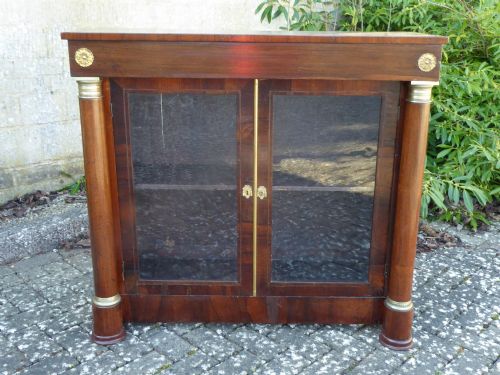
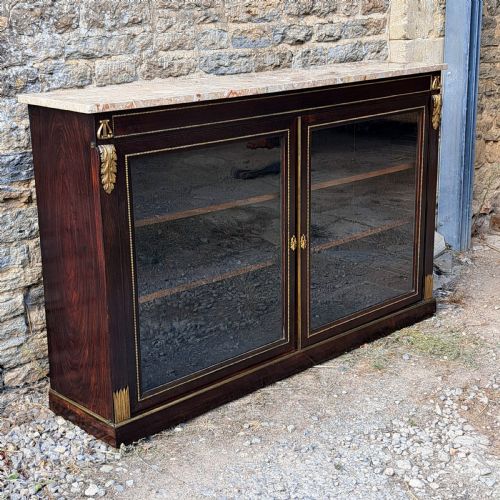

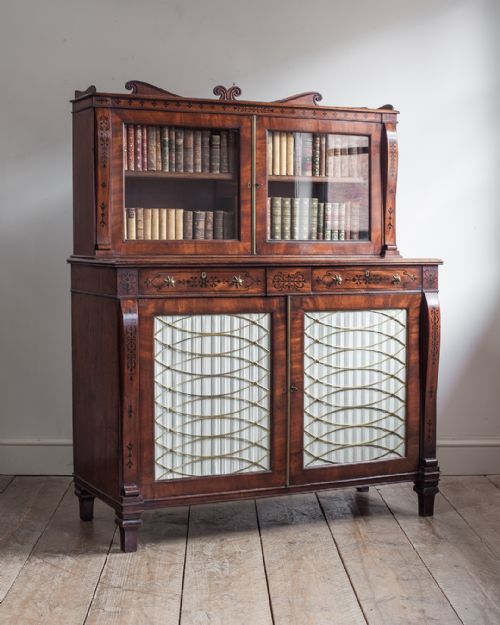


Regency Glazed Credenza
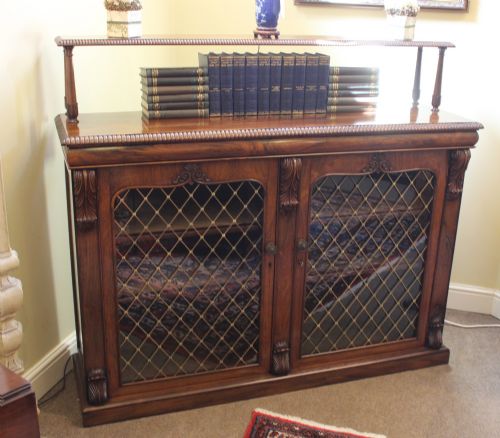
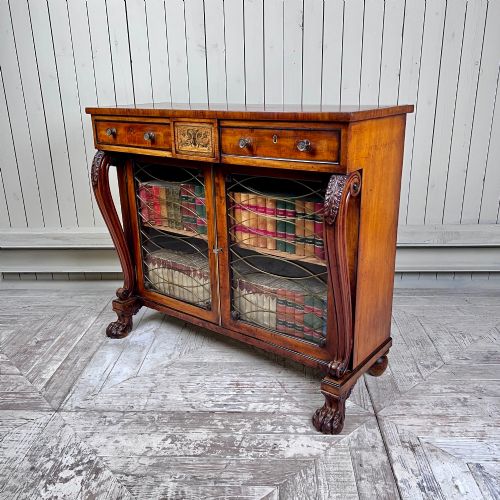
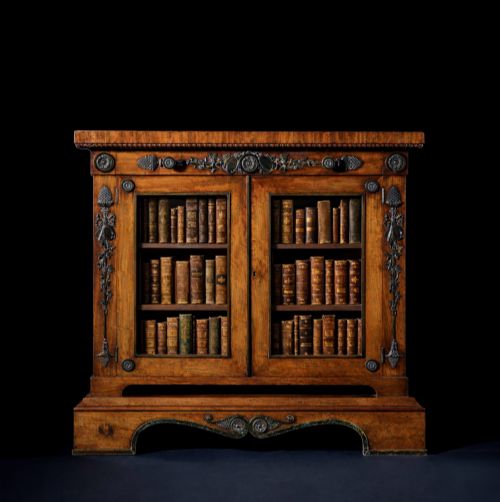
A regency glazed credenza offers elegant storage and display, bringing refined timber and glass work to a fine room.
Regency Glazed Credenza
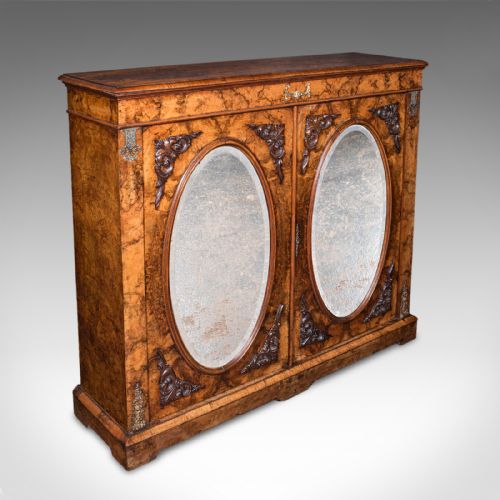
When searching for a regency glazed credenza, buyers encounter a selection of bookcases, side cabinets, and chiffoniers from the Regency, Georgian, and nineteenth-century periods. These pieces serve to display books and decorative objects while concealing items behind timber lower doors.
The versions met most frequently on this page take the form of rosewood and mahogany side cabinets or bookcase cabinets, often featuring glazed upper sections and brass or gilt metal mounts. Proportions range from neat single units to large breakfront library cabinets.
Origins span English workshops of the early nineteenth century, alongside later revival pieces produced in Victorian times. Walnut, burr yew, and pollard oak also appear among the woods utilised by cabinetmakers of these eras.
Materials and construction
Cabinetmakers constructed these pieces using dense hardwoods such as rosewood, mahogany, and walnut, frequently applying fine veneers to carcases of secondary timber. Brass inlay, ormolu mounts, and gilt bronze provide structural and decorative contrast against the dark grains.
Glass is set into timber or brass-framed doors to protect contents while allowing visibility, and marble tops occasionally cap the upper surfaces of side cabinets. Interior shelving adjusts within upright partitions, constructed to support heavy volumes or display items.
Regency Glazed Credenza Retail Price Guide 2026
Typical asking prices for regency glazed credenza among the pieces listed under this phrase on Sellingantiques today, from the lower quarter to the upper quarter. They describe what is for sale here now, not the wider market.
Listings feature items spanning the Regency, Georgian, and Victorian periods, executed in rosewood, mahogany, walnut, and pollard oak.
Markers of distinction
Quality rests upon the selection of timber figures, such as figured rosewood, burr yew, and pollard oak, paired with precise brass inlay and Ormolu mounts. The crispness of carved details and the integration of original glass panes set superior examples apart from standard production.
Attribution to known makers or workshops elevates a piece, as seen in items linked to cabinetmakers working in London and Edinburgh during the early nineteenth century. Original proportions, retaining neatness and structural integrity, indicate superior workshop standards.
S Jamar·William Trotter
The Regency Glazed Credenza Glossary
- Breakfront
- A piece of furniture whose central section projects forward from the flanking wings. This configuration creates architectural depth in large library cabinets and side cupboards.
- Chiffonier
- A low cabinet featuring a combination of shelves, drawers, and enclosed cupboards. These pieces evolved during the nineteenth century for use in reception rooms.
- Ormolu
- Gilt bronze applied as decorative mounts to furniture frames and doors. The technique involves a mercury and gold amalgam fired onto a brass or bronze base.
- Pier Cabinet
- A narrow display cabinet designed to fit wall spaces between windows. They typically incorporate glazed doors to protect porcelain and small collections.
Regency Glazed Credenza: Frequently Asked Questions
What is a regency glazed credenza used for?
These cabinets store books, papers, and household items while displaying porcelain and ornaments behind glass doors.
They sit in reception rooms and libraries, serving both decorative and practical functions in a formal interior.
How do I identify the Regency period?
Look for classical restraint, clean lines, and restrained use of brass inlay, ormolu mounts, and gilt bronze. Rosewood and mahogany predominate in the timber selection.
Cabinets from this era often feature neatly proportioned carcases with simple glazed doors and architectural cornices.
What woods are typical for these cabinets?
Rosewood and mahogany form the primary materials found across the available pieces. Walnut, pollard oak, and burr yew also appear.
Makers utilised these dense timbers for their rich grain patterns, often enhancing them with boxwood stringing and brass details.
Where should I place a side cabinet?
Side cabinets suit drawing rooms, dining spaces, and hallways where wall space permits a low profile unit. They anchor the room while providing surface area for lamps and objects.
Keep them away from direct sunlight and heat sources to protect the polished wood surfaces and timber joints.