
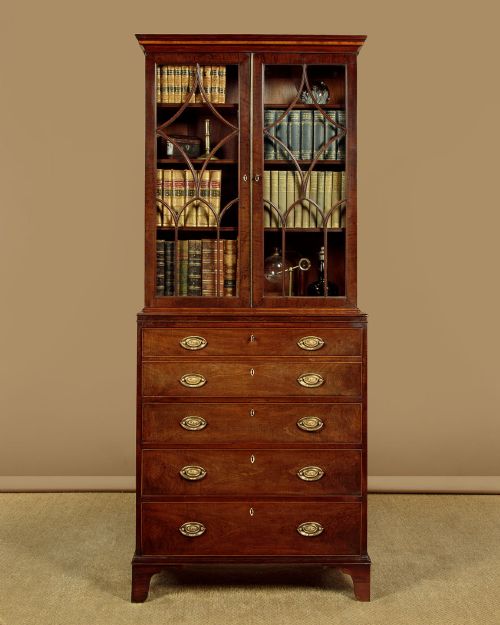
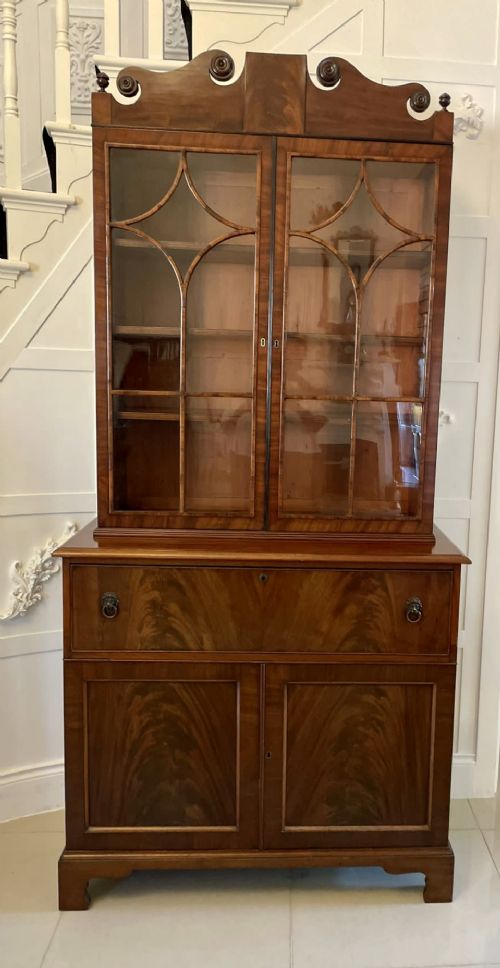
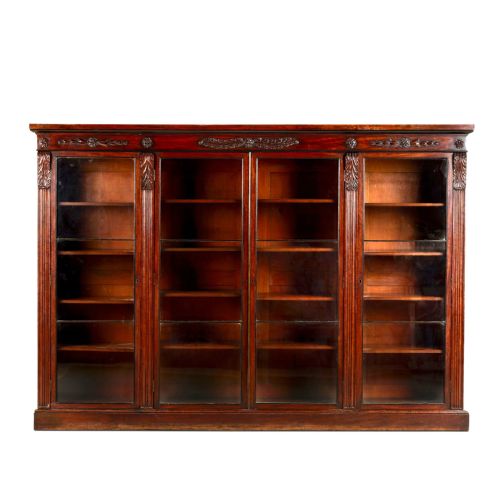
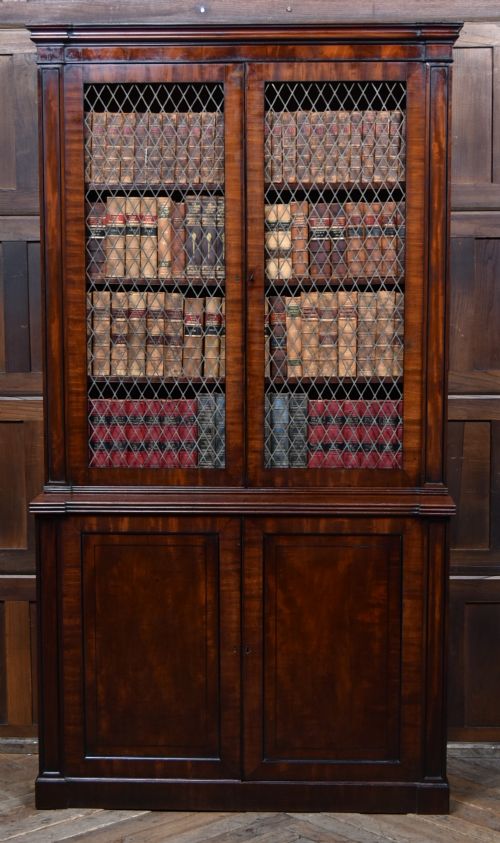
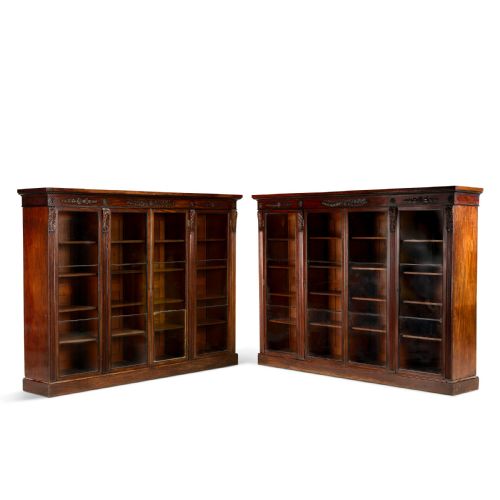
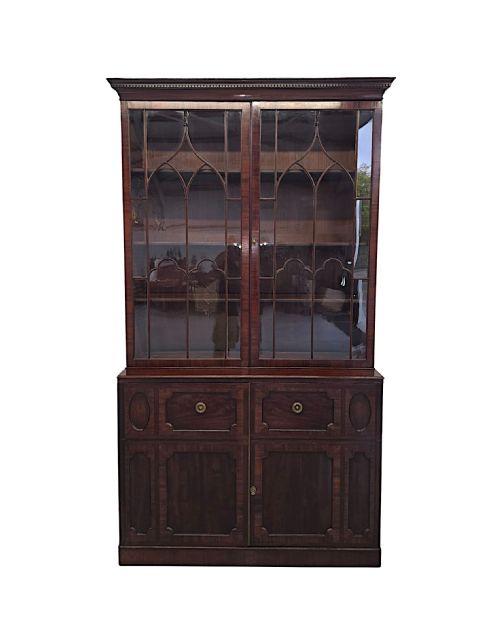
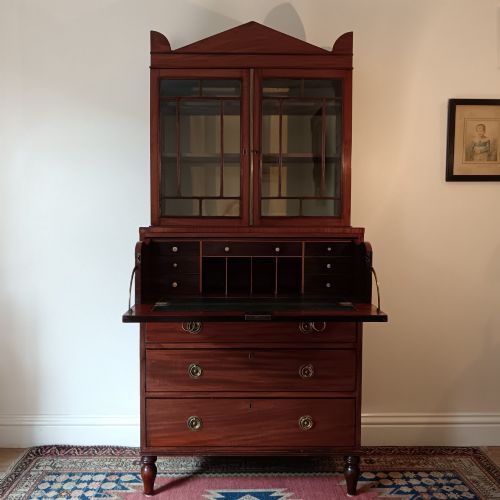
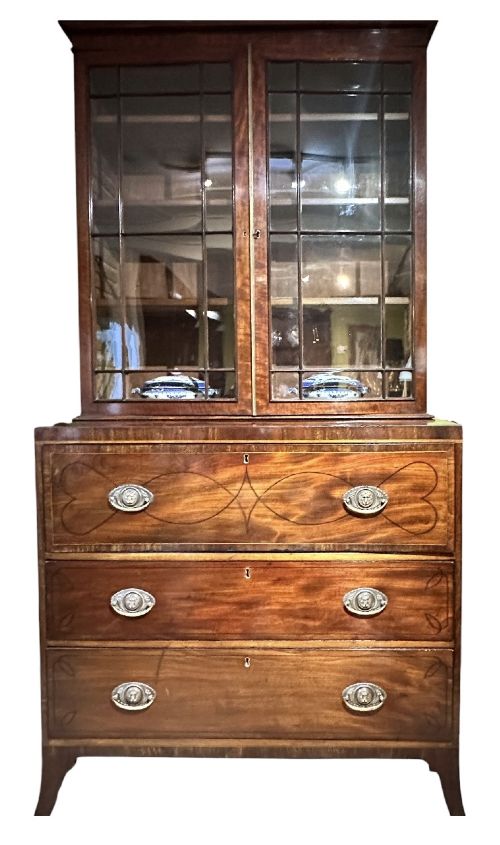
Regency Glazed Bookcase Cabinet
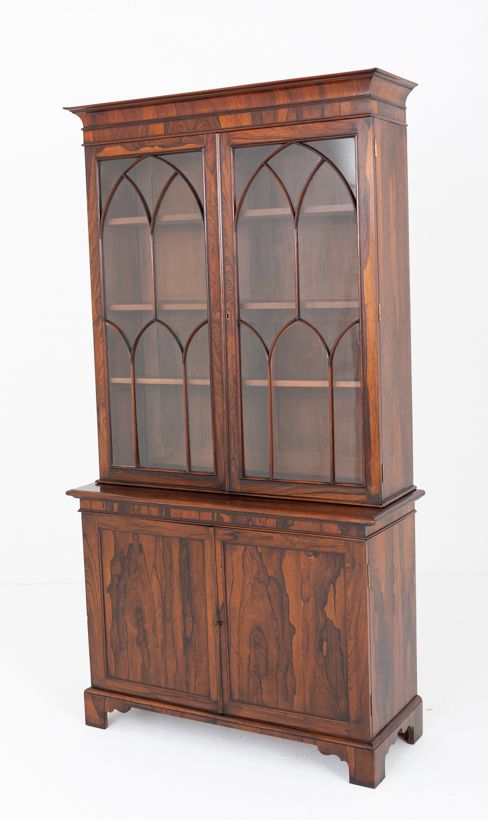
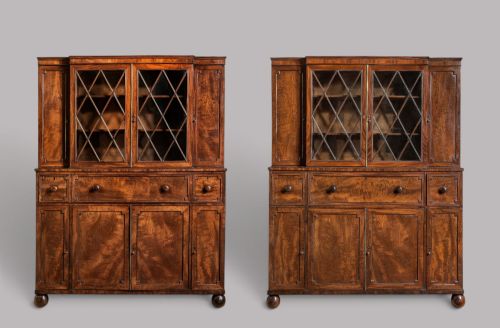
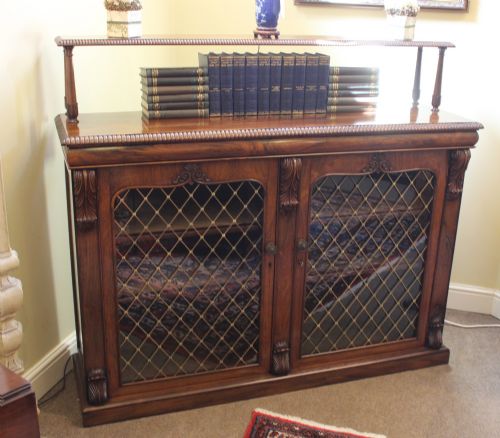
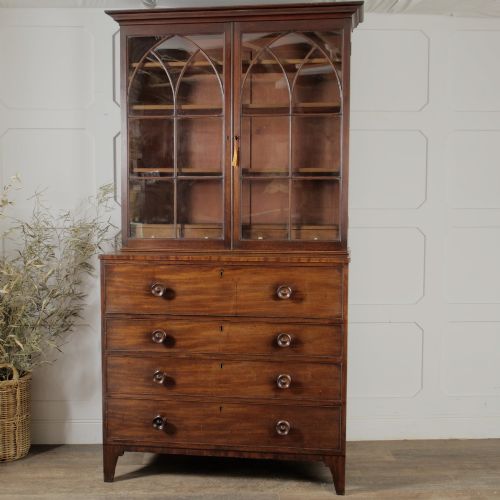
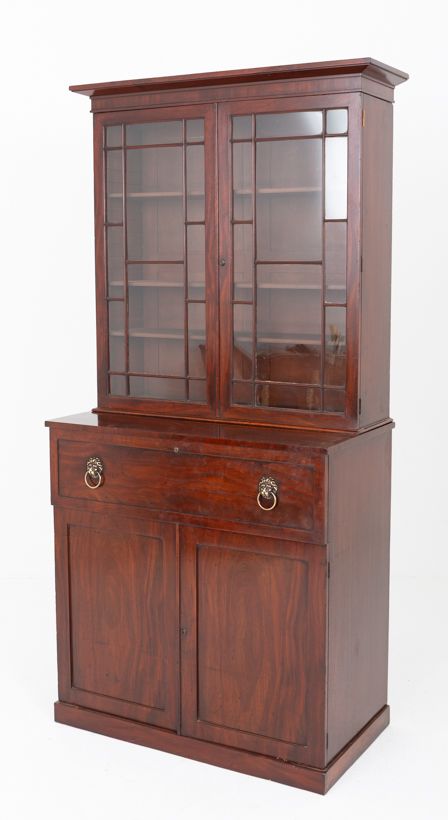
These regency glazed bookcase cabinet pieces combine architectural proportion with transparent display, designed to house valuable libraries and display prized collections.
Regency Glazed Bookcase Cabinet
A regency glazed bookcase cabinet bridges the divide between formal library storage and elegant drawing-room display. The pieces on this page span the Regency, Georgian, and William IV periods, alongside later nineteenth-century interpretations.
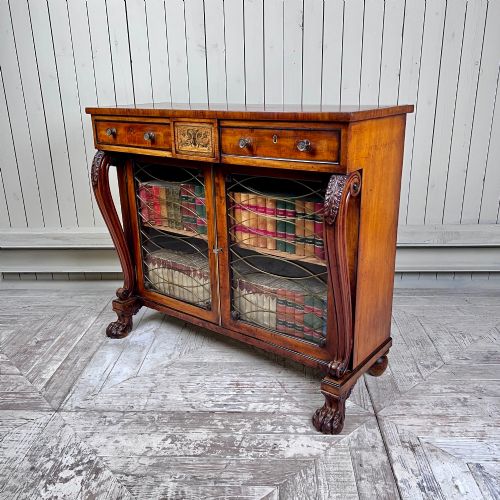
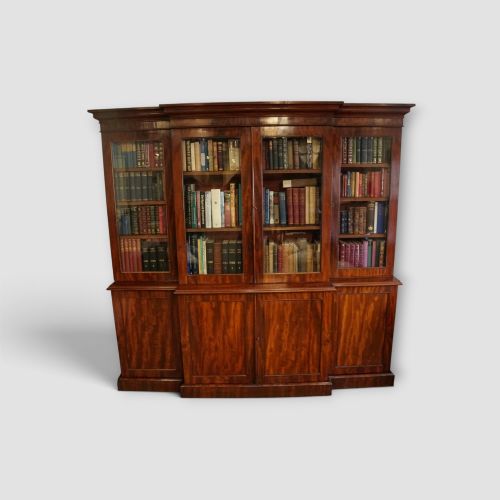
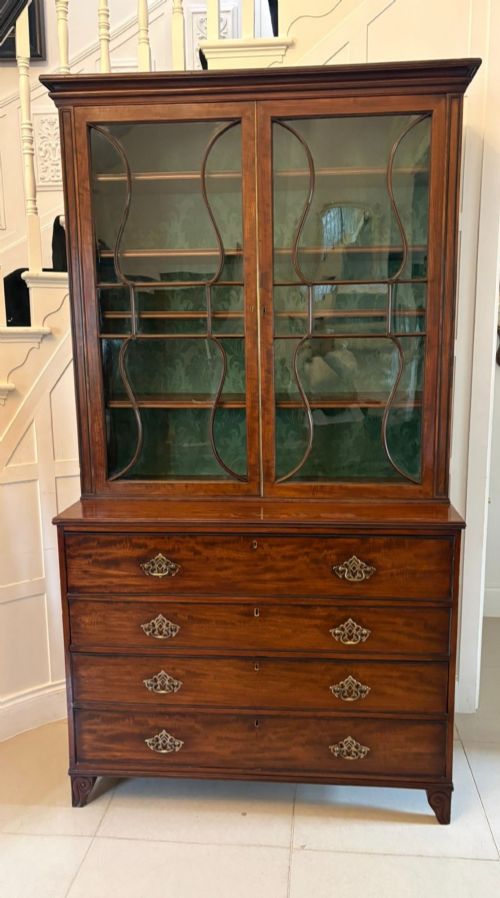
Makers produced these cabinets in various formats, ranging from tall breakfront library bookcases to smaller secretaire bookcases and low pier cabinets. Figured mahogany and rosewood dominate the material record, often paired with glass doors to protect texts from dust.
The architectural lines of the Regency style prevail, alongside occasional Gothic Revival details and late Georgian proportions. These items function as the focal point of a room, combining enclosed shelf space with upper glass panels.
Materials and Technique
Cabinetmakers relied on dense hardwoods such as mahogany and rosewood as the structural foundation for these large pieces. Timber selection focused on figured grains, which provided natural patterning across large flat surfaces.
Craftsmen applied contrasting wood inlay, ebony stringing, and brass mounts to accentuate the geometry of the doors and cornices. Wire mesh occasionally replaced standard glass panes in specialised library cabinets to aid ventilation.
Listings feature mahogany, rosewood, and walnut timbers, alongside brass inlay and wire mesh.
Distinctions in Execution
Quality rests in the handling of timber figure and the precision of the joinery across large breakfront carcasses. Superior examples exhibit continuous grain matching across drawer fronts and doors.
The refinement of brass inlay, fine bronze mounts, and internal fittings such as fitted writing drawers separate standard production from workshop pieces attributed to prominent makers.
Gillows·George Oakley·Marsh & Tatham
The Regency Glazed Bookcase Cabinet Glossary
- Secretaire bookcase
- A hybrid form featuring a pull-down writing drawer with an internal fitted arrangement of small drawers and pigeonholes, set beneath glazed upper doors.
- Breakfront
- A cabinet design where the central section projects forward from the flanking wings, creating a pronounced architectural rhythm.
- Chiffonier
- A low sideboard or cabinet, occasionally adapted with upper shelving or glass doors to serve as a compact bookcase.
- Pier cabinet
- A narrow cabinet designed to fit the wall space between windows, often featuring glazed doors and rosewood surfaces.
- Astragal glazed
- Glass doors divided into smaller panes by narrow wooden glazing bars, characteristic of period library furniture.
Regency Glazed Bookcase Cabinet: Frequently Asked Questions
How do I use a secretaire bookcase?
The central drawer pulls down on hinges to reveal a writing surface complete with small compartments for stationery and documents. This allows the cabinet to function as both a desk and a library.
The upper glass doors remain closed during writing use, keeping your volumes protected while you utilise the fold-down leather or wood desk surface.
Where should I place a large breakfront bookcase?
These imposing pieces require a principal wall in a reception room, library, or study where their architectural proportion can anchor the space. Ensure the room has stable humidity to protect the antique rosewood and mahogany veneers.
Position the cabinet away from direct sunlight to prevent fading of the polished wood surfaces and the fabrics often used within the interior.
What is the difference between a pier cabinet and a bookcase?
Pier cabinets are typically lower and narrower, designed specifically to sit against the wall space between architectural windows. Standard bookcases offer taller proportions intended for extensive library storage.
Both variants utilise glass doors, but pier cabinets lean toward display functions for decorative objects rather than heavy book storage.
How do I identify a Regency period piece?
Look for classical restraint, clean architectural lines, and the use of dark tropical hardwoods like mahogany and rosewood. Brass inlay, ebony stringing, and bronze mounts frequently appear on pieces from this era.
Construction details such as hand-cut dovetails and original float glass in the doors provide further confirmation of early nineteenth-century manufacture.