


Regency Gilded Urns
Regency gilded urns bring neoclassical grandeur to a room, combining classical forms with rich surface gilding.
Regency Gilded Urns
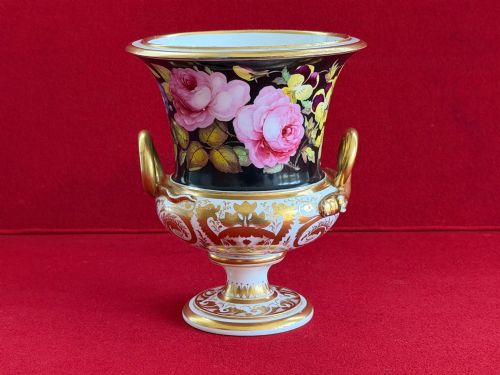
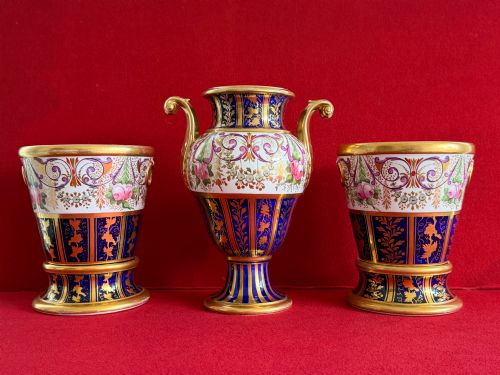
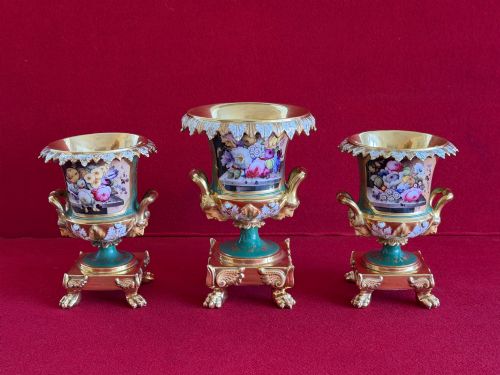
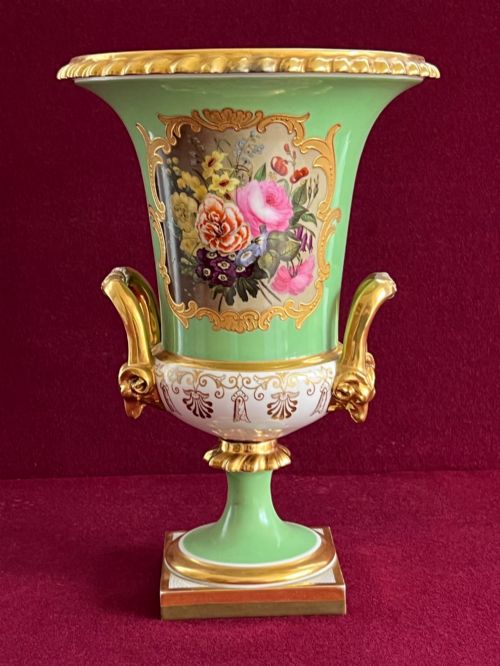
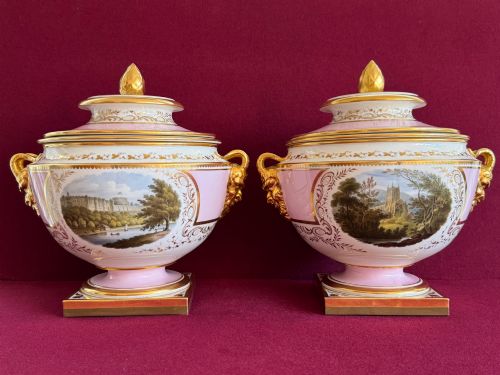
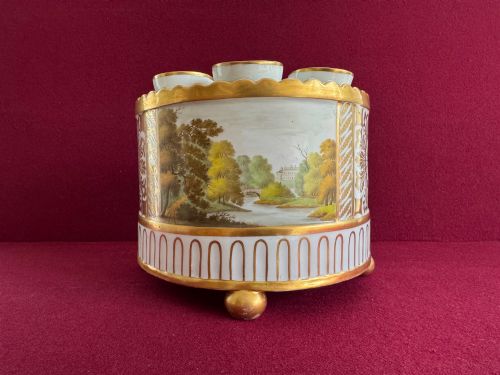
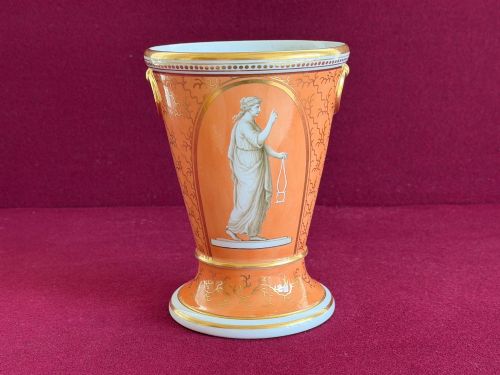
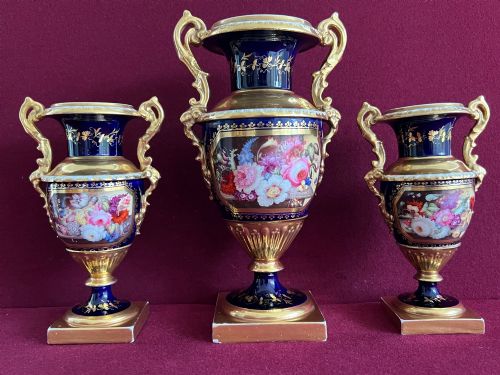
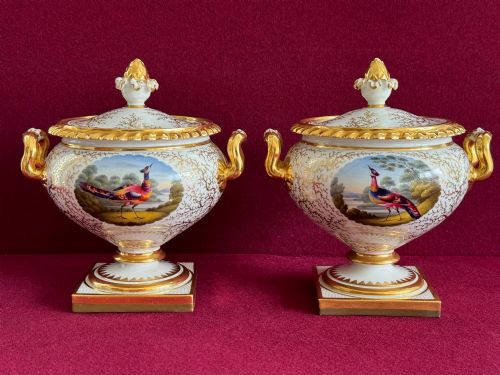
When searching for regency gilded urns, collectors encounter a variety of porcelain and wooden decorative objects originating principally from the nineteenth century, including the Georgian and Victorian periods. The selection on this page leans heavily toward English porcelain vessels, such as campagna urns, jardinières, ice pails, and two-handled vases produced by notable factories.
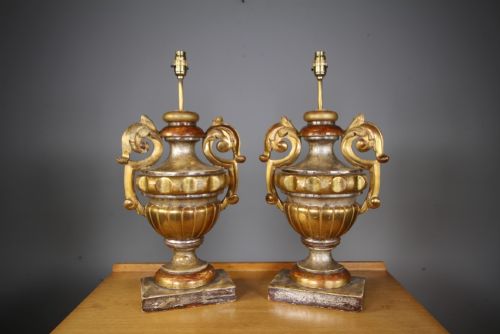
Beyond porcelain, the listings include carved wood items like giltwood lamps and pine mirrors finished with gold leaf, gesso, and ormolu mounts. Neoclassical and Regency styles dominate the aesthetic, drawing heavily on ancient Greek and Roman shapes adapted for British country houses.
Materials and Craftsmanship
Porcelain vessels were hand-thrown or moulded, then painted with enamel colours and finished with hand-applied gilding that often required multiple firings in a kiln. Artisans utilised gold leaf and liquid gilding to accent handles, rims, and classical motifs on bodies of blue, pink, or white porcelain.
Wooden items relied on carved pine, gesso, and giltwood, where craftsmen applied thin sheets of gold leaf over a prepared chalk and glue ground. Ormolu, or gilded bronze, provided cast and chased metallic accents for lamp bases and decorative mounts.
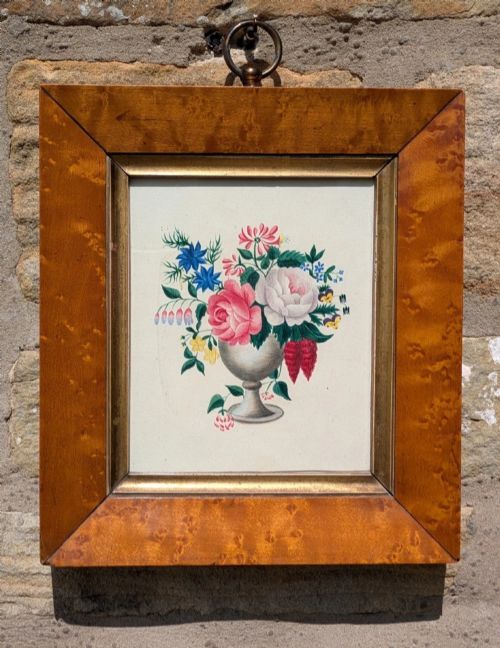
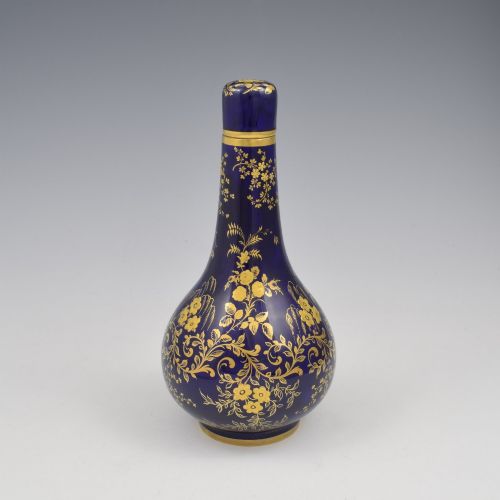
A tiny miniature porcelain vase sits among the heavy country house urns, proving that grand neoclassical taste came in pocket-sized editions.
Judging Quality and Execution
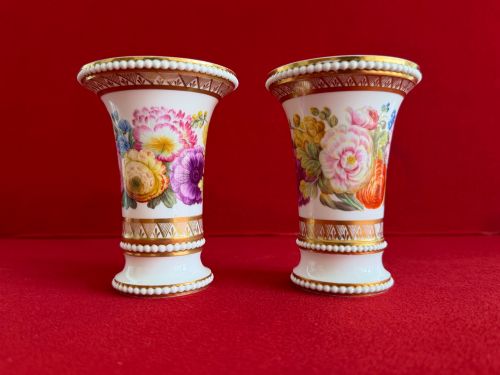
Quality rests primarily in the crispness of the modelling and the finesse of the hand-painted decoration, such as botanical studies or topographical scenes executed by named painters. Superior porcelain pieces display even glaze, precise enamel work, and thick, burnished gilding that retains its lustre.
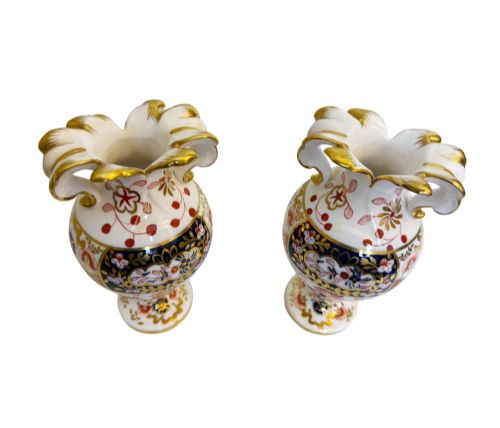
For carved pieces and lamps, quality shows in the depth and sharpness of the wood carving beneath the gold leaf, alongside the weight and detail of any ormolu mounts. Matched pairs and complete garnitures command greater interest than single items due to the difficulty of assembling balanced sets.
Flight Barr and Barr·Spode·Mason·Chamberlain Worcester·H and R Daniel
The Regency Gilded Urns Glossary
- Campagna urn
- A bell-shaped vessel with a footed base and handles, modelled after ancient Roman marble garden urns. This silhouette forms the basis of many nineteenth-century decorative porcelain pieces.
- Giltwood
- Timber, usually pine or carved wood, coated with gold leaf or gilt powder over a gesso preparation. It provides a bright, reflective surface for mirrors and lamp bases.
- Gesso
- A plaster mixture applied to wood surfaces as a smooth base for subsequent gilding. Craftsmen carved intricate details directly into this layer before applying gold leaf.
- Ormolu
- Gilded brass or bronze used for decorative mounts, handles, and lamp components. The technique involves applying a mercury and gold amalgam to metal before firing.
- Jardiniere
- An ornamental pot or stand designed to hold live plants or floral arrangements. These ceramic vessels often feature twin handles and elaborate neoclassical gilding.
Regency Gilded Urns: Frequently Asked Questions
What is a campagna urn?
A campagna urn is a classical bell-shaped vessel featuring a footed base and distinct handles, designed to mimic ancient marble garden pieces. Nineteenth-century makers adapted this ancient silhouette into porcelain table ornaments and decorative garnitures for formal interiors.
These pieces typically sat on mantelpieces or side tables in grand houses, often arranged in matched pairs or larger garniture sets. Their classic proportions made them popular vehicles for hand-painted botanical scenes and rich gilding.
How were these urns used?
Many nineteenth-century urns served as purely decorative ornaments for country house drawing rooms, while others functioned as ice pails, potpourri containers, or jardinières for plants. Porcelain examples with covers often held scented dry leaves or acted as centrepieces for dining tables.
Wooden and ormolu variants frequently functioned as lighting supports, later converted into table lamps during the nineteenth or twentieth centuries. Their classical decoration reflected the prevailing neoclassical taste of the period.
How do I care for gilt porcelain?
Gilt porcelain requires gentle cleaning with a soft, dry cloth to remove dust without damaging the delicate hand-applied gold leaf or enamel colours. Harsh chemical cleaners and abrasive cloths must be avoided, as they quickly wear away the thin nineteenth-century gilding.
When handling heavy ceramic urns or ice pails, support the base rather than lifting entirely by the handles, which are prone to historical stress fractures. Displaying pieces away from direct sunlight protects the painted enamels from fading over time.
Are these pieces English or continental?
The majority of pieces listed here originate from English factories such as Worcester, Spode, and Minton, alongside regional potteries like Mason's. Their designs frequently draw inspiration from French Sèvres porcelain and ancient Roman antiquities.
Certain continental items, such as Dutch toleware urns, also appear within the wider selection, demonstrating the cross-channel exchange of neoclassical design motifs during the Regency period. Examining factory marks and paste composition helps confirm the exact origin of each vessel.