

Regency Etagere
These tiered display pieces are built for portable service and open display, and a regency etagere brings layered proportion and practical shelving to a room.
Regency Etagere
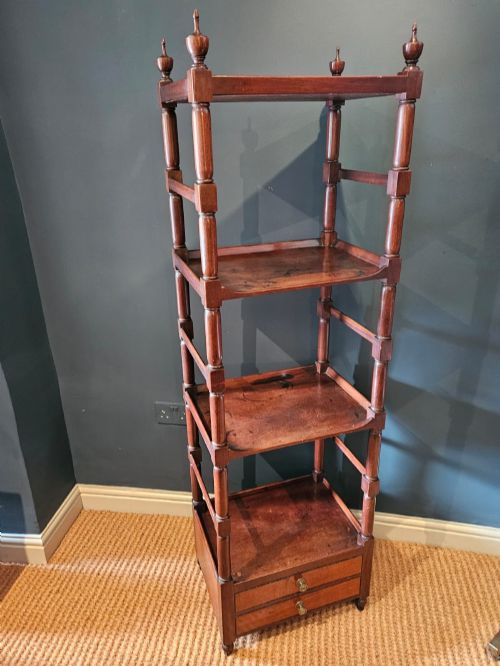
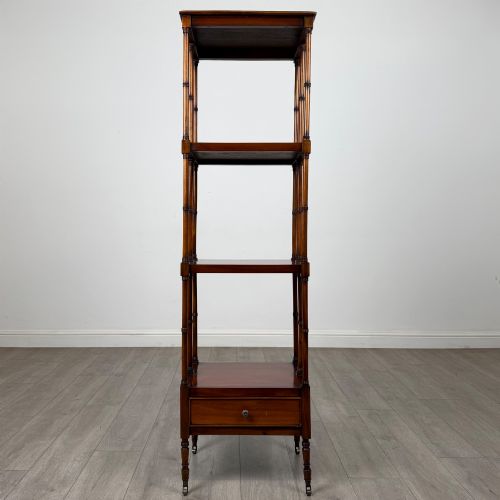
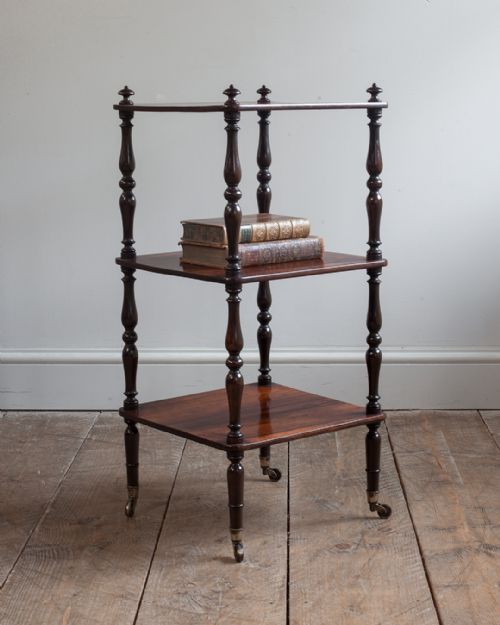
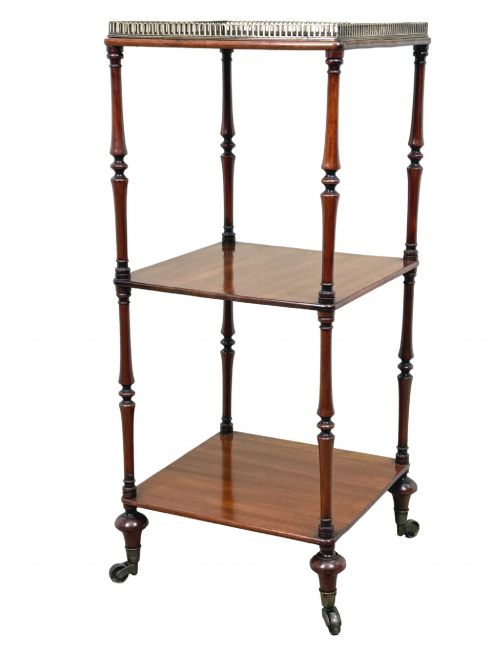
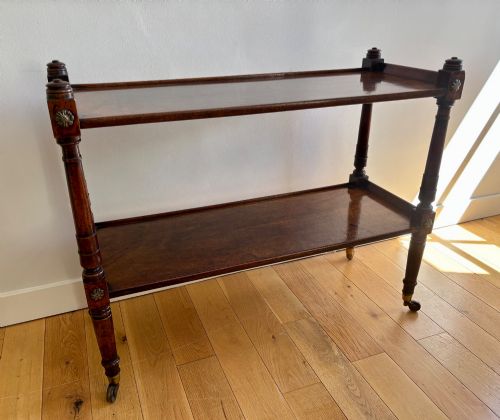
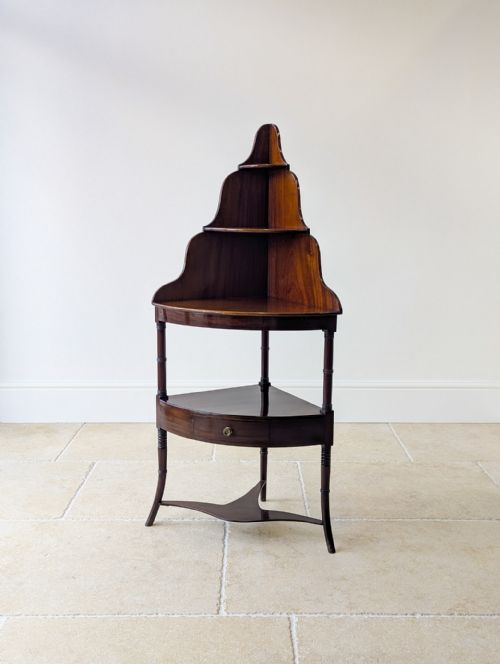
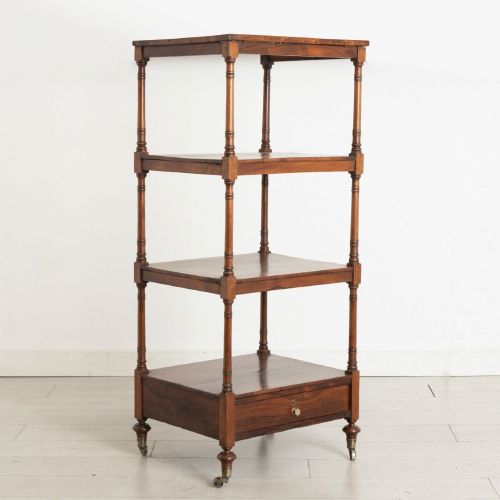
A regency etagere is an open tiered stand designed for books, display and portable service, appearing frequently alongside related forms such as whatnots and open bookcases. You will most commonly encounter mahogany and rosewood examples from the early nineteenth century featuring multiple stacked platforms.
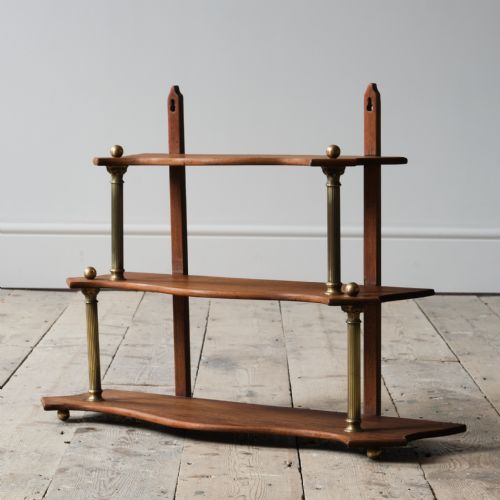
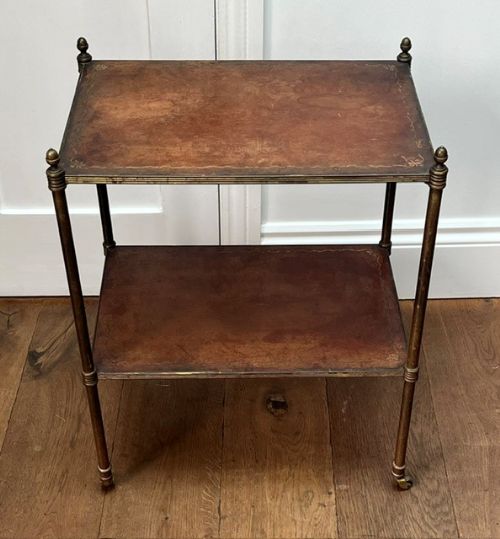
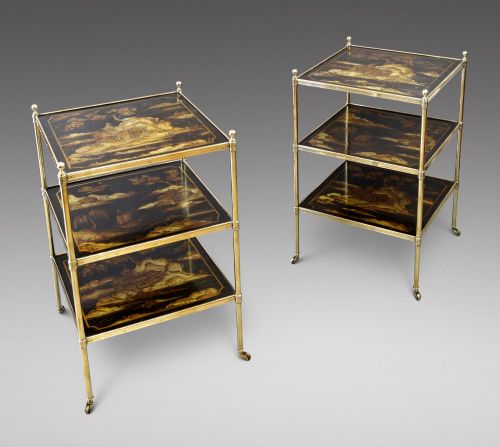
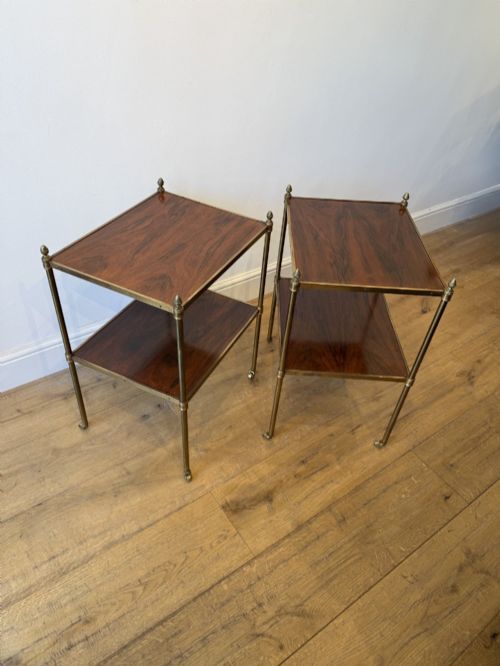
The form spans freestanding multi-tiered stands, corner units, and occasional tables with brass framing or turned supports. These pieces served diverse domestic uses in period interiors, functioning as music stands, dumb waiters, and display furniture.
Materials and construction
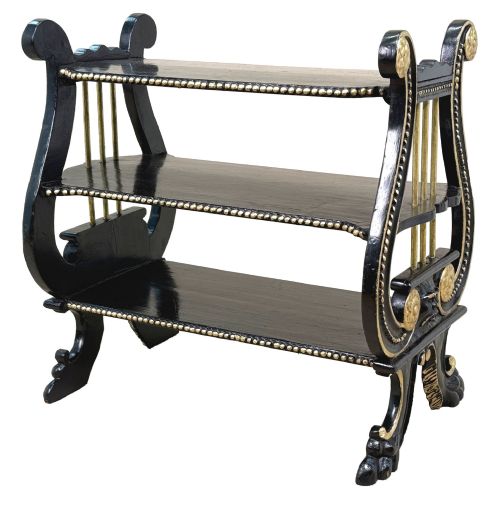
Cabinetmakers built these pieces primarily using dense timbers such as mahogany and rosewood, occasionally selecting exotic grains like birdseye maple, walnut, or ebonised wood for decorative impact. Surfaces often incorporate brass inlay, brass framing, tooled leather, or parcel gilding to accent the tiered profiles.
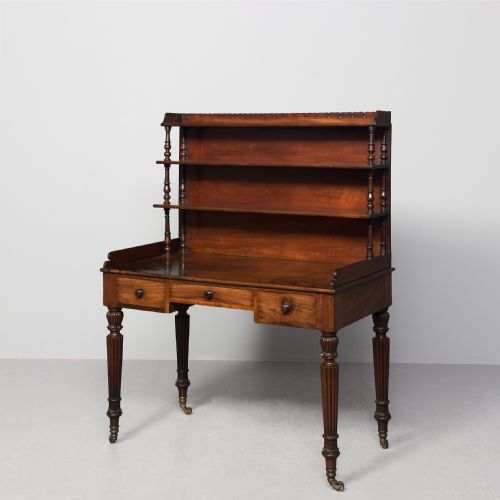
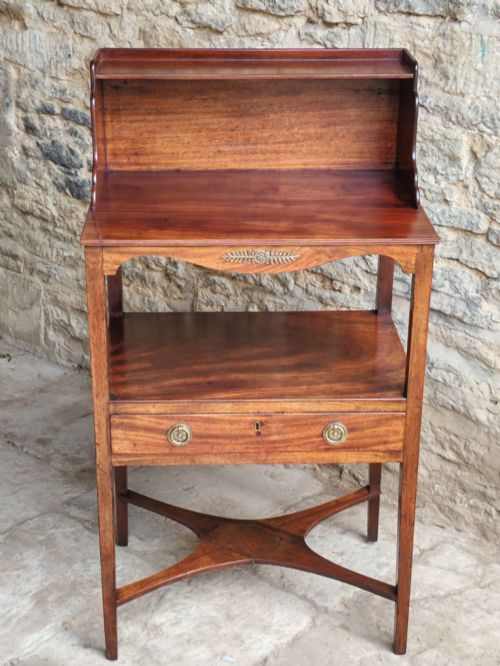
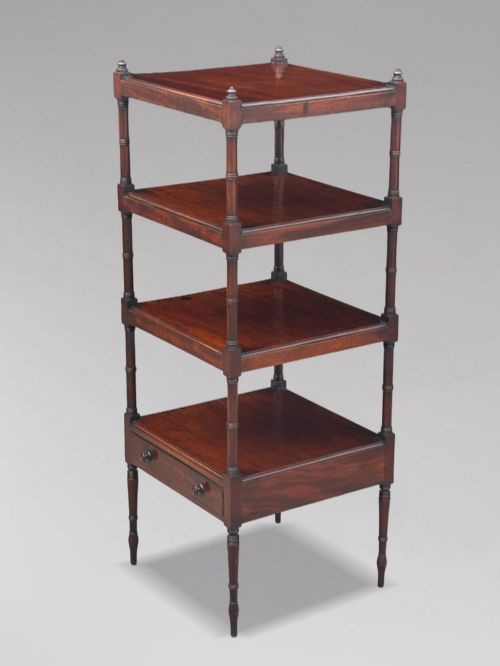
Joinery relies on turned columns, slender uprights, and structural brackets supporting stepped shelves, sometimes incorporating lower drawers or side compartments into the frame.
Some versatile nineteenth-century designs combine bookshelves, music stands, and drinks storage into a single towering piece of furniture.
Differences in quality
Quality rests upon the selection of timber veneers, the crispness of turned wooden supports, and the integration of fine brass mounts or galleries. Pieces featuring figured rosewood or carefully matched mahogany display superior cabinetwork compared to utilitarian shelving.
Proportion and structural balance separate standard production from exceptional examples, where the spacing of tiers and the refinement of corner joints show deliberate craftsmanship.
James Mein of Kelso·Mallett of London·Strahan of Dublin
The Regency Etagere Glossary
- Etagere
- An open piece of furniture with multiple tiers for displaying small objects, books, or serving items. It developed in France before becoming popular in British interiors.
- Whatnot
- A multi-tiered shelving unit used for displaying ornaments or books, closely associated with the etagere form. These pieces often feature turned uprights and small drawers.
- Canterbury
- A low, multi-section stand designed for holding sheet music, folios, or books, frequently incorporated into tiered etagere designs. They often include carrying handles or slatted dividers.
- Dumb waiter
- A tiered serving stand or dumb waiter table used for holding dishes or drinks without requiring domestic servants at hand. The form overlaps with revolving or multi-shelf etageres.
- Parcel gilt
- Wood or metal partially covered with gold leaf to highlight carved details, mouldings, or mounts. This technique adds contrast against ebonised or dark timber surfaces.
Regency Etagere: Frequently Asked Questions
How were etageres used originally?
These pieces served as movable display stands and serving units in drawing rooms, libraries, and dining spaces. They held books, ornaments, and portable items within easy reach.
Their open tiers allowed decorative objects to be viewed from multiple angles while providing flexible storage in formal interiors.
What is the difference between an etagere and a whatnot?
The terms often overlap in period inventories, though etagere traditionally emphasises display shelves while whatnot often implies a general utility stand with multiple tiers. Both forms utilise stacked wooden platforms supported by slender columns.
Catalogues and makers historically used the names interchangeably for open shelving units of similar construction.
Where should I place an etagere in a room?
Freestanding etageres work effectively against walls or as double-sided room dividers in larger spaces. Corner variants utilise unused angles to add height and display surface.
They pair well beside seating arrangements or as secondary surface space in studies and sitting rooms.
How do I identify a period piece?
Examine the timber species, construction joints, and secondary woods used on the interior surfaces and drawer linings. Period pieces from the nineteenth century display hand-cut joinery and characteristic ageing to the wood.
Fittings such as brass casters, gallery rails, and turned supports should match the manufacturing techniques of the era.