

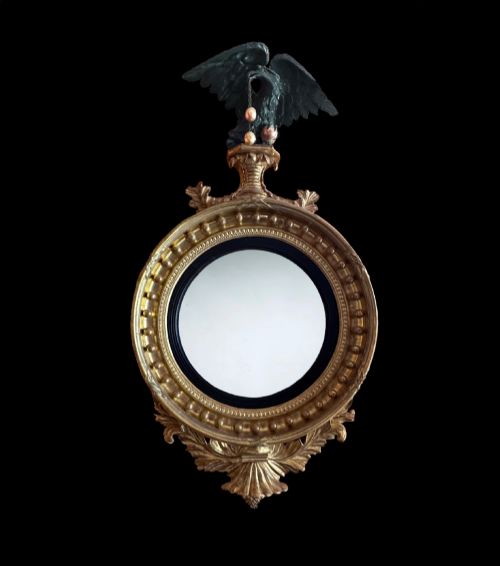

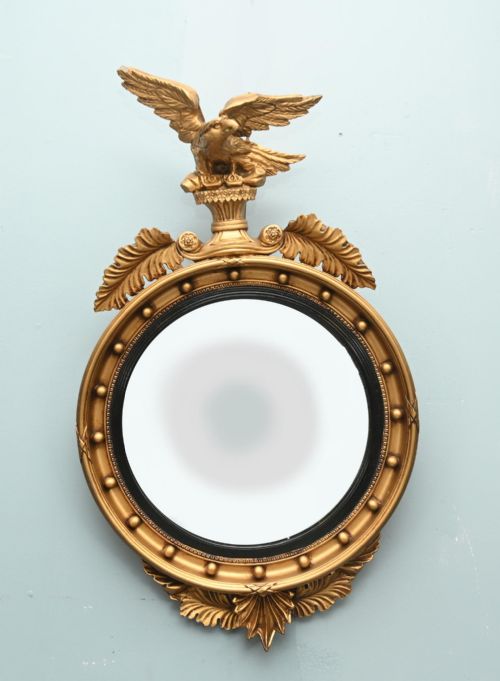


Regency Eagle Girandole
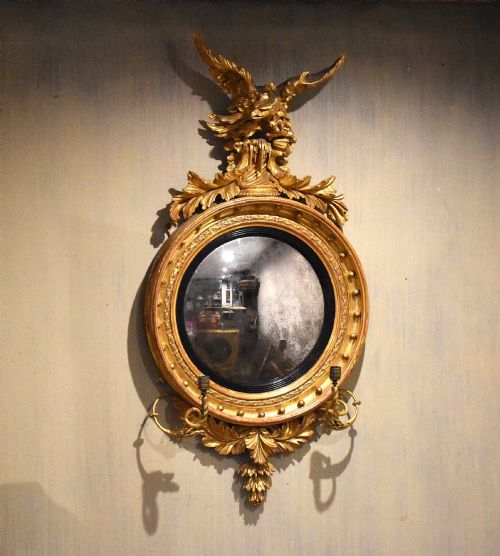
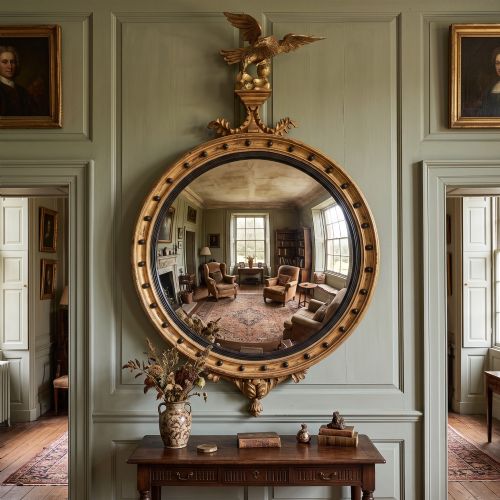
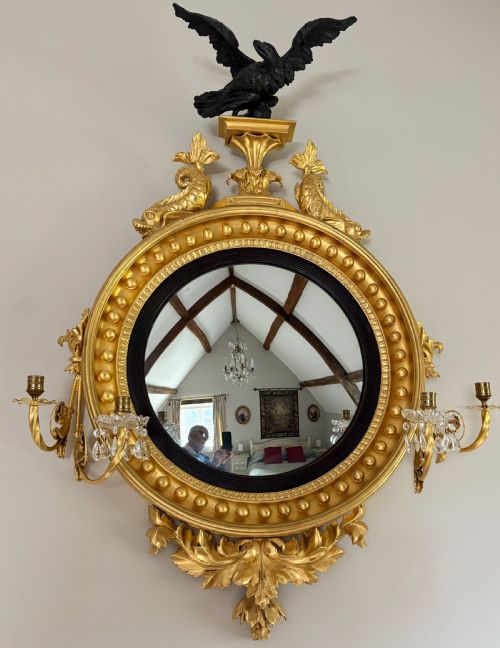
A regency eagle girandole is a convex wall mirror topped by a carved bird, bringing both historic drama and expanded light to a room.
Regency Eagle Girandole
A regency eagle girandole is a prominent wall mirror featuring a convex glass plate set within a circular frame, frequently surmounted by a carved bird. These objects function simultaneously as practical reflective surfaces and commanding decorative focal points.
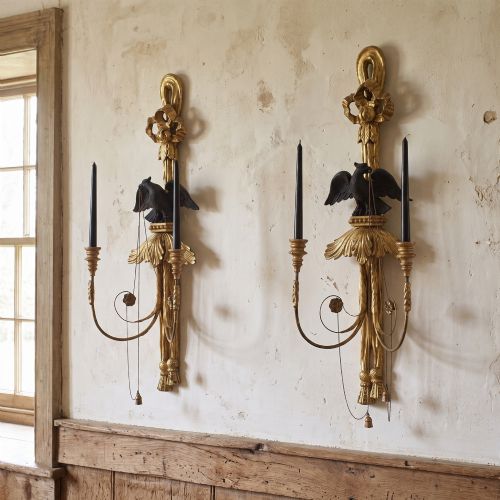
The selections encountered here span the Regency period itself alongside later revivals from the nineteenth and early twentieth centuries. Pieces arrive in various sizes, ranging from modest domestic wall sconces to large centrepiece mirrors.
Makers and manufacturers across different eras produced these mirrors using established classical designs, often drawing on George III style traditions. The core format remains consistent: a rounded glass surface framed in ornate timber.
Buyers seeking a regency eagle girandole will find both genuine period examples and later nineteenth or twentieth century interpretations. Each version shares the distinctive convex optical effect that curves the room back into the viewer's space.
Distinctions in craftsmanship
The fineness of the carved eagle and the depth of the surrounding frame ornamentation distinguish superior examples from simpler ones. Artisans who invested greater time in delicate wood carving and gesso preparation produced pieces with sharper sculptural detail.
The integrity of the original gilt surface and the clarity of the convex mirror glass significantly influence the character of the object. Over time, surfaces patinate differently, and the preservation of original gilding marks the distinction between untouched quality and later intervention.
Regency Eagle Girandole Retail Price Guide 2026
Typical asking prices for regency eagle girandole among the pieces listed under this phrase on Sellingantiques today, from the lower quarter to the upper quarter. They describe what is for sale here now, not the wider market.
Materials recorded across these wall mirrors include giltwood, ebonised wood, gesso, brass, and mirror glass.
The Regency Eagle Girandole Glossary
- Convex mirror
- A round mirror with an outward-curving glass surface that reflects a wide, distortion-heavy view of the entire room. This optical property was prized in historic interiors for gathering ambient light.
- Giltwood
- Timber that has been coated with a thin layer of gold leaf over a prepared gesso ground. It provides a luminous, reflective surface that catches natural and artificial light.
- Gesso
- A plaster-like mixture applied to wood frames to create a smooth base for carving and gilding. It allowed craftsmen to mould intricate relief patterns before applying gold leaf.
- Girandole
- A branched wall sconce or a mirror fitted with candle holders attached to the frame. These arms allowed the reflective glass to multiply the illumination from candles.
- Ebonised wood
- Timber treated with a dark stain or finish to imitate ebony. This dark contrast was frequently paired with gilt details in Regency design.
Regency Eagle Girandole: Frequently Asked Questions
What is a convex mirror used for?
Historically, these mirrors were hung in principal rooms to reflect light from windows and candles across the entire space. The curved glass provided servants and hosts with a wide-angle view of guests assembled in the room.
Today, they serve primarily as striking decorative accents above mantelpieces or in entrance halls. Their unique optical distortion adds depth and movement to interior walls.
How do I date a giltwood mirror?
Dating relies on examining the construction methods of the timber frame, the composition of the gesso, and the characteristics of the mirror glass itself. Period pieces from the Regency era show specific joinery techniques and hand-carved details distinct from later nineteenth-century revivals.
Subtle signs of wear in the gilding and the manufacturing traits of the glass plate help differentiate between an original early nineteenth-century piece and a twentieth-century copy.
Where should I hang a girandole?
These mirrors command attention and work best as the central focal point of a room, such as above a fireplace or a console table. Hanging them at eye level ensures the convex glass captures the best reflections of the surrounding interior.
Because they project outward from the wall, ensure they are secured safely away from high-traffic walkways where they might be bumped.
What is the difference between Regency and George III style?
George III style spans the latter half of the eighteenth century, leaning heavily on elaborate neoclassical and rococo motifs. Regency style, while overlapping, emerged fully during the early nineteenth century with an emphasis on bold architectural lines and Grecian or Roman influences.
Mirrors made during the Regency revival periods later in the nineteenth and twentieth centuries often reinterpreted these earlier classical motifs using contemporary manufacturing methods.