
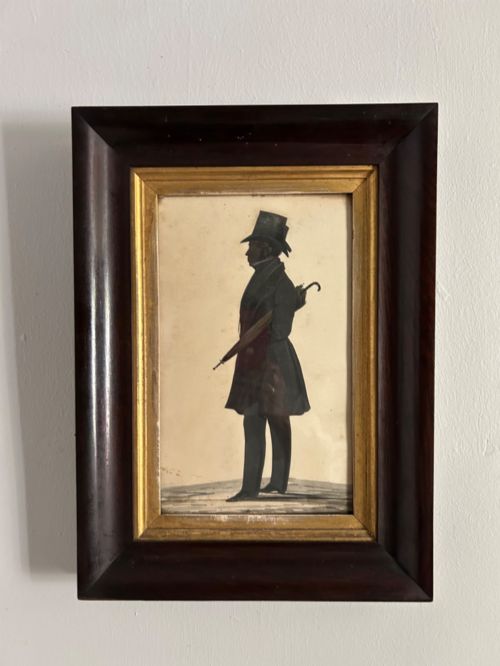


Regency Cut Paper Picture
A Regency cut paper picture brings quiet nineteenth century character to a wall through delicate monochrome craft and careful framing.
Regency Cut Paper Picture
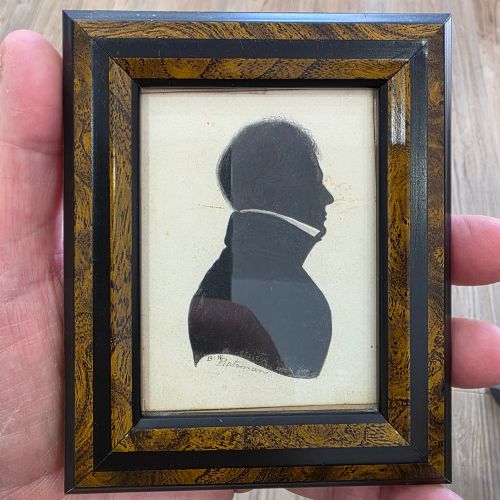
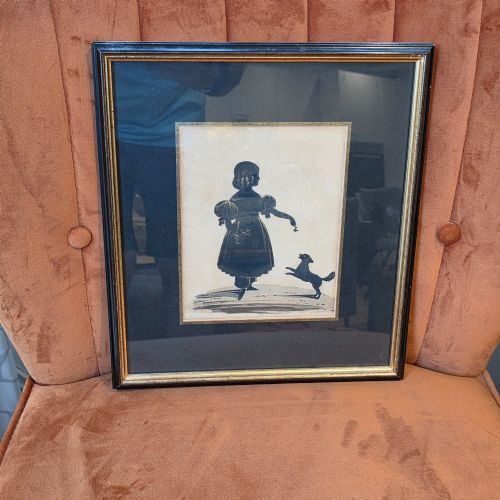
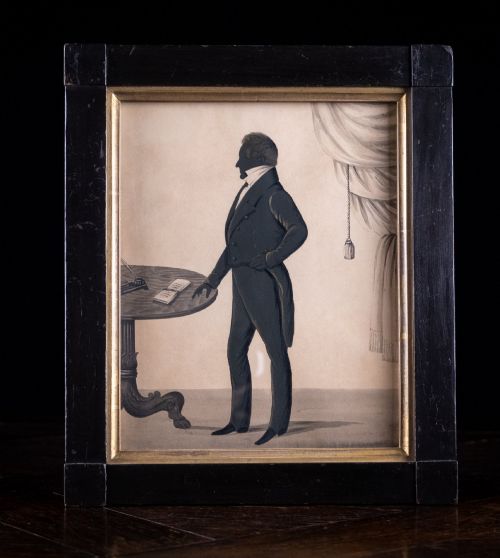
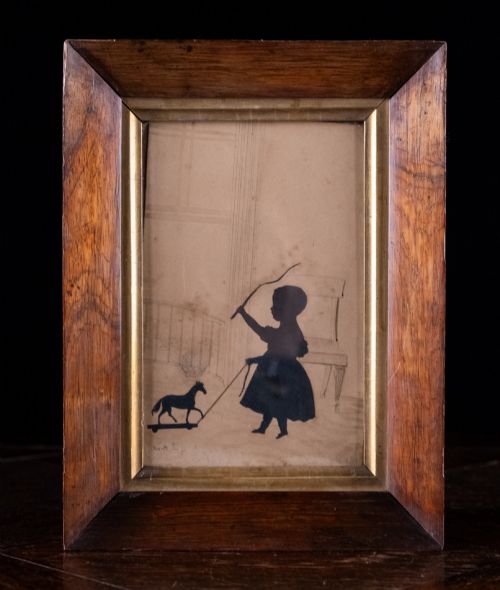
A regency cut paper picture presents a detailed scene or portrait formed entirely from snipped paper, usually mounted against a contrasting dark background. These works range from simple profile portraits to elaborate compositions of flowers, children, and animals.
Most examples found here date from the nineteenth century, spanning the Regency and Victorian periods. They often appear framed in ebonised wood or maple with gilt brass accents, preserving the fragile paper within glass.
Collectors encounter both solitary portraits of gentlemen and ladies and more narrative domestic scenes involving children and dogs. The form bridges traditional silhouette work and intricate papercraft.
How They Were Made
Craftsmen used fine scissors to snip silhouette forms and botanical details directly from paper, sometimes adding delicate touches of ink and watercolour. The resulting paper cutouts were then carefully positioned and adhered to a backing sheet.
Finished works were framed under glass using wood mouldings such as maple or ebonised wood, frequently incorporating gold leaf or gilt details to highlight the inner edge of the frame.
Listings feature works created across the nineteenth century, utilising paper, ink, glass, ebonised wood, and gold leaf.
What Varies in Quality
The finesse of the scissor work dictates the primary distinction in quality, separating stiff, blocky shapes from pieces with hair-thin lines and botanical accuracy. Mastery of shadow and proportion distinguishes a casual keepsake from an accomplished artistic silhouette.
Original framing contributes significantly to the integrity of the piece, as period ebonised wood and maple surrounds with intact gilt liners complement the delicacy of the paper within.
Bateman·William James Hubard·Augustin Edouart
The Regency Cut Paper Picture Glossary
- Silhouette
- A portrait or image represented as a solid shape of a single colour, usually black, outlined and cut from paper. This technique captures profile likenesses with remarkable economy of line.
- Ebonised wood
- Timber stained or treated to resemble dense, black ebony wood. Makers utilised this dark finish to create high contrast frames that made white or pale paper cutouts stand out.
- Gilt
- A thin layer of gold leaf or gold paint applied to surfaces. It appears on the inner borders of period frames to add a touch of warmth.
- Regency
- The stylistic period spanning the early nineteenth century, noted for classical restraint and elegance. Works from this era often display refined proportions and clean decorative lines.
Regency Cut Paper Picture: Frequently Asked Questions
How should I hang a paper picture?
Keep paper works out of direct sunlight to prevent the ink and paper from fading over time. Position them on interior walls where humidity and temperature remain stable.
Ensure the hanging wire and original frame fixings are secure before mounting. Professional framing tape and acid-free backing help preserve the paper inside.
Are all silhouettes made from paper?
While many examples utilise cut paper mounted on a contrasting background, artists also painted silhouettes directly onto card, plaster, or convex glass. Paper cutouts rely entirely on the precision of scissors.
Examining the edge of the profile under magnification reveals whether the form is drawn in ink or physically snipped from sheet paper.
How do I identify a Regency frame?
Regency frames often feature shallow mouldings of ebonised wood or maple, frequently complemented by narrow gilt inner bezels. The timber grain and traditional corner joints offer clues to their age.
Later Victorian replacements tend to be heavier or lack the crisp gilding characteristic of the early nineteenth century.
What subjects appear in these pictures?
Portraits of gentlemen, ladies, and children dominate the genre, often recording specific sitters from the nineteenth century. Domestic animals such as dogs frequently accompany the human figures.
Botanical arrangements, particularly floral compositions, also appear within the Regency cut paper tradition.