


Georgian Family Portrait
A georgian family portrait captures the intimate domestic bonds of past centuries through oil, watercolour, and delicate miniatures.
Georgian Family Portrait
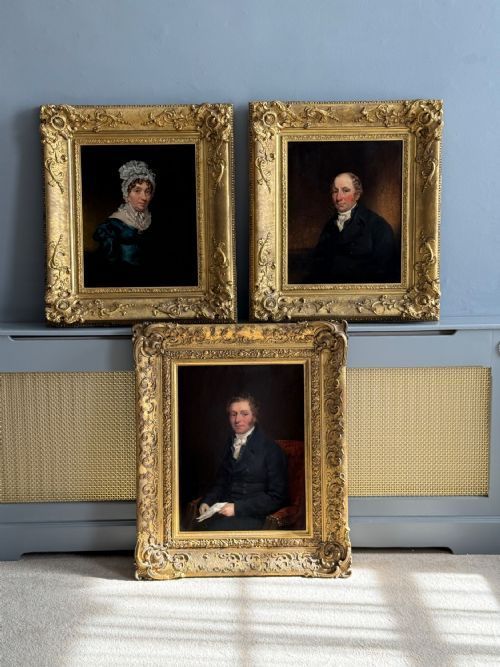
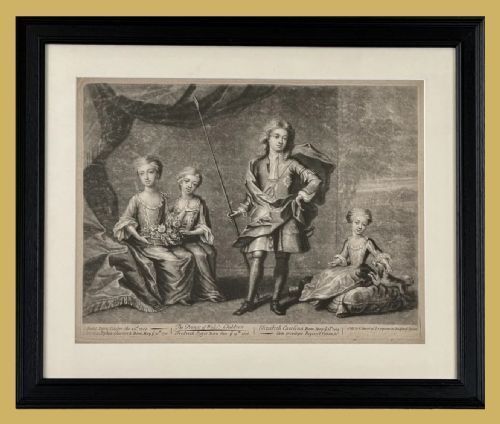
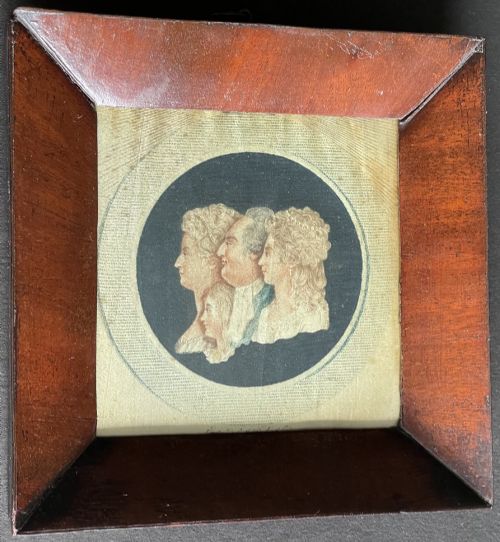
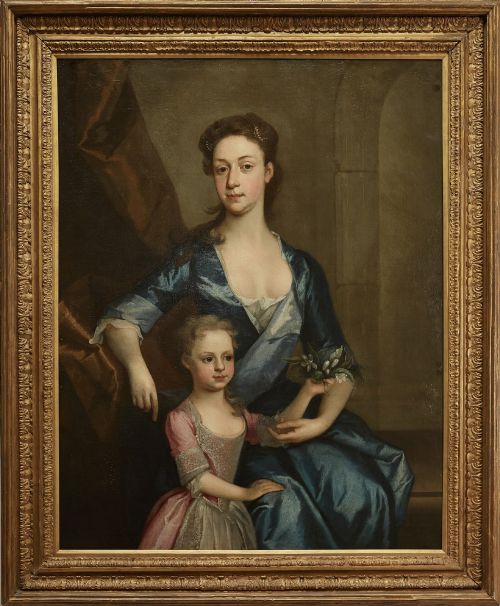
A georgian family portrait presents groups of relatives, parents with children, or siblings captured in oil paintings, watercolours, and silhouette conversation pieces. These artworks range from grand oil paintings depicting households in country house grounds to modest portrait miniatures and prints on silk.
The pieces on this page span the eighteenth and nineteenth centuries, reflecting styles from Early Georgian and Regency to Victorian and Neoclassical periods. Buyers will encounter both large canvas group paintings and intimate works executed in ink, plumbago, and paper.
Materials and Construction
Artists executed these works using oil on canvas or panel, watercolour, ink, and plumbago on paper, often encased in original giltwood frames. Detail work relied on fine brush techniques applied to prepared canvas, wood, or ivory miniatures.
Framing materials include carved giltwood, maple wood, and stepped oak frames, reflecting the craftsmanship of the eighteenth and nineteenth centuries.
Georgian Family Portrait Retail Price Guide 2026
Typical asking prices for georgian family portrait among the pieces listed under this phrase on Sellingantiques today, from the lower quarter to the upper quarter. They describe what is for sale here now, not the wider market.
Artworks span multiple object types, ranging from large oil paintings and fine art to silhouette conversation pieces and portrait miniatures.
Assessing Quality and Execution
Quality rests in the precision of facial expressions, the handling of textiles, and the anatomical accuracy achieved by the painter or miniaturist. Works by documented hands demonstrate superior draftsmanship in rendering hands, drapery, and spatial depth within domestic settings.
The preservation of the original support, whether canvas, panel, or paper, alongside untouched period framing, contributes significantly to the integrity of the piece.
Joseph Clover RA·Joseph Highmore·Charles Hayter·William Egley·George Engleheart·James Ferguson·John Hoppner·Ozias Humphry·Charles Philips·Michael Dahl·Hans Hysing·Kershaw Schofield·Thomas Murray·Robert Byng·Francis Alleyne·Sir Thomas Lawrence·Henry Edridge·Jonathan Richardson·Sir Godfrey Kneller·Thomas Hudson
The Georgian Family Portrait Glossary
- Plumbago
- A drawing executed in graphite, taking its name from the Latin for lead ore. These works show fine monochromatic detail common in eighteenth-century portraiture.
- Conversation piece
- An informal painting depicting a group of people, often family members, interacting in a domestic or outdoor setting. This genre became popular in British art during the eighteenth century.
- Portrait miniature
- A small, highly detailed painting, frequently executed on ivory, vellum, or card. These portable objects were often kept in lockets or fitted cases.
- Mezzotint
- A printmaking process of the printmaker's art that achieves tonal gradation through roughening and scraping a metal plate. It allows for subtle shadows and highlights in portrait reproductions.
- Giltwood
- Wood that has been coated with a thin layer of gold leaf or powder. This finish is frequently found on period frames housing fine art.
Georgian Family Portrait: Frequently Asked Questions
What is a conversation piece?
A conversation piece is a specific type of group portrait showing family members engaged in a shared activity within a domestic or natural setting. These works emphasise narrative and relationship over formal posed stiffness.
Such paintings often include domestic pets, architectural backdrops, or personal possessions that hint at the social standing and daily lives of the sitters depicted.
How do portrait miniatures differ from standard paintings?
Portrait miniatures are scaled-down likenesses, often painted on ivory or paper, designed to be held in the hand or worn as personal mementoes. They require specialised magnifying techniques to achieve their intense level of detail.
While oil paintings on canvas hung on walls for public display within the home, miniatures offered a private, portable way to keep family members close.
How can I date a framed silhouette?
Framed silhouettes from this era are generally dated by the framing materials, such as maple frames with specific corner mounts, and the costume details of the sitters. Hairdos, collars, and bonnet shapes provide clear chronological markers.
Profile portraits cut from black paper or painted on glass gained immense popularity during the late eighteenth and early nineteenth centuries.
Where should I hang an antique portrait?
Antique portraits suit traditional reception rooms, studies, or hallways where lighting can be controlled to protect fragile pigments. Keeping them away from direct sunlight preserves both the canvas and the delicate paper of watercolours and prints.
Picturing these families in living spaces continues a long tradition of domestic display, allowing the historic clothing and expressions to become part of a modern interior.