

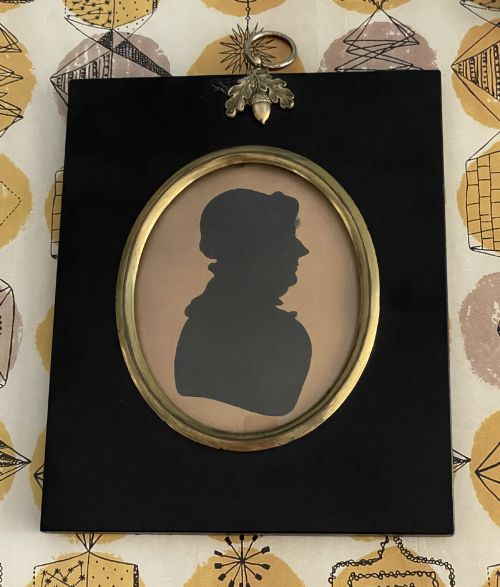
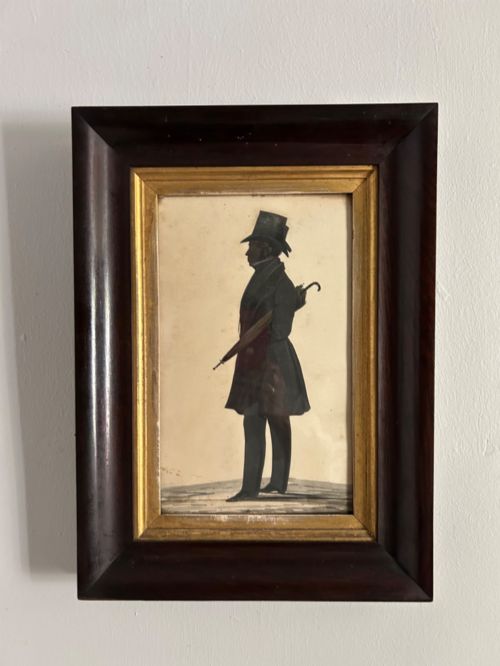


Antique Framed Portrait Shade
An antique framed portrait shade offers a quiet likeness in ink and paper, capturing a sitter with neat economy.
Antique Framed Portrait Shade
An antique framed portrait shade is a small likeness captured through ink, cut paper or paint, preserved behind glass. The examples here span the eighteenth and nineteenth centuries, including Regency and Victorian periods.
Buyers will find framed silhouettes of gentlemen, ladies, children and animals, rendered as wall art or miniature portraits. The most common forms on this page are paper silhouettes framed in wood, ebonised wood or gilt.
How they were made
Makers produced these works using cut paper, ink and occasionally paint, applied to card or plaster. Skilled practitioners cut profiles freehand with scissors or brushed fine ink details onto paper.
Frames are constructed from wood, ebonised wood and brass, often finished with gold leaf or gilding. Pieces are set behind protective glass to preserve the delicate paper and ink surfaces from dust and moisture.
Antique Framed Portrait Shade Retail Price Guide 2026
Typical asking prices for framed portrait shade among the pieces listed under this phrase on Sellingantiques today, from the lower quarter to the upper quarter. They describe what is for sale here now, not the wider market.
Materials recorded across the selection include paper, glass, ink, wood, gold leaf, brass and ebonised wood.
What varies in quality
Quality rests in the precision of the cutting or brushwork and the delicacy of the painted highlights. Works with detailed bronze or gold leaf embellishments show greater handwork than plain cut paper.
The choice of framing and the preservation of the original backing material influence the character of the piece. Well-kept glass and sound wooden or ebonised frames maintain the integrity of the portrait within.
Bateman·James Gillespie·Hubard Gallery·Augustin Edouart·George Atkinson·John Smith of Edinburgh·Miers
The Antique Framed Portrait Shade Glossary
- Silhouette
- A portrait profile filled in with a solid dark colour, usually black, against a pale background. This form relies entirely on contour and line to capture a likeness.
- Ebonised wood
- Timber treated to resemble ebony, providing a dark, smooth finish popular for framing small works. It creates a strong contrast with gilded highlights.
- Gilt
- A thin layer of gold applied to wood or metal frames. This technique adds warmth and reflectivity to the border of the portrait.
- Miniature portrait
- A small-scale painting or likeness designed for intimate viewing. These works require fine brushes and steady hands to achieve detail in a restricted space.
- Regency
- A style period dating from the early nineteenth century, noted for classical elegance and restrained ornament. Works from this era often feature refined profiles and neat brass mounts.
Antique Framed Portrait Shade: Frequently Asked Questions
What is an antique framed portrait shade?
An antique framed portrait shade is a historical silhouette or miniature profile, typically created in ink or cut paper during the eighteenth or nineteenth centuries.
These pieces were framed behind glass to preserve the delicate materials, serving as personal likenesses before the widespread use of photography.
How were these portraits displayed?
Owners hung these framed works on parlour and study walls, often grouping several silhouettes together in tight arrangements.
Their compact size allowed them to fit into smaller domestic spaces alongside larger oil paintings and mirrors.
How do I identify a Regency silhouette?
Regency silhouettes often feature fine gilded highlights on clothing or hair, set within slender ebonised wooden frames.
The sitters typically wear clothing characteristic of the early nineteenth century, such as high-collared coats and Regency bonnets.
Are these works painted or cut?
Makers produced these portraits using both methods, sometimes combining cut paper with painted ink details.
Some artists specialised in freehand paper cutting with scissors, while others applied ink and paint directly to card.
How should I care for a framed shade?
Keep these pieces away from direct sunlight to prevent the ink and paper from fading over time.
Maintain a stable indoor environment to protect the original wood frames and glass settings from humidity.