

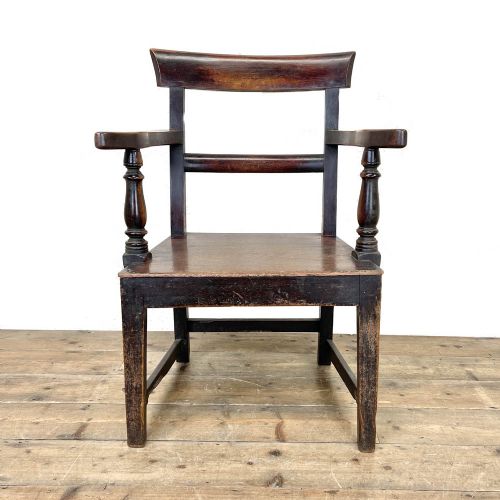
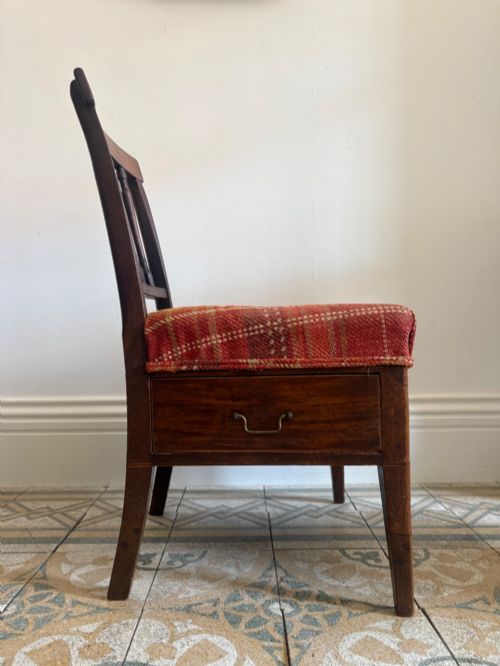
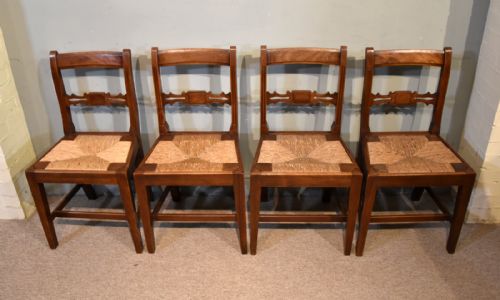
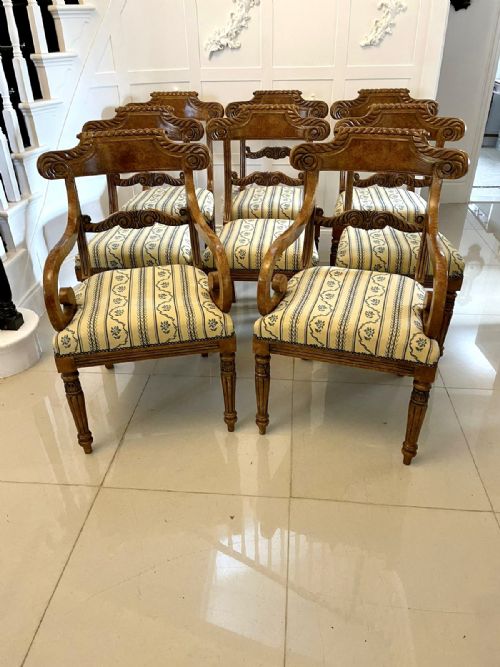
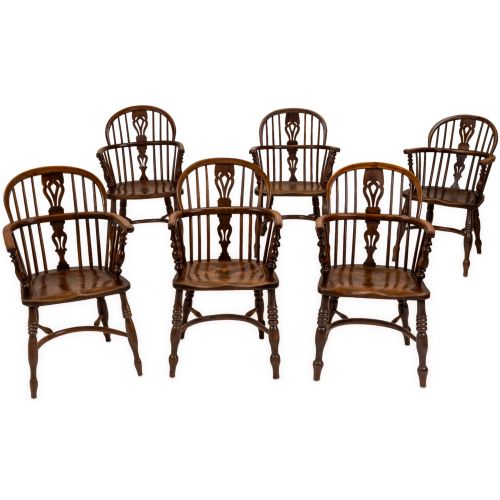
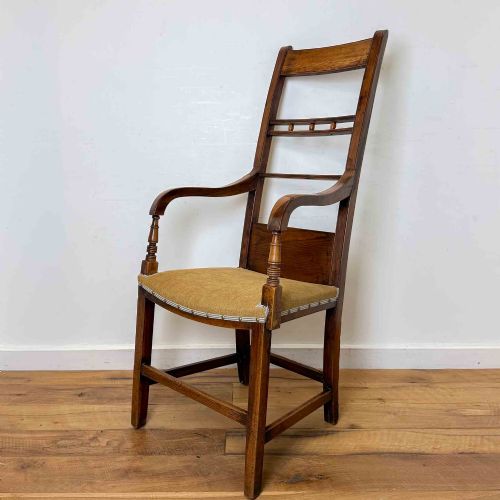

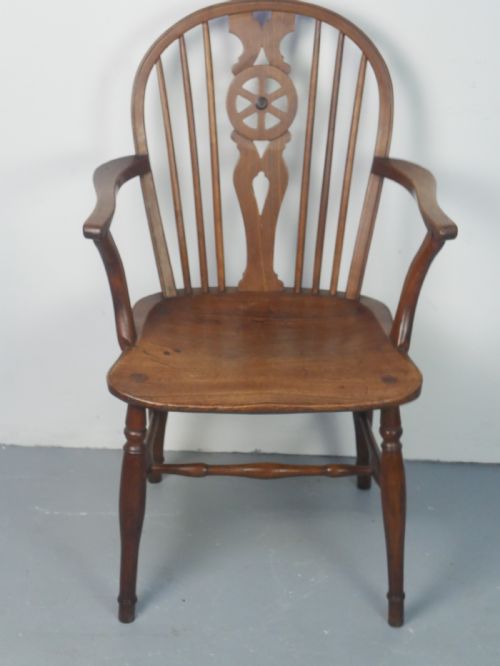


Regency Country Chair
A regency country chair brings vernacular regional character and robust timber construction into everyday domestic spaces.
Regency Country Chair
A regency country chair encompasses robust domestic seating produced across English regions during the early nineteenth century and surrounding decades. Buyers searching this phrase encounter dining chairs, side chairs, and Windsor armchairs featuring local timbers and vernacular designs rather than urban London polish.
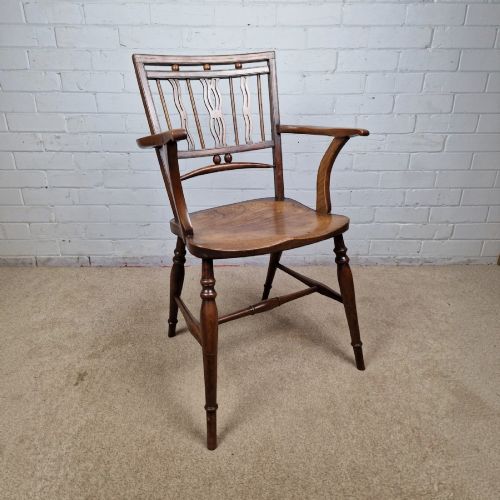
The material palette draws heavily on regional hardwoods, frequently pairing elm seats with yew, fruitwood, or ash framing. Regional variations emerge clearly in East Anglian dish seats and Mendlesham forms.
Makers ranged from rural village joiners to specialised provincial chair bodgers operating in woodland workshops. These pieces served practical domestic functions in kitchens, libraries, and country house halls.
Construction and Materials
Regional makers utilised native timbers selected for strength and local availability, turning spindle legs and steaming hoops from fruitwood, yew, and ash. Solid elm provided stable, carved plank seats capable of withstanding heavy daily use.
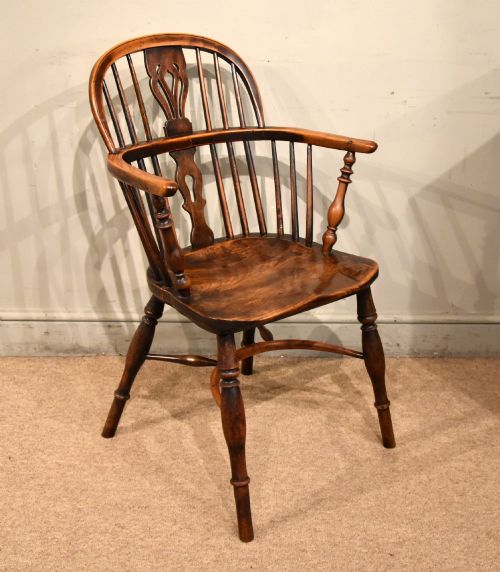
Joinery methods combined traditional mortise and tenon joints with wedged spindles driven straight through solid plank seats. Windsor variants employed bentwood bows secured with crinoline stretchers for structural rigidity.
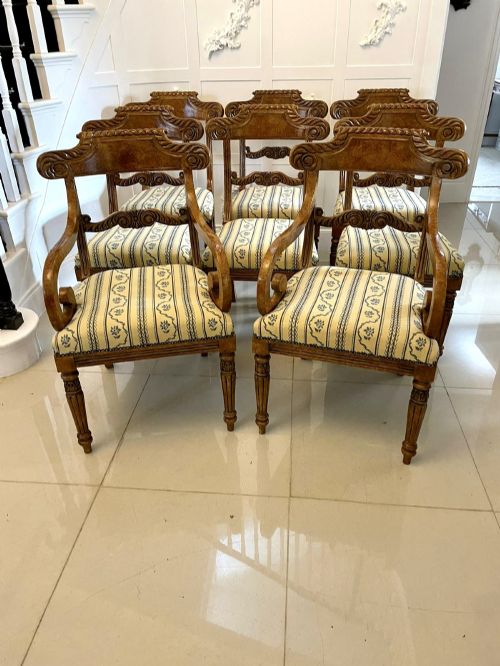
Current listings feature elm, yew, fruitwood, and mahogany across Windsor, dining, and library armchair forms spanning the Georgian, Regency, and Victorian periods.
Evaluating Quality and Character
Quality rests in the integrity of the timber, the sculptural depth of carved dish seats, and the retention of original surface treatments such as early paint or simulated rosewood graining. Superior examples maintain balanced proportions and original structural components without excessive timber replacement.
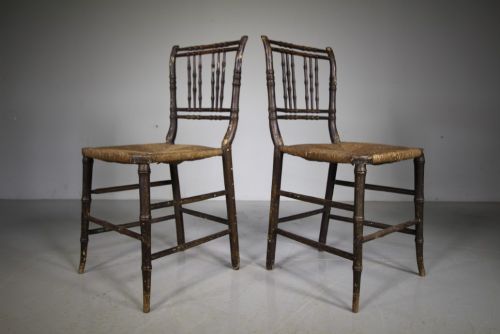
Regional distinction and decorative ambition elevate certain forms, from simple kitchen seating to elaborate simulated bamboo or faux birds-eye maple finishes. The distinction lies between utilitarian workshop output and ambitious provincial cabinet work.
The Regency Country Chair Glossary
- Windsor chair
- A wooden chair featuring a solid carved seat into which the legs and back spindles are independently socketed. This method creates a sturdy, resilient frame typical of rural production.
- Dish seat
- A wooden chair seat hollowed out into a shallow depression for comfort. Country makers carved these plank seats by hand using adzes and scorps.
- Crinoline stretcher
- A curved hoop stretcher connecting the legs of a Windsor chair beneath the seat. It provides structural reinforcement while resembling the shape of a Victorian hoop skirt.
- Mendlesham chair
- A distinct regional armchair originating from Suffolk, featuring a solid splat and sturdy wood construction. These pieces often incorporated contrasting timbers such as yew and elm.
- Carver chair
- An open armchair designed for the head of a dining table or general parlour use. They mirror the styling of matching side chair sets.
Regency Country Chair: Frequently Asked Questions
What is a regency country chair?
A regency country chair is a vernacular dining or armchair produced during the early nineteenth century using regional English timbers and traditional woodworking methods. These seats combine urban stylistic influences with rural practicality.
They offer buyers sturdy timber construction and distinctive local character that contrasts with formal city-made furniture of the same period.
How do I identify a Windsor armchair?
A Windsor armchair is distinguished by its solid wooden seat holding inserted legs and back spindles rather than a traditional framed upholstery structure. Hoop backs and stick backs are common regional variations.
Most examples pair elm seats with yew or fruitwood frames, often supported by turned legs joined with stretchers.
Where were these chairs made?
Provincial joiners and woodland chair bodgers manufactured these pieces across various English regions, including East Anglia and the Thames Valley. Local timber availability dictated the choice of woods used in each workshop.
Regional specialisms led to distinct local forms such as the Mendlesham armchair or East Anglian dish seat chairs.
How should I live with these chairs?
Living with these chairs involves placing them around a dining table or utilising single armchairs in halls and libraries. Their sturdy wooden construction makes them suitable for daily domestic use.
Keep them away from direct heat sources and sudden humidity changes to protect the aged timber and original surface finishes.
Are painted finishes original?
Many provincial chairs received early paint, faux bamboo, or simulated rosewood graining to mimic more expensive exotic hardwoods. Original surface treatments survive on several pieces.
Evaluating the paint requires looking for natural wear patterns and age-related patination consistent with nineteenth-century domestic environments.