
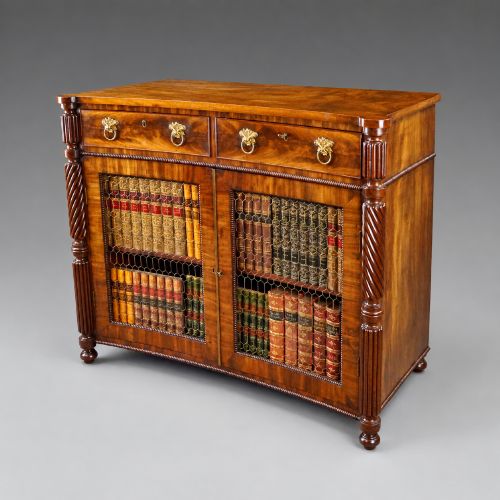
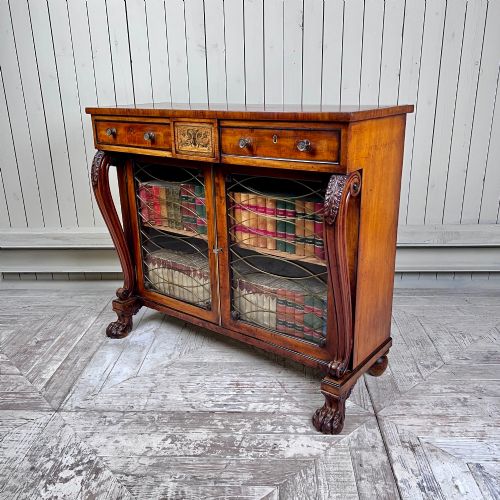
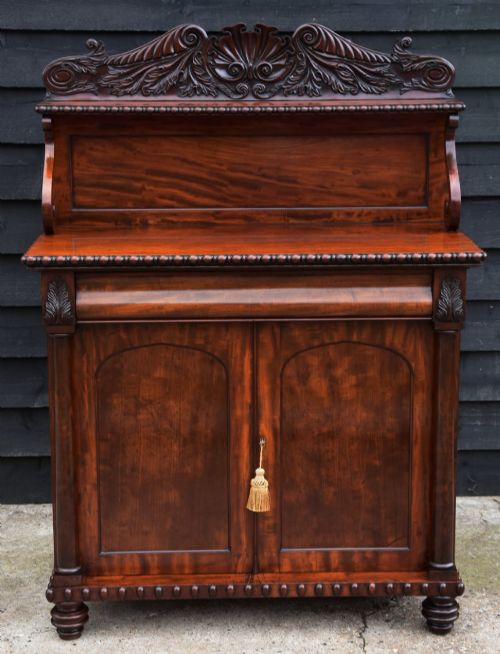
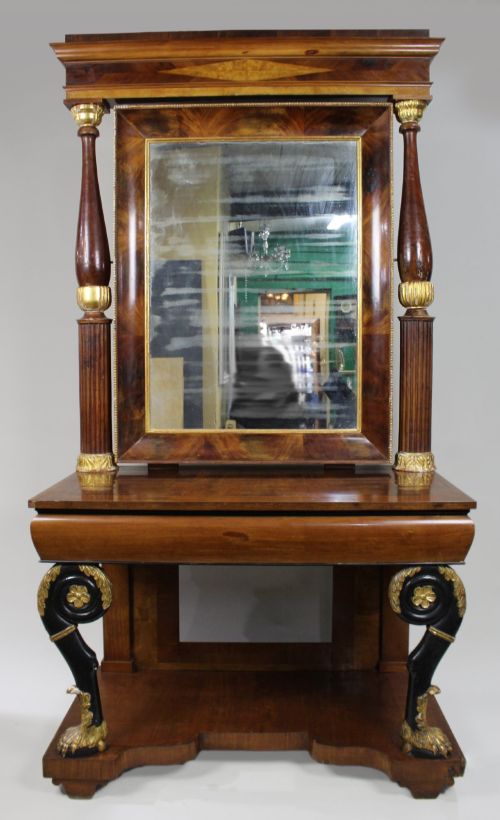
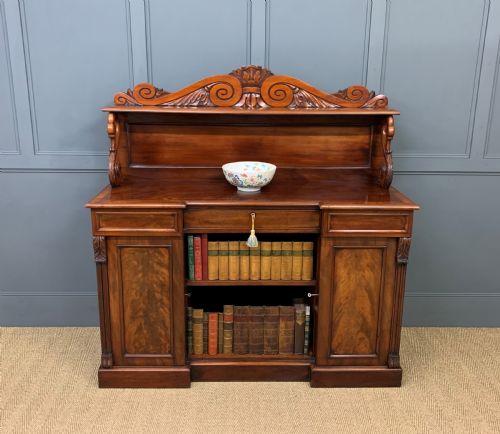
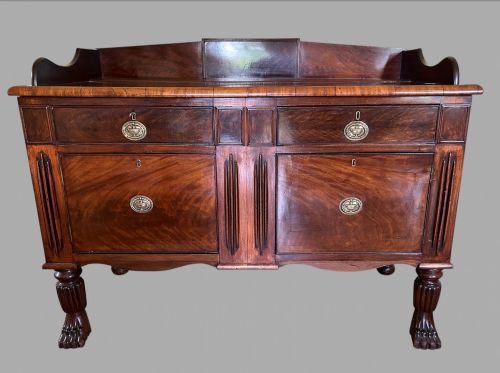
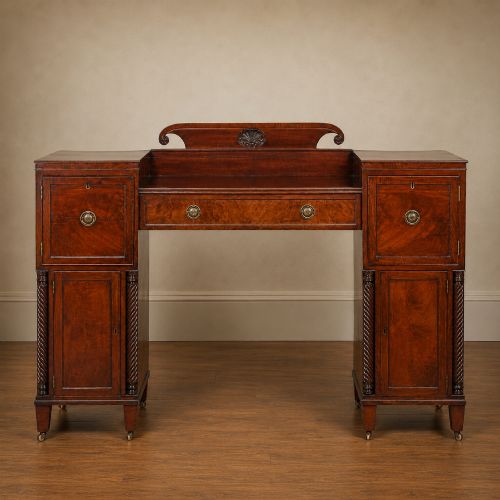
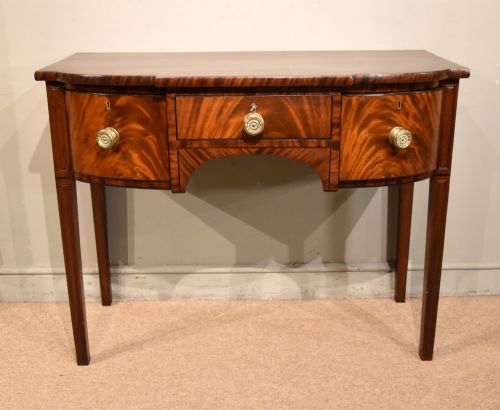
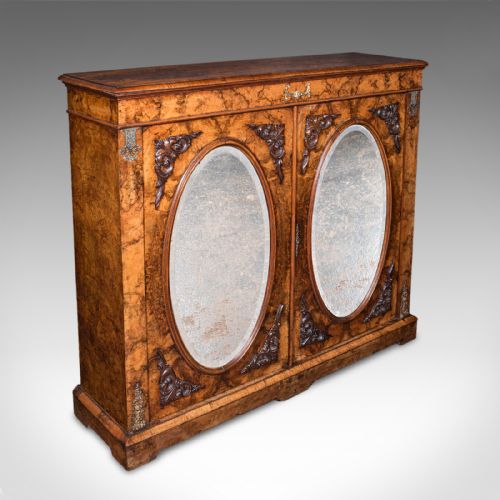
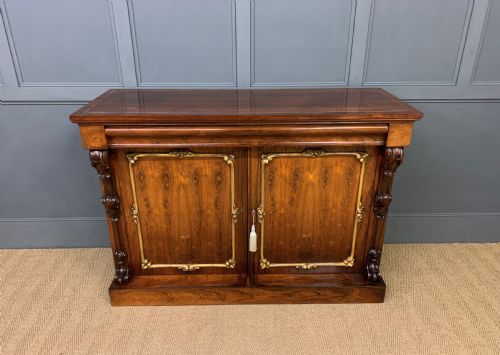
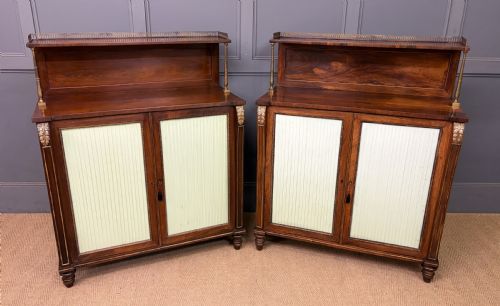

Regency Carved Sideboard
A regency carved sideboard brings architectural weight and refined timber into a dining room, offering both display and storage.
Regency Carved Sideboard
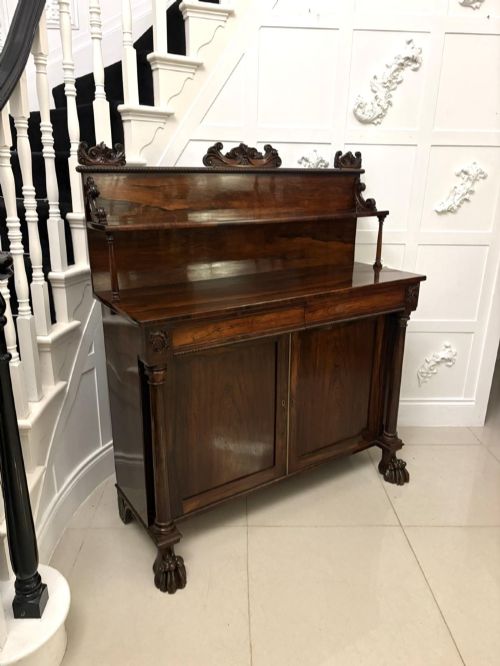
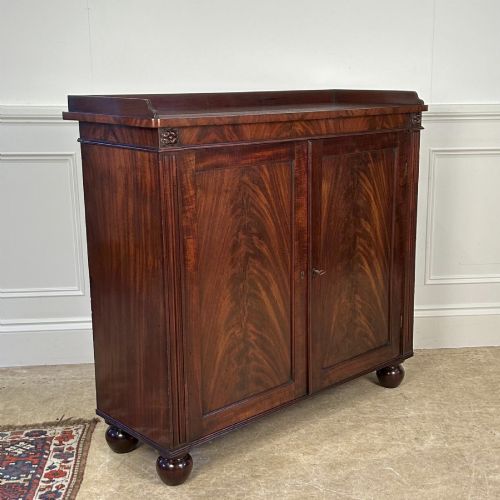
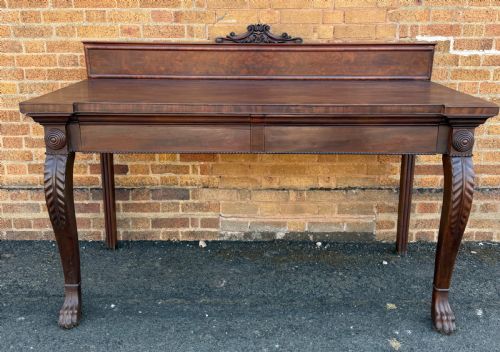
A regency carved sideboard encompasses heavy timber dining room furniture designed for serving and storage during the early nineteenth century. Pieces matching this search span pedestal sideboards, serving tables, and chiffoniers originating from the Regency, William IV, and Georgian periods.
Mahogany and flame mahogany veneer dominate the selection, often accented with rosewood, brass inlay, and ormolu mounts. Makers and cabinetmakers of the era employed neoclassical motifs, pillar supports, and bold carved details to anchor formal dining spaces.
How they were made
Cabinetmakers utilised solid mahogany and rich flame mahogany veneers applied to structural carcases to achieve deep, figured grain patterns. These surfaces received hand-rubbed finishes that emphasised the natural depth and colour of the timber.
Brass inlay, ormolu mounts, and parcel gilt details were integrated into the woodwork as structural accents. Structural stability relied on traditional joinery, heavy pedestals, and carved supports designed to bear the weight of large serving surfaces.
Miniature sideboards designed as tea caddies allow miniature dining room grandeur on a tabletop scale.
What varies in quality
The selection of timber dictates the visual impact, with figured flame mahogany and rosewood representing superior choices over plain secondary woods. Figuration that matches symmetrically across doors and drawers indicates deliberate selection by the maker.
Carved enrichment, such as ram heads, leaf scrollwork, and brass inlay execution, separates standard production from top-tier workshop output. Crisp, deep carving requires exceptional chisel work that retains sharp edges without sanding away definition.
Gillows·Robert Strahan and Co·Mack Williams and Gibton
The Regency Carved Sideboard Glossary
- Sideboard
- A large dining room piece designed for serving food and storing tableware. These items typically feature central drawers flanked by cupboards or pedestals.
- Chiffonier
- A low cabinet derived from the sideboard, frequently fitted with shelves or a mirror superstructure. They emerged during the nineteenth century for drawing room use.
- Flame mahogany
- A veneer cut from timber fork sections where the grain produces a flickering flame effect. Cabinetmakers utilised this figure on primary display surfaces.
- Ormolu
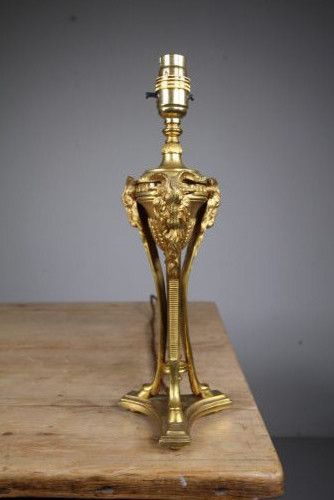
- Gilded bronze applied as decorative mounts on furniture. This material provides metallic contrast against dark timbers like rosewood and mahogany.
- Pedestal sideboard
- A form featuring two distinct pedestals flanking a central table section. This layout defines heavy Regency and William IV dining furniture.
Regency Carved Sideboard: Frequently Asked Questions
What is a regency carved sideboard?
A regency carved sideboard is a heavy dining room furnishing built during the early nineteenth century for serving food and storing silver. These items utilise mahogany, rosewood, and brass inlay within neoclassical and William IV styles.
Craftsmen incorporated carved pedestals, brass mounts, and figured veneers to create imposing focal points for formal interior spaces.
How do I date a sideboard?
Dating relies on timber selection, structural hardware, and stylistic motifs such as ormolu mounts and carved pillar supports. Pieces span the Regency, George IV, and William IV eras.
Consulting the secondary woods inside drawers and examining the joinery methods helps narrow the decade of manufacture.
Where should I place a sideboard?
Sideboards suit dining rooms, morning rooms, and large hallways where their length and depth provide balanced visual weight. They function practically as serving surfaces and display areas.
Ensure adequate floor space around the piece to accommodate the projecting pedestals and opening cabinet doors.
What wood was used?
Mahogany and flame mahogany veneer form the primary body of most examples, complemented by rosewood, walnut, and amboyna. Secondary woods line the interior drawers.
Decorative contrast comes from brass inlay, parcel gilt elements, and ormolu mounts applied directly to the timber carcase.