
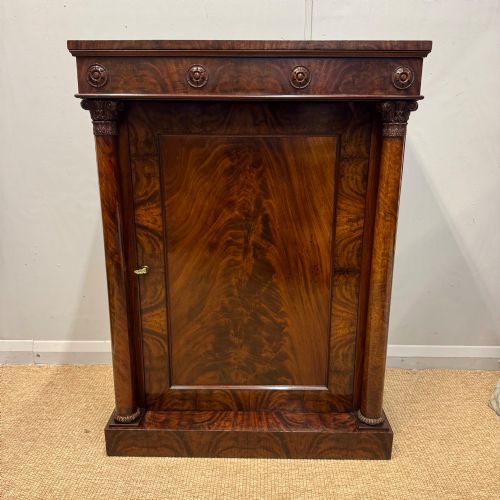
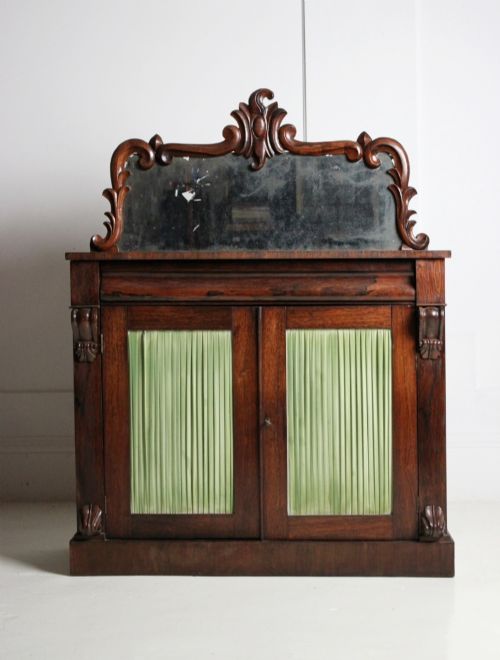
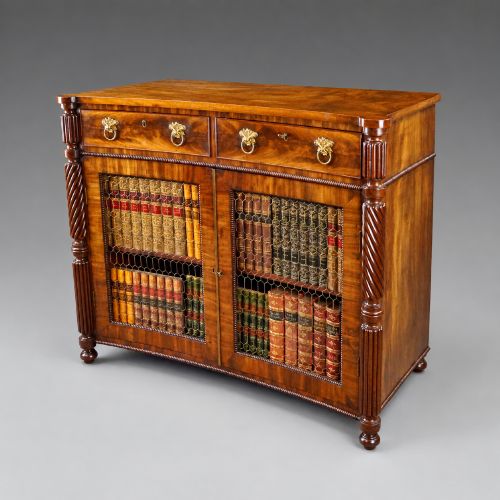
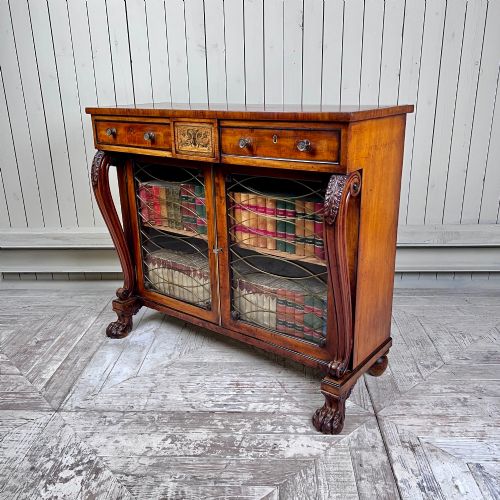
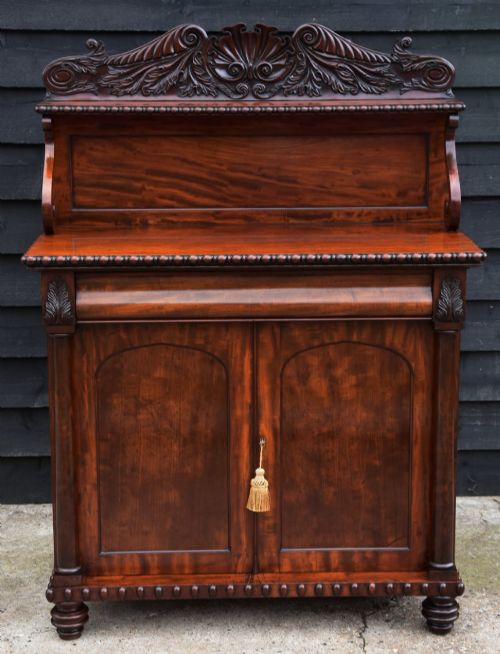
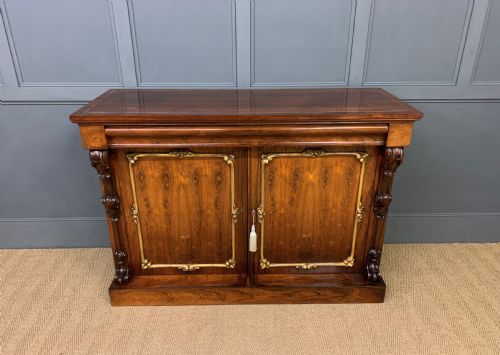
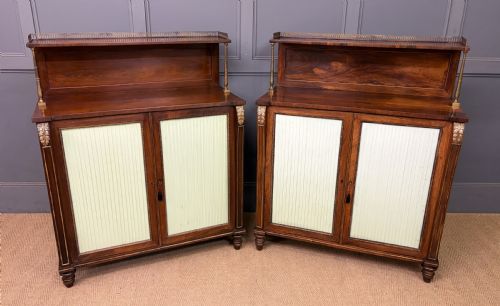
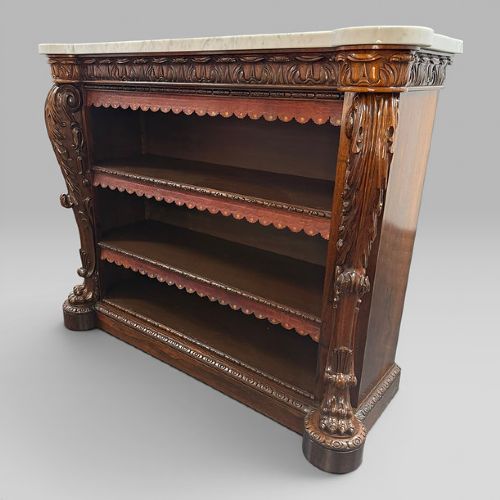

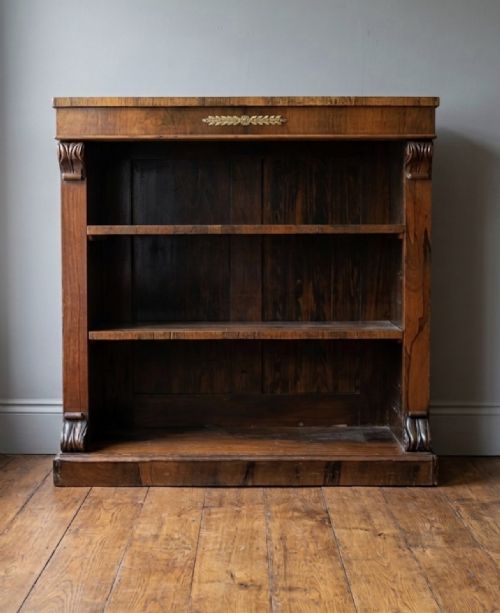


Regency Carved Side Cabinet
These regency carved side cabinet pieces combine fine timber with classic proportions, offering practical storage and distinct period character for a traditional interior.
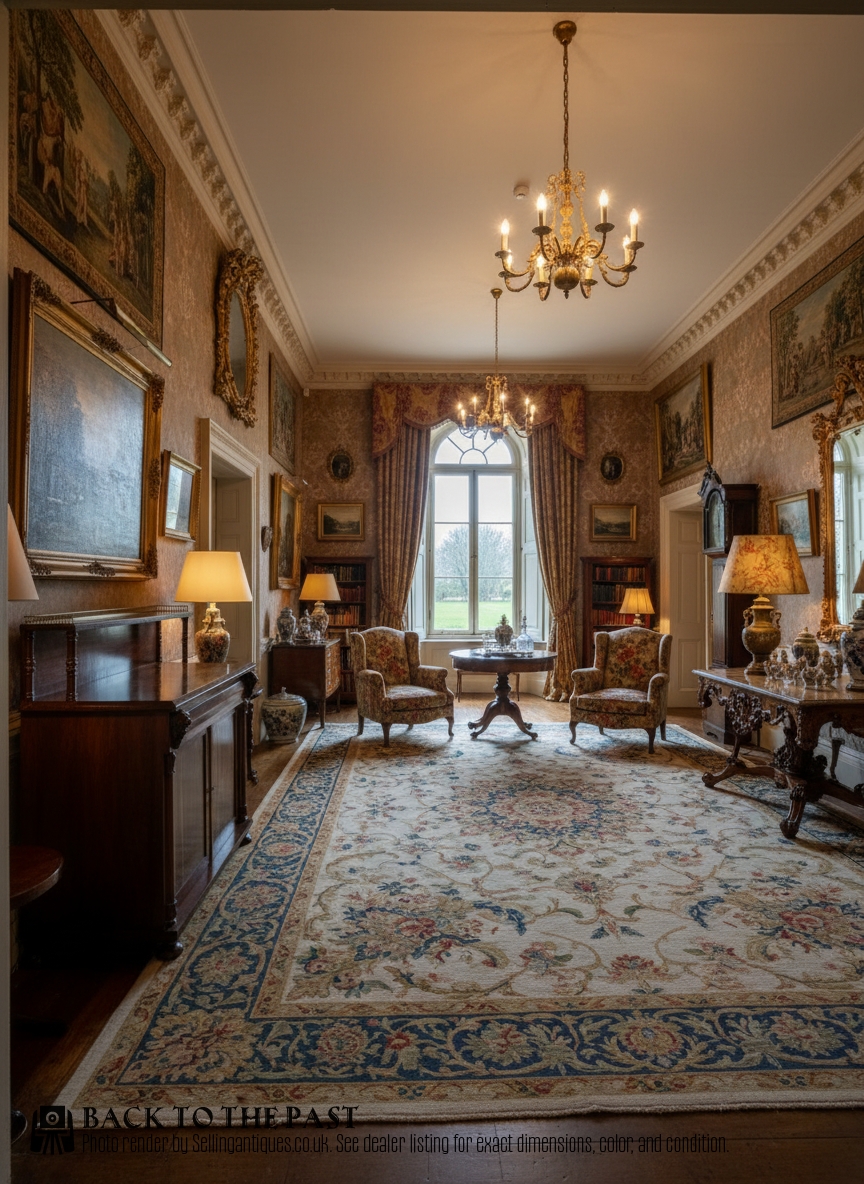
Regency Carved Side Cabinet
A regency carved side cabinet brings formal early nineteenth century design into a room, serving as a functional surface and storage unit. These items appear across the Regency and William IV periods, alongside later nineteenth century interpretations.
Most examples found here utilise dense timbers like mahogany and rosewood, often shaped into compact sideboards, chiffoniers, or open bookcases. Cabinet makers from the era built these forms to stand against a wall in a dining room or parlour.
Buyers will encounter variations including marble tops, glazed doors, and lower cupboard sections enclosed by brass wire or wooden panels. Pieces span straightforward functional storage as well as more decorative formats featuring satinwood or ebony details.
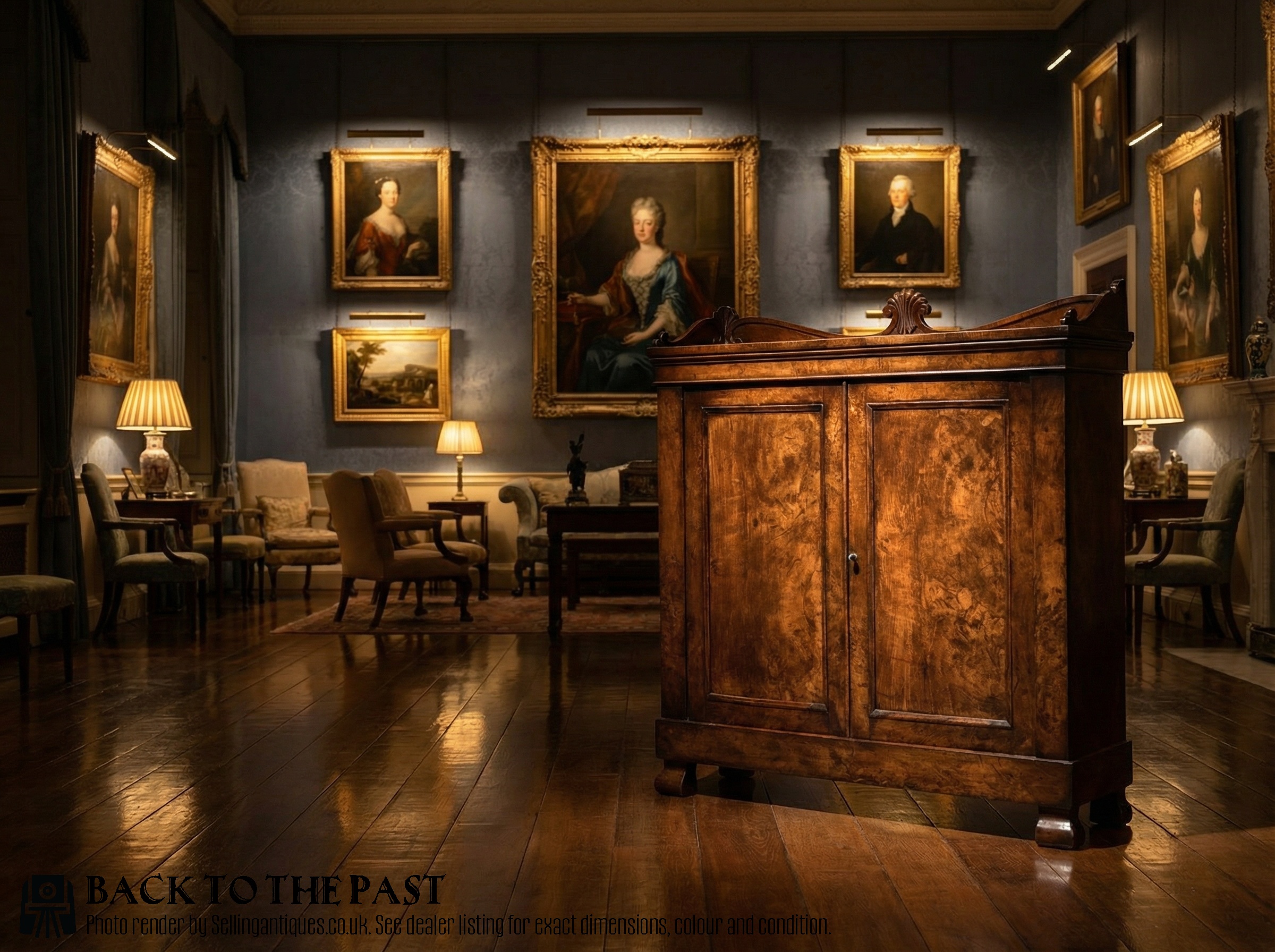
How they were made
Cabinet makers built these pieces using solid foundations of mahogany, oak, or rosewood, frequently applying flame mahogany veneer or exotic timbers like Gonçalo Alves and amboyna to the exterior surfaces. These veneers were selected for their pronounced grain patterns.
Brass inlay, delicate stringing, and glazed panels were incorporated to add contrast and texture to the timber bodies. Marble tops also appear on specific configurations, providing a durable and cool upper surface.
Some cabinets hide their contents behind fine brass wire mesh instead of glass.
What varies in quality
The choice of timber grain and the precision of the veneer work dictate much of the visual distinction between examples. Pieces utilising carefully matched pollard oak, rio rosewood, or flame mahogany demonstrate greater ambition in their design.
The refinement of brass inlay, column carving, and secondary woods such as oak show the level of skill invested by the workshop. Superior examples maintain balanced proportions and integration between structural elements and decorative details.
Gillows·William Trotter
The Regency Carved Side Cabinet Glossary
- Chiffonier
- A low sideboard or cabinet, typically featuring shelves or a mirror above the main surface. These compact units gained popularity during the Regency period for living room storage.
- Gonçalo Alves
- A dense exotic hardwood known for its striking, variegated dark brown and tan grain. Cabinet makers used this timber for high-status furniture.
- Wellington chest
- A tall, narrow chest of drawers secured by a locking side pilaster hinged to the frame. This form provides secure storage within a compact footprint.
- Breakfront
- A piece of furniture where the central section projects forward from the flanking outer sections. This architectural arrangement creates depth and shadow.
Regency Carved Side Cabinet: Frequently Asked Questions
Where should I place a side cabinet?
These cabinets suit dining rooms, hallways, or living spaces where low surface space and enclosed storage are both required.
Their shallow depth allows them to sit against walls without obstructing walkways while displaying decorative objects on top.
What is the difference between a chiffonier and a side cabinet?
A chiffonier generally includes an upper superstructure with shelves or a gallery, whereas a standard side cabinet finishes at the top surface.
Both forms offer enclosed lower storage behind panelled or glazed doors.
How do I care for rosewood and mahogany surfaces?
Maintain the timber by keeping it away from direct heat sources and strong sunlight that can dry out the polish.
Dust regularly with a dry cloth and apply occasional wax suitable for antique furniture to preserve the finish.
How can I tell a Regency piece from a Victorian one?
Regency pieces typically display restraint, classical proportions, and specific decorative motifs like brass inlay or Egyptian revival details.
Later Victorian items often use heavier proportions and darker finishes while building on the earlier forms.