

Regency Carved Library Desk
A regency carved library desk brings architectural discipline and figured timber to a study, offering substantial writing surfaces shaped by nineteenth-century joinery.
Regency Carved Library Desk
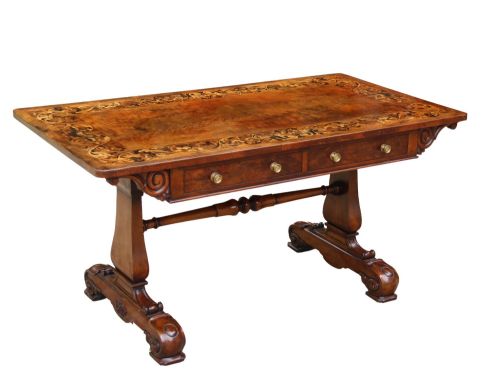
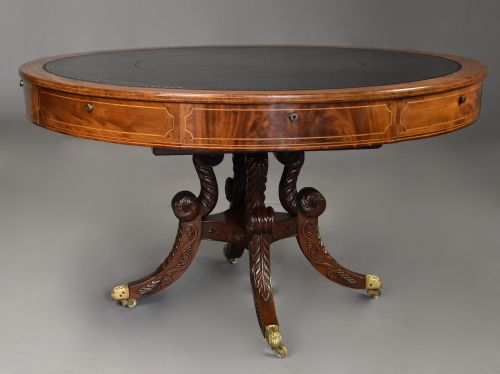
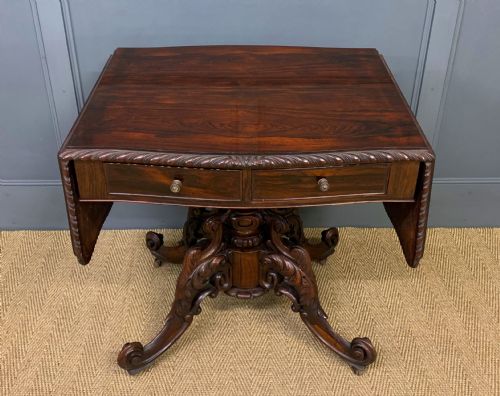
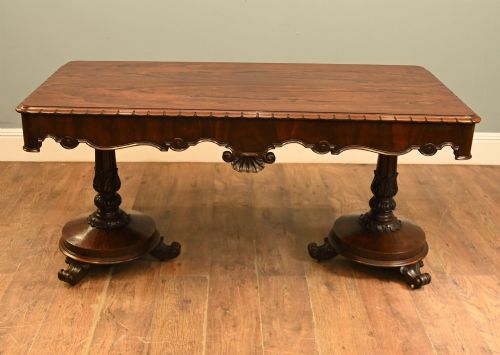
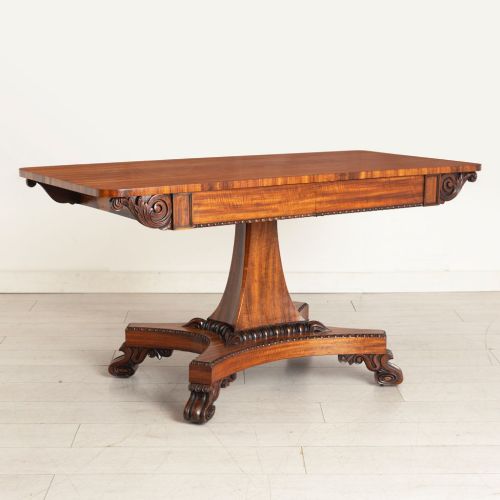
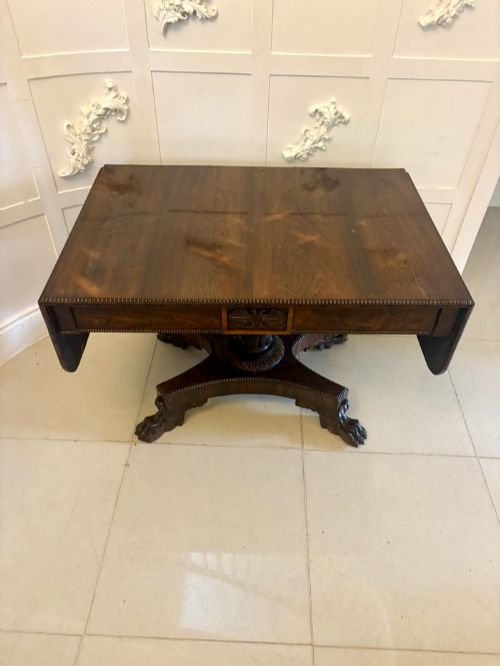
A regency carved library desk is a serious piece of nineteenth-century furniture designed for scholarly use, frequently appearing alongside related forms like writing tables, partners desks, and rotating drum tables. These pieces date principally from the Regency, George IV, and William IV periods, constructed in England and Ireland during the early part of the 1800s.
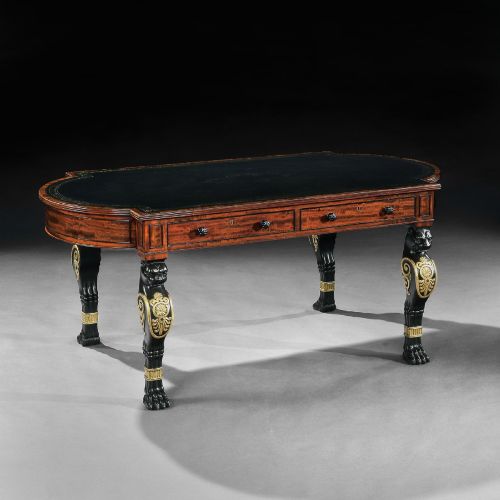
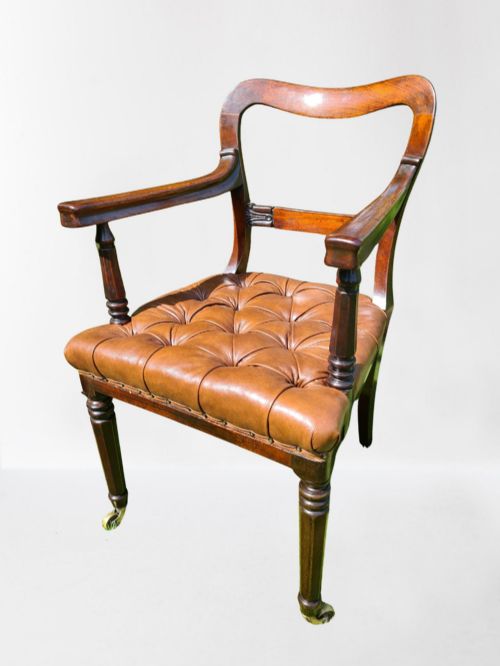
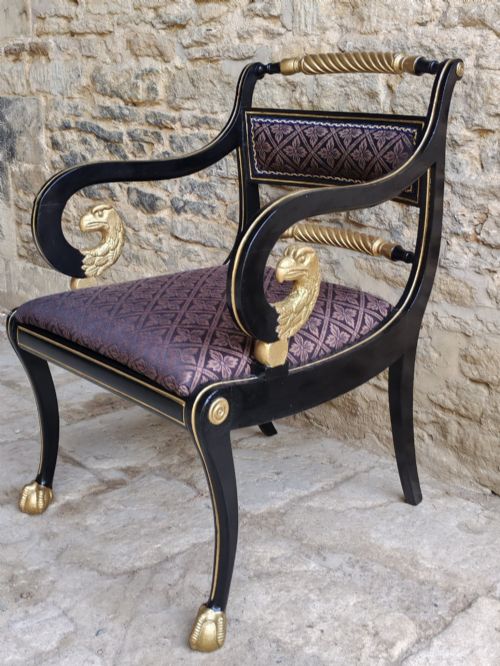
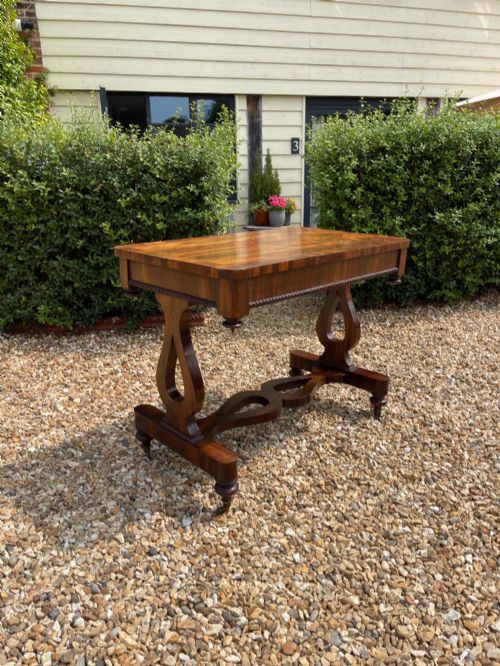
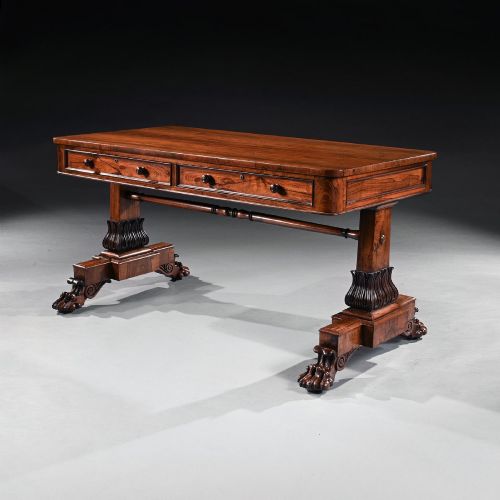
Makers and designers of the period drew upon Georgian proportions while introducing bolder carved details like lions paw feet, giltwood accents, and intricate woodwork. The forms range from compact pollard oak writing tables to broad scale partners desks and rotating drum tables fitted with leather inserts.
Materials and Construction
Makers relied heavily upon dense, durable hardwoods, selecting flame mahogany, rosewood, oak, and pollard oak for their pronounced grain patterns and structural stability. These timbers were frequently polished to a deep patina, accentuating the natural figure of the wood across large surfaces like table tops and pedestal bases.
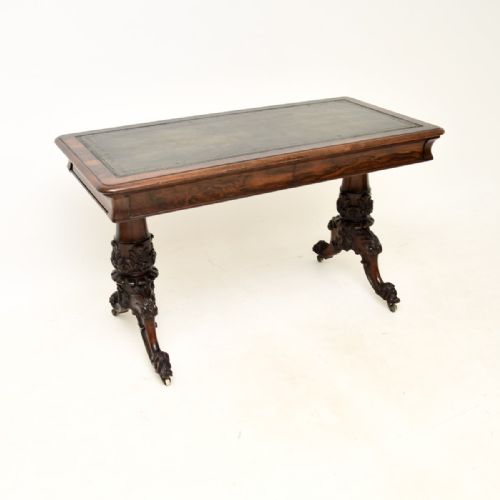
Leather inserts provided a smooth, durable writing surface set into the timber tops, often bordered by subtle tooling in blind or gilt stamp work. Brass fittings, castors, and occasionally ivory paintwork or giltwood details completed the hardware and ornamentation of the finer examples.
Joinery methods of the era prioritized sturdy carcass construction, turning, and hand-carved ornamentation applied to legs, feet, and friezes. Rotating mechanisms for drum tables and complex pedestal arrangements demonstrated the advanced carpentry skills of workshops operating during the early nineteenth century.
Regency Carved Library Desk Retail Price Guide 2026
Typical asking prices for regency carved library desk among the pieces listed under this phrase on Sellingantiques today, from the lower quarter to the upper quarter. They describe what is for sale here now, not the wider market.
Listings feature woods such as mahogany, rosewood, oak, pollard oak, and gonçalo Alves across the nineteenth century.
Judging Quality and Execution
The selection of timber grain largely dictates the visual success of a piece, with mirrored veneers and carefully matched flame mahogany or pollard oak separating standard utility items from exceptional commissions. Timber choice extends to secondary woods used in drawer linings and interior framing, where consistent quality marks competent workshop practice.
The crispness and depth of hand-carved details, such as lions paw feet or reeded legs, reveal the competence of the artisan. Sharp, well-defined carving demonstrates a higher standard of craftsmanship than soft or mechanically smoothed moulding.
Proportion and architectural balance govern the overall presence of the furniture, ensuring that pedestals, frieze drawers, and writing surfaces relate harmoniously. Pieces attributed to distinguished workshops or makers display superior structural integration and refined hardware selection.
Gillows·Williams and Gibton·George Smith·Jean-Joseph Chapuis·Bush of London
The Regency Carved Library Desk Glossary
- Partners desk
- A large double-sided writing table designed for two people to work face-to-face, featuring banks of drawers on both sides.
- Drum table
- A circular library table with a rotating top surrounded by frieze drawers, resting on a central pillar and pedestal base.
- Sofa table
- A rectangular occasional or writing table with drop leaves on either end, traditionally placed before a sofa.
- Bergere chair
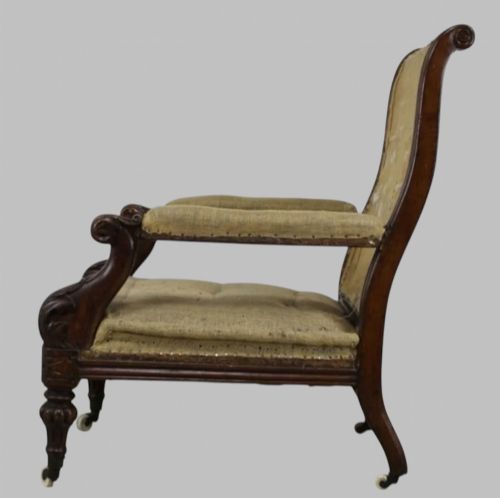
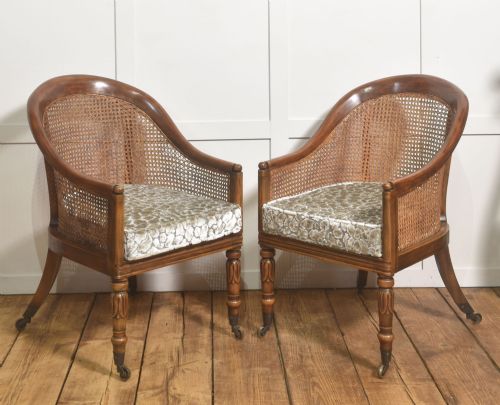
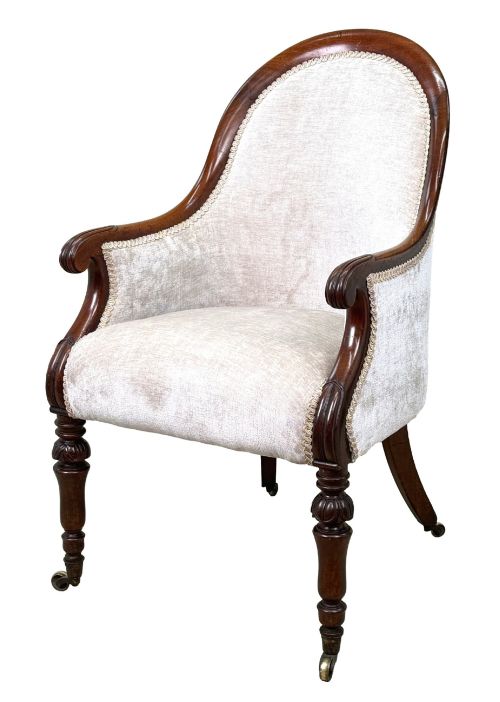
- An enclosed upholstered armchair with exposed wooden framing and cane or upholstered sides.
- Patina
- The surface sheen and mellowing developed by wood and leather through age and handling over many decades.
Regency Carved Library Desk: Frequently Asked Questions
What is a partners desk?
A partners desk is a substantial writing table built with drawers and cupboards on opposite sides, allowing two people to sit and work facing one another. These pieces were standard in large nineteenth-century libraries and administrative offices.
They are typically freestanding with finished backs, making them suitable for placement in the middle of a room rather than against a wall.
How do I care for leather desk inserts?
Leather writing surfaces require gentle cleaning with a slightly damp cloth followed by a neutral leather cream to prevent cracking. Avoid harsh chemical cleaners or excessive moisture that might damage the underlying timber.
Maintaining the leather helps preserve the blind-tooled borders and keeps the writing surface supple during daily use.
What is a drum table?
A drum table is a circular library table featuring a deep top fitted with a ring of drawers, often mounted on a central pillar with spreading feet. Many examples incorporate a mechanism allowing the entire top to rotate for easy access to stationery.
These tables were designed to sit in the centre of a room, providing storage and a stable surface for books and papers.
How do I distinguish Regency from Victorian furniture?
Regency furniture, produced in the early nineteenth century, typically exhibits clean architectural lines, classical influence, and restrained classical carving like reeding or brass inlay. Victorian pieces, emerging after 1837, often display heavier proportions, more exuberant ornamentation, and darker finishes.
Comparing the secondary timbers, hardware style, and joinery techniques helps clarify the specific period of manufacture.