
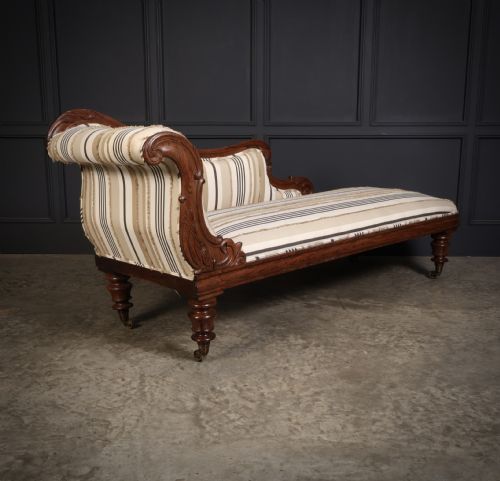

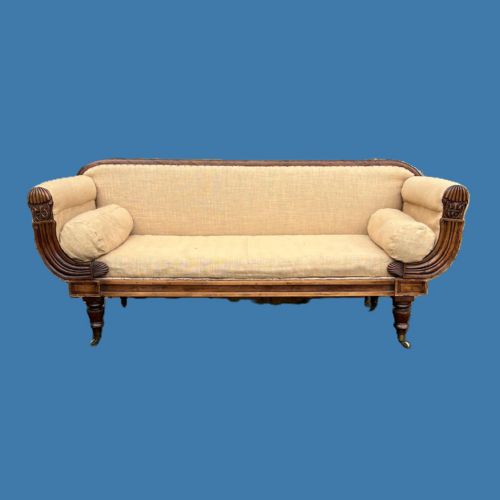


Regency Carved Daybed
A regency carved daybed brings classical elegance to any interior, offering a sophisticated place to recline that echoes classical antiquity.
Regency Carved Daybed
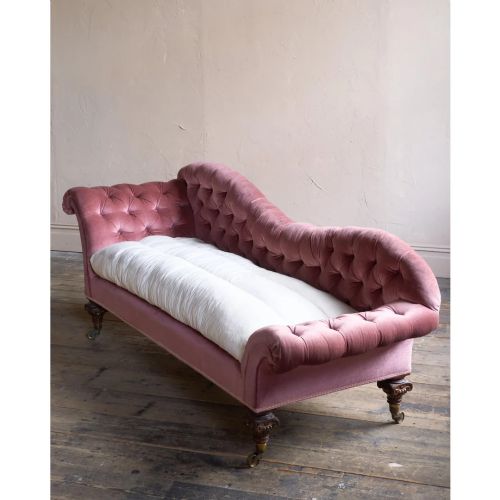
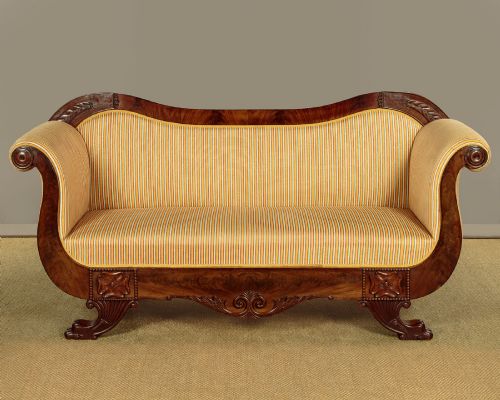
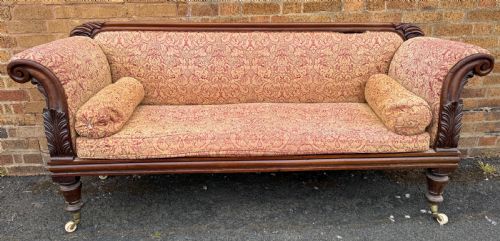
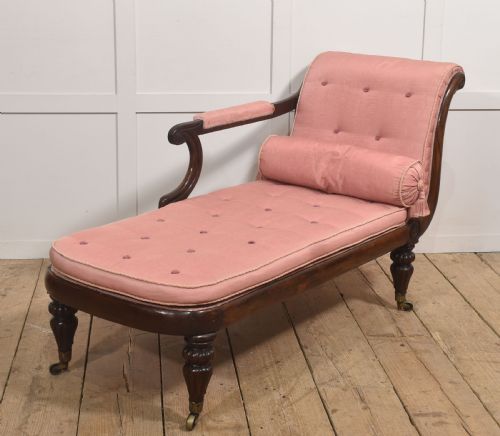
When searching for a regency carved daybed, you encounter a selection of sophisticated seating furniture primarily spanning the nineteenth century, including the Regency and William IV periods. These pieces take various forms, most commonly appearing as scroll-end sofas, chaise longues, and double-ended settees.
The materials utilised in these pieces heavily feature rich timbers such as mahogany, rosewood, and walnut, frequently complemented by upholstery in fabric and velvet. Makers of the era drew upon Regency, William IV, George IV, and even Anglo-Indian styles to create seating designed for both formal reception rooms and private chambers.
Judging quality in execution
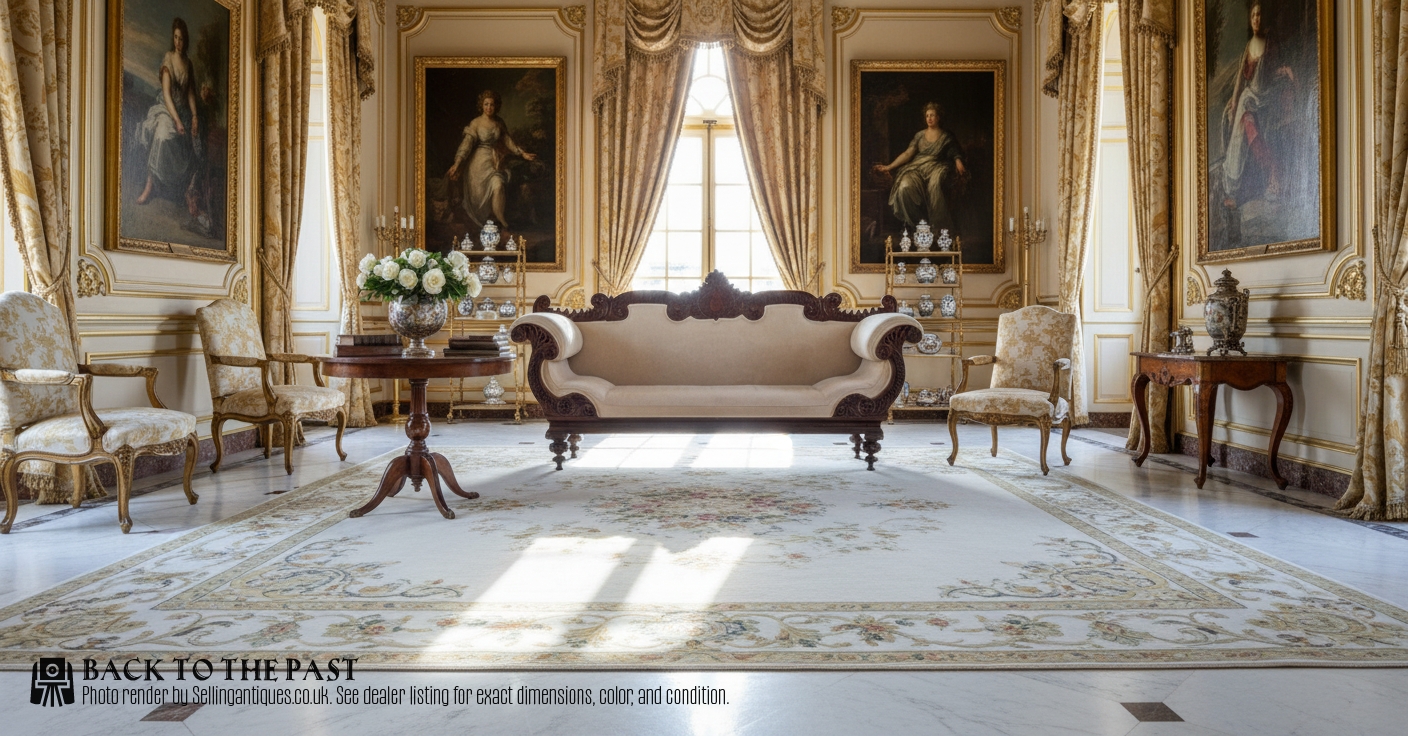
Quality in a regency carved daybed rests largely on the crispness of the timber carving and the selection of the wood veneers. Superior pieces display deep, fluid lines on scroll ends and ionic column legs, whereas lesser examples feature softer detail or simpler turning.
The choice of primary timber dictates much of the distinction, with finely grained rosewood or figured mahogany marking out superior cabinetwork. Construction integrity, seen in the seamless integration of double scroll ends and structural stability, further separates standard production from exceptional workshop output.
One recorded daybed emerged directly from Badminton House, having been specially ordered from makers Morel and Hughes.
Morel and Hughes
The Regency Carved Daybed Glossary
- Scroll-end
- A structural arm or back termination curving outward in a spiral scroll. This form defines many nineteenth-century daybeds and couches.
- Chaise longue
- An upholstered long chair or daybed designed for reclining, combining a chair back with an extended seat. They appear frequently in mahogany and rosewood variants.
- Récamier
- A type of daybed featuring two raised scroll ends, named after Madame Récamier who was famously painted on one. These often appear in William IV and Regency forms.
- Simulated rosewood
- A painted or stained finish applied to a less expensive timber to imitate the grain and rich colour of genuine rosewood. Cabinetmakers utilised this technique during the early nineteenth century.
Regency Carved Daybed: Frequently Asked Questions
How do I date a regency carved daybed?
Dating relies on observing stylistic markers such as classical scroll ends, timber choices like rosewood or mahogany, and structural proportions typical of the early nineteenth century.
Cabinetmaking techniques and specific period motifs, including George IV or William IV design cues, further help narrow the decade of manufacture.
Where were daybeds placed in period homes?
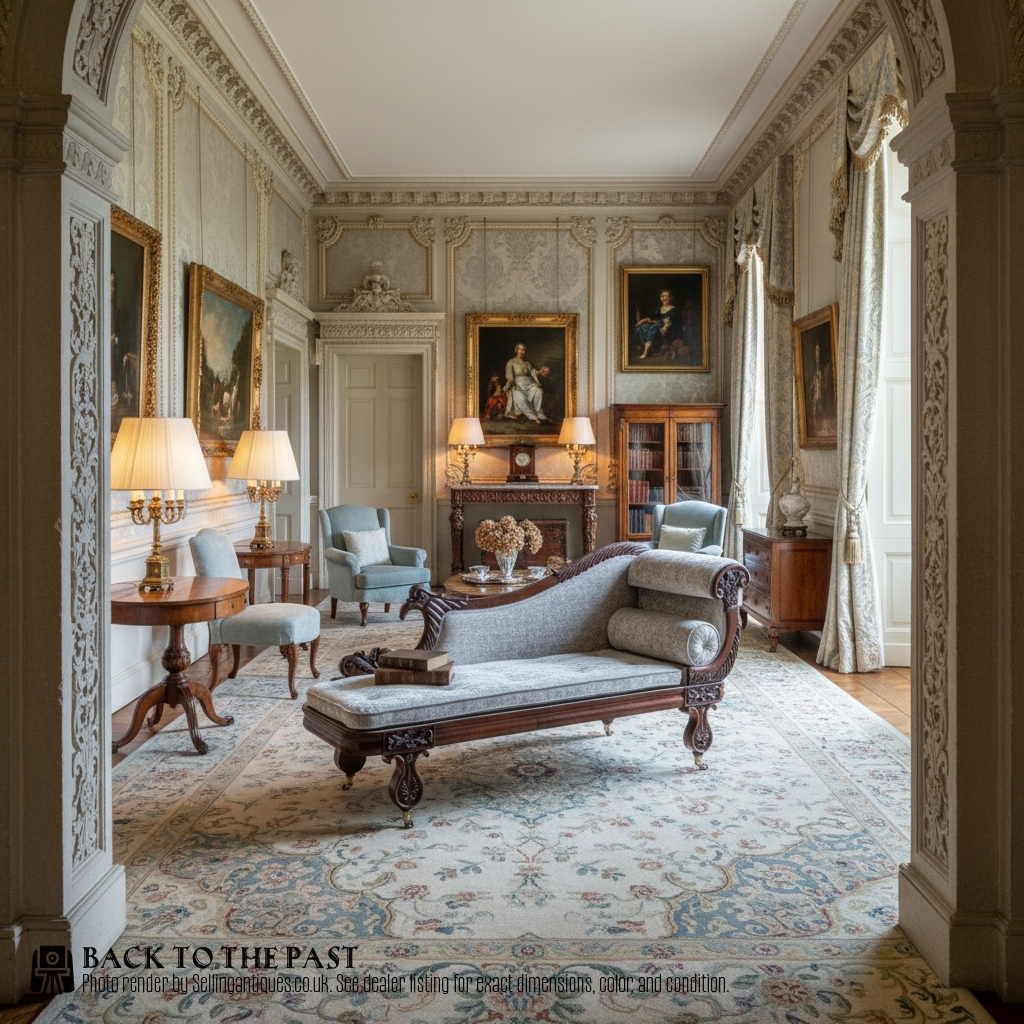
In nineteenth-century interiors, these pieces typically occupied drawing rooms, libraries, or large hallways as both decorative statements and functional lounging furniture.
Their finished backs allowed them to sit away from the walls, often positioned to catch the light near tall windows.
Can I use a historic daybed for daily sitting?
These robust hardwood frames remain structurally sound for regular use when properly maintained and upholstered with modern support.
Careful consideration of the antique joints and fabric wear ensures the piece withstands everyday lounging.