


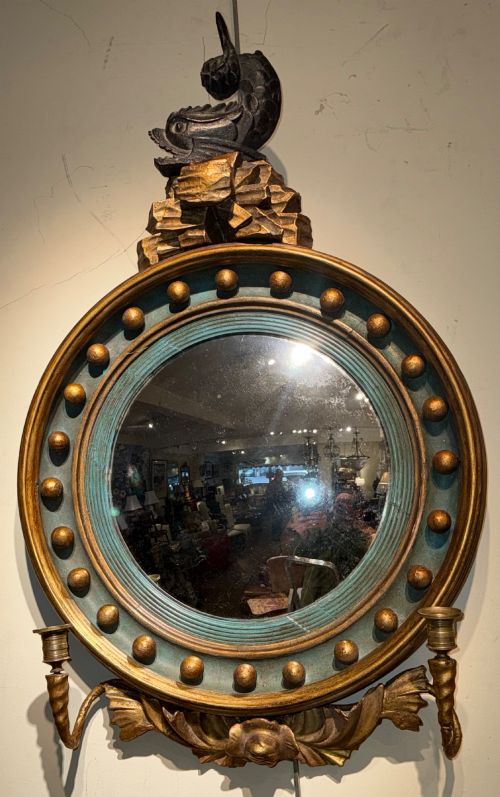

Regency Carved Convex Mirror
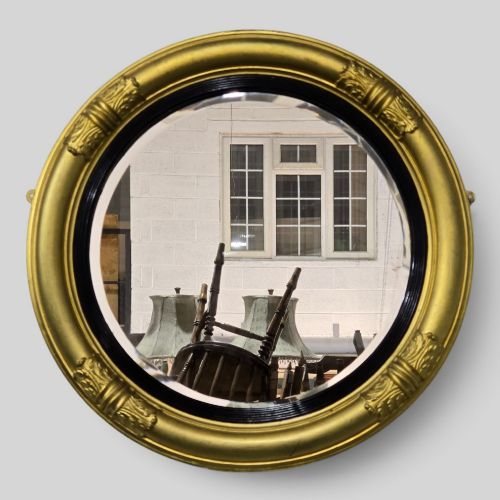
A regency carved convex mirror bends the light of a room into a singular, curving circular field.
Regency Carved Convex Mirror
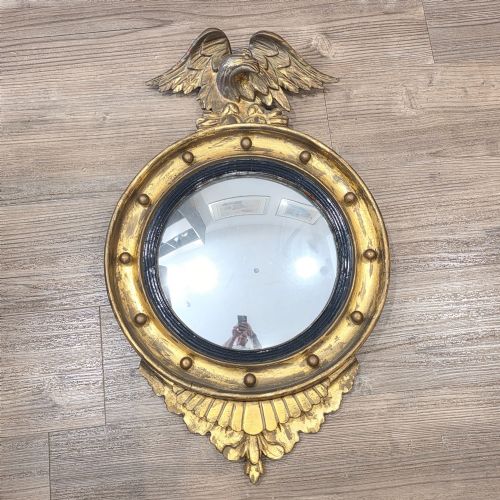
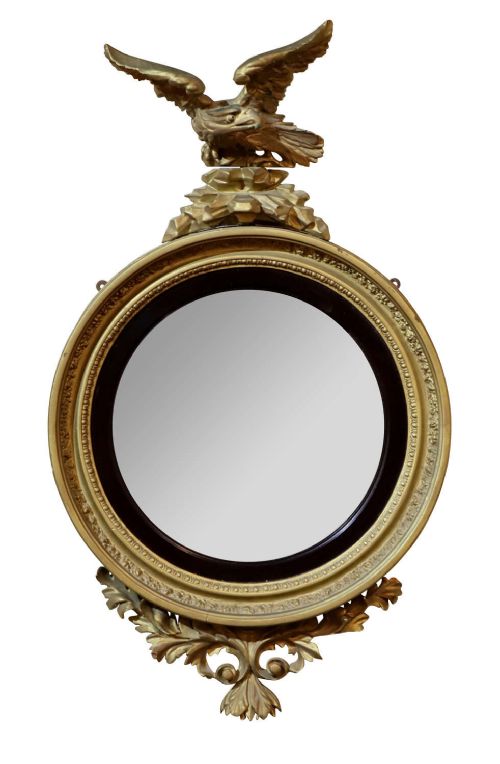
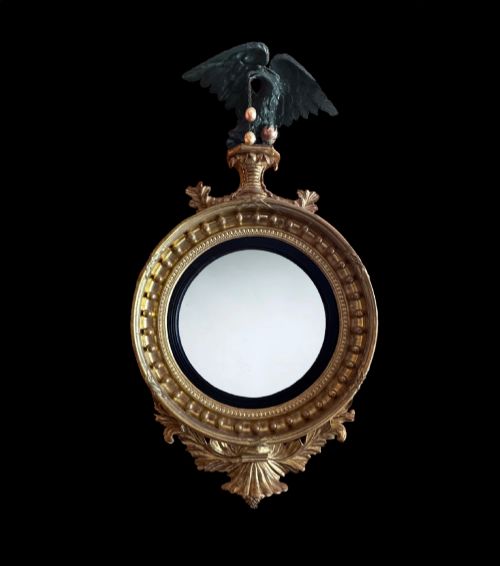
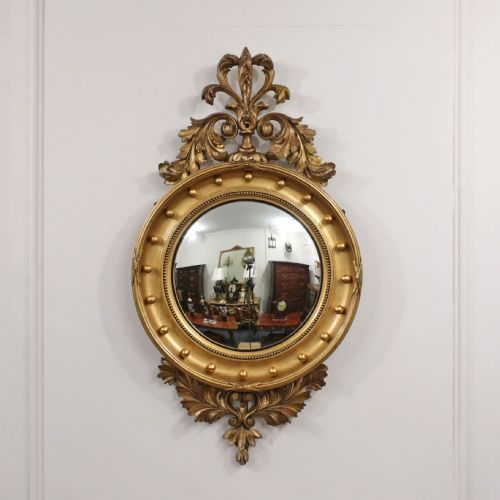
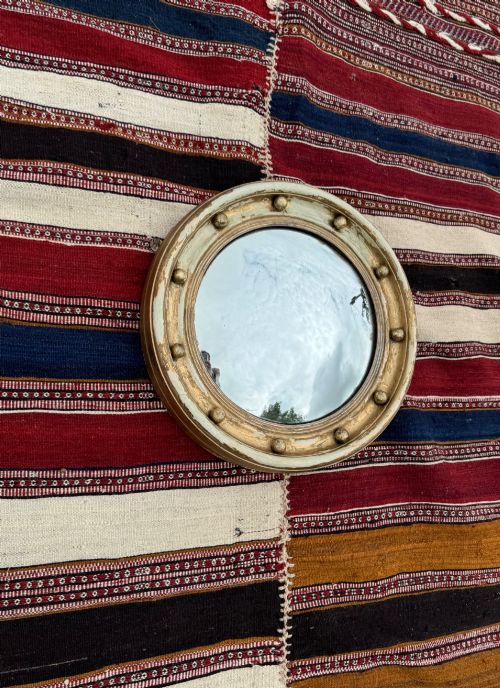
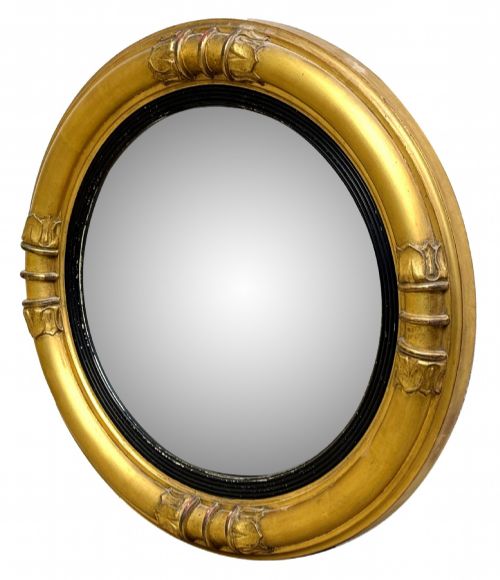
When you search for a regency carved convex mirror, you encounter circular wall plates designed to reflect an entire interior within a compact, curved glass surface. The most common version on this page dates to the Regency period and the nineteenth century, often framed in giltwood with circular proportions.
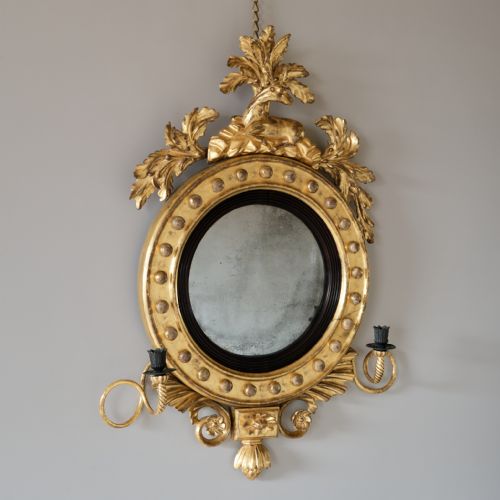
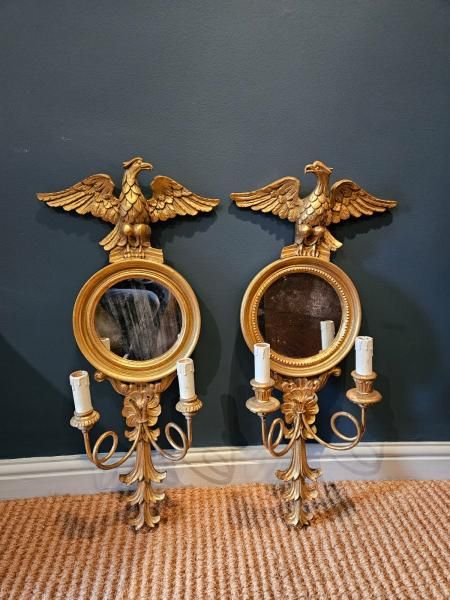
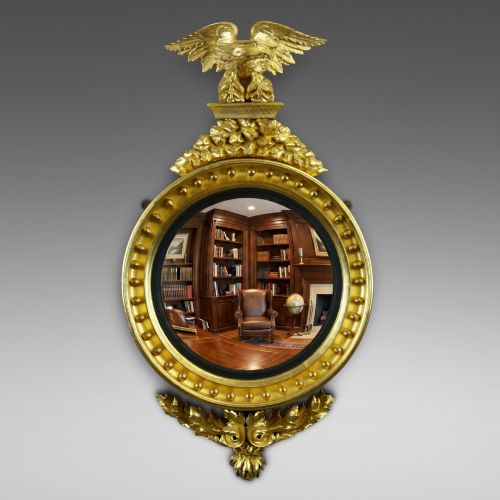
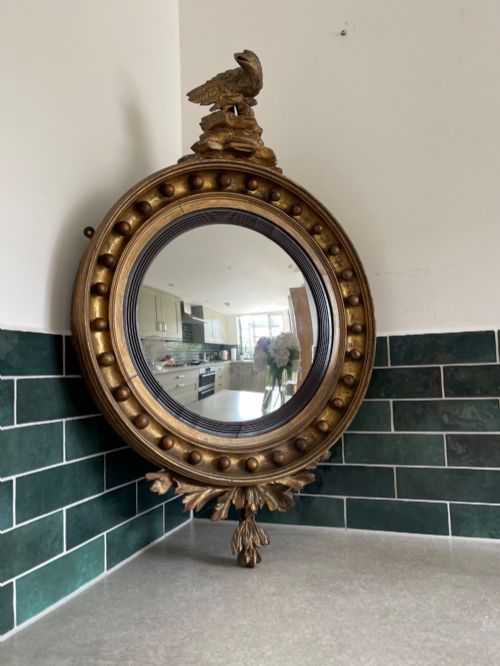
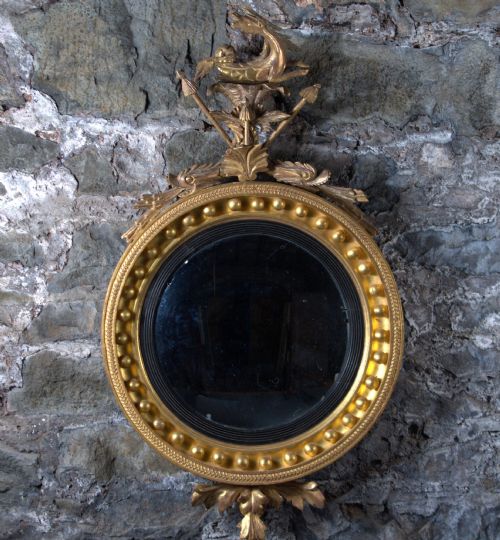
Many examples feature carved decorations at the top, such as a spread eagle or dragon, alongside variations like girandole mirrors equipped with wall sconces for candles. The forms range from small scaled pieces to large plates spanning significant wall dimensions, predominantly shaped from timber, gesso, and glass.
How they were made
Makers shaped these frames from timber, applying layers of gesso before finishing the surface with gold leaf to create the distinctive giltwood appearance. The curved mirror glass itself required specialised blowing or casting techniques to achieve the spherical distortion characteristic of convex plates.
Carved details like eagles, leaves, and sconces were shaped by hand before being fixed to the circular wooden frames. Ebonised wood accents and brass components occasionally supplement the gilt surfaces to delineate the mouldings.
An eagle watches every move you make across the room from its perch atop the glass.
What varies in quality
The crispness of the hand-carved wood and gesso ornamentation dictates the visual weight of the frame, where deeper, sharper relief work separates finer examples from softer castings. The integrity of the original gilding and the clarity of the curved mirror plate establish the overall preservation grade of the piece.
Proportions between the circular frame and carved surmounts like eagles or dragons influence the balance of the composition. Early nineteenth-century execution displays distinct joinery and detailing compared to later revivals from the Victorian era or the 1920s.
The Regency Carved Convex Mirror Glossary
- Convex mirror
- A circular wall glass curved outward to project a wide-angle reflection of the surrounding room. This form was traditionally utilised to monitor activity across dining spaces and drawing rooms.
- Giltwood
- Timber coated with gold leaf applied over a prepared gesso ground. It provides the characteristic bright metallic finish seen on historical frames.
- Gesso
- A plaster mixture applied to wood frames to create a smooth surface for carving and gilding. It allows for intricate moulded details and relief decoration.
- Girandole
- A wall mirror fitted with candle sconces projecting from the frame. The polished branches serve to multiply the candlelight within the interior.
- Surmount
- A carved decorative element positioned at the top of the mirror frame. Eagles and mythical beasts frequently occupy this focal position.
Regency Carved Convex Mirror: Frequently Asked Questions
How do you hang a heavy convex mirror?
These circular frames require robust wall fixings secured directly into masonry or solid timber studs to support the substantial weight of the timber and glass. Steel picture wire or heavy brackets attached to the reverse must align with sturdy structural support.
Positioning the glass at eye level ensures the wide-angle reflection captures the opposite wall and light sources effectively without straining the hanging hardware.
Where were these mirrors placed historically?
Regency interiors typically positioned these circular wall plates in principal reception rooms, dining parlours, and entrance halls. Their optical properties allowed hosts to observe guests and service across the room from a single vantage point.
Placing the glass opposite a window maximised the distribution of natural daylight into darker corners of the interior.
How do you distinguish Regency from later revivals?
Authentic Regency examples display period timber construction, hand-carved gesso details, and authentic wear to the original gilt surfaces. Secondary periods like the Victorian era, 1890, and the 1920s introduced revival pieces with distinct surface preparations and machine tooling.
Examining the backboards, fixings, and the composition of the gesso layers clarifies the manufacturing era of the frame.
What is the purpose of the eagle surmount?
The spread eagle perched atop the frame served as a patriotic emblem and a decorative focal point popular during the early nineteenth century. This carved motif added vertical height and formal dignity to the circular composition.
Surmounts were hand-carved separately and secured to the top of the giltwood moulding during assembly.