



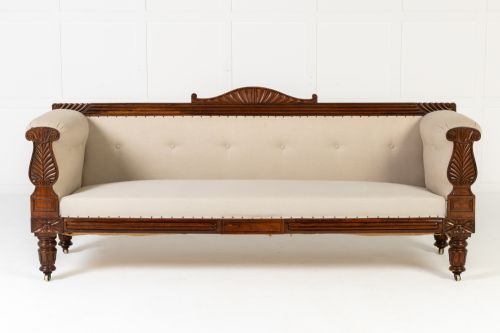


Regency Carved Bench
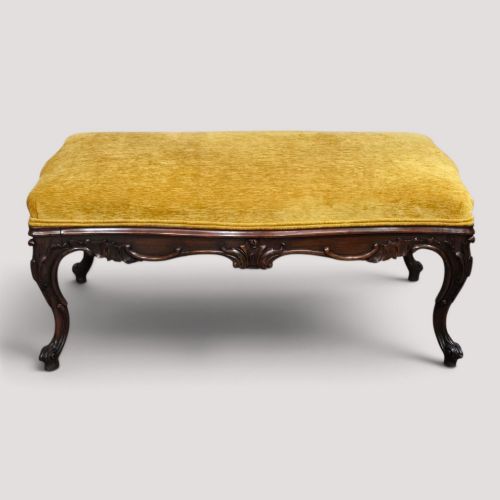
Regency carved bench examples bring architectural proportion and refined neoclassical seating forms directly into a room.
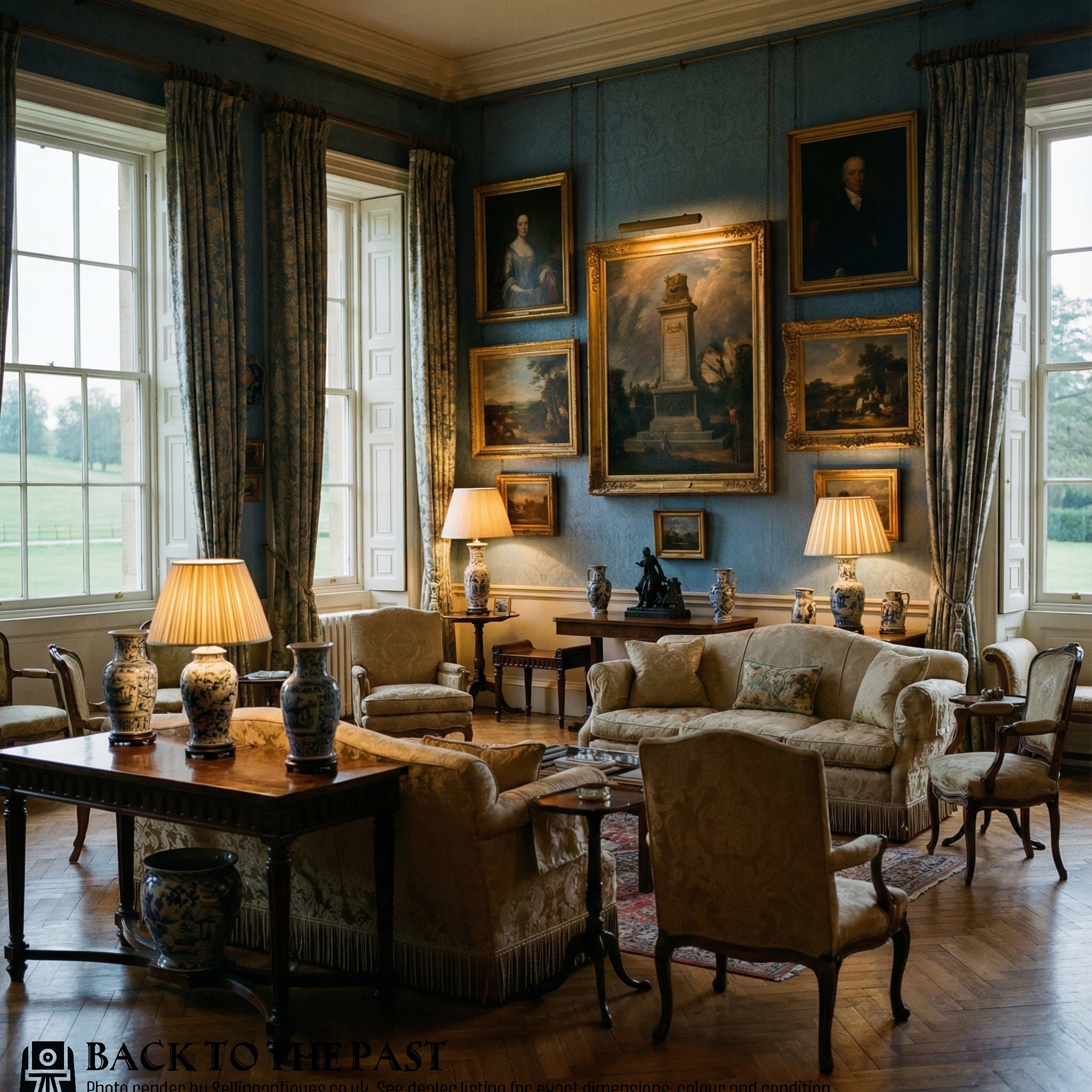
Regency Carved Bench
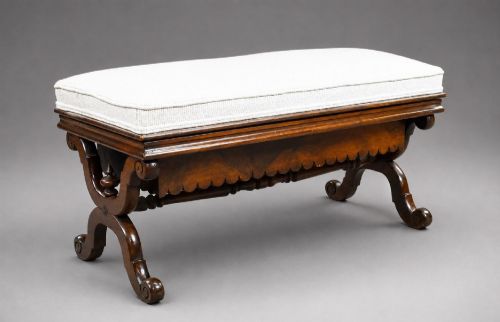
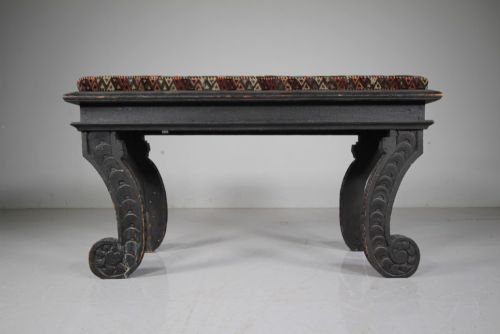
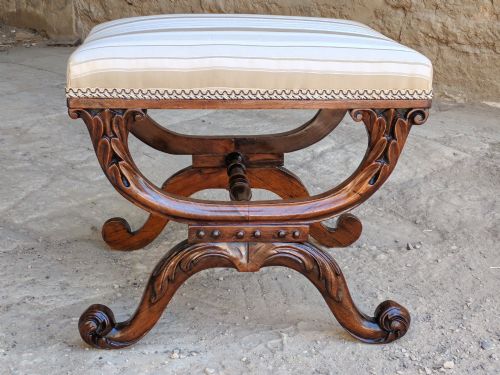
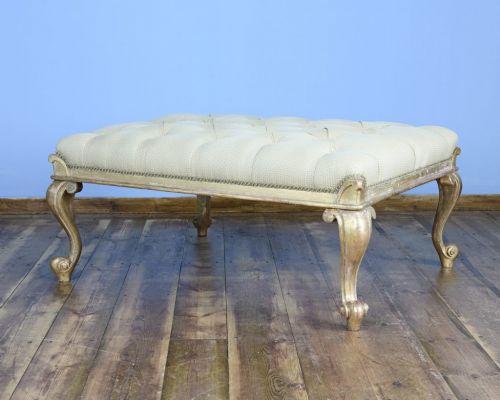
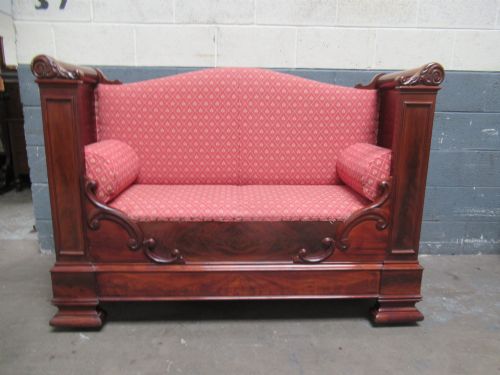
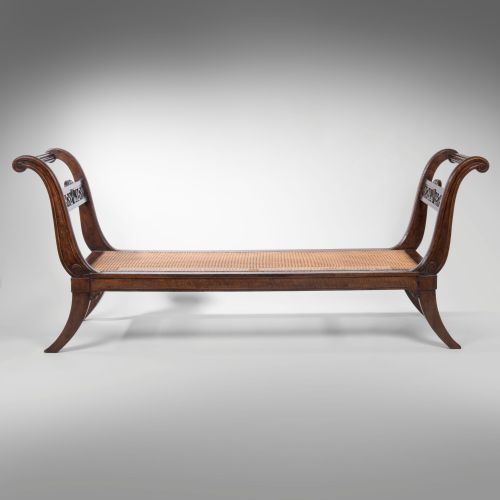
A regency carved bench encompasses various seating forms designed for grand interiors, including window seats, hall benches, and long stools. These pieces draw from neoclassical and French Empire styles, often featuring distinct scroll ends or X-frame structures.
The selection frequently includes mahogany and rosewood timber frames alongside giltwood and painted pine examples. Makers and workshops of the period produced both domestic country house models and more formal scaled pieces.
Window seats and hall benches serve practical seating roles while anchoring hallways, drawing rooms, and gallery spaces with classical lines. Pieces span the early nineteenth century into the William IV and later Victorian periods.
Materials and construction methods
Carpenters utilised dense hardwoods such as mahogany and rosewood for structural durability, applying carving and parcel gilding to enrich the surfaces. Giltwood and gesso finishes appear on formal neoclassical items alongside painted pine variants.
Upholstered elements rely on traditional textiles, velvet, and fabric coverings, while certain seating types integrate cane work within wooden frames. Structural joinery incorporates X-frame supports and curule bases to achieve stability without heavy visual bulk.
Several pieces arrive ready for your own upholstery fabric, offering a blank canvas for interior projects.
Standards of craftsmanship
The refinement of the timber carving and the crispness of the giltwood or gesso application distinguish superior examples from standard production. Dense grain selection in rosewood and mahogany indicates higher material quality.
Proportion and structural integrity define the architectural success of a piece, particularly in complex forms like X-frame stools and scroll-end sofas. Retained original surface finishes and authentic period upholstery methods elevate the standing of surviving items.
Miles & Edwards
The Regency Carved Bench Glossary
- Curule
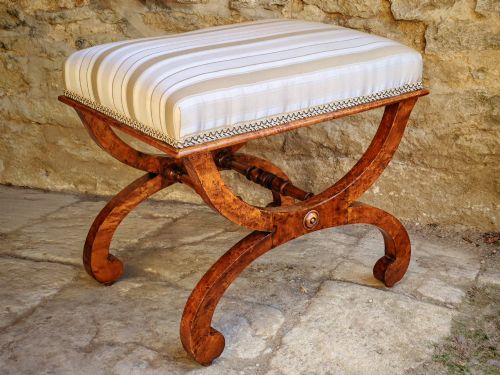
- An ancient X-shaped seating design adapted during the neoclassical revival for stools and benches. This form provides structural strength and mimics Roman magistrate chairs.
- Giltwood
- Timber coated with gold leaf or a gold-coloured preparation. It creates a brilliant reflective surface popular in formal nineteenth-century interior schemes.
- Window Seat
- A long narrow bench built or placed specifically to fit within a window recess. These typically feature scroll ends or upholstered arms.
- Scroll End
- A seating terminal that curves outward in a volute or scroll shape. This stylistic flourish characterises many sofas and window seats of the period.
- X Frame
- A cross-legged structural support resembling the letter X. It underpins many formal stools and curule seats found in the listings.
Regency Carved Bench: Frequently Asked Questions
Where should I place a window seat?
Window seats suit entry halls, long corridors, and beneath large drawing room windows where their linear proportions fit naturally.
They offer practical seating without obstructing light or room circulation.
How do I distinguish mahogany from rosewood?
Mahogany generally displays a warm reddish-brown tone with straight or ribbon grain patterns.
Rosewood exhibits a heavier weight and a darker, contrasting grain with deep purple and black streaks.
What is a curule stool?
A curule stool utilises a crossing X-frame base inspired by classical antiquity.
Cabinet makers of the period revived this ancient Roman shape for formal seating and footstools.
Can I use these benches for everyday seating?
Most surviving pieces possess sturdy hardwood frames constructed from mahogany, oak, or rosewood.
Upholstered surfaces may require modern reinforcement depending on the intended daily use.