
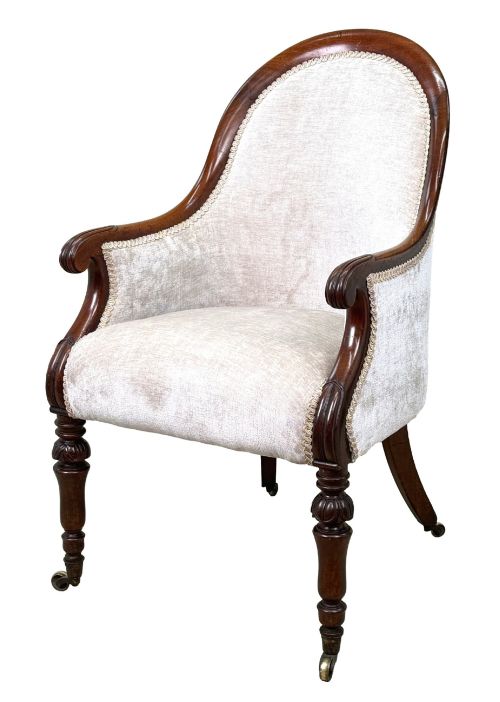
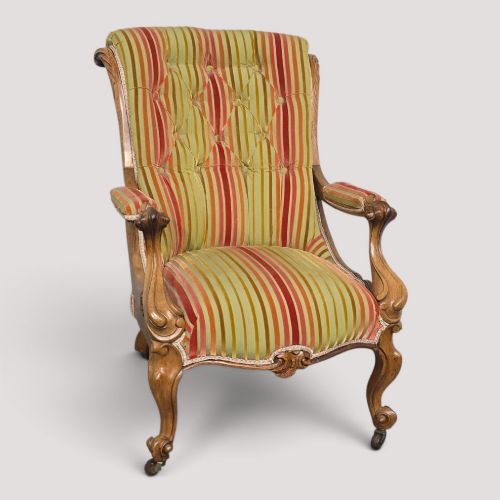
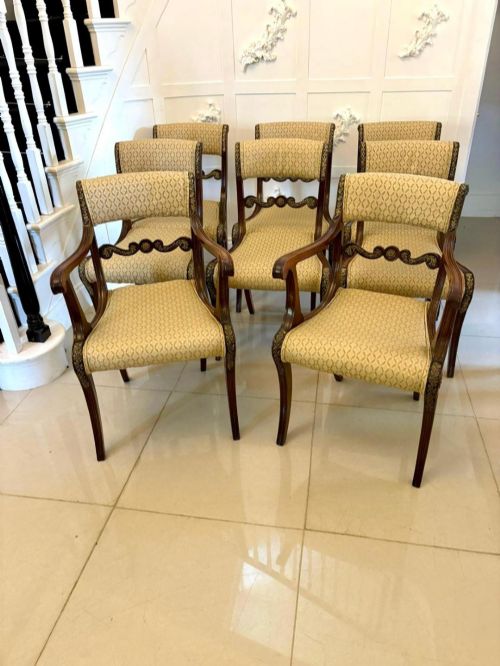

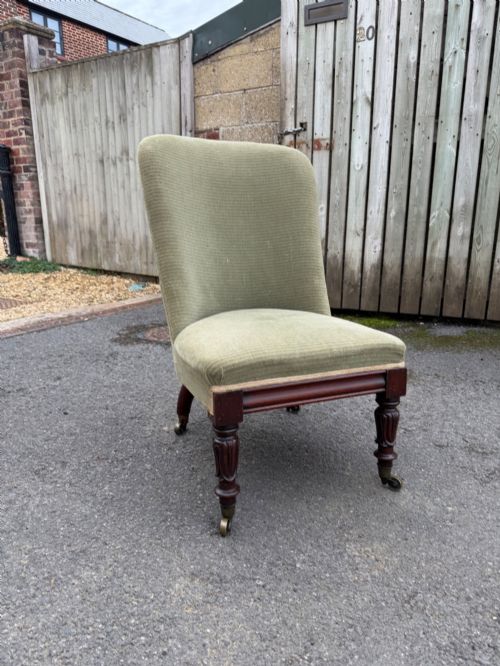
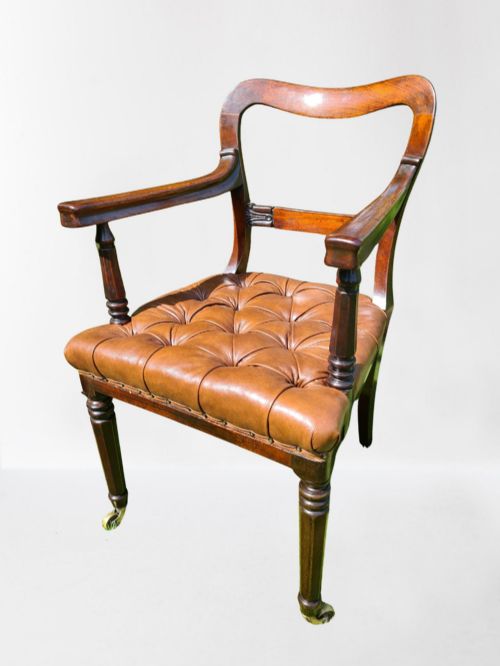
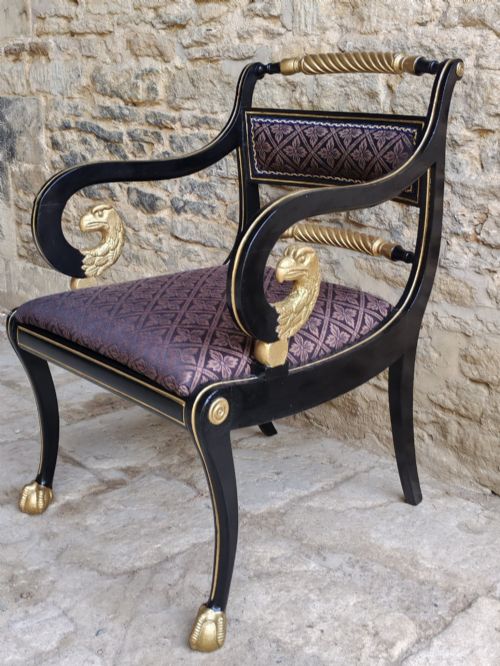
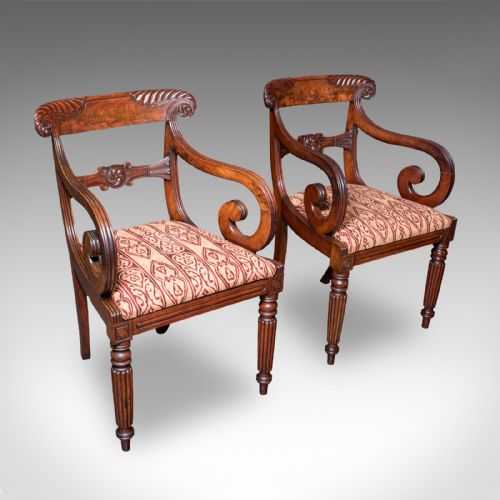
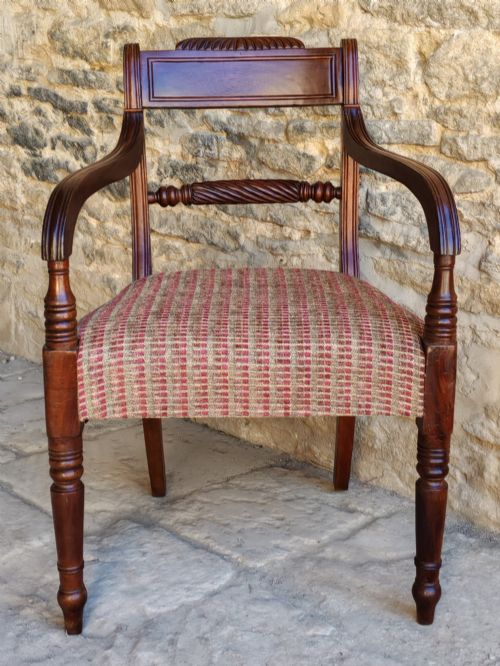
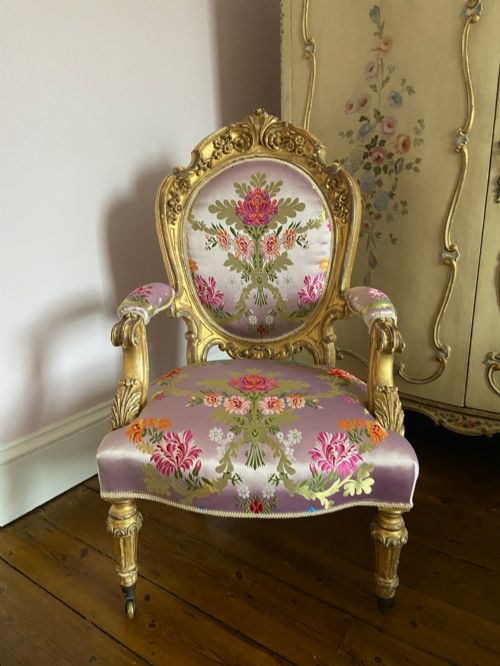
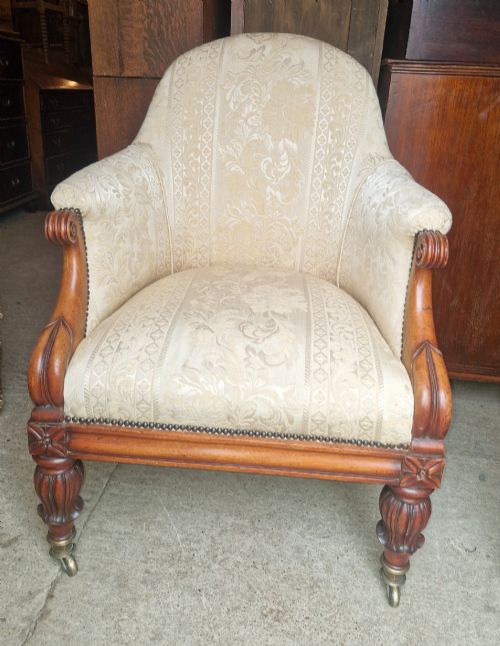
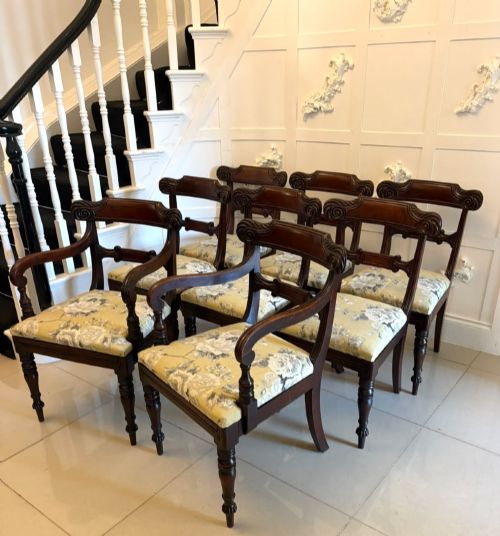
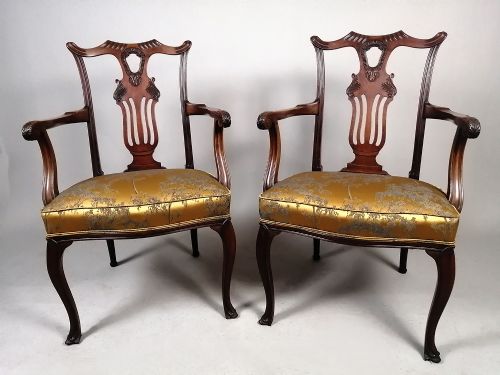
Regency Carved Armchair
A regency carved armchair brings sculptural form and dark timber into a room, offering a seat shaped by classicism.
Regency Carved Armchair
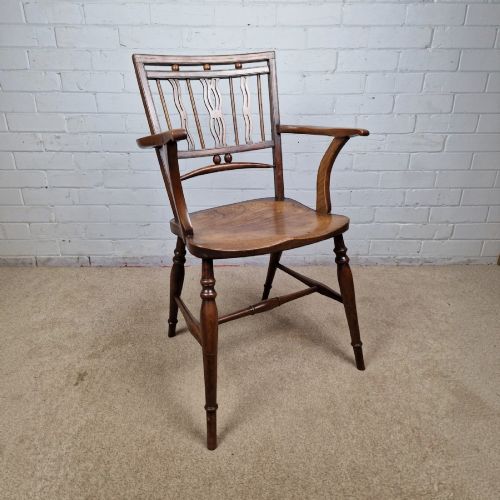
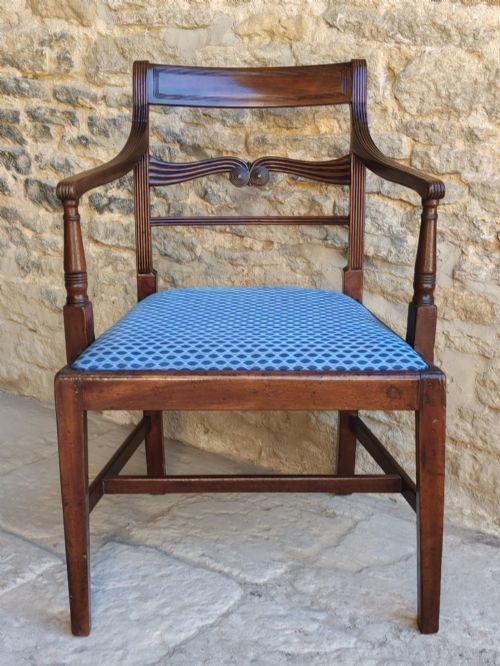
A regency carved armchair combines structural timber frames with classical detailing, often appearing as a library chair, dining carver, or open elbow seat. The selection ranges from authentic period pieces dating to the early nineteenth century through to later revival interpretations.
Mahogany and rosewood dominate the listings, frequently accompanied by smaller numbers in walnut, padouk, and gilt wood. Forms vary from library armchairs with enclosed upholstered sides to open arm variants featuring curved backsplats and scroll arms.
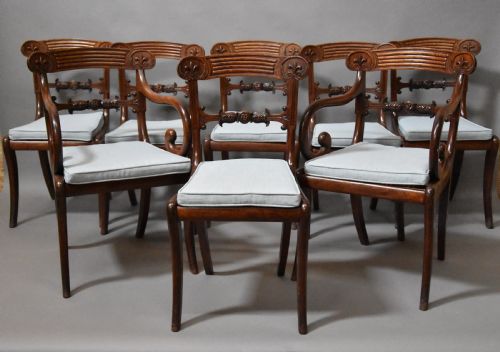
The aesthetic draws heavily on classical antiquity, displaying elements such as ropeback designs, lyre splats, and lion monopodia supports. Pieces surface both individually and in matched dining sets that include armchairs alongside side chairs.
Distinctions in Quality
The refinement of the carved ornament dictates the standing of a piece, separating straightforward production from masterwork execution. Crisp detailing on scroll arms, backsplats, and monopodia supports demonstrates superior workshop competence.
Timber selection and grain matching across the frame influence overall presence, alongside the structural integration of the arms to the seat rail. Original surface patination and retention of period cane or secondary woods complete the assessment.
Several armchairs incorporate roaring lion paws to stand upon, bringing fierce antique wildlife directly into the parlour.
Thomas Hope
The Regency Carved Armchair Glossary
- Carver
- An armchair designed to match a set of dining chairs, typically featuring open arms and a wider seat. These were traditionally placed at the head of a dining table.
- Bergère
- An enclosed upholstered armchair with a wooden frame, often featuring cane panels on the back and sides. This form gained popularity during the Regency period for library and drawing-room use.
- Monopodia
- A carved furniture support taking the form of a single animal leg, frequently ending in a lion's paw. This classical motif appears on high-status Regency seating.
- Sabre leg
- A concave curving leg that tapers toward the foot, mimicking the shape of a cavalry sword. It is a defining characteristic of Regency chair design.
- Lyre back
- A chair back featuring an open splat shaped in the exact contour of a musical lyre. This motif reflects the period fascination with ancient Greek art.
Regency Carved Armchair: Frequently Asked Questions
What is a carver chair?
A carver chair is an armchair built with open sides to accommodate formal dress, historically paired with simpler dining chairs. They sat at the heads of the table.
On this page, carvers appear singly, in pairs, or as part of large dining sets alongside matching side chairs.
How do I identify a Regency armchair?
Regency armchairs are identified by classical motifs, sabre legs, reeded frames, and dark timber such as mahogany or rosewood. The design draws directly on ancient Greek and Roman forms.
Details like brass accents, ropeback splats, and carved lion monopodia further point to this specific nineteenth-century era.
Were these chairs used at desks?
Many sturdy mahogany armchairs functioned as library or desk chairs due to their supportive arms and compact footprints. They provided comfortable seating for writing and reading.
Low open arm variants and tub library chairs are particularly suited for placement at a partner desk or reading table.
How do I live with antique timber?
Living with antique timber requires stable indoor humidity and protection from direct sunlight to prevent wood splitting and fading. Regular dusting with a dry cloth maintains the polished finish.
Upholstery and cane work benefit from gentle care and occasional professional inspection to preserve structural integrity during daily use.