


Regency Canterbury Magazine Rack
A regency canterbury magazine rack brings structured elegance to a room for holding periodicals, newspapers and sheet music.
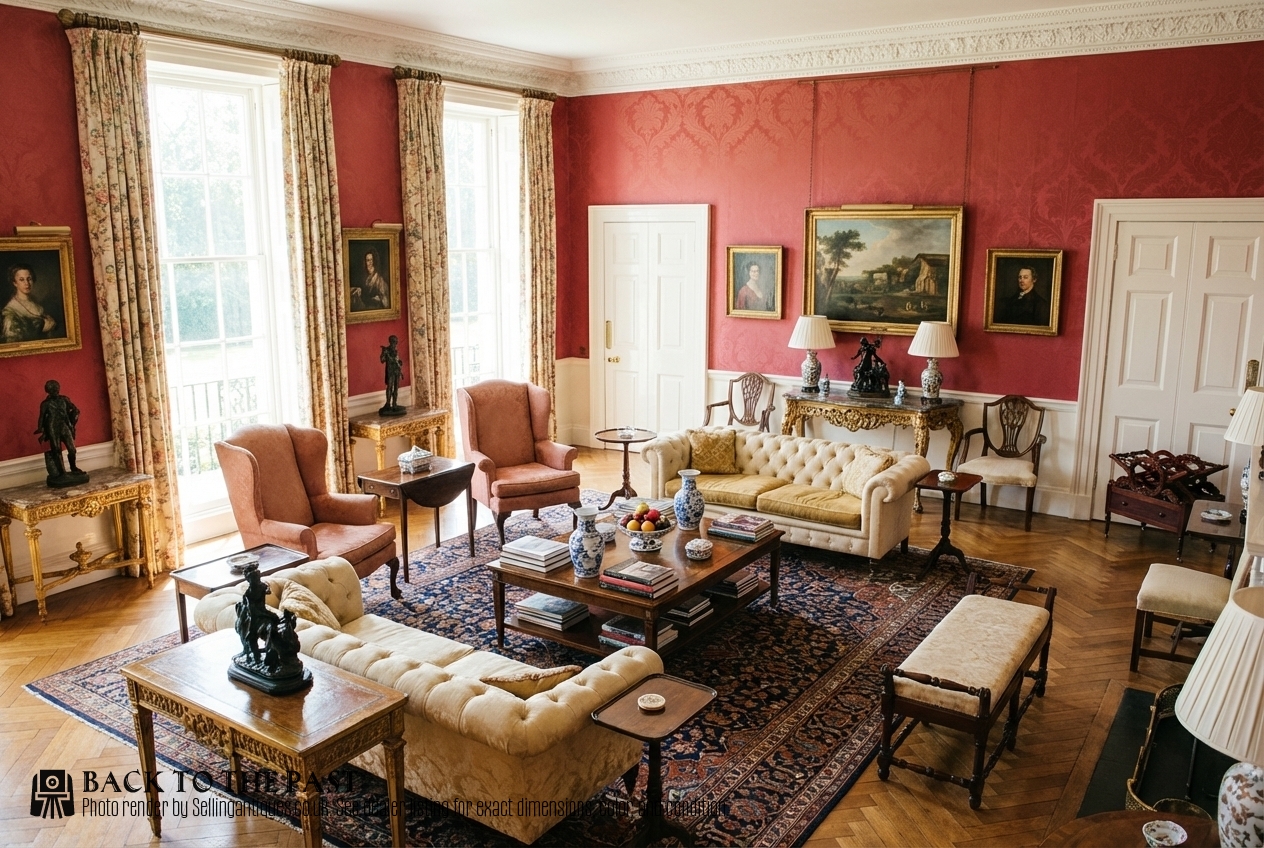
Regency Canterbury Magazine Rack
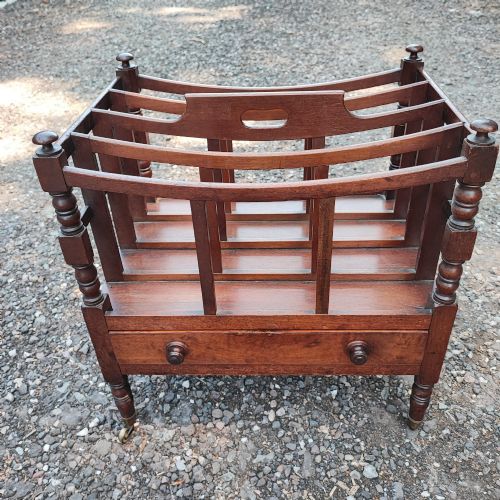
Pieces span several periods, with Regency and 19th-century examples dominating the selection alongside Georgian, William IV, and occasional later revivals. Craftsmen originally conceived these items for papers and folios, adapting them naturally for modern magazines.
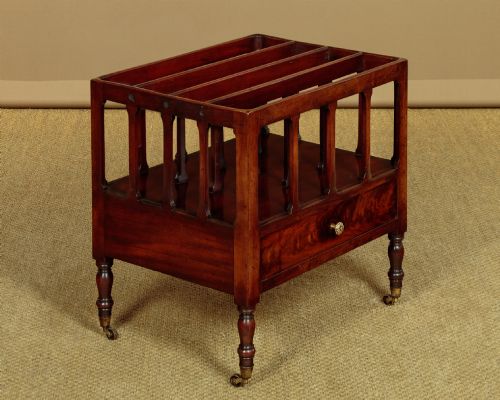
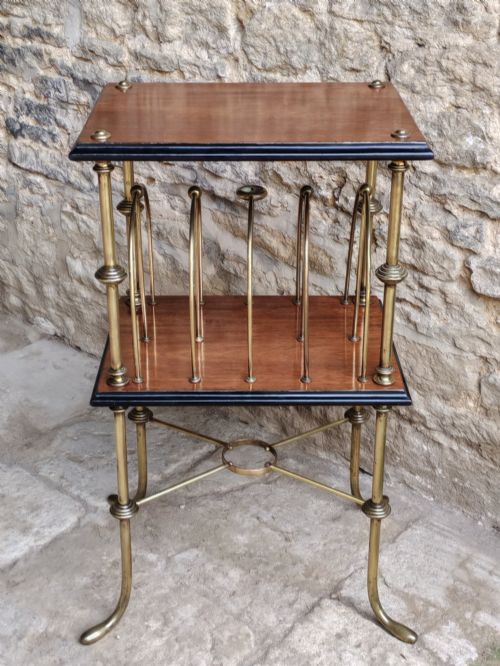
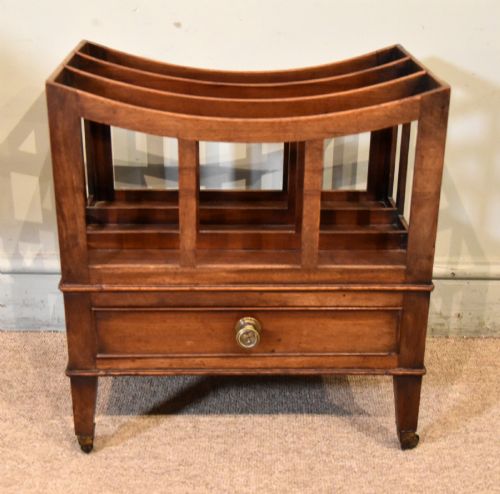
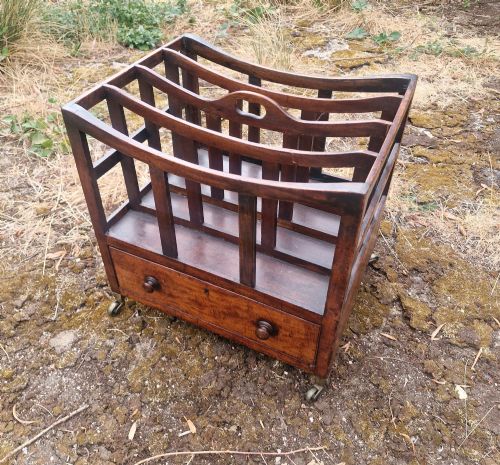
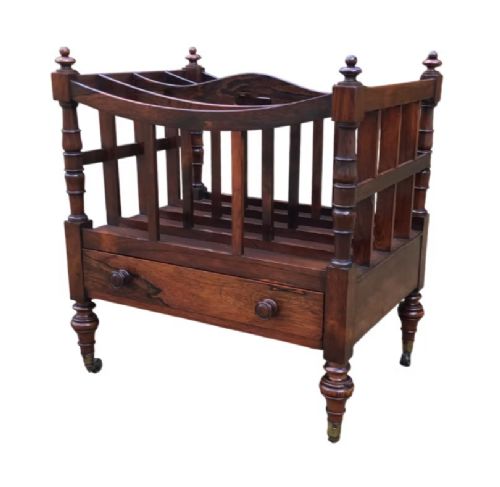
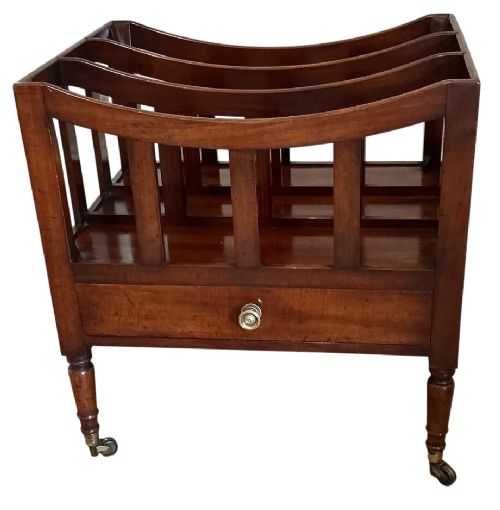
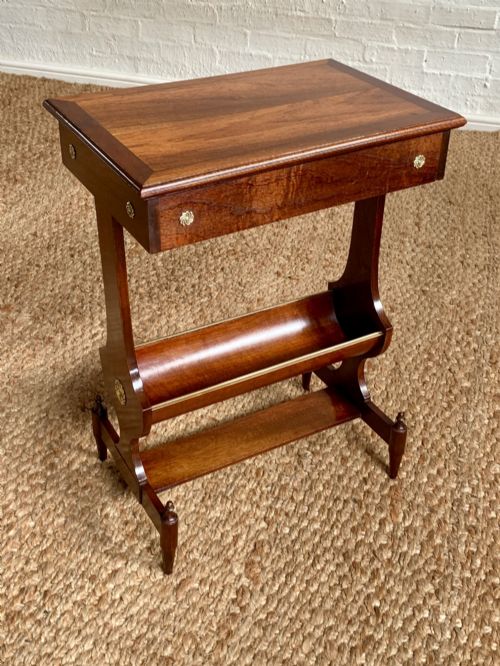
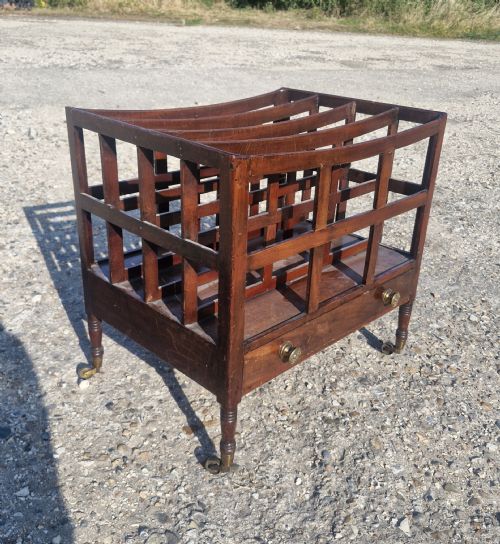
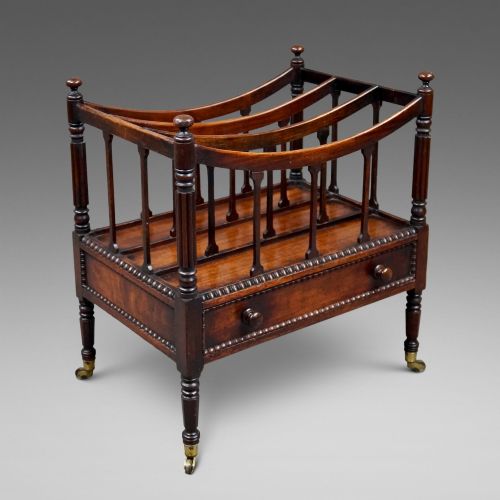
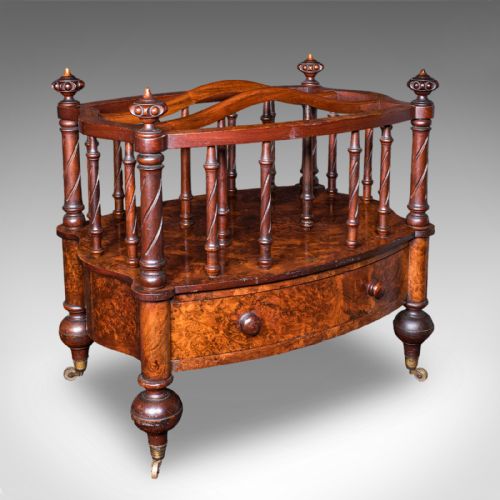
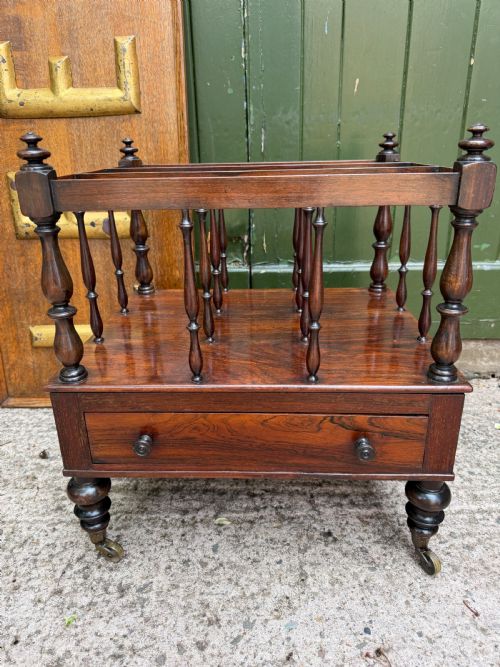
The layout on this page relies heavily on mahogany and rosewood constructions, sometimes enriched with burr walnut, ebony banding, and brass details. Boat-shaped designs and distinct multi-division formats appear frequently among the offerings.
Materials and construction
Cabinet makers utilised dense native and exotic timbers, primarily selecting rich mahogany and figured rosewood for their stability and grain. Burr walnut and Cuban mahogany also feature in select pieces, showcasing the natural depth of the wood.
Structural finesse shows in turned legs, brass castors, and delicate upright slats shaped to support paper without snagging. Inlaid ebony banding and carved details, such as Prince of Wales feathers, demonstrate the precision of period joinery.
Listings feature mahogany, rosewood, burr walnut, and brass, spanning the Georgian, Regency, and William IV periods.
Distinctions in craftsmanship
Superior examples reveal themselves through the choice of timber figure, such as richly grained rosewood or well-matched mahogany veneers. The crispness of turned supports and the integration of functional drawers elevate certain pieces above standard utility items.
Proportion and structural restraint separate workshop pieces from grander cabinet-maker output. Refined joinery in the slatted dividers and original brass castors indicate a higher tier of period production.
The Regency Canterbury Magazine Rack Glossary
- Canterbury
- A low freestanding stand with partitioned sections, originally used for sheet music, newspapers and folios. The name derives from the Archbishop of Canterbury, who supposedly commissioned the first design.
- Boat-shaped
- A descriptor for racks featuring curved, outward-sloping sides reminiscent of a hull. This silhouette characterises many refined Regency models.
- Folio
- A large format for printed sheets or unbound papers. These stands were originally sized to accommodate such large documents alongside newspapers.
- Castor
- A small wheel mounted on a swivel attached to the base of the legs. They allowed the stand to be moved easily across a carpet or floor.
- Bandings
- Thin strips of contrasting wood inlaid into the primary surface as a decorative border. Georgian and Regency makers used ebony for stark linear contrast.
Regency Canterbury Magazine Rack: Frequently Asked Questions
What was a canterbury originally used for?
These stands were built to hold sheet music, unbound books, and newspapers in the drawing room or music room. Wealthy households relied on them to keep reading materials tidy yet accessible near seating.
Over time, the compartments proved equally suited to modern magazines and periodicals. Their portable nature allowed servants to shift them around country houses.
How do I spot a true Regency piece?
Look for timber choices like Cuban mahogany or rosewood, combined with specific details such as turned legs and brass castors. Proportions tend to be balanced, prioritising architectural clarity over heavy ornamentation.
Construction methods also provide clues, including hand-cut dovetails within any integrated drawers. Comparing the grain and hardware against documented period examples helps confirm the date.
Can I use these racks for modern magazines?
The vertical divisions accommodate standard contemporary magazines and broadsheet newspapers without issue. The sturdy timber construction supports heavy weekly publications quite easily.
Care should be taken not to force oversized folios into narrower divisions. Placing them gently prevents strain on the delicate slatted uprights.
Where should I place a canterbury in a room?
These pieces sit well beside a reading chair, sofa, or desk where periodicals are frequently used. Their finished backs allow them to stand away from walls rather than being pushed flat against them.
Keep them away from direct heat sources and strong sunlight to protect the polished mahogany or rosewood veneer. Allowing room around the castors also highlights the design of the legs.