
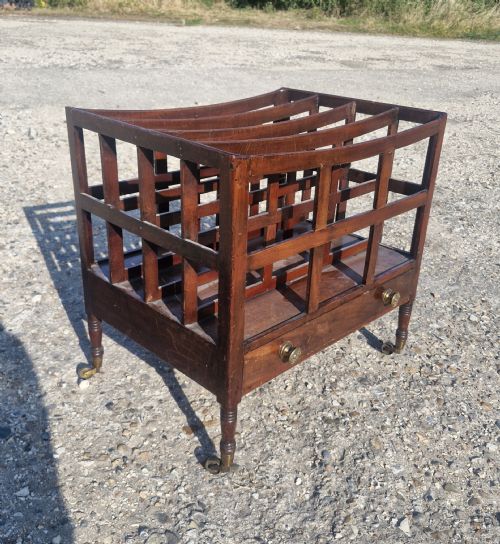
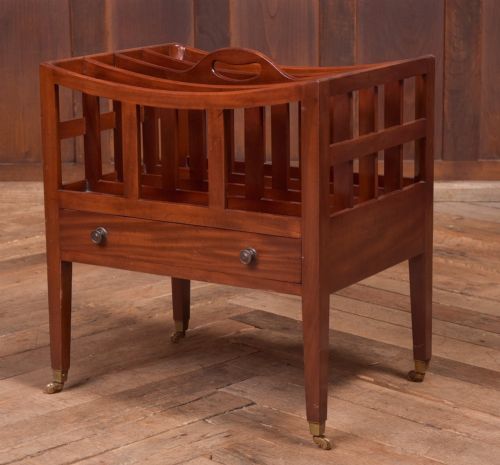


Traditional Mahogany Magazine Rack
A traditional mahogany magazine rack keeps your periodicals organised in timber that warms up a room.
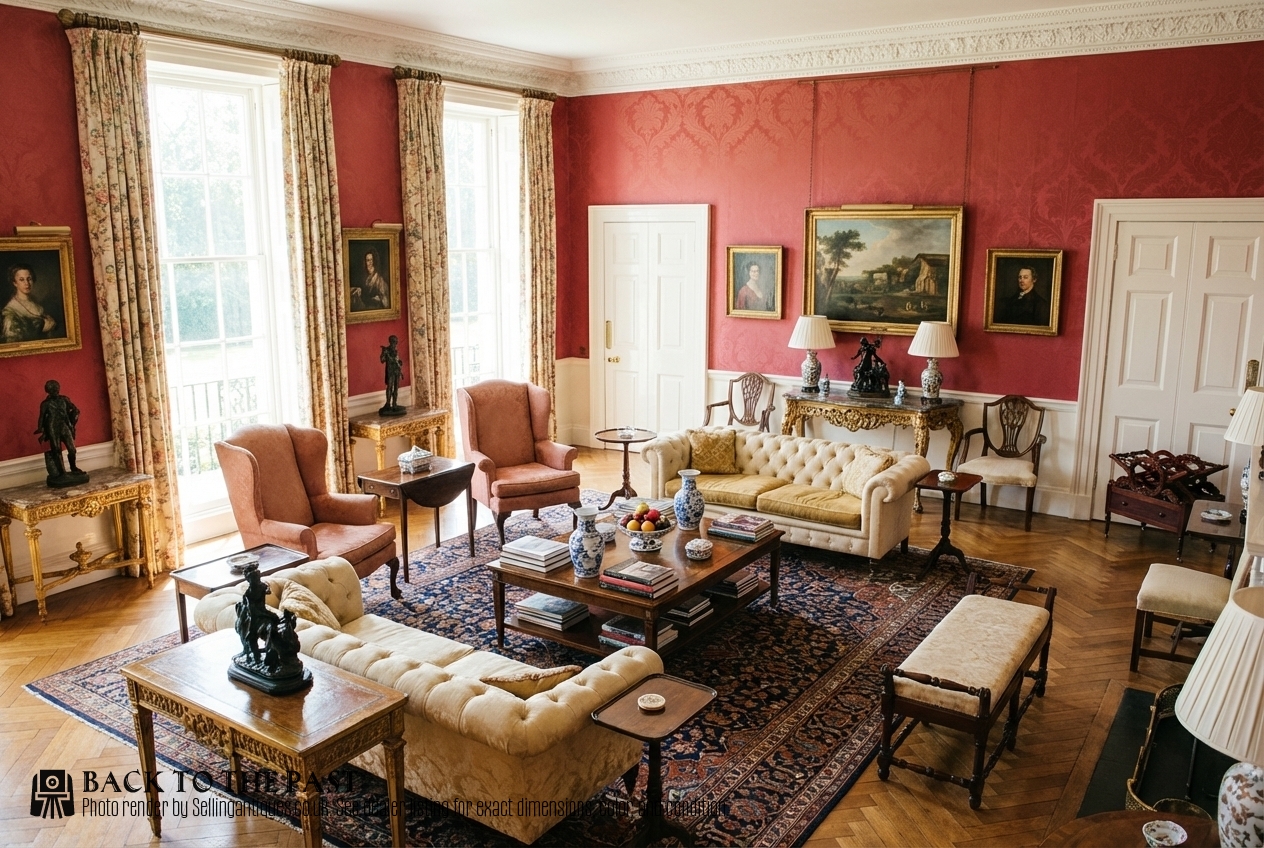
Traditional Mahogany Magazine Rack
When you search for a traditional mahogany magazine rack, you encounter a practical household furnishing designed to hold newspapers, journals and sheet music. These pieces range from dedicated Victorian and Edwardian canterburys to revolving bookcases and tiered racks spanning the nineteenth and early twentieth centuries.
The versions you meet most often on this page take the form of the traditional mahogany canterbury, featuring slatted divisions and often standing on castors. Makers also produced variations combining brass detailing, satinwood inlay, and rosewood alongside the primary timber.
Originating in earlier centuries for the drawing room or library, these items demonstrate how period craftsmen solved the daily clutter of paper. Each example reflects the prevailing taste of its era, from George III proportions to later Edwardian interpretations.
How they were made
Cabinetmakers built these pieces using solid mahogany and flame mahogany veneer over secondary timbers, shaping the wood to form upright divisions and carrying handles. Joinery relied on traditional methods such as mortise and tenon joints to ensure the slatted partitions remained rigid under the weight of heavy periodicals.
Decorative touches included delicate satinwood inlay, contrasting rosewood, and cast brass handles or stands that allowed revolving models to turn smoothly. French polishing finished the surfaces, bringing out the deep grain and warm tone characteristic of period mahogany.
Listings span the nineteenth and early twentieth centuries, covering periods from George III and Regency through to Victorian, Edwardian, and Arts and Crafts examples.
What varies in quality
Quality in these furnishings rests upon the selection of timber and the crispness of the cabinetwork. Pieces utilising figured flame mahogany or subtle satinwood inlay show a higher level of ambition than plain domestic examples.
The refinement of the turned spindles, the integrity of the slatted divisions, and the presence of original brass castors distinguish finer workshops from standard production. Structural rigidity in the uprights and handles demonstrates superior execution.
The Traditional Mahogany Magazine Rack Glossary
- Flame mahogany
- A veneer cut from the fork of the mahogany tree where the branch meets the trunk, creating a distinctive flickering flame pattern. Cabinetmakers reserved this timber for prominent surfaces.
- Satinwood inlay
- A decorative technique where lighter contrasting wood is set flush into the mahogany surface. It creates geometric or floral borders characteristic of finer period pieces.
- Rosewood
- A dense, dark timber with distinct figuring used occasionally for accents or entire frames. It provided a rich contrast to the red tones of standard mahogany.
- Castors
- Small wheel attachments fixed to the feet of the stand to allow easy movement across the floor. Period examples often utilise brass sockets and ceramic or metal wheels.
Traditional Mahogany Magazine Rack: Frequently Asked Questions
What is a traditional mahogany magazine rack?
A traditional mahogany magazine rack is a period furnishing designed to hold journals, newspapers, and sheet music. These pieces often take the form of open canterburys with slatted divisions and carrying handles.
Craftsmen built them from the late eighteenth century through the Edwardian era, employing solid mahogany, flame veneer, and occasional brass fittings to combine utility with refined domestic style.
How were canterburys used originally?
Originally, households placed these stands beside seating areas in drawing rooms, libraries, and parlours to keep reading materials close at hand. They held daily newspapers, weekly periodicals, and scores for the pianoforte.
The partitioned sections kept papers upright and sorted, while the central handle allowed servants or family members to move the stand easily around the room.
How do I date a mahogany magazine rack?
Dating relies on observing the prevailing style, construction methods, and secondary woods. Pieces from the Georgian period show restrained classical proportions, whereas Victorian examples often feature heavier turning and more elaborate carving.
Edwardian and later twentieth-century interpretations tend to be lighter, sometimes incorporating simpler tiered shelving or revolving book structures while retaining the traditional mahogany material.
How do I live with a period magazine rack?
Living with one of these stands simply involves using it for its original purpose, whether holding modern magazines or displaying large books. Position the piece away from direct heat sources and strong sunlight to protect the polish and timber.
Regular dusting with a soft cloth maintains the finish, and allowing the wood to breathe preserves the rich depth of the mahogany grain over time.