






Regency Candlestick Lamps
Regency candlestick lamps bring classic illumination and polished metalwork into a room, combining early lighting forms with later electric fittings.
Regency Candlestick Lamps
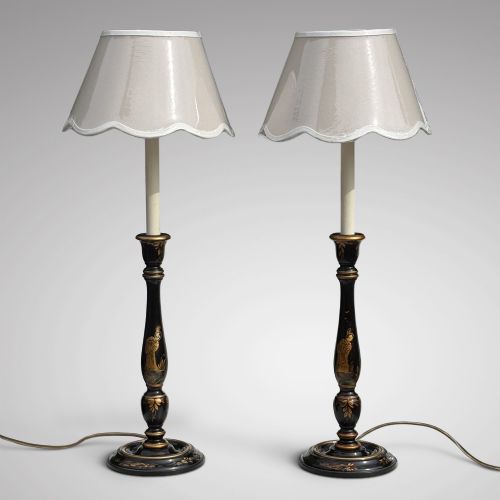
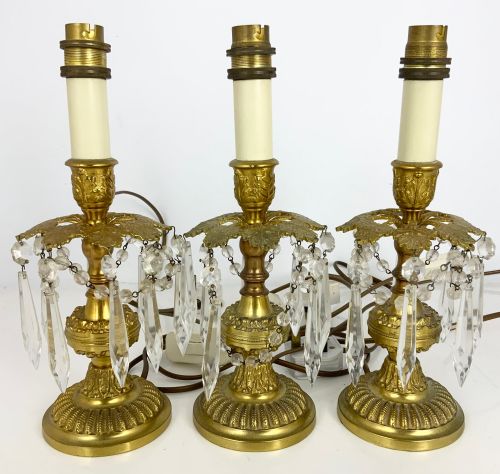
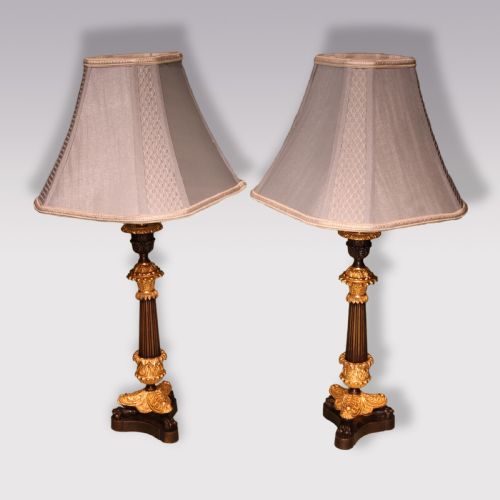
The selection ranges from early nineteenth-century pairs featuring classical proportions to later twentieth-century interpretations influenced by earlier neoclassical styles. Many pieces retain architectural elements such as Corinthian columns or figural mounts, while others incorporate adjustable green tole shades for a desk setting.
Materials and Construction
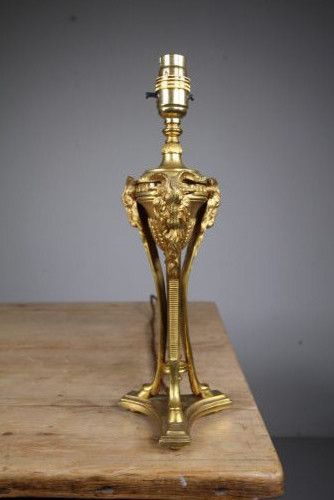
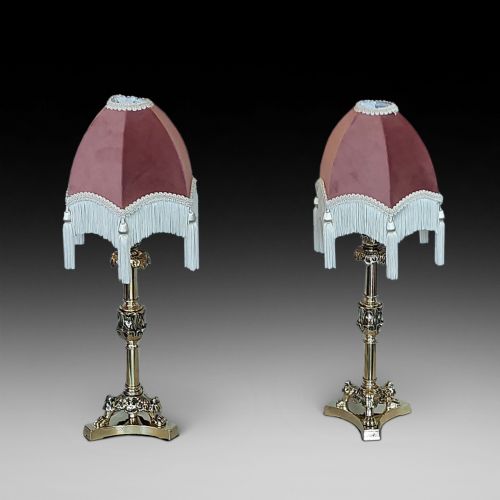
The construction of these lamps relies heavily on cast bronze, brass, and gilt ormolu, frequently combined to create tonal contrast between polished highlights and dark patinated surfaces. Metal components are cast, chased, and mounted securely, often incorporating marble bases or decorative collars.
Conversions from oil or wax to electricity involve routing wiring through the original stem or adding discrete fittings without compromising the structural integrity of the antique candlestick base.
Look closely for merman twin-arm candelabra lamps hiding beneath the shade, bringing mythological sea creatures straight to the sideboard.
Assessing Quality
Quality in these lighting pieces is determined by the crispness of the original metal casting and the preservation of the fire-gilded ormolu surface. Finer examples display meticulous hand-chasing on foliate details, rams heads, and figural mounts rather than soft, rounded edges from worn moulds.
The weight and stability of the base, the integrity of any associated crystal lustres, and the sympathetic nature of the electrical conversion further separate standard production from superior examples.
The Regency Candlestick Lamps Glossary
- Ormolu
- A technique of applying finely ground high-carat gold to a bronze base using mercury amalgamation. This creates a brilliant, durable golden finish characteristic of neoclassical and Regency metalwork.
- Patinated bronze
- Bronze that has been treated chemically or naturally to darken the surface. This creates subtle tonal depth across figurative and architectural lamp bases.
- Tole
- Painted or lacquered sheet metal, most commonly seen in dark green on adjustable shade interiors for desk and bouillotte lamps. It directs light downward while cutting glare.
- Corinthian column
- An architectural order featuring an ornate capital decorated with acanthus leaves. This motif appears frequently on classical brass and bronze lamp stems.
- Lustre
- A cut glass or crystal pendant hung from a metal collar to refract light. These ornaments are typical of period chandeliers and embellished table lamps.
Regency Candlestick Lamps: Frequently Asked Questions
Are these lamps safely wired?
Most antique lamps are fitted with modern electrical wiring during their conversion or subsequent servicing. It is standard practice for a qualified electrician to check older internal components before regular use.
Buyers should inspect the cord entry points and bulb holders to confirm they meet current domestic standards while preserving the antique housing.
How do I clean bronze and ormolu?
Maintenance requires only gentle dusting with a soft, dry cloth to prevent the accumulation of grit in recessed chasing. Avoid abrasive metal polishes, which strip the delicate ormolu layer from the bronze substrate.
Applying a microcrystalline wax can protect vulnerable patinated surfaces from atmospheric moisture and handling marks over time.
Where should I place a candlestick lamp?
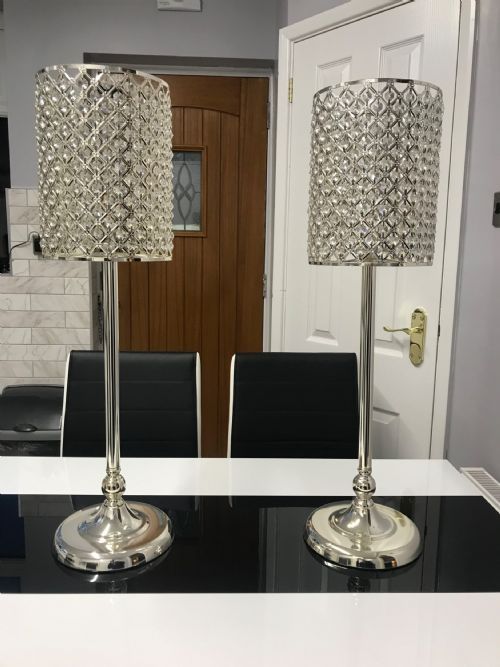
These compact vertical lights suit sideboards, sofa tables, and desks where surface depth is limited. Their slender columns provide focused illumination without dominating the surrounding furniture.
Pairs look particularly balanced when placed on matching pedestals or at opposite ends of a mantelpiece.
How do I identify a Regency period piece?
Regency metalwork typically displays restrained neoclassical motifs, including classical urns, paw feet, and crisp foliate banding. Proportions remain architectural and balanced, reflecting early nineteenth-century design principles.
Many surviving pieces show honest wear to the original gilding and patination consistent with age and historical handling.