


French Chateau Bedside Lamps
French chateau bedside lamps bring grand European character to a bedroom, combining classical metalwork and porcelain to light a bedside table with historical charm.
French Chateau Bedside Lamps
When you search for french chateau bedside lamps, you encounter decorative lighting pieces that draw on 19th-century styles and earlier classical designs. These domestic lights take the form of table lamps, converted candlesticks, and side lamp tables that evoke a stately French country house interior.
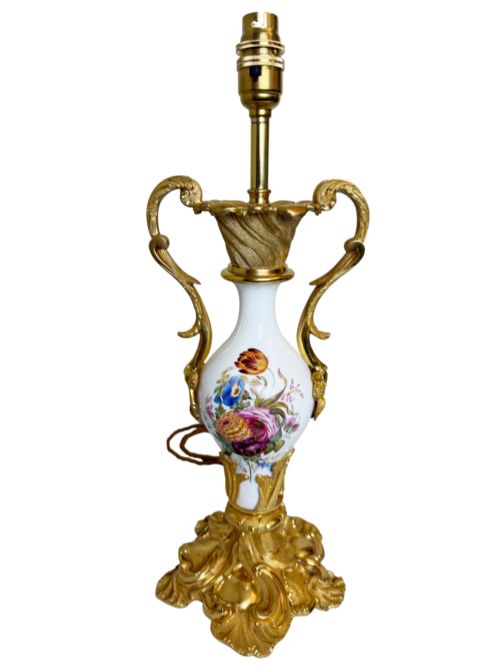
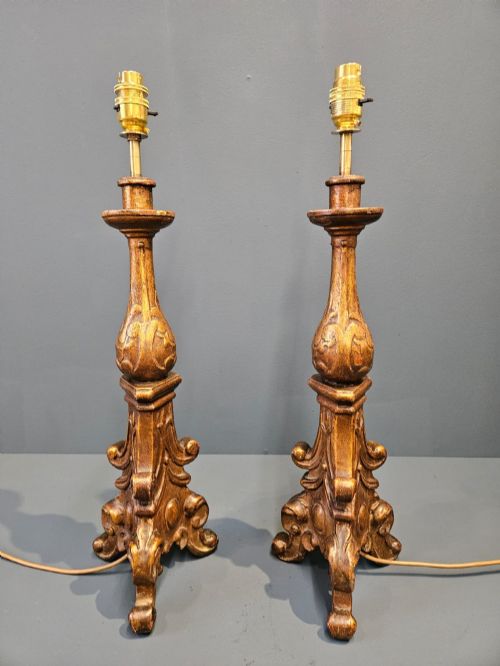
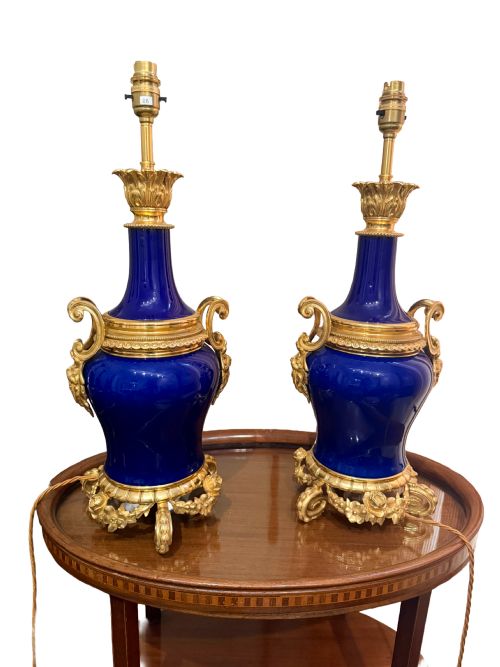
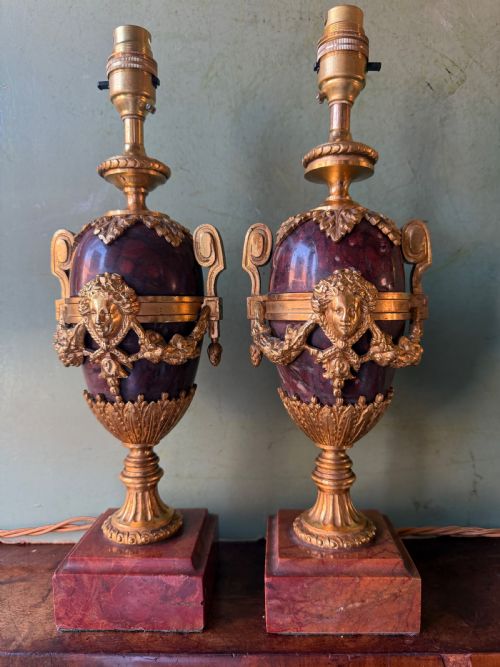
Most examples appear as matched pairs, utilising materials characteristic of French chateau interiors such as ormolu, marble, and porcelain. Forms range from columnar marble structures to floral design table lamps and gilded wood candlesticks adapted for electric lighting.
How they were made
Maker's workshops built these lamps using cast bronze, brass, and ormolu mounts to create structured frames that support porcelain bodies or marble columns. Gilding and patination techniques were applied to metals to achieve rich surface finishes.
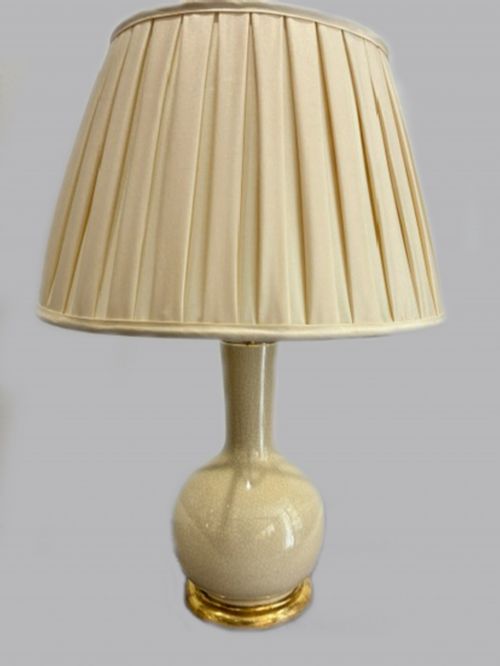
Porcelain elements often feature painted details, crackle ware finishes, or rich blue and bleu royale colourways inspired by Sevres traditions. Marble bases and columns were turned and polished to provide solid weight and classical proportion.
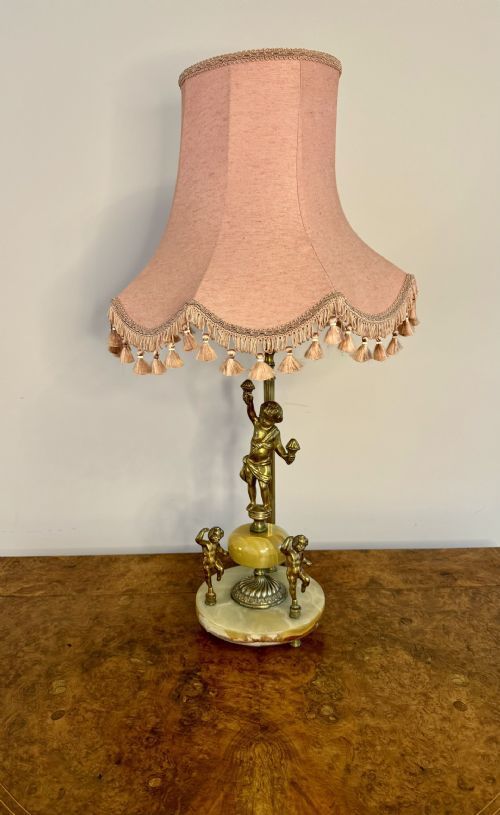
Fabric shades in silk or tailored materials complete the construction, often paired with moulded plaster or carved giltwood components. Many pieces began life as candlesticks before later conversion into wired table lamps.
The furniture and lighting selections showcase Louis XVI style, Rococo revival, French Empire, Napoleon III, and Edwardian design influences.
What varies in quality
Quality rests in the crispness of the metal casting and the depth of the ormolu gilding. Finer pieces display sharply defined chased details on bronze mounts rather than soft, smoothed edges.
The choice of materials dictates the upper tier of pieces, where solid marble, genuine porcelain bodies, and substantial cast bronze replace lighter plaster or timber alternatives. Matched pairs also command greater consistency in proportion and decorative harmony.
The French Chateau Bedside Lamps Glossary
- Ormolu
- Gilded bronze, where a finely ground high-carat gold mercury amalgam is applied to a bronze object. This technique creates a rich, lasting metallic finish seen on many 19th-century mounts.
- Louis XVI Style
- A neoclassical design style characterised by straight lines, symmetry, and classical motifs like urns and fluting. It heavily influences French chateau decoration.
- Sevres
- A famous French porcelain manufactory known for luxury ceramic pieces. Items in this style often feature deep blue grounds and gilt bronze mounts.
- Cracklevare
- Pottery or porcelain featuring a network of fine cracks in the glaze, deliberately produced for decorative effect. It adds texture and age to antique lamp bodies.
French Chateau Bedside Lamps: Frequently Asked Questions
Are these lamps originally wired for electricity?
Most antique lamps from this era started life as oil lamps or candlesticks, receiving electrical wiring during later conversions to suit modern homes.
Original metal candlesticks were adapted to hold electrical fittings while retaining their historical bases and decorative mounts.
How do I style a pair of side table lamps?
Place matching lamps on either side of a bed on matching side tables to create symmetry in a bedroom interior. Their classical marble and ormolu construction works well against neutral walls and traditional wooden furniture.
Pairing them with silk or fabric shades softens the light and complements the gilded bronze or porcelain bodies.
What is the difference between ormolu and brass?
Ormolu is gilded bronze, featuring a layer of gold applied to a cast bronze base through traditional fire-gilding methods. It yields a deeper and richer golden tone than standard brass.
Brass is an alloy of copper and zinc used for structural components or simpler cast decorative elements.
How can I date a French table lamp?
Dating relies on examining the materials, casting techniques, and stylistic markers such as Louis XVI revival details or Victorian proportions. Maker's marks, ceramic types, and the method of metal assembly also help narrow down the period.
Pieces frequently span from the late 19th century into the early 20th century, reflecting specific revival movements in French design.