


Regency Campaign Furniture
Regency campaign furniture comprises portable campaign chests, folding desks and tables built for officers on the move during the nineteenth century.
Regency Campaign Furniture
Regency campaign furniture consists of practical, dismantling pieces designed for travel by military officers during the nineteenth century. Buyers searching for regency campaign furniture typically encounter chests of drawers, butler's trays on folding stands, and campaign desks.
How they were made
Cabinetmakers utilised dense timbers such as mahogany, Cuban mahogany, teak, and camphorwood to endure harsh conditions. These woods were often chosen for their durability and resistance to warping during travel.
Brass corners, flush-fitting handles, and strapwork reinforced the joints and protected the edges during transit. Folding mechanisms and removable legs allowed heavy wardrobes and desks to pack flat into manageable units.
What varies in quality
Quality depends upon the precision of the brass hardware integration and the selection of figured timber veneers. Superior examples exhibit tight joinery that remains stable when assembled and disassembled repeatedly.
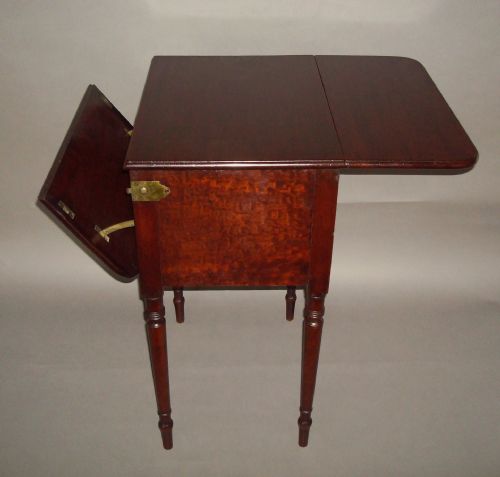
The sophistication of the internal fittings, such as secretaire drawers with pigeonholes and secret compartments, distinguishes finer workshop production. Original recessed brass handles and intact folding mechanisms indicate a higher grade of officer's equipment.
The Regency Campaign Furniture Glossary
- Campaign chest
- A sectional chest of drawers built in two or more parts with flush brass handles and corner brackets for easy transport. These chests separated from their base frames for loading onto baggage animals.
- Secretaire chest
- A chest of drawers featuring a fitted writing drawer with a drop-front desk surface and internal compartments. Officers used these pieces for correspondence and document storage in the field.
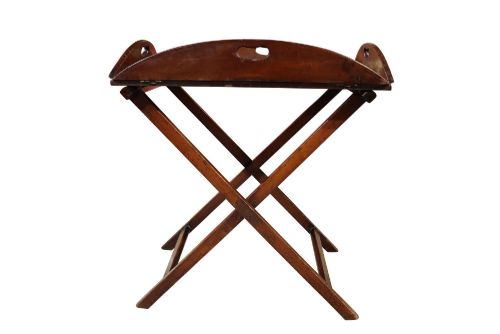
- Butler's tray
- A rectangular wooden tray with hinged or cutout sides, typically mounted on a folding X-frame stand for serving meals or drinks. The stand collapsed flat when not in use.
- Camphorwood
- An aromatic Asian timber frequently utilised for campaign chests due to its natural insect-repellent properties. This wood protected uniforms and papers from pests during tropical postings.
Regency Campaign Furniture: Frequently Asked Questions
What is regency campaign furniture?
Regency campaign furniture comprises portable wooden furnishings constructed for military officers travelling on duty during the nineteenth century. These pieces dismantle or fold to facilitate transport on ships and wagons.
Items range from modular chests of drawers and secretaire desks to folding beds and butler's trays. The design prioritises structural durability and space-saving efficiency above ornamentation.
How do you date a campaign chest?
Dating relies upon timber selection, brass hardware style, and construction methods. Pieces from the early nineteenth century often utilise solid mahogany or teak with hand-cut dovetails.
Later Victorian and revival pieces introduce machine-made elements and different internal configurations. Examining the wood species and the complexity of the brass recessed fittings helps establish the era.
Why does campaign furniture fold?
Campaign furniture was engineered to fold or separate into compact sections for transport by military officers on active service. Officers needed to pack their personal quarters quickly when relocating camps.
Removable legs, hinged tables, and sectional chests ensured that bulky desks and wardrobes occupied minimal space during transit. This portability defined military equipment throughout the nineteenth century.
What woods were used for campaign pieces?
Cabinetmakers employed durable tropical hardwoods that could withstand extreme climates and rough handling. Mahogany, Cuban mahogany, and teak appear frequently across the period listings.
Camphorwood was also utilised, particularly for pieces originating from Chinese export workshops. These dense timbers resisted moisture and splitting during long sea voyages.