
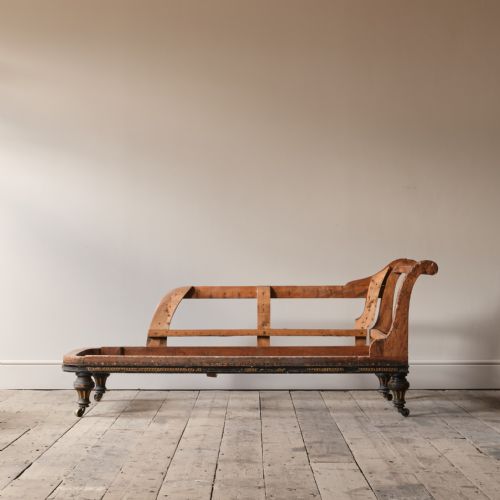
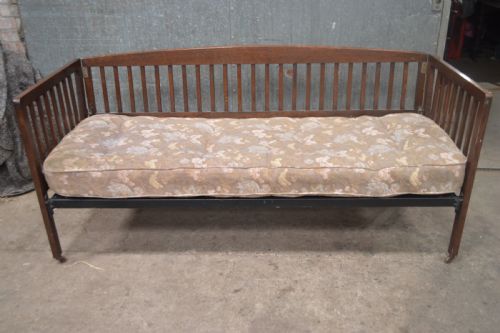
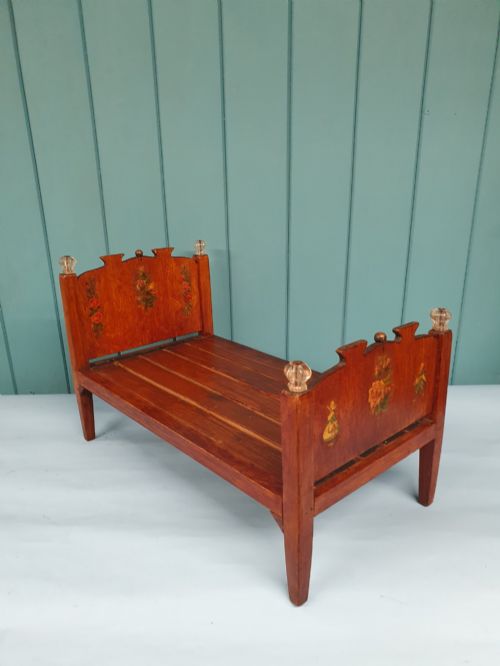


Brown Wooden Daybed
These brown wooden daybeds combine seating and sleeping with rich timber grains and historical character, offering versatile comfort for your home.
Brown Wooden Daybed
When searching for a brown wooden daybed, you encounter a diverse selection of furniture spanning the nineteenth and early twentieth centuries, including Victorian designs, campaign beds, and colonial pieces. These items serve multiple functions, acting as daytime loungers, benches, or alternative seating options within various room settings.
The pieces listed on this page range from full-sized nineteenth-century chaise longues and fold-down oak day beds to smaller items such as miniature dolls' beds and children's beds. You also find cultural variations like carved Indian takhat coffee tables, Moorish window seats, and hand-carved African ceremonial beds.
Originating from periods such as the Victorian era, the George IV period, and the 1920s, these daybeds and related seating forms utilise sturdy timbers and distinct regional styles. The selection prioritises solid wooden constructions and functional designs suited for historical interiors.
How they were made
Makers constructed these pieces using a variety of hardwoods such as mahogany, oak, teak, and ebonised wood, often combining the timber framework with brass fittings or woven rattan. Artisans employed hand-carving techniques, as seen in traditional Indian teak floor seats and African ceremonial beds, alongside folding mechanisms for campaign furniture.
The listings on this site feature nineteenth-century and 1920s pieces in mahogany, oak, teak, iron, and ebonised wood.
What varies in quality
The standard of craftsmanship shows in the depth and precision of hand-carved details on hardwood surfaces, particularly within regional styles like Moorish, Colonial Indian, and African tribal pieces. Superior examples maintain structural integrity in their folding mechanisms, joints, and detachable legs.
The choice of primary timber and secondary materials, such as the quality of the mahogany, teak, or oak and the condition of integrated rattan or brass, determines the overall refinement of the construction.
Holland & Sons
The Brown Wooden Daybed Glossary
- Chaise longue
- An upholstered sofa in the form of a chair with a long seat for reclining. Nineteenth-century examples often feature carved wooden frames and adjustable ends.
- Campaign bed
- A portable bed designed for military use that folds or dismantles for travel. These typically incorporate brass hardware and sturdy hardwood frames.
- Takhat
- A low wooden platform or seat used in traditional Indian interiors. They often feature intricate hand-carvings and serve multiple purposes including coffee tables.
- Ebonised wood
- Timber treated with a finish to give it the appearance of ebony. This technique was popular in Victorian furniture to create dark, polished surfaces.
- Rattan
- A palm-based material woven for seating panels and bed bases. It provides flexible support while maintaining a lightweight structure.
Brown Wooden Daybed: Frequently Asked Questions
How were antique campaign beds used?
Antique campaign beds were originally built for officers on military campaigns, featuring folding frames and detachable legs for easy transport.
Today, their clever mechanical designs and portable nature make them practical for guest rooms and flexible living spaces.
Are these daybeds comfortable for sleeping?
Many nineteenth-century daybeds and chaise longues were built with relaxation in mind, offering supportive wooden structures and adjustable sections.
Depending on the specific model, adding appropriate cushions or mattresses transforms them into functional guest beds.
How do I identify a Victorian daybed?
Victorian daybeds often display characteristic period styles, robust hardwood construction, and sometimes adjustable elements or turned wooden legs.
Comparing the timber types, joinery, and stylistic details helps distinguish them from later twentieth-century pieces.