


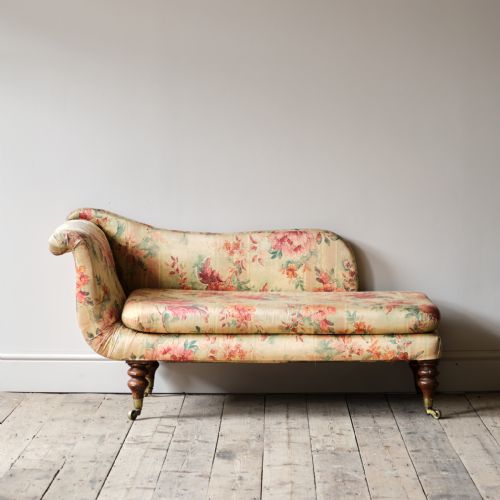


Georgian Daybed
A georgian daybed brings architectural grace to a room, offering a long seat designed for daytime reclining during the late eighteenth and early nineteenth centuries.
Georgian Daybed
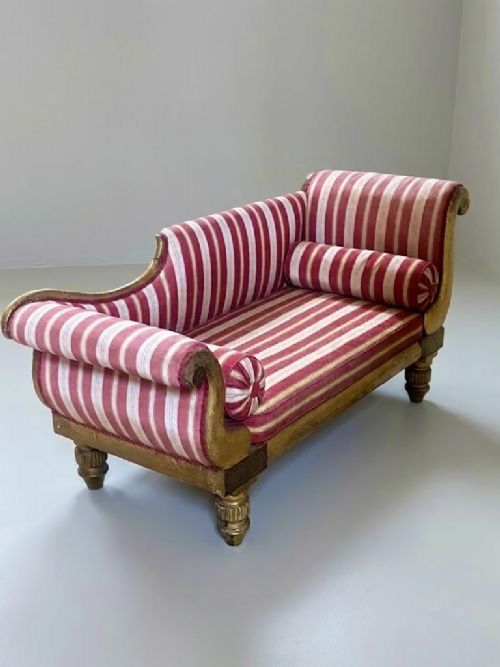
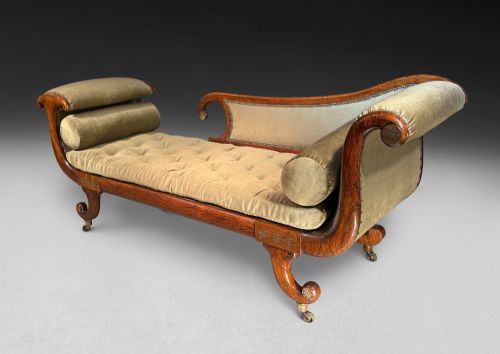
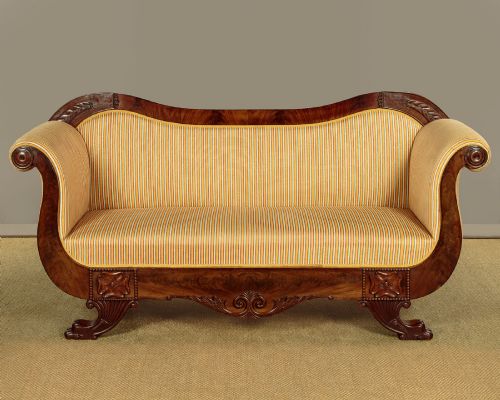
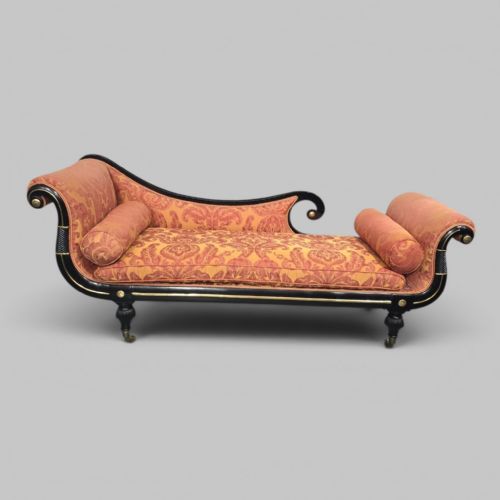
When searching for a georgian daybed, buyers encounter diverse forms ranging from late eighteenth-century walnut and oak examples to nineteenth-century mahogany, rosewood, and giltwood pieces. The selection predominantly includes scroll-end sofas, chaise longues, double-ended settees, and récamiers dating from the Regency, George IV, and William IV periods.
The objects span varied seating configurations, from single-ended scroll couches to substantial four-seater settees and folding campaign beds. Many pieces combine structural timber frames with sophisticated upholstery fabrics, velvet, satin, and silk.
Makers and designers of the era drew on classical precedents, producing pieces that function equally as decorative centrepieces and functional reclining furniture. Surviving examples reflect both modest country house furnishings and elaborate urban seating.
Materials and construction
Cabinetmakers utilised solid timbers such as mahogany, walnut, oak, and simulated rosewood to form the structural frames of these daybeds. Decorative enhancements include brass inlay, intricate carving, and giltwood finishes applied to prominent scroll ends and rails.
Upholstery forms an integral part of the construction, employing traditional textiles including velvet, satin, silk, and modern replacement fabrics over supportive padding. Joinery techniques from the period ensure stability across extended lengths, often incorporating double scroll ends or cane panels.
Some nineteenth-century travellers evidently refused to compromise on daytime comfort, employing folding campaign beds designed for aristocratic napping on the move.
Markers of distinction
Quality in these pieces rests upon the crispness of the timber carving, the choice of primary woods such as figured mahogany or simulated rosewood, and the subtlety of brass inlay work. Refined proportions and harmonious scroll ends distinguish superior workshops from standard regional production.
The integrity of the original frame construction, alongside the fidelity of subsequent reupholstery to historical precedents, shapes the overall character of each piece. Surviving surface patination on exposed timber elements further separates well-preserved examples from heavily restored ones.
Gillows
The Georgian Daybed Glossary
- Regency
- A stylistic period spanning the British regency and the reign of George IV, characterised by classical revival motifs and refined joinery. This era produced many of the prominent scroll-end sofas and chaise longues found today.
- Chaise longue
- A long seated piece of furniture intended for reclining, combining elements of a chair and a daybed. These items frequently feature a single raised end or double scroll arms.
- Récamier
- A type of daybed with two raised ends and an open side, named after the Parisian salon hostess painted by Jacques-Louis David. Examples from the nineteenth century often exhibit sweeping mahogany frames.
- Simulated rosewood
- A painted or grained finish applied to an alternative timber, such as beech, to imitate the rich dark figuring of genuine rosewood. Cabinetmakers utilised this technique to achieve fashionable aesthetics at a lower material cost.
- Giltwood
- Timber treated with gold leaf or gold paint to create a decorative metallic surface. This finish appears on high-status seating from the Regency period.
Georgian Daybed: Frequently Asked Questions
How were daybeds used historically?
These pieces served as elegant lounging furniture in drawing rooms, libraries, and boudoirs, allowing individuals to recline in semi-public spaces without retiring to a bedroom.
They functioned both as decorative seating for multiple guests and as private resting places during the daytime hours.
How do I identify a Regency daybed?
Regency pieces are distinguished by classical revival motifs, bold mahogany or simulated rosewood grains, and characteristic scroll-end arms. Brass inlay and carved wooden details often point to this specific nineteenth-century aesthetic.
Construction methods typically involve exposed timber frames combined with upholstered seats and backs.
How do I care for antique upholstery?
Care for antique upholstery involves protecting delicate textiles like silk, satin, and velvet from direct sunlight and regular gentle vacuuming with a soft brush attachment. Professional cleaning helps preserve fragile historic fabrics without damaging the underlying padding.
Exposed wooden frames benefit from periodic dusting with a dry cloth and occasional application of appropriate furniture wax.