




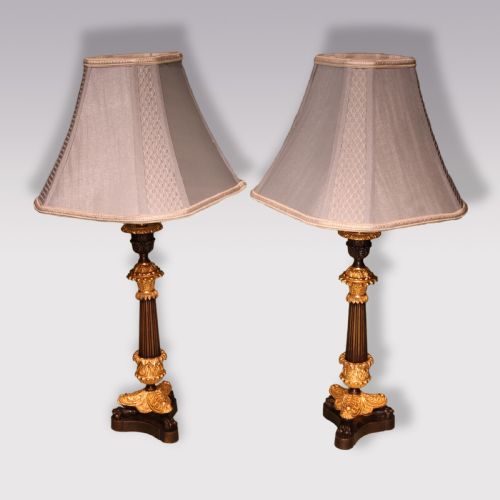

Regency Bronze Desk Lamp
A regency bronze desk lamp brings classical weight and warm light to a study, prized for its dark patination and sculptural cast metal.
Regency Bronze Desk Lamp
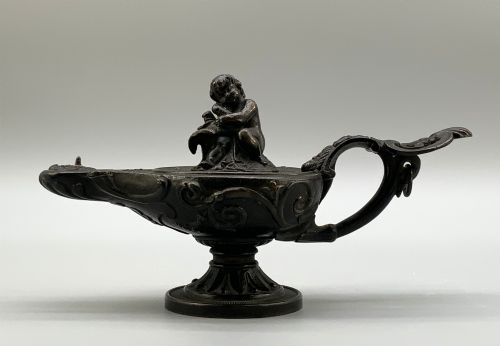
A regency bronze desk lamp combines heavy cast metal with classical forms such as columns, urns, and figural supports. Pieces meeting this description often draw on Neoclassical, French Empire, and William IV designs originating in the nineteenth century.
The selection here ranges from converted oil lamps and candlesticks to dedicated desk lights and bouillotte lamps with tole shades. Buyers encounter patinated bronze frequently paired with ormolu mounts, brass details, and occasional gilt bronze finishes.
Origins span English workshops and continental European centres, with Grand Tour influences appearing alongside domestic Regency styles. Many examples adapt earlier lighting mechanisms or candle holders for electrical use while retaining their original proportions.
Materials and construction
Foundry work relied on bronze, patinated bronze, and ormolu, often combined in a single piece to create contrast between dark surfaces and bright gilt highlights. Brass and gilt metal appear alongside these primary metals in supporting mounts and decorative fittings.
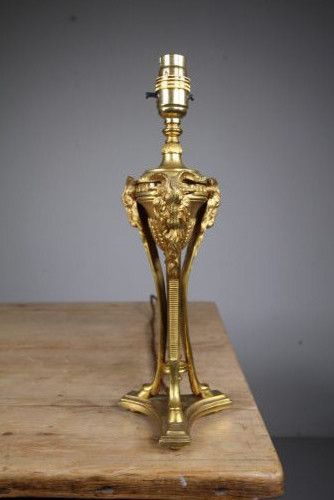
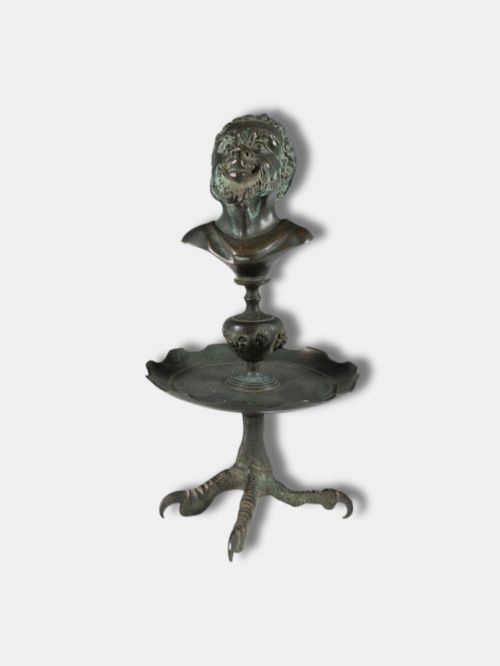
Casting methods produced detailed figures, rams' heads, eagles' claws, and classical columns, which were subsequently hand-finished and chased. Later adaptations integrated silk, fabric, and glass elements alongside traditional tole shades for illumination.
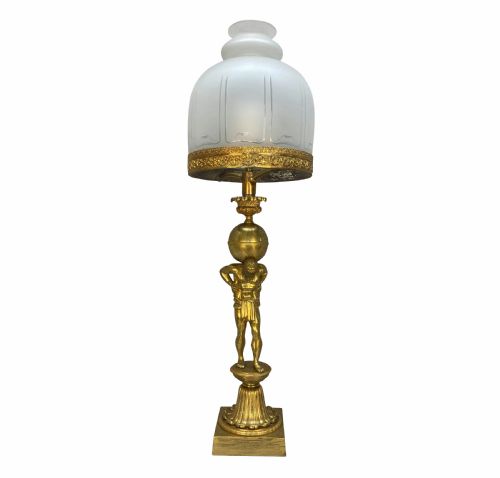
Atlas figures enduringly shoulder the weight of illumination, proving that mythological titans make surprisingly reliable desk companions.
Quality and craftsmanship
Proportion and structural integrity separate standard production from superior pieces, particularly where columns, figural Atlases, or mounted urns support the weight of the lamp. The integration of ormolu fire gilding rather than modern paint or lacquer marks the higher end of the range.
The Regency Bronze Desk Lamp Glossary
- Ormolu
- Gilded bronze produced by applying a mercury and gold amalgam to the metal surface and heating it. This technique creates a durable, warm metallic finish characteristic of French Empire and Regency decorative arts.
- Patination
- The surface sheen and colour acquired by bronze over time through age and handling, or artificially induced by chemical means. A desirable patination adds visual depth to the dark metal.
- Bouillotte lamp
- An adjustable desk lamp featuring a central shaft, multiple candle arms or burner fittings, and a characteristic shade. They were designed for card games and reading.
- Neoclassical
- A style drawing inspiration from the classical art and architecture of ancient Greece and Rome. It manifests in these lamps through urns, columns, and strict symmetry.
- Grand Tour
- Cultural travel undertaken by wealthy Europeans in the nineteenth century, returning with classical antiquities and bronzes. Many desk lamps reflect these sculptural souvenirs and motifs.
Regency Bronze Desk Lamp: Frequently Asked Questions
Are these lamps safe for modern electrical use?
Most antique bronze lamps offered by dealers have been re-wired to comply with contemporary safety standards while preserving their original bodies and fittings.
Buyers should inspect the internal wiring or consult a qualified electrician to ensure compatibility with modern wall sockets and bulbs.
How do I clean a bronze desk lamp?
Dusting gently with a soft, dry cloth is sufficient for routine maintenance of patinated and gilt surfaces. Avoid harsh chemical cleaners or abrasive polishes that can strip the original patination or damage delicate ormolu mounts.
What is the difference between bronze and spelter?
Bronze is a heavy alloy of copper and tin known for strength and fine casting detail. Spelter is a cheaper, softer zinc alloy often used as a substitute in later decorative objects.
Regency examples predominantly utilise bronze, whereas later reproductions or alternative twentieth-century pieces occasionally turn to spelter.
Can I adjust the height of a bouillotte lamp?
Traditional bouillotte lamps often feature a key or screw mechanism on the central column that allows the metal or tole shade to slide up and down.
This adjustment directed the light downward onto the desk surface as candles burned down or as reading needs changed.