




Regency Bronze Clock
A regency bronze clock brings sculptural weight and precision movement to a mantelpiece, combining patinated metal with classical architecture and figural detail.
Regency Bronze Clock
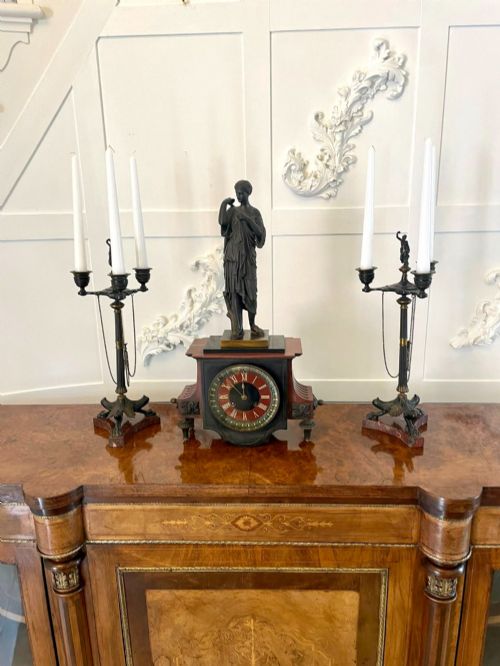
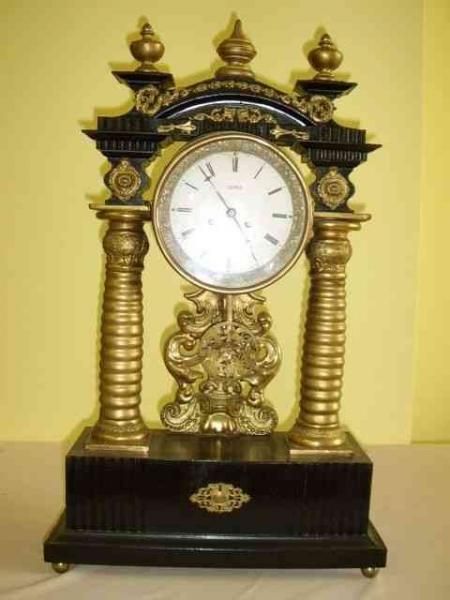
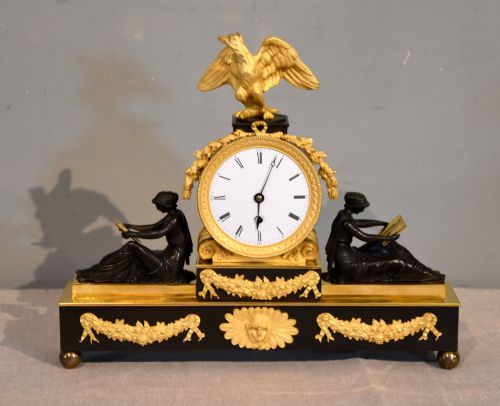
A regency bronze clock combines architectural marble or wooden cases with cast patinated and gilt metal figures, taking the form of mantel clocks, portico clocks, and clock sets originating from the Regency and early nineteenth-century periods. These timepieces range from English Fusee movements by makers such as Baetens and Viner to French Empire examples featuring classical motifs, animals, and mythological figures.
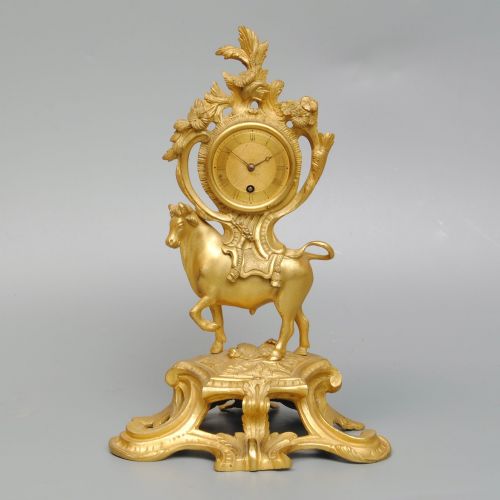
Buyers seeking a regency bronze clock encounter both English fusee timepieces and continental striking mantel clocks, often housed in green marble, white alabaster, or rich mahogany cases. The subjects span from simple architectural timepieces to elaborate figural compositions depicting goats, poodles, cherubs, and classical deities.
The aesthetic of a regency bronze clock draws heavily on Neoclassical and French Empire styles, integrating finely chased ormolu mounts with dark patinated bronze bodies. These objects serve simultaneously as dependable timekeepers and as sculptural centrepieces for the interior.
Materials and Construction
Makers of a regency bronze clock employed a combination of cast patinated bronze, bright gilt bronze ormolu, and brass, mounted upon bases of marble, alabaster, or mahogany. The metal components were cast, hand-chased to sharpen the surface detail, and fire-gilded or chemically patinated to create contrast between the dark bronze and the brilliant gilt elements.
The mechanical heart of a regency bronze clock typically involves a single or double chain fusee movement in English pieces, or an eight-day striking mechanism in continental examples. Enamel or silvered dials, sometimes protected behind glass bezels, display the hours alongside delicate hands driven by precise brass gear trains.
Regency Bronze Clock Retail Price Guide 2026
Typical asking prices for regency bronze clock among the pieces listed under this phrase on Sellingantiques today, from the lower quarter to the upper quarter. They describe what is for sale here now, not the wider market.
Several Regency clocks substitute standard classical urns for unexpected companions, featuring sculpted poodles, goats, and birds in trees.
Evaluating Quality and Execution
The quality of a regency bronze clock rests upon the crispness of the metal chasing and the depth of the fire-gilding on the ormolu mounts. Finer examples display deeply undercut cast figures and sharp botanical or classical relief work, whereas lesser pieces show softer, shallower detailing from worn or secondary moulds.
Movement sophistication also distinguishes the tier of a regency bronze clock, with integrated chain fusee mechanisms and signed backplates by noted London or continental makers representing superior horological ambition. The integration between the architectural stone case and the metal ornamentation reveals whether a piece was conceived as a unified whole or assembled from disparate elements.
Baetens London·Viner London·Pons De Paul·Hessen Paris·William Hardy London·FB Adams London·Perigal And Duterrau·Bently And Beck London·Payne Of London
The Regency Bronze Clock Glossary
- Fusee
- A conical pulley used in clock movements to maintain an even pull on the gear train as the mainspring unwinds. This mechanical device ensures more accurate timekeeping throughout the running period.
- Ormolu
- Finely ground high-carat gold mercury-gilded to a bronze object, producing a durable and luminous yellow finish. This technique was widely utilised on mounts and figures during the Regency and French Empire periods.
- Portico Clock
- A tall mantel clock designed with architectural pillars or columns supporting the movement housing, often placed on a stepped marble base. The pendulum typically swings visibly within the open central space.
- Patinated Bronze
- Metal treated with chemicals to darken the surface and create a protective, decorative skin. This dark finish provides contrast against bright gilt ormolu mounts.
- Striking Movement
- A clock mechanism that sounds the hours or half-hours on a bell or gong. These systems require additional gear trains alongside the standard time-recording movement.
Regency Bronze Clock: Frequently Asked Questions
What is a fusee movement?
A fusee is a conical drum inside the clock that equalises the declining power of the mainspring as it unwinds. This mechanism improves the precision of the timepiece over its running cycle.
English makers frequently utilised chain fusee movements in high-grade mantel clocks during the nineteenth century.
How do English and French clocks differ?
English examples often prioritise mechanical reliability through fusee movements housed in clean architectural cases of marble or mahogany. French pieces lean towards ornate figural subjects and striking mechanisms.
Both traditions draw upon Neoclassical and Empire design vocabularies utilising gilt bronze and patinated metal.
Where should I place a portico clock?
A portico clock requires a sturdy, level surface such as a mantelpiece, sideboard, or large pier table where its architectural columns and visible pendulum can be appreciated. Because many incorporate heavy marble bases and delicate glass elements, a stable location away from heavy vibrations is essential.
Allowing sufficient clearance around the case ensures the pendulum swings freely.
How do I care for ormolu and bronze?
Maintenance requires gentle dusting with a soft, dry brush to prevent dirt accumulation within the chased recesses of the metal. Avoid liquid cleaners, polishes, or abrasive cloths that can strip the delicate fire-gilding or alter the historical patina.
Keeping the clock away from direct sunlight and damp environments preserves the finish of both the metal and the stone case.