

Regency Breakfront
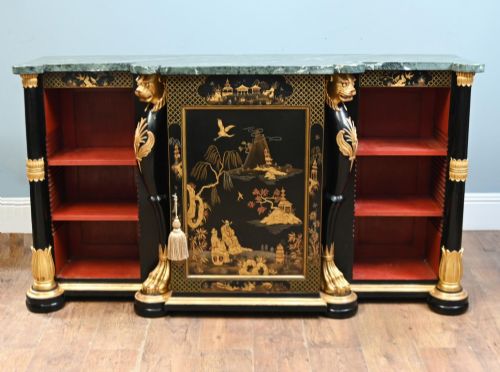
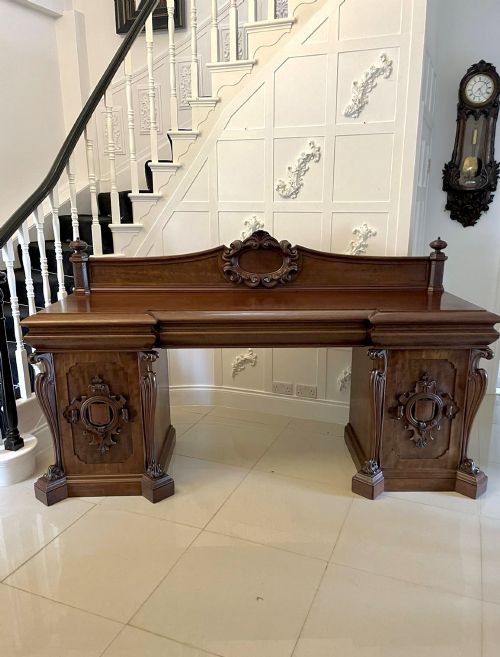
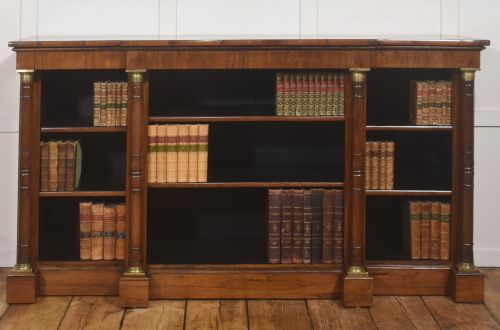
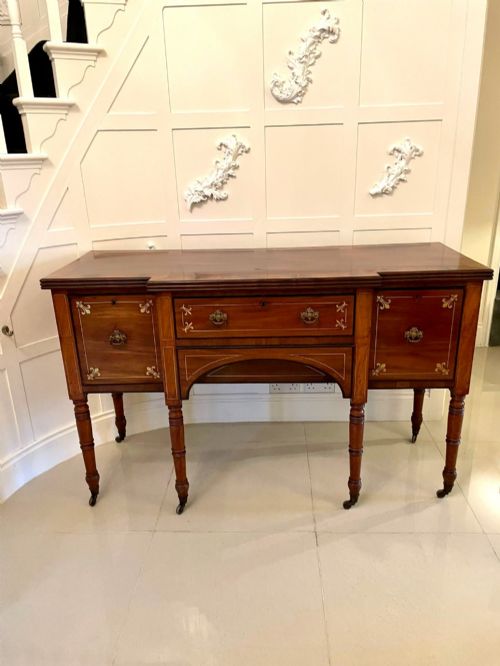
A regency breakfront commands the room with its stepped facade, offering serious storage and a powerful architectural presence for the collector.
Regency Breakfront
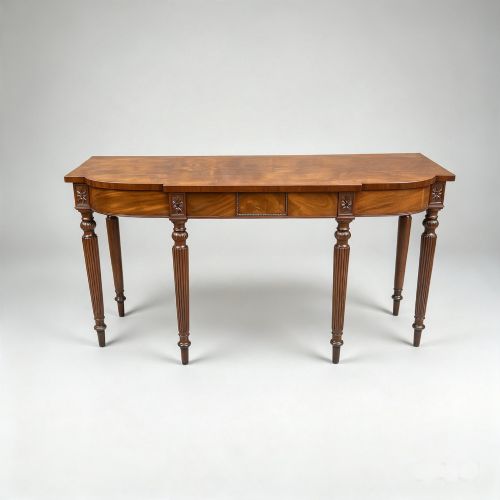
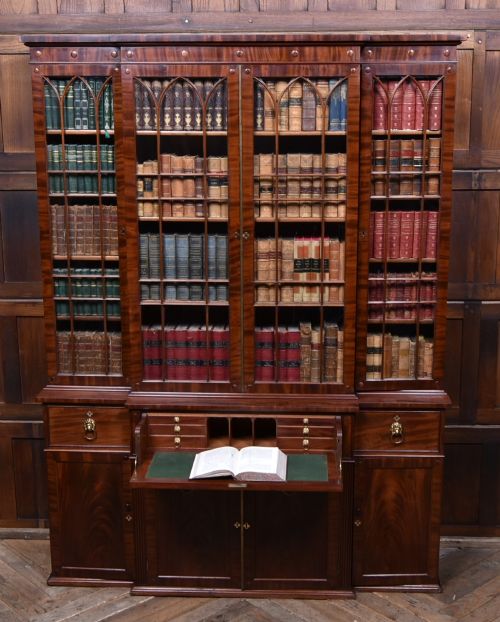
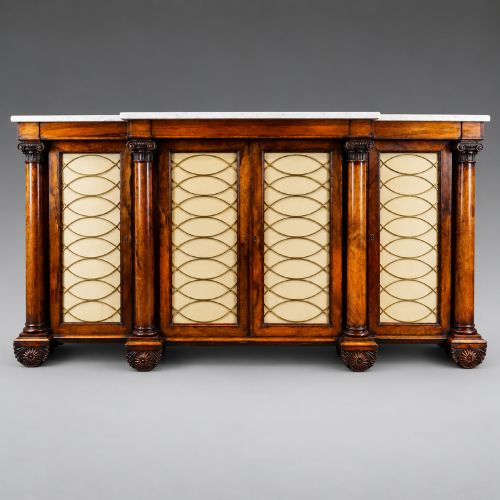
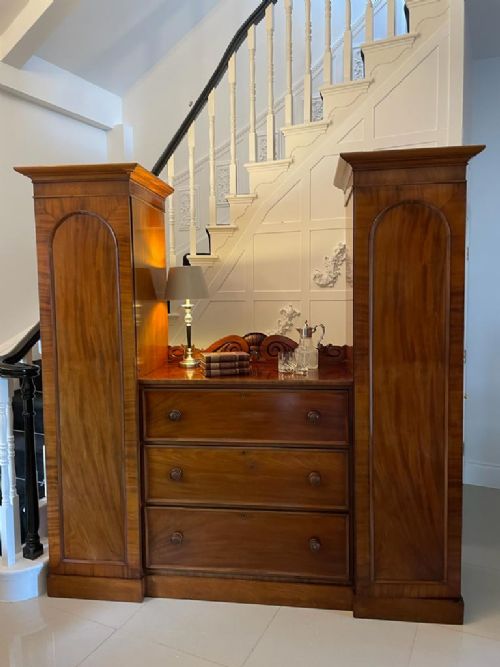
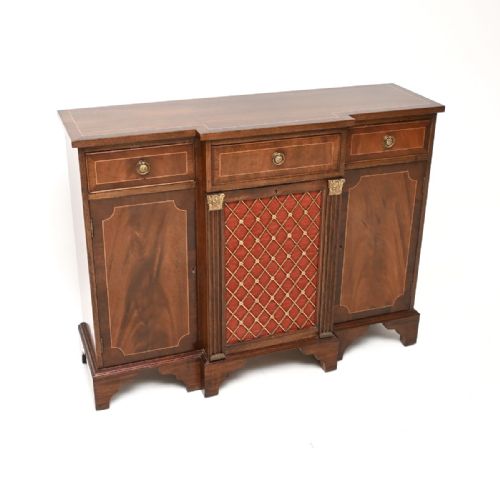
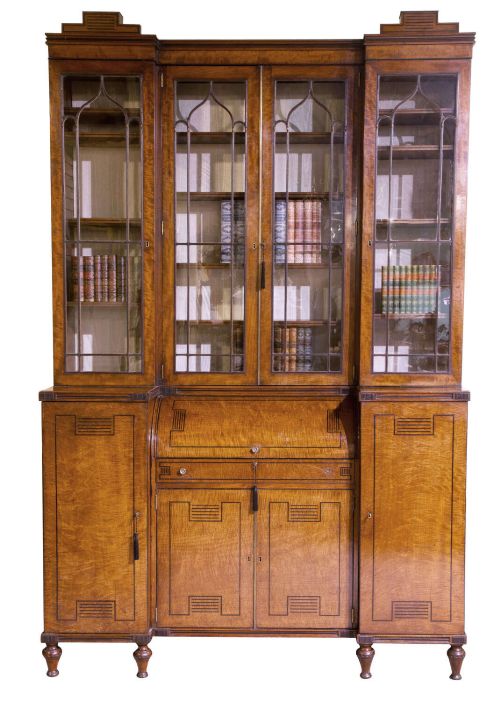
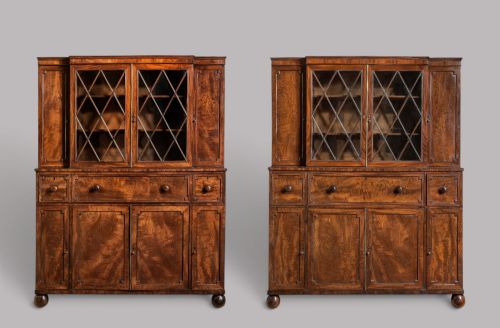
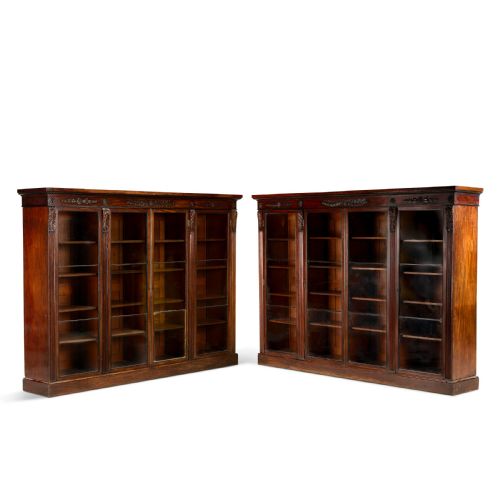
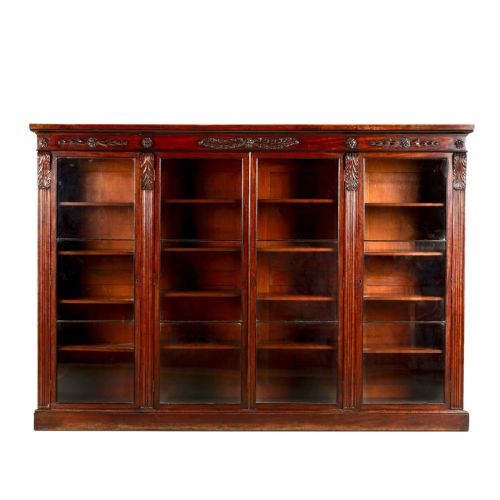
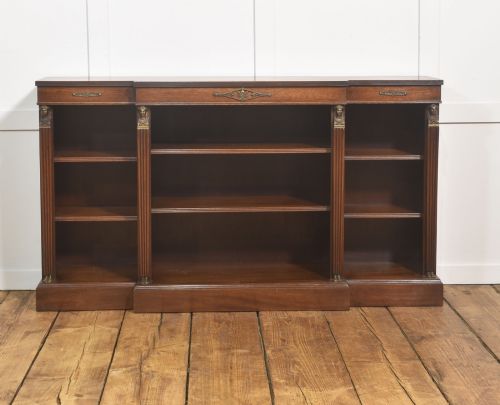
A regency breakfront typically presents as a large bookcase, sideboard or side cabinet where the central section projects forward from the flanking wings. This stepped profile creates a strong shadow line and visual rhythm that defined elite interiors from the early nineteenth century.
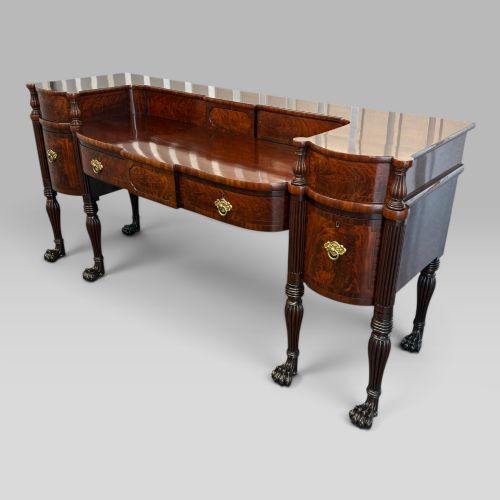
The selections span the authentic Regency period alongside later revivals from the twentieth century, including pieces built in nineteen-ten and nineteen-thirty. Forms range from library bookcases with glazed doors to sideboards fitted with lion paw feet.
Makers working in the manner of Gillows produced substantial library pieces, while later revivals brought similar architectural proportions into Edwardian spaces. The silhouette remains one of the most substantial case furniture forms available.
Materials and Construction
Cabinetmakers relied heavily upon mahogany and flame mahogany veneer, selected for rich grain movement across wide drawer fronts and cupboard doors. Rosewood, satinwood and amboyna appear on select pieces, bringing deeper colour contrast and tonal variation to the timber surfaces.
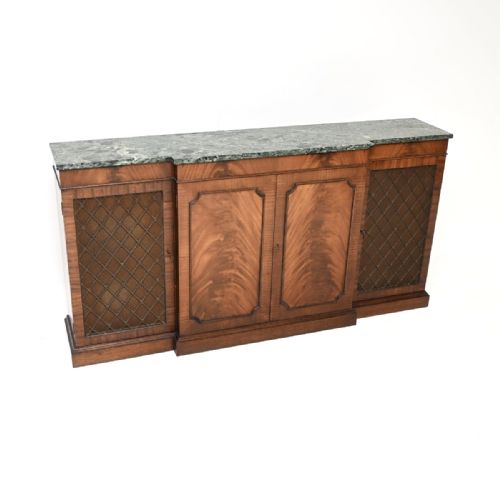
Brass mountings, inlay and grilles provide metallic accents against the dark woods, whilst marble tops appear on specific side tables and sideboards. Secondary woods and traditional joinery underpin the heavy architectural carcasses of these large items.
Regency Breakfront Retail Price Guide 2026
Typical asking prices for regency breakfront among the pieces listed under this phrase on Sellingantiques today, from the lower quarter to the upper quarter. They describe what is for sale here now, not the wider market.
Materials recorded across the selection include solid mahogany, flame mahogany veneer, rosewood, amboyna, brass, marble, and fabric.
Judging the Standard of Construction
Quality rests in the choice of timber figure, particularly the symmetry of flame mahogany veneer across multiple doors and the crispness of inlay work involving ebony and satinwood. Finer examples display meticulous attention to brass detailing and the proportion of the projecting centre section.
The integrity of the structural carcass and the depth of the carved elements, such as lion paw feet or reeded columns, separate standard workshop output from exceptional cabinet work. Later revivals vary according to how closely they adhere to original nineteenth-century proportions and joinery methods.
Gillows
The Regency Breakfront Glossary
- Breakfront
- A piece of furniture whose central section projects forward from the flanking wings. This architectural device breaks up a flat wall of timber and creates distinct vertical zones.
- Flame mahogany veneer
- A thin slice of mahogany cut from the fork of the tree where the branches join the trunk. It yields a dramatic, flame-like grain pattern prized by cabinetmakers.
- Secretaire bookcase
- A tall case piece incorporating a fitted writing drawer with a drop-front desk surface concealed behind upper bookshelves. It combines a library function with a compact writing space.
- Grill front
- Cabinet doors fitted with fine brass wire mesh rather than glass panes. This allowed air circulation for books while keeping contents partially obscured.
- Verre eglomise
- A traditional technique of cold painting and gilding on the reverse side of glass. It produces a reflective, metallic panel often seen in fine mirror frames.
Regency Breakfront: Frequently Asked Questions
What is a regency breakfront?
A regency breakfront is a large piece of case furniture, usually a bookcase or sideboard, featuring a stepped facade where the middle section advances beyond the sides. This configuration creates deep shadow lines and a commanding architectural presence.
Originating in the early nineteenth century and later revisited in the twentieth century, these pieces were designed to anchor grand dining rooms and libraries while providing extensive display and storage capacity.
How do I date a breakfront bookcase?
Dating relies on examining the timber species, veneer thickness, secondary woods, and hardware styles. Authentic nineteenth-century examples often feature solid mahogany construction with flame mahogany veneers and hand-cut joinery.
Later revivals from the early twentieth century typically exhibit different interior construction methods, machine-cut elements, and distinct secondary timbers that distinguish them from original Regency or George IV pieces.
Where should I place a breakfront in my home?
These large architectural pieces require a substantial wall with adequate clearance to let the stepped facade cast its natural shadows. Libraries, dining rooms, and spacious hallways provide the ideal scale for bookcases and sideboards of this proportion.
Ensure the room can accommodate the depth of the projecting central section and that direct sunlight is managed to protect sensitive rosewood and mahogany veneers.
What is the difference between a sideboard and a breakfront bookcase?
A sideboard is designed for dining room service, featuring low proportions with cupboards and drawers for storing silver and linen, occasionally topped with marble. A breakfront bookcase rises significantly higher, dominated by glazed or grill doors for displaying libraries.
Both share the signature projecting central section, but their internal fittings and overall heights serve entirely different functional roles within a room.