



Regency Brass Mounted Cabinet
A regency brass mounted cabinet brings architectural proportion and gleaming metal inlay into a room, offering both display and concealed storage.
Regency Brass Mounted Cabinet
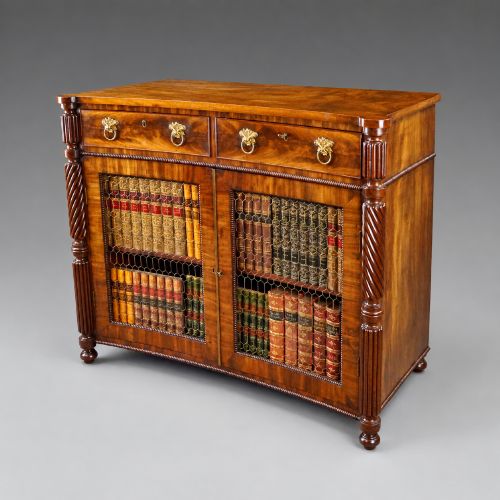
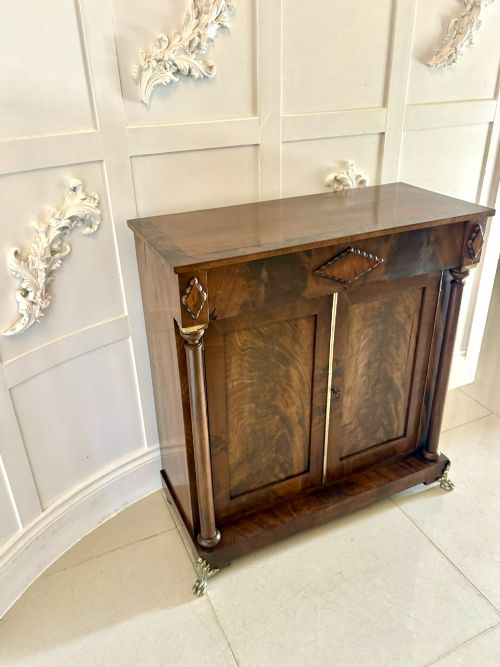
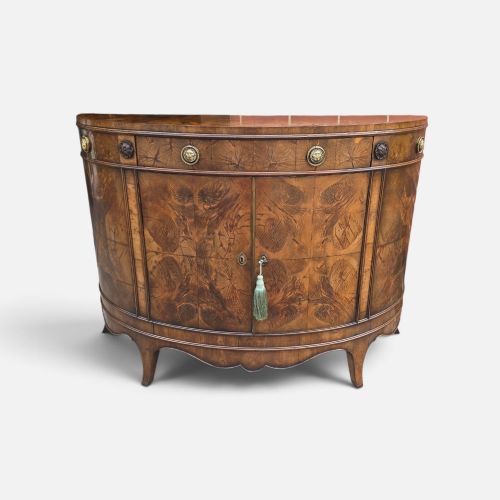
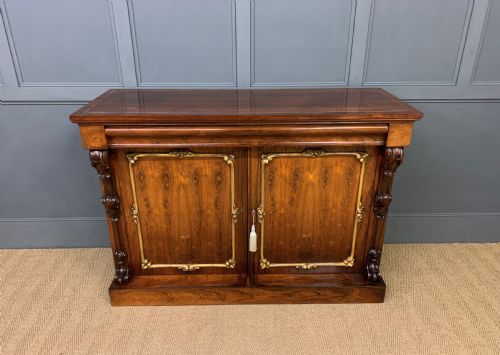
A regency brass mounted cabinet serves primarily as a side cabinet, chiffonier, or bookcase designed to hold books and display decorative objects. These pieces originate predominantly from the Regency period and the wider nineteenth century, alongside later revival interpretations.
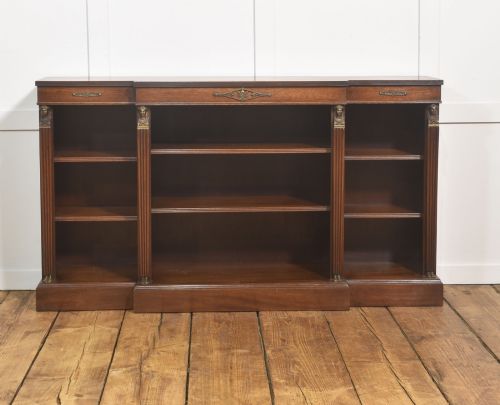
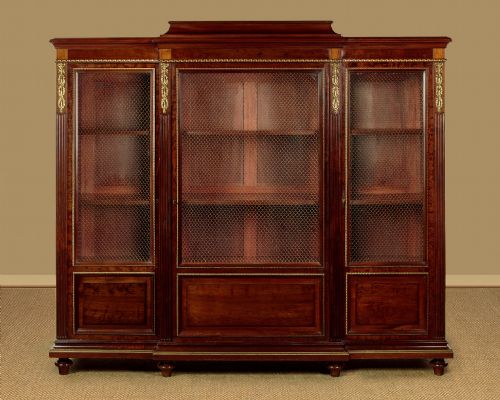
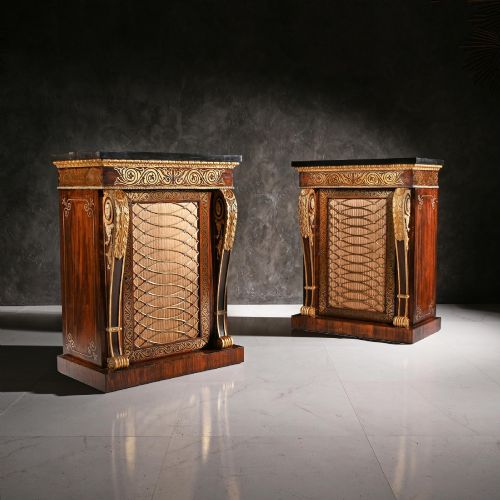
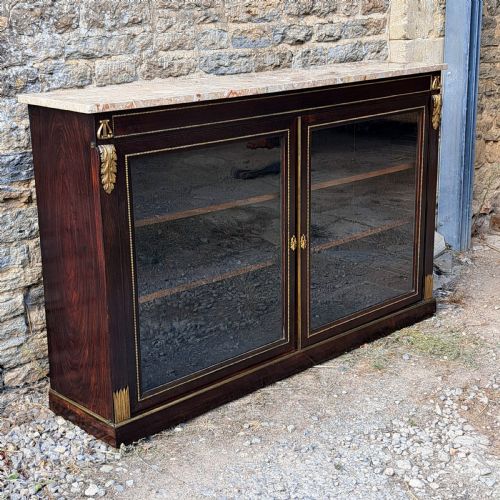
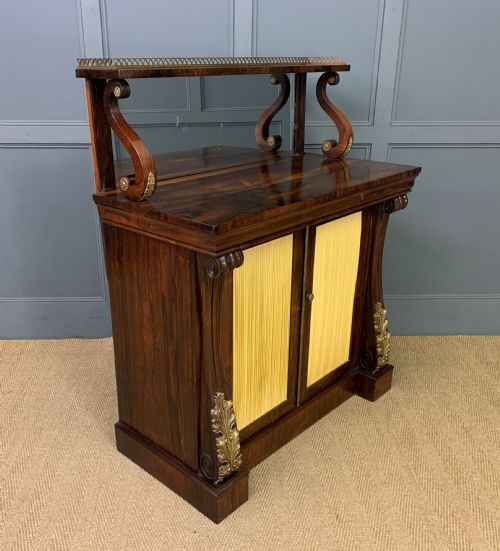
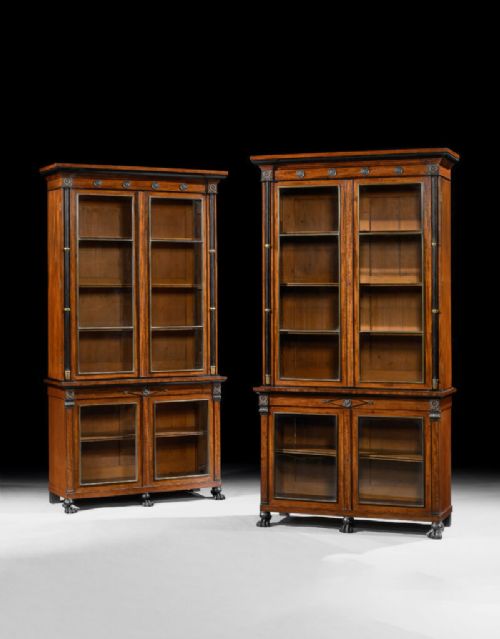
Buyers encounter forms ranging from low side cabinets with pleated chiffon panels to tall breakfront bookcases and pedestal cabinets. Mahogany and rosewood form the main carcases, fitted with adjustable shelving and enclosed lower doors.
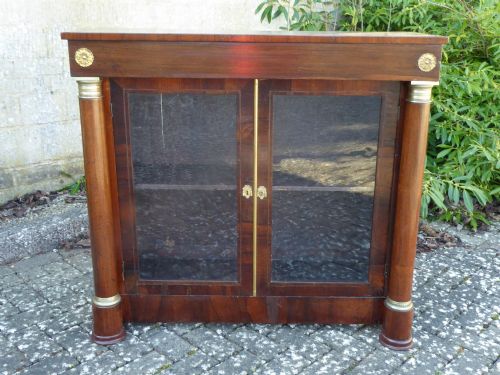
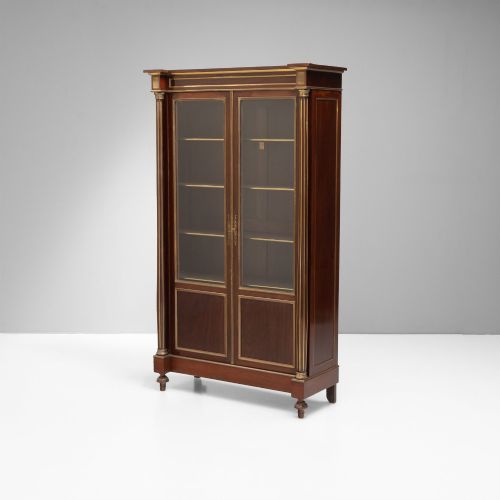
The aesthetic draws heavily on French Empire and neoclassical idioms, incorporating architectural columns, gilt brass mounts, and inlaid brass lines. Many examples function as sideboards or credenzas, integrating marble tops and mirrored backs into the design.
How they were made
Cabinetmakers constructed these carcases using dense tropical hardwoods such as Honduras mahogany and figured rosewood, frequently applied as veneers over secondary pine or oak. Boxwood stringing and brass inlay define the surface decoration, routed carefully into the wood grain.
Cast and chased ormolu and gilt brass mounts secure to the doors and pilasters, while pierced brass galleries edge marble tops and open shelves. Specialised workshops utilised pleated silk or chiffon behind glazed or wire-mesh door panels to soften the interior view.
Listings feature woods such as rosewood, mahogany, yew wood, and burr walnut, combined with marble tops and gilt brass mounts.
What varies in quality
The refinement of the brass inlay and the crispness of the cast ormolu mounts separate standard production from masterwork pieces. Superior examples display meticulous hand-chiselling on the metal mounts and precise routing of brass stringing that follows the natural figure of the rosewood or mahogany veneer.
Structural integrity of the carcase and the selection of timber veneers dictate overall grade. Highly figured timbers, intact original marble tops, and secondary woods of solid oak rather than pine indicate a higher tier of workshop production.
Louis Constantin Le Gaigneur·Marsh and Tatham·Gillows·Harrods·John McClean·S. Jamar
The Regency Brass Mounted Cabinet Glossary
- Chiffonier
- A low cabinet featuring shelves or drawers, commonly fitted with enclosed doors below and sometimes surmounted by a small superstructure. These pieces became central to the drawing room during the nineteenth century.
- Ormolu
- Gilt bronze mounts applied to furniture for decorative accent. The technique involves treating brass or bronze with an amalgam of gold.
- Breakfront
- A cabinet configuration where the central section projects forward from the flanking wings. This architectural arrangement creates depth and shadow across the facade.
- Stringing
- Thin inlay lines of contrasting timber or brass inserted into grooves on cabinet doors and drawer fronts. It outlines geometric panels and borders.
Regency Brass Mounted Cabinet: Frequently Asked Questions
How do I spot a true period piece?
Examine the secondary woods inside the drawers and backboards, such as oak or pine, which show age through hand-tooling marks and oxidation. Period brass work is hand-cut and fitted individually rather than stamped by machine.
Compare the construction methods with known workshop standards of the early nineteenth century. Traditional joinery and aged veneer shrinkage offer reliable indicators of authenticity.
Where should I place a side cabinet?
These low storage units fit well against dining room walls or living room expanses where they provide surface display space without blocking light or obstructing pathways. Their finished backs occasionally allow placement perpendicular to a wall.
Keep them away from direct heat sources and strong sunlight to protect the fragile rosewood and mahogany veneers from drying and splitting over time.
How do I care for brass mounts?
Dust the brass elements gently with a soft, dry cloth to prevent the accumulation of grime in the chased details. Avoid abrasive commercial cleaners that strip the remaining gilt layer from the metal.
Apply a microcrystalline wax sparingly to the timber surfaces around the mounts to preserve the polish of the wood without touching the brass inlay.
What is the difference between a chiffonier and a bookcase?
A chiffonier typically combines enclosed lower storage with open or glass-fronted upper display shelves, often incorporating fabric panels behind the doors. Bookcases focus primarily on tiered shelving for library storage.
Chiffoniers frequently feature marble tops or mirrored superstructures designed specifically for drawing rooms, whereas bookcases prioritize adjustable wooden shelving throughout.