
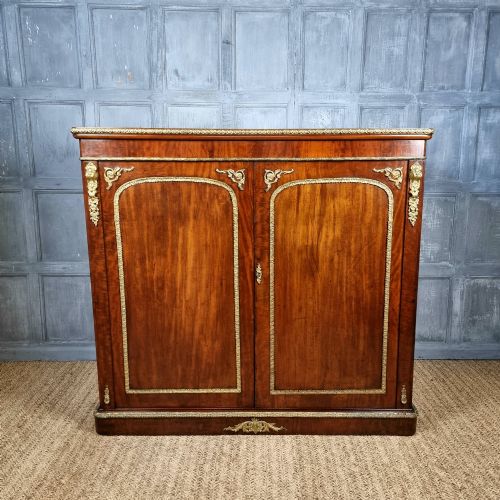
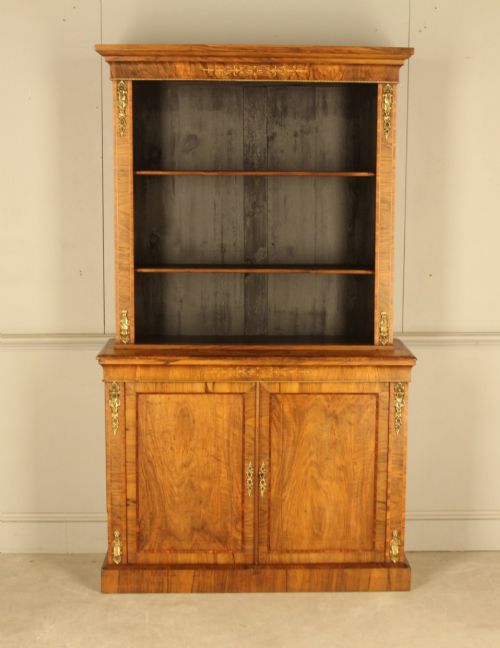
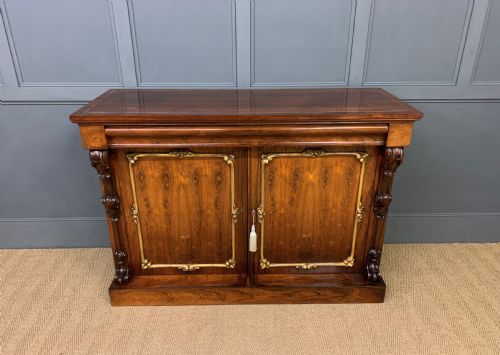
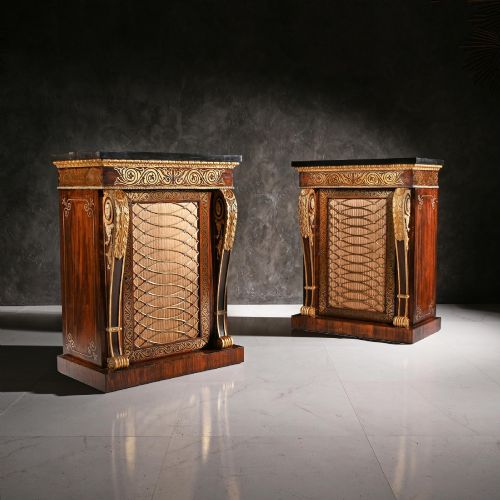
Gilt Mounted Cupboard
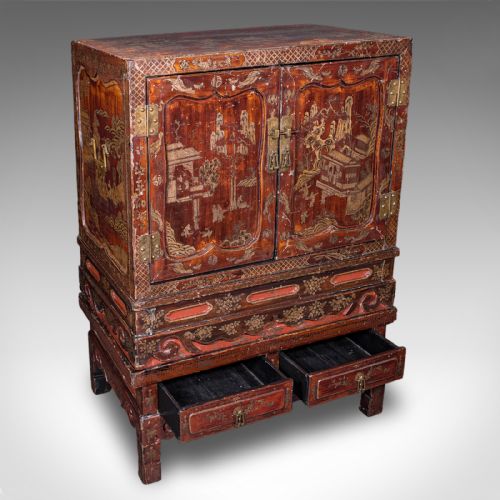
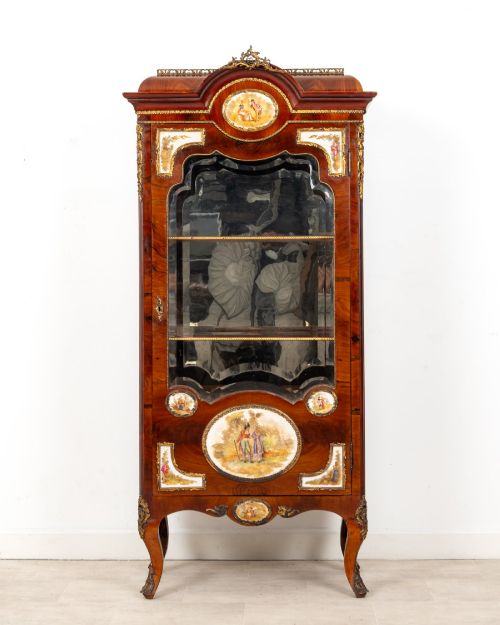
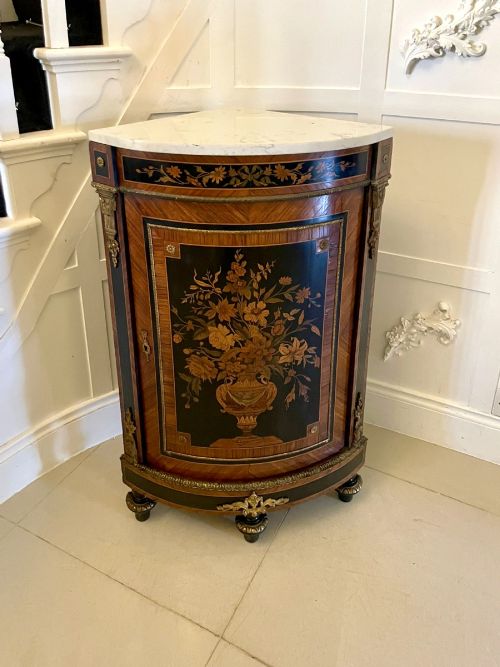
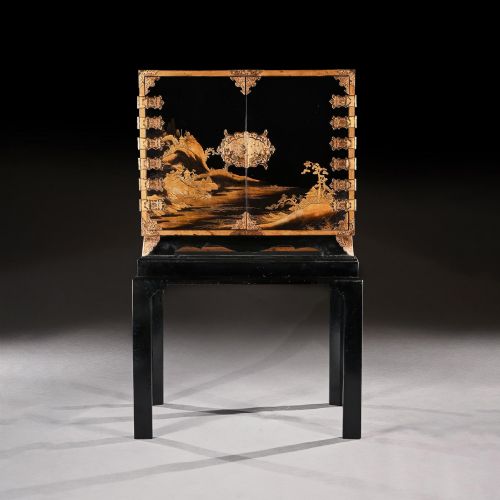
A gilt mounted cupboard brings together rich timber and chased metal mounts, offering an imposing presence for any room.
Gilt Mounted Cupboard
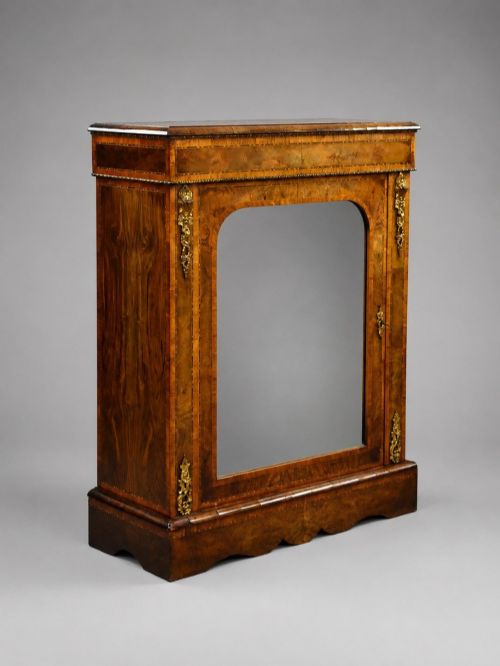
A gilt mounted cupboard search reveals a diverse selection of storage furniture, ranging from French commodes and side cabinets to English bookcases and display cabinets spanning the seventeenth to the twentieth centuries. The majority of pieces encountered here lean towards nineteenth-century Victorian and French revival styles, incorporating architectural symmetry and decorative timber forms.
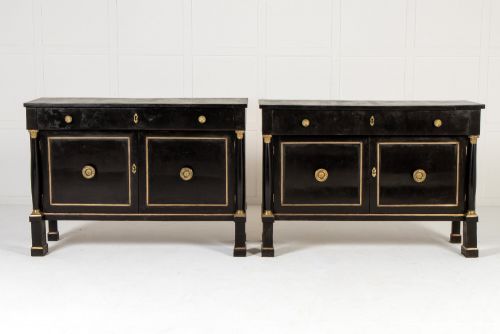
Makers produced these cabinets as focal storage pieces for drawing rooms and reception spaces, utilising forms such as corner cabinets, pier cabinets, and cabinets on stands. Walnut, kingwood, and ebonised woods predominate, frequently paired with marble surfaces or inset porcelain plaques.
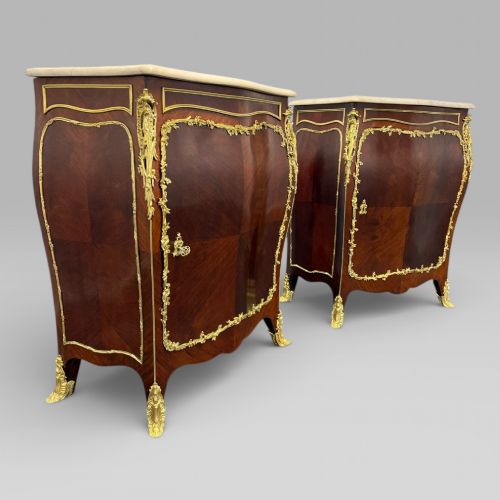
Continental workshops heavily influence the selection, with numerous examples displaying Louis XV and Louis XVI design characteristics through serpentine fronts and marquetry patterns. English makers contribute robust walnut and rosewood iterations, including brass-inlaid side cabinets and campaign pieces.
Materials and Construction
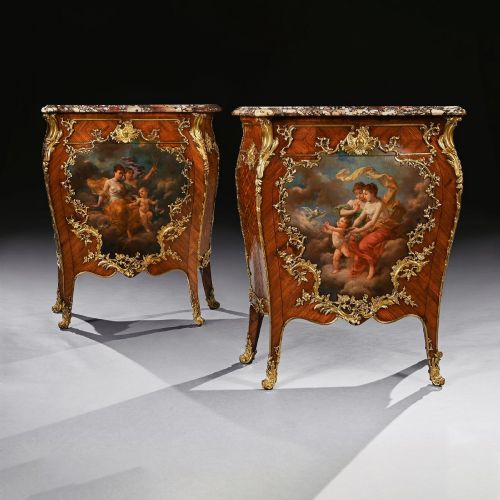
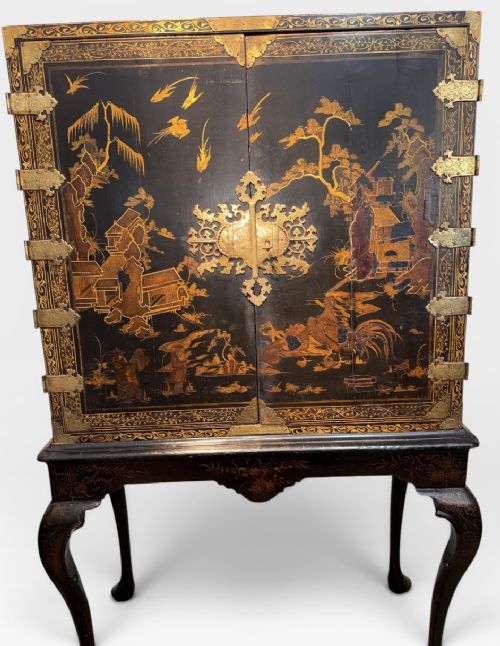
Carpenters built these carcasses using dense foundational timbers such as oak, mahogany, and walnut, subsequently applying decorativeveneers including kingwood, satinwood, and tortoiseshell. Surface decoration relied on meticulous marquetry, japanning, and Vernis Martin painted panels.
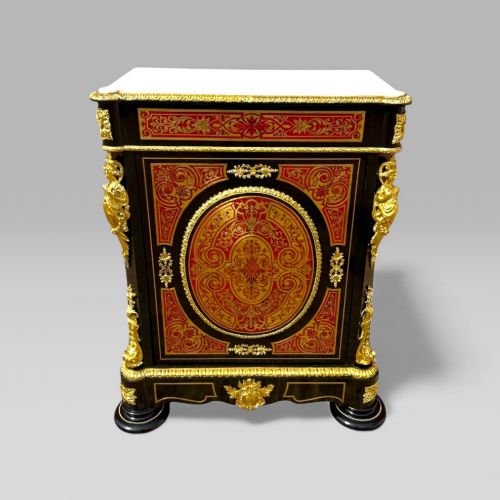
Gilt bronze and ormolu mounts were cast and chased by hand, then pinned or screwed to corners, friezes, and feet to accentuate the structural lines. Marble tops, often in white or coloured varieties, were slabbed and polished to sit precisely upon the upper carcase.
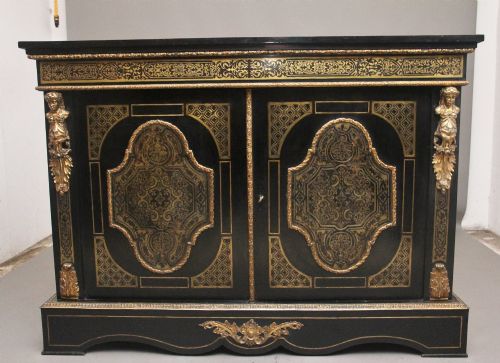
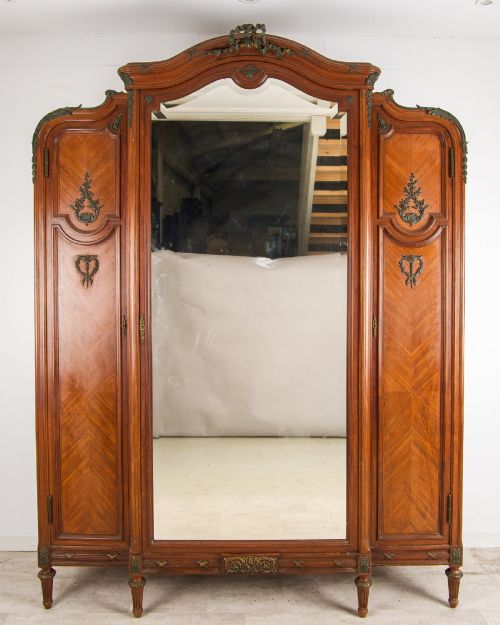
Inlaid brass stringing and boullework utilising tortoiseshell and brass sheets formed intricate geometric or floral scrolls across ebonised surfaces. Cabinet doors frequently incorporated glazed panels for display purposes or mirrored plates within armoire frames.
Materials employed across the selection include tortoiseshell, Sevres porcelain, burr walnut, and French ormolu mounts.
Evaluating the Pieces
The refinement of the ormolu or gilt bronze mounts dictates the visual success of the piece, separating crisp, hand-chased metalwork from softer, more mechanically cast alternatives. Artisans who dedicated greater time to chiselling the surface details achieved depth and shadow that elevate the entire facade.
Timber selection and veneer matching reveal the underlying standard of construction, with symmetrical grain patterns and precise marquetry indicating superior workshop practice. The integration of high-grade materials like Sevres porcelain plaques or original marble tops further separates standard production from ambitious commissions.
Structural integrity depends on the original joining of the carcase and the smooth operation of doors and drawers within often complex serpentine or bombe shapes. Originality of components, from internal shelving to the gilt mounts themselves, defines the historical standing of each cabinet.
Gillows·Louis Constantin Le Gaigneur·E. Kahn·Paul Sormani·Beurdeley
The Gilt Mounted Cupboard Glossary
- Ormolu
- Gilded bronze used widely for decorative mounts on furniture. The technique involves applying a mercury and gold amalgam to cast bronze before heating.
- Boullework
- Marquetry technique utilising tortoiseshell and brass inlaid in counter-change patterns. It gained popularity through French cabinet makers during the seventeenth and eighteenth centuries.
- Vernis Martin
- A simulated Japanese lacquer developed by the Martin brothers in France. It created translucent, glossy painted panels for fine cabinetry.
- Marquetry
- Inlay work using thin veneers of different coloured woods, ivories, or metals to form pictorial or geometric designs on furniture surfaces.
- Meuble d'appui
- A French term for a low side cabinet or support cabinet used for displaying decorative objects on its top surface.
- Bombe
- A swollen or bulging convex shape characteristic of certain eighteenth-century and revival furniture designs.
Gilt Mounted Cupboard: Frequently Asked Questions
What is a gilt mounted cupboard?
A gilt mounted cupboard is a storage piece adorned with cast metal mounts finished in gold, combining practical cabinetry with decorative display.
These pieces range from small bedside chests to large armoires and commodes produced across several centuries.
How do I care for marble top cabinets?
Marble surfaces require gentle cleaning with damp cloths and neutral soaps to avoid etching from acidic spills. Avoid abrasive cleaners that can dull the polished finish over time.
Keep wooden carcases polished with appropriate waxes and maintain stable room humidity to protect delicate veneers and marquetry.
Where were these cabinets placed originally?
Cabinet makers designed these pieces for formal reception rooms, drawing rooms, and bedrooms in grand townhouses and country estates. They served to store precious ceramics, linens, or books while displaying art objects on their surfaces.
Smaller side cabinets and pier cabinets often occupied narrow wall spaces between windows or beside fireplaces.
How can I tell a revival period piece apart?
Nineteenth-century revival pieces often utilise machine-sawn internal timbers and standardised mount fixings compared to their earlier eighteenth-century counterparts. Stylistic cues such as heavy ebonised finishes and specific brass inlay techniques help pinpoint nineteenth-century French workshops.
Examining the construction methods inside drawers and carcase backs reveals the manufacturing technology of the era.