



Regency Brass Inlay Chiffonier
These regency brass inlay chiffonier pieces are elegant low storage cabinets defined by metal work and rich timber, built to organise a room with distinct style.
Regency Brass Inlay Chiffonier
A regency brass inlay chiffonier sits firmly within the Regency and 19th Century periods, functioning primarily as a side cabinet, bookcase or storage unit. These pieces combine flat surfaces with enclosed lower compartments and sometimes open upper shelving.
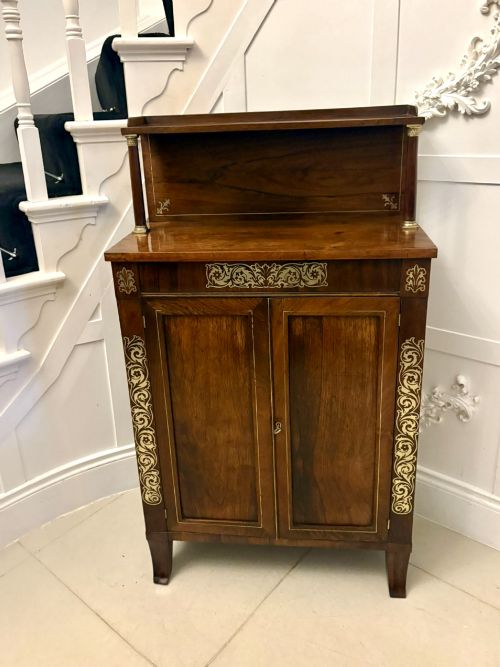
The version most commonly met on this page is constructed from rosewood or mahogany, decorated with inlaid brass details and dating from around 1800 to 1850. Many examples adopt grand Regency styles, appearing as single cabinets or matched pairs.
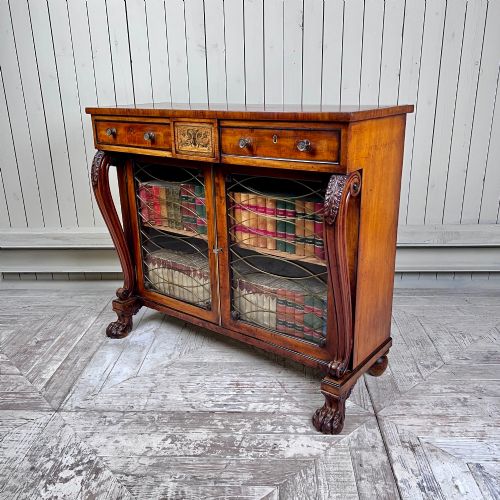
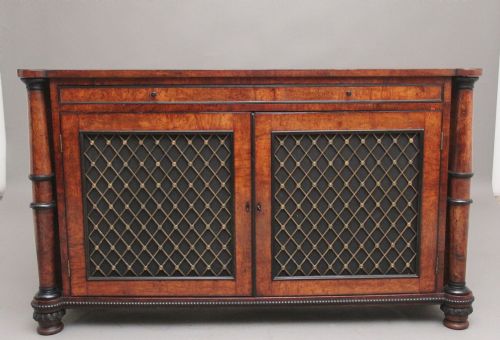
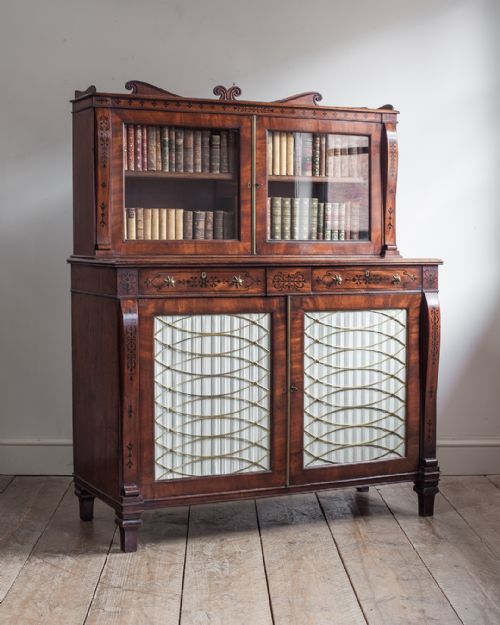
Makers often integrated glazed doors or fabric panels behind glass, creating functional display space for books and decorative objects. The form serves as both a practical sideboard and a refined architectural anchor for a room.
How they were made
Cabinet makers utilised dense hardwoods such as rosewood, mahogany, pollard oak and amboyna as the structural base, often applying ebony or boxwood accents. These timbers provided a stable, dark canvas for decorative metalwork.
Craftsmen inlaid fine brass strips and motifs directly into the wood grain, creating geometric or scrolling patterns that catch the light. Glass, mirror and fabric components were also incorporated into doors and upper sections.
Listings feature pieces spanning the Regency and 19th Century periods, dating from 1800 to 1850.
What varies in quality
The precision and intricacy of the brass inlay work separates standard examples from exceptional pieces, where floral or geometric lines remain crisp and completely flush with the timber. The choice of primary wood also dictates standard, with highly figured rosewood and amboyna representing the upper tier.
Proportion and structural complexity influence the character of each piece, ranging from simple two-door side cabinets to elaborate waterfall bookcases with secretaire drawers. The presence of matched pairs adds considerable architectural weight to the design.
John McLean
The Regency Brass Inlay Chiffonier Glossary
- Chiffonier
- A low cabinet featuring enclosed storage below, occasionally topped with shelves or a bookcase structure. This form evolved during the early nineteenth century to serve dining and drawing rooms.
- Brass inlay
- Metal strips set flush into the wooden surface of furniture to form decorative patterns. Craftsmen utilised this technique extensively during the Regency period.
- Rosewood
- A dense, heavily figured timber with dark brown and black grain patterns. Cabinet makers favoured this material for high-status furniture.
- Secretaire
- A writing drawer or compartment built into a cabinet, featuring a drop-down front that reveals small internal drawers and pigeonholes. This addition increased the functional utility of the piece.
- Waterfall bookcase
- A set of open shelves diminishing in depth from bottom to top, often incorporated into the upper section of a cabinet. The style emerged in the Regency period.
Regency Brass Inlay Chiffonier: Frequently Asked Questions
What is a regency brass inlay chiffonier used for?
These cabinets function as versatile storage units for living spaces and dining rooms, providing enclosed shelving for household items and display space on top.
Many examples incorporate upper bookcases or open shelves, allowing owners to exhibit books and decorative objects while keeping clutter hidden below.
How do I date a regency brass inlay chiffonier?
Dating relies on examining the timber selection, hardware style and construction methods typical of the early nineteenth century. Pieces from this era frequently feature rosewood or mahogany combined with precise brass stringing.
Comparing the structural proportions to documented examples from the Regency period helps narrow down the decade of manufacture between 1800 and 1850.
How do I care for rosewood and brass furniture?
Maintenance requires keeping the timber away from direct sunlight and maintaining stable humidity to prevent the wood from warping or cracking. Gentle dusting preserves the polished surface without wearing down the delicate metal inlay.
Avoid harsh chemical cleaners, using only soft cloths and specialist wax appropriate for antique hardwoods to maintain the finish.
What is the difference between a chiffonier and a sideboard?
A chiffonier is typically smaller and more refined than a sideboard, often including enclosed cupboards beneath shelves or a bookcase superstructure. Sideboards generally run longer and focus purely on serving functions in a dining room.
Both forms utilise fine hardwoods and brass decoration, but the chiffonier offers a more compact storage solution for a drawing room or study.