



Regency Brass Inlaid Chiffonier
A regency brass inlaid chiffonier brings refined storage and lustrous metal detail to a room, combining the practicality of a low cabinet with the elegance of classical design.
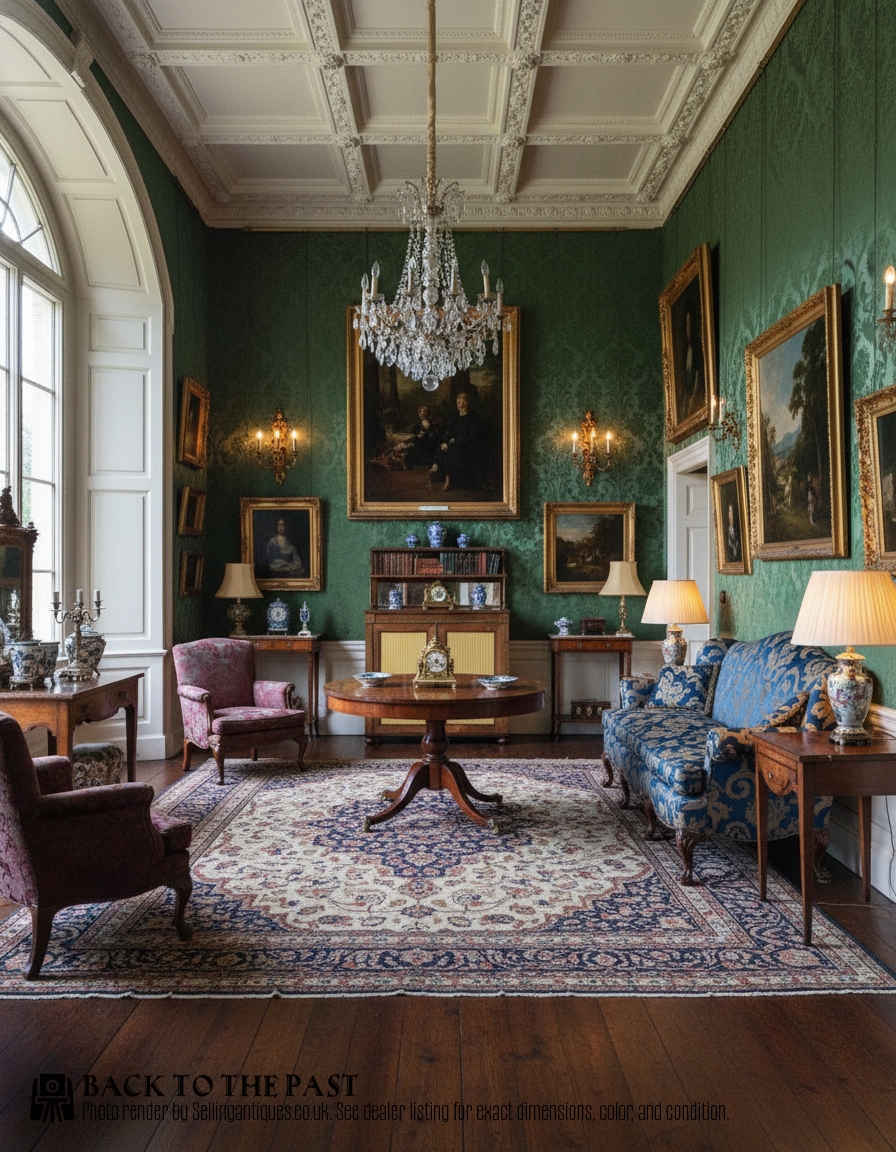
Regency Brass Inlaid Chiffonier
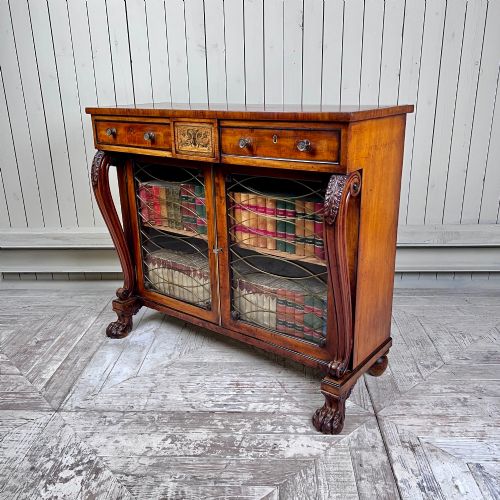
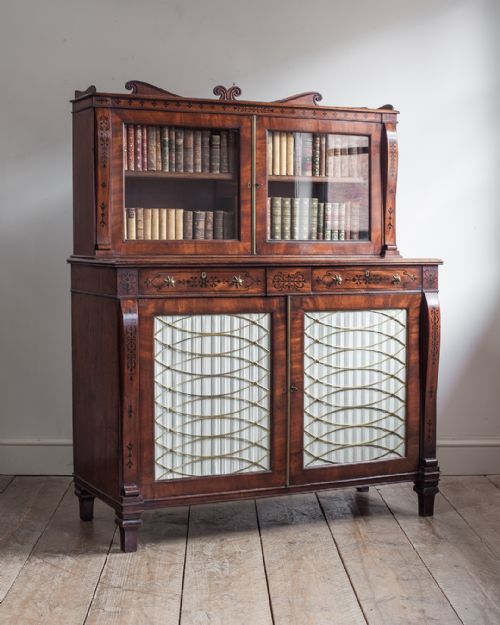
A regency brass inlaid chiffonier serves as a low side cabinet or bookcase, designed for formal reception rooms and parlours during the early nineteenth century. Buyers searching this phrase look for architectural timber furniture that combines enclosed lower storage with open shelving or enclosed upper display.
Rosewood forms the majority of the examples seen on this page, accompanied by mahogany, pollard oak, amboyna, satinwood, and palisander. Pieces date predominantly from the Regency period and the wider nineteenth century, spanning around eighteen hundred to eighteen fifty.
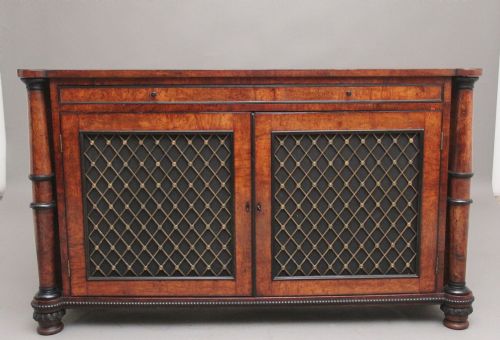
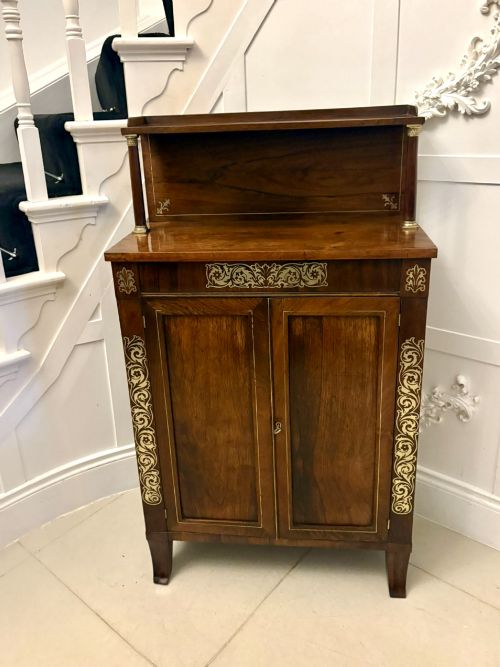
The form often includes brass inlay applied in delicate classical motifs across the timber surfaces, sometimes paired with glazed doors, silk lined panels, or mirror backs. Single cabinets, pairs, and waterfall bookcases appear alongside secretaire variants equipped for writing.
Materials and construction
Cabinet makers utilised dense exotic hardwoods such as rosewood and mahogany as the primary ground, frequently enhancing the grain with contrasting borders of ebony and boxwood. These timbers provide a dark, uniform surface that allows inlaid metalwork to stand out sharply.
Brass was hand cut into fine lines, scrolls, and palmette motifs before being recessed directly into the wood surface and secured with animal glue. Glass, mirror plates, and pleated silk panels were integrated into door frames to lighten the visual weight of the heavy timber construction.
Several chiffoniers conceal pull out writing drawers behind their upper frieze, letting nineteenth century correspondents compose letters while hiding the ink.
Distinctions in quality
Quality rests upon the precision of the brass inlay work and the selection of figured timber veneers. Superior examples display tight, unbroken brass lines and meticulously matched grain patterns across doors and panels.
The sophistication of the internal fittings, such as secretaire drawers with fitted stationery compartments or adjustable shelving, separates standard utility cabinets from finer drawing room pieces. Structural integrity in the joints and original brass grilles or hardware further elevate an example.
John McClean·Gillows·William Trotter
The Regency Brass Inlaid Chiffonier Glossary
- Chiffonier
- A low cabinet derived from the sideboard, typically featuring enclosed cupboards below and shelves or a superstructure above. It emerged in the early nineteenth century for dining and drawing rooms.
- Rosewood
- A heavy, dark timber with pronounced figuring that served as a favored ground for brass inlay during the Regency period. Its rich natural colour deepens with age.
- Secretaire
- A cabinet or chest incorporating a pull down writing drawer fitted with small compartments and pigeonholes. This hybrid form allowed private correspondence within a shared living space.
- Palisander
- A term applied to several richly figured dark Brazilian timbers similar to rosewood. It offers a dense surface suitable for precision cabinet work.
Regency Brass Inlaid Chiffonier: Frequently Asked Questions
What is a regency brass inlaid chiffonier used for today?
These cabinets function well as low sideboards in dining areas, media consoles in sitting rooms, or display surfaces for lamps and decorative objects.
The enclosed lower cupboards offer practical concealed storage, while upper shelves display books or ceramics without dominating the floor space.
How do I identify a true Regency period piece?
Examine the secondary woods used inside the carcass, such as oak or pine, alongside the construction methods of the drawer linings and backboards. Regency pieces typically exhibit hand cut dovetails and specific brass inlay patterns characteristic of early nineteenth century workshops.
Proportions remain balanced and classical, reflecting the furniture design manuals of the era.
Why is rosewood so common on these cabinets?
Rosewood provided a dark, heavy, and intensely figured background that contrasted sharply with bright brass inlay. Cabinet makers favoured its dense grain because it held fine metalwork securely without splintering.
Imported heavily during the nineteenth century, it defined luxury furniture styling.
Are pairs of cabinets difficult to find?
Matching pairs of side cabinets or chiffoniers survive in smaller numbers than single pieces because domestic room layouts often separated them over generations. When they do appear, they usually share identical timber figuring and inlay motifs.
They offer a balanced appearance for placement flanking a fireplace or large window.