



Regency Brass Grill Cabinet
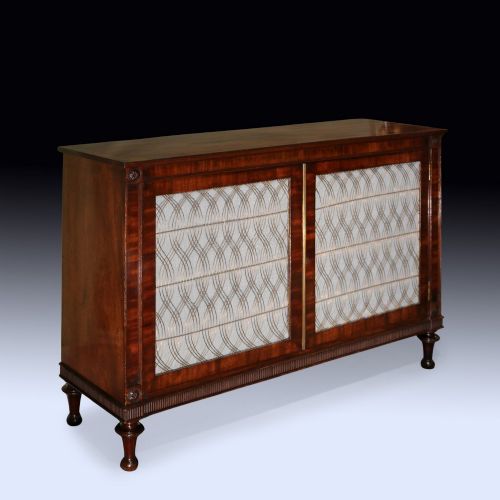
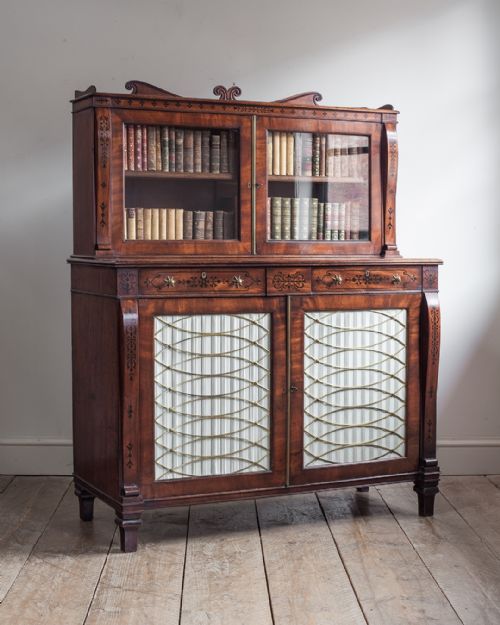
A regency brass grill cabinet combines formal proportion with the subtle texture of wire mesh, offering a refined way to house books and display objects.
Regency Brass Grill Cabinet
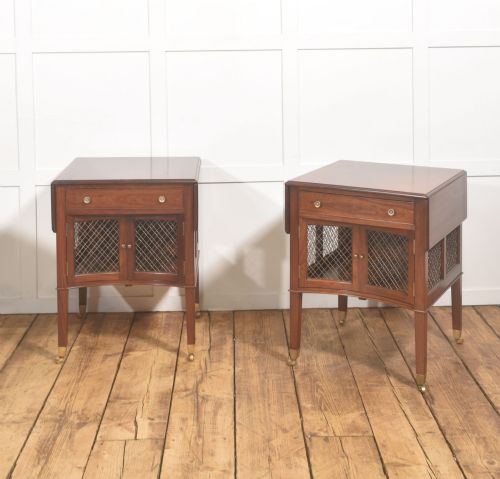
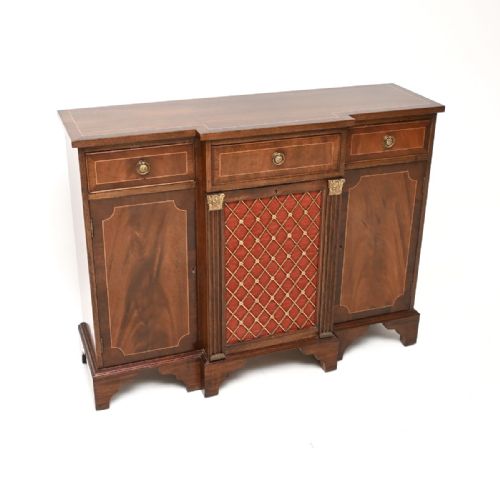
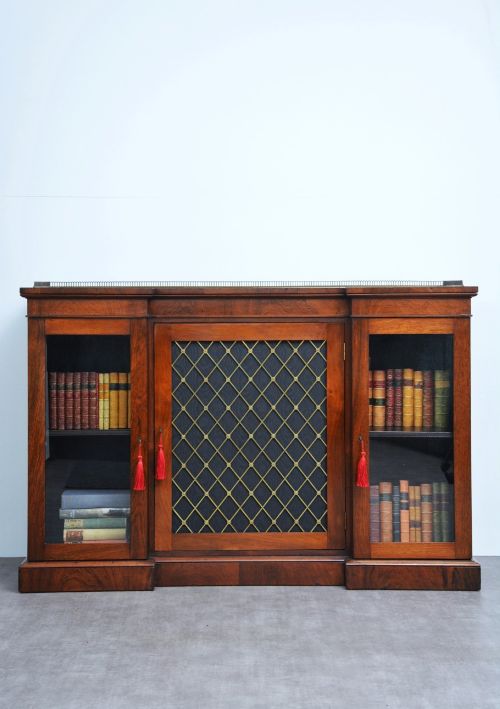
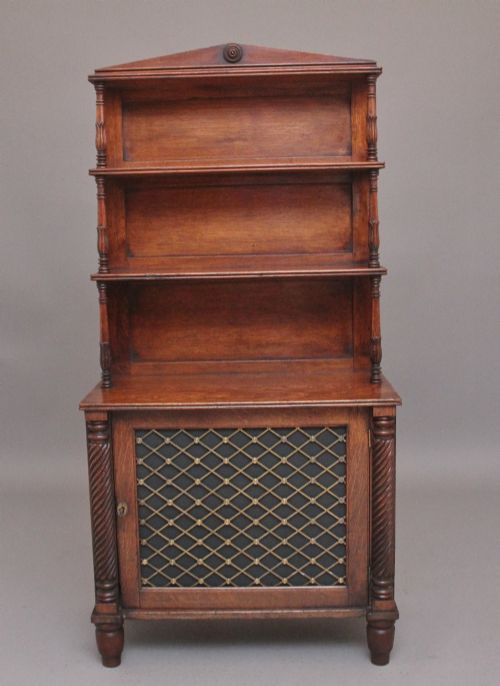
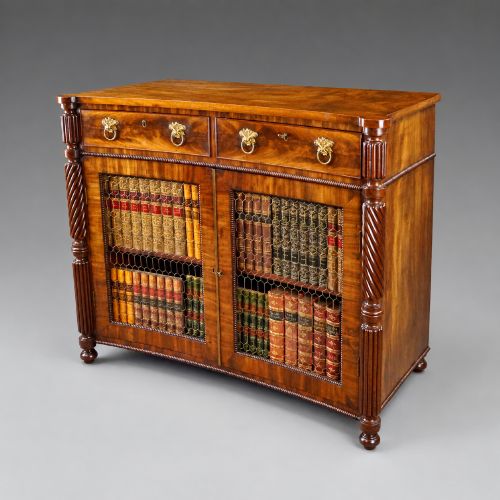
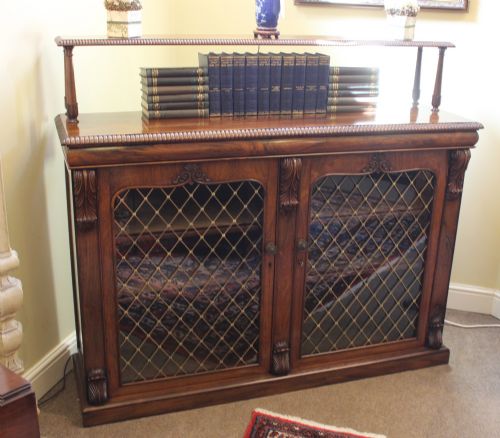
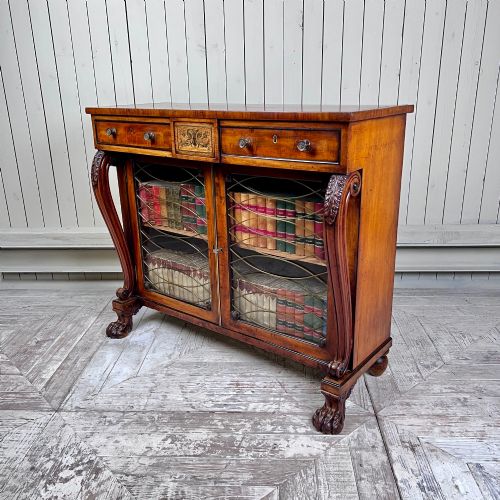
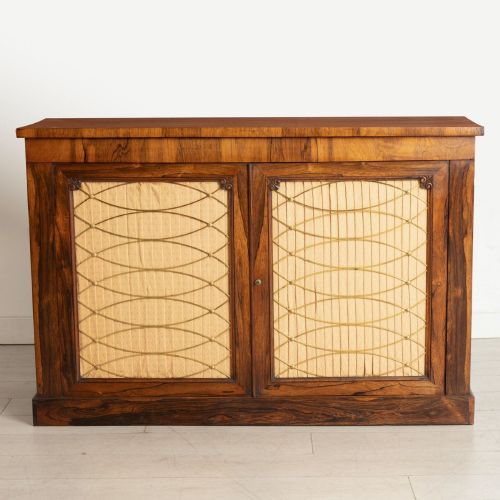
When you search for a regency brass grill cabinet, you encounter forms built for domestic storage and display during the early nineteenth century and later revival periods. The selections span compact side cabinets, low chiffoniers, and taller bookcase cabinets rather than a single uniform shape.
Mahogany and rosewood dominate the material record, frequently paired with satinwood or walnut across related pieces. Most examples incorporate glazed or wire-grilled doors designed to protect contents while maintaining visibility within a room.
The style draws heavily from neoclassical principles, showing restraint in ornament and reliance on timber grain and brass detailing. Pieces range from authentic Regency and William IV iterations down to twentieth-century reproductions.
Materials and Construction
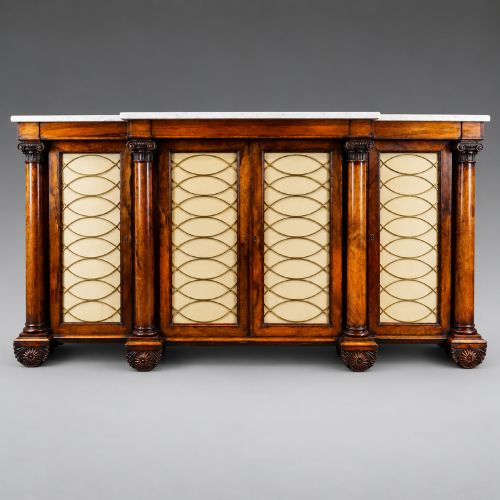
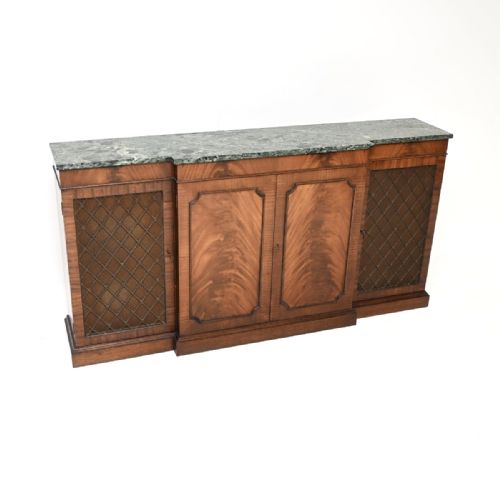
Cabinet makers utilised dense timbers like mahogany and rosewood as the structural foundation, often enhancing surfaces with contrasting ebony inlay or brass stringing. Selected pieces incorporate marble tops or fabric backing behind the metal grillwork.
Fine brass grilles were woven or pierced into geometric patterns, secured behind wooden door frames to enclose the shelved interior. Structural joinery relies on traditional cabinet-making techniques suited to heavy hardwoods.
Regency Brass Grill Cabinet Retail Price Guide 2026
Typical asking prices for regency brass grill cabinet among the pieces listed under this phrase on Sellingantiques today, from the lower quarter to the upper quarter. They describe what is for sale here now, not the wider market.
Gentlemen once hid their correspondence behind locked grill doors, trusting brass wire to guard secrets from wandering eyes.
Evaluating Quality
The distinction between standard utility pieces and top-tier cabinet work rests in the selection of timber figures and the crispness of brass inlay. Finer examples display meticulous attention to proportion, harmonious grain matching, and substantial brass hardware.
Secondary woods used in linings and the precision of the joinery distinguish workshops of high repute from provincial production. The integration of the brass grill within the door frame reflects the overall standard of the build.
Gillows
The Regency Brass Grill Cabinet Glossary
- Chiffonier
- A low cabinet originating in the early nineteenth century, typically featuring shelves or drawers enclosed by doors. These pieces often served in dining rooms for holding plate and glass.
- Breakfront
- A cabinet design where the central section projects forward from the flanking wings. This architectural arrangement creates depth and visual balance across the piece.
- Grille
- A lattice of metal wire or brass strips set into furniture doors in place of wood or glass. It provides ventilation and security while keeping contents visible.
- Secretaire
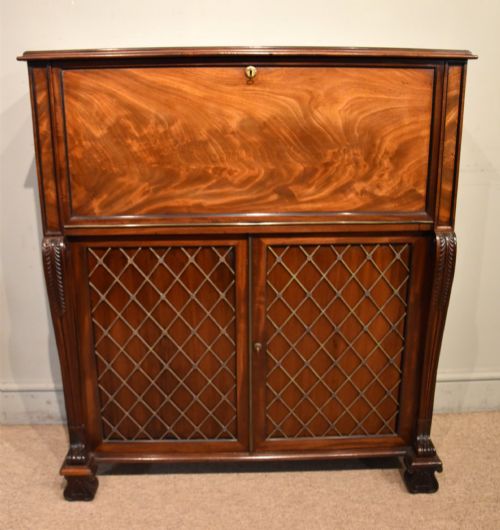
- A desk component fitted with a drop-front writing flap and internal small drawers. It integrates a practical workspace directly into the body of a cabinet.
- Fiddle back
- A descriptive term for mahogany timber possessing a wavy grain pattern resembling the wood used for violins. This figuring appears on select high-grade furniture fronts.
Regency Brass Grill Cabinet: Frequently Asked Questions
What is a regency brass grill cabinet used for?
These cabinets served primarily in libraries, drawing rooms, and dining spaces to store books, ceramics, and silverware securely. The enclosed shelving kept dust away from valuable possessions while the metal mesh allowed air circulation.
Today, they function well as storage furniture in living areas or hallways. The display capability makes them practical for showing collections while keeping items organised behind closed doors.
How do I identify a genuine period piece?
Authentication involves examining the timber species, secondary woods inside drawers, and the construction methods used in the carcass. Period examples typically show hand-cut dovetails and genuine brass inlay rather than modern substitutes.
Stylistic markers such as neoclassical proportions and period-appropriate hardware help distinguish original nineteenth-century items from later twentieth-century revivals.
How should I care for rosewood and mahogany?
Maintain timber surfaces by dusting regularly with a soft, dry cloth and avoiding silicone-based polishes. Keep cabinets away from direct heat sources and strong sunlight to prevent the rosewood and mahogany from fading or splitting.
Waxing the wood periodically preserves the natural lustre of the grain. Brass elements can be left unpolished to develop a natural patina over time.
What is the difference between a chiffonier and a bookcase?
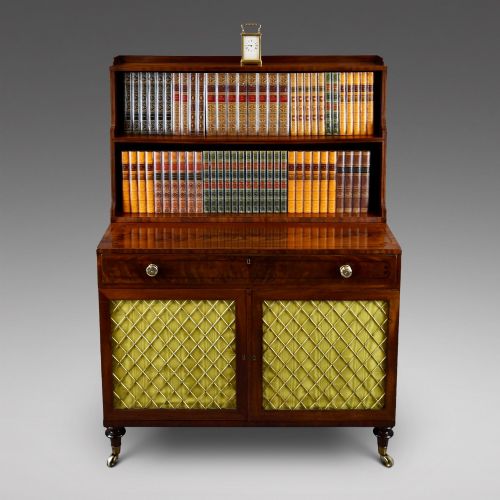
A chiffonier is typically a lower piece of furniture featuring enclosed cabinet doors beneath or beside a tier of shelving. Bookcases are generally taller structures designed explicitly for vertical book storage.
Many pieces bridge these categories by combining lower grill-front cupboards with upper open shelves for display.